PD Necklace Trends: Why Palladium is Fine Jewelry's Secret
Discover why the PD necklace is dominating 2026 fine jewelry trends. Explore palladium's weight, grading, and pricing vs. platinum.

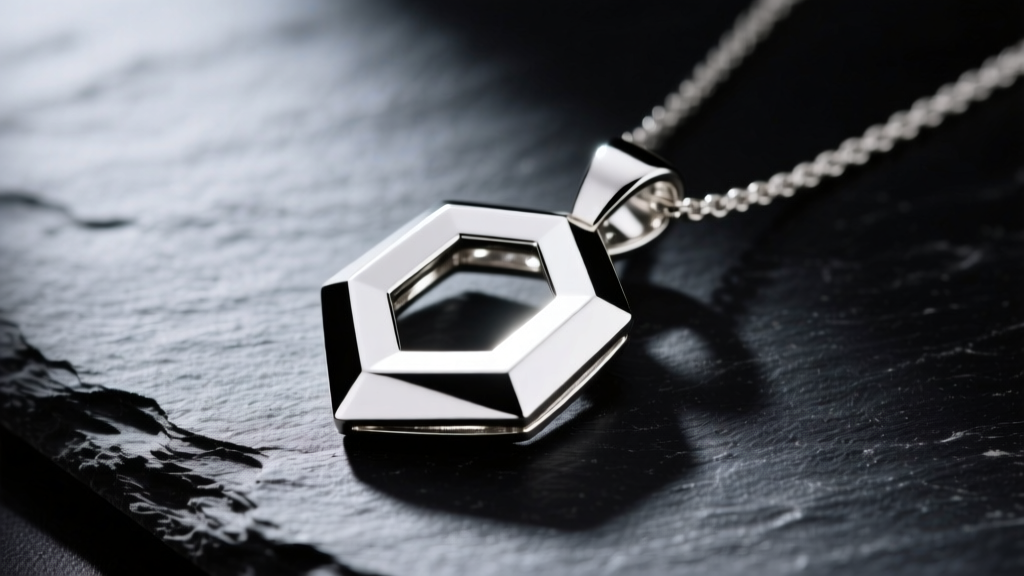
When browsing bespoke fine jewelry or estate collections, you may occasionally encounter a piece stamped with the hallmark PD. While many consumers mistakenly assume this refers to a specific designer brand or a proprietary alloy, a "PD necklace" actually denotes one of the most fascinating and underutilized metals in the platinum group family: Palladium. As we navigate the 2026 fine jewelry market, palladium is experiencing a quiet renaissance among independent casters and avant-garde designers who prioritize structural innovation, hypoallergenic purity, and natural white brilliance.
Unlike white gold, which requires periodic rhodium plating to maintain its icy facade, or platinum, which carries a hefty density and price premium, a palladium necklace offers a unique intersection of wearability and metallurgical prestige. In this comprehensive style and trend analysis, we decode the science, market positioning, and styling nuances of the PD necklace.
The 'PD' Hallmark: Decoding Palladium in Modern Jewelry
Palladium (chemical symbol Pd, atomic number 46) is a rare, lustrous, silvery-white metal discovered in 1803. It belongs to the Platinum Group Metals (PGMs). In jewelry, the PD or PALL stamp guarantees that the piece is predominantly composed of this precious metal. According to the Gemological Institute of America (GIA), palladium is naturally white, meaning it will never fade, yellow, or require chemical dipping to maintain its color. This inherent stability makes it an exceptional canvas for diamond and sapphire pendants, as the metal's cool undertones amplify the refractive light of colorless stones without the artificial filter of rhodium.
Metallurgical Deep Dive: 950 Pd vs. 900 Pd Alloys
To understand the value of a PD necklace, you must look beyond the surface and examine the alloy composition. Pure palladium is relatively soft, so it must be alloyed for jewelry applications. There are two primary grades you will encounter in the 2026 market:
- 950 Palladium (950 Pd): Composed of 95% palladium and 5% ruthenium (or occasionally copper/gallium). This is the premium standard for fine jewelry. The addition of ruthenium dramatically increases the metal's hardness and tensile strength, making it suitable for intricate chain links and secure prong settings in pendant necklaces.
- 900 Palladium (900 Pd): Composed of 90% palladium and 10% alloy metals. While slightly less expensive, it is more prone to oxidation during the casting process and is generally reserved for heavier, less intricate chain designs rather than delicate pendant settings.
Expert Insight: Always inspect the clasp and jump ring of a PD necklace. High-end makers will stamp '950 Pd' on the clasp plate. If the stamp simply reads 'Pd' without a numeric prefix, it may be an older piece or a lower-grade alloy that is more susceptible to solder-joint failure.
Weight, Wearability, and the 'Floating' Pendant Effect
The most immediate physical difference you will notice when wearing a PD necklace compared to platinum is the weight. Palladium has a density of approximately 12.02 g/cm³, whereas platinum sits at a much heavier 21.45 g/cm³. This means a palladium chain is nearly 45% lighter than an identically dimensioned platinum chain.
This dramatic weight reduction is not a compromise; it is a distinct design advantage. For oversized, heavy gemstone pendants or long, layering chains (such as 24-inch or 30-inch opera lengths), a PD necklace prevents neck fatigue. It allows designers to create voluminous, architectural chain links that drape elegantly and 'float' on the collarbone without pulling the neckline of the wearer's garment.
The Caster's Dilemma: Why PD Necklaces Are Rare in Malls
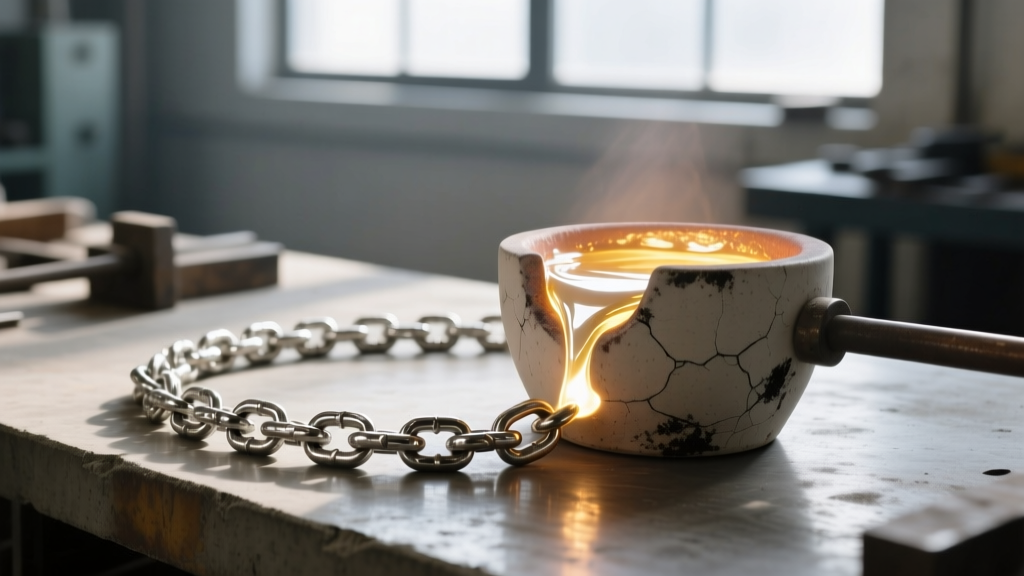
If palladium is so advantageous, why isn't every commercial jewelry retailer stocking PD necklaces? The answer lies in manufacturing complexity. Palladium has a high melting point of 1554.9°C (2831°F). More problematically, when molten, palladium acts like a sponge for oxygen and hydrogen, which leads to severe porosity and brittleness in the final cast if exposed to ambient air.
To successfully cast a 950 Pd pendant or chain link, a foundry must use specialized vacuum-casting or argon-gas-shielded equipment. This high barrier to entry means that PD necklaces are largely absent from mass-market mall jewelers, who prefer the forgiving nature of 14k/18k white gold or the established supply chains of platinum. Instead, palladium is the domain of bespoke artisans, master casters, and designers pushing the boundaries of modernist jewelry.
Clasp Engineering and Failure Modes
Because of palladium's specific metallurgical memory, traditional spring-ring clasps are a known failure point on PD necklaces. The metal lacks the 'spring-back' memory of steel or certain platinum alloys, meaning the tiny internal spring mechanism can fatigue and fail to close securely. When purchasing or designing a palladium pendant necklace, always opt for:
- Lobster Clasps: Thicker and more robust, relying on a heavier internal mechanism.
- Magnetic Neodymium Clasps: Increasingly popular in 2026 for seamless chain integration without mechanical stress.
- Box Clasps with Safety Eights: Ideal for heavy palladium tennis necklaces or thick Cuban chains.
Styling the Palladium Pendant: Necklines and Patina
Styling a PD necklace requires an understanding of how the metal interacts with light and skin chemistry over time. Unlike platinum, which develops a soft, satin-like patina, palladium's patina is distinctly different. It tends to develop a subtle, frosted 'gunmetal' hue in areas of high friction, while retaining its brilliant white luster in recessed areas. This creates a natural, organic contrast that collectors highly prize.
Pairing with Necklines
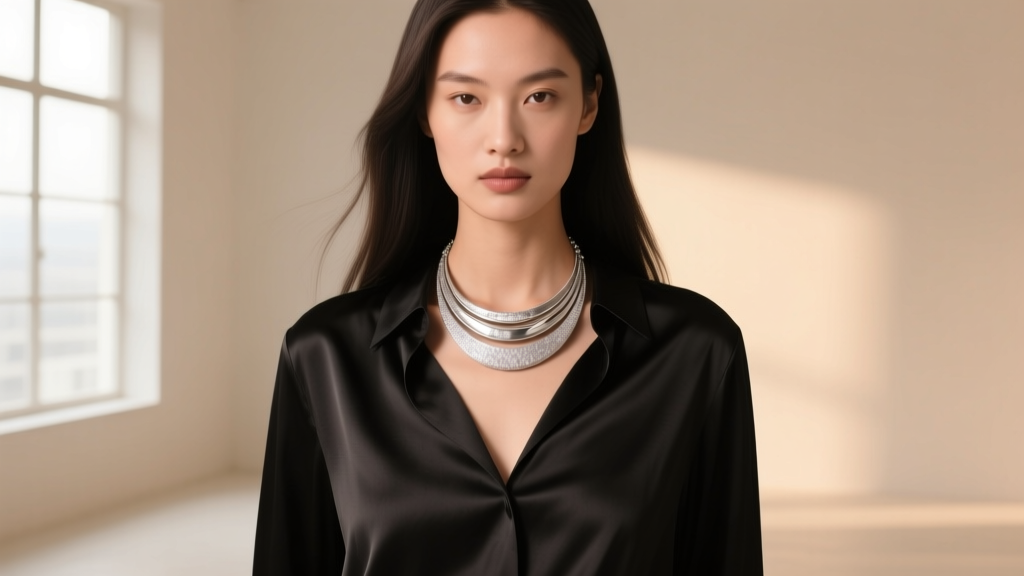
The natural brightness of 950 Pd makes it a striking contrast against deep, rich fabrics. A 16-inch palladium choker or a delicate 18-inch pendant necklace looks exceptionally sharp against charcoal wools, navy silks, and black cashmere. Because the metal is naturally white, it does not clash with the undertones of the wearer's skin, making it universally flattering across both cool and warm complexions—a rarity among white metals.
Investment and Pricing Realities for 2026
The pricing of a PD necklace is a complex equation of raw material costs and specialized labor. Historically, palladium was significantly cheaper than platinum, earning it the moniker 'the poor man's platinum.' However, market dynamics, particularly the automotive industry's use of palladium in catalytic converters, have caused wild price fluctuations over the last decade. According to market analysts at Johnson Matthey, PGM markets remain highly sensitive to industrial demand and geopolitical supply chain shifts.
In 2026, the raw material cost of palladium often hovers between that of 18k white gold and platinum. However, because of the specialized argon-casting required, the labor premium on a bespoke PD necklace can push the final retail price to parity with platinum. You are paying for the artisan's expertise and the metal's hypoallergenic purity, not just the commodity weight.
Comparison Chart: White Metals in Fine Jewelry
| Metal | Density (g/cm³) | Maintenance Required | Allergy Risk | Typical Use Case |
|---|---|---|---|---|
| 950 Palladium (PD) | 12.02 | None (Develops frosted patina) | Zero (Hypoallergenic) | Bespoke pendants, lightweight chains |
| 950 Platinum (PT) | 21.45 | Polishing (Develops satin patina) | Zero (Hypoallergenic) | Heavy chains, heirloom settings |
| 18k White Gold | 15.50 | Rhodium dipping every 1-2 years | Moderate (Nickel alloys) | Mass-market diamond pendants |
| Argentium Silver | 10.49 | Tarnish removal (Low frequency) | Low (Copper alloys) | Fashion jewelry, layering pieces |
Final Verdict: Is a PD Necklace Right for You?
A PD necklace is not a mainstream purchase; it is a deliberate choice for the informed collector. If you prioritize a naturally white, hypoallergenic metal that allows for larger, more dramatic pendant designs without the punishing weight of platinum, palladium is unmatched. When sourcing a PD necklace, seek out independent jewelers who are transparent about their 950 Pd alloys and possess the specialized casting infrastructure to deliver a porosity-free, structurally sound piece. In an era of homogenized mall jewelry, the quiet brilliance of palladium remains one of fine jewelry's best-kept secrets.


