The Ultimate Braided Chain Necklace Buying Guide (2026)
Discover what to look for when buying a braided chain necklace in 2026. Expert guide on weaves, karat durability, gauge sizes, and clasp mechanics.

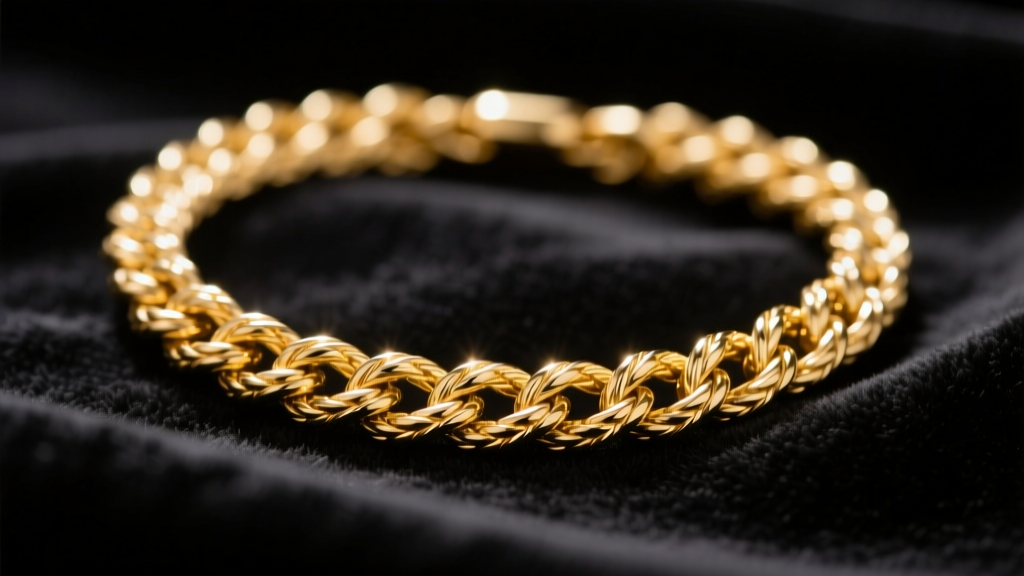
The Resurgence of the Braided Chain Necklace
In 2026, the shift towards tactile, heavy-metal aesthetics has pushed the braided chain necklace to the forefront of fine jewelry trends. Unlike standard cable or curb chains that lie flat and rely on simple interlocking rings, braided chains are engineered through complex, multi-directional weaving. This creates a rope-like, three-dimensional texture that catches light dynamically and offers superior drape. However, the intricate metallurgy and mechanical engineering required to produce a high-quality braided chain mean that not all pieces are created equal. Whether you are investing in a standalone statement piece or a durable foundation for heavy pendants, understanding the structural nuances of braided weaves is critical to avoiding premature stretching, clasp failure, or link degradation.
The Anatomy of a Braided Weave
A true braided chain necklace is constructed by weaving multiple strands of wire or interlocking micro-links in alternating directions. This structural complexity provides excellent flexibility, allowing the chain to contour smoothly to the collarbone without kinking. However, the high density of solder joints and friction points between links makes the choice of metal alloy paramount. According to the Gemological Institute of America (GIA), the tensile strength of the alloy directly dictates how well a woven chain will resist 'link elongation'—the gradual stretching that occurs when heavy pendants pull on the microscopic connection points of a braided weave.
Top Weave Profiles: Rope, Wheat, and Byzantine
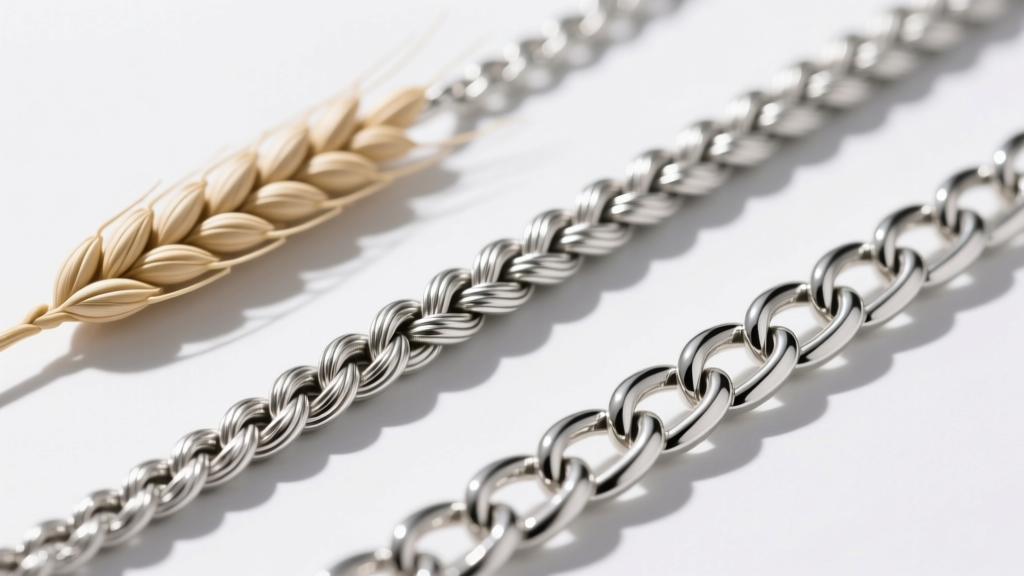
When shopping for a braided chain necklace, you will primarily encounter three distinct weave profiles. Each offers a unique visual texture and structural durability.
1. The Rope Chain
The rope chain is the most recognizable braided style, characterized by small metal links twisted together to mimic the appearance of a hemp rope. Modern CNC-machined rope chains offer incredible uniformity. Buying Tip: Opt for a 'solid' rope chain rather than a 'hollow' one. Hollow rope chains are notoriously difficult to repair if crushed or kinked, whereas solid rope chains can be re-soldered by a skilled bench jeweler.
2. The Wheat (Spiga) Chain
Wheat chains feature oval links woven in the same direction, creating a smooth, braided tube that resembles stalks of wheat. Because the links are woven tightly and uniformly, wheat chains are exceptionally strong and highly resistant to kinking. They are widely considered the best braided chain style for suspending heavy gemstone pendants.
3. The Byzantine Chain
The Byzantine weave is a complex, 3D interlocking pattern where each link passes through four others. It is thick, supple, and visually striking. Due to the sheer volume of metal required and the labor-intensive assembly, Byzantine chains command a premium price and are usually worn as standalone statement pieces rather than pendant carriers.
Material Selection and Karat Durability
The metal you choose for your braided chain necklace will dictate its lifespan, maintenance requirements, and price point. While 18k gold offers a richer yellow hue, its higher pure gold content makes it softer. For braided weaves, 14k gold is often the superior functional choice. The higher percentage of alloy metals (like copper and zinc) in 14k gold significantly increases the tensile strength, preventing the woven links from stretching under the weight of a pendant.
| Material | Durability & Tensile Strength | Maintenance Level | 2026 Est. Price Range (3mm, 20') |
|---|---|---|---|
| 14k Yellow Gold | High (Excellent for daily wear) | Low | $1,100 - $1,600 |
| 18k Yellow Gold | Moderate (Prone to elongation) | Low | $1,800 - $2,500 |
| 950 Platinum | Very High (Dense, won't lose metal) | Moderate (Develops patina) | $3,500 - $5,000+ |
| Sterling Silver | Moderate (Soft, prone to stretching) | High (Tarnishes in crevices) | $150 - $350 |
Sizing, Gauge, and Pendant Compatibility
The width and wire gauge of your braided chain necklace determine both its visual weight and its load-bearing capacity. Wire gauge refers to the thickness of the metal used to form the links; a lower gauge number indicates a thicker, stronger wire.
- 1.5mm - 2.0mm (Delicate): Best for lightweight, minimalist braided chains. Do not pair with pendants heavier than 3 grams.
- 2.5mm - 4.0mm (Medium): The sweet spot for pendant compatibility. A 3mm solid wheat chain can comfortably support pendants up to 15 grams without risking link elongation.
- 5.0mm+ (Heavy): Ideal for standalone statement pieces. The bail of most standard pendants will not fit over the end caps of chains this thick.
Jeweler's Insight: Always check the inner diameter of your pendant's bail before purchasing a thick braided chain. A 3mm wheat chain requires a bail with an inner clearance of at least 4mm to allow the chain to drape naturally without pinching the woven links.
Clasp Mechanics: Preventing Catastrophic Failure
The clasp is universally the weakest point on any necklace, but on a heavy braided chain necklace, clasp failure can result in the loss of a significant financial investment. Standard spring-ring clasps are entirely inadequate for braided chains over 15 grams due to spring fatigue and thin wire construction.
For braided chains, you should exclusively look for:
- Oversized Lobster Clasps: Ensure the clasp is cast solid, not stamped from sheet metal. The internal spring mechanism must be heavy-duty.
- Box Clasps with Double Safety Catches: The gold standard for heavy Byzantine or thick rope chains. The box clasp provides a secure mechanical lock, while the dual safety catches (figure-8 wires) ensure that even if the primary box latch fails, the chain remains secured around the neck.
Cleaning and Maintenance Protocols
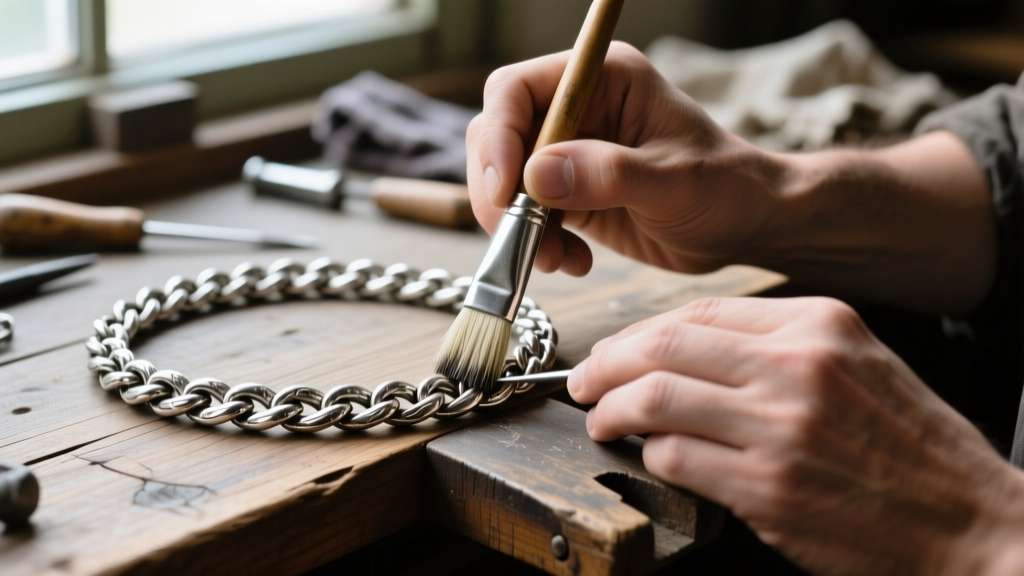
The intricate crevices of a braided chain necklace are magnets for sebum, lotions, and dead skin cells. Over time, this buildup can dull the metal and, in the case of sterling silver, accelerate localized tarnishing due to trapped moisture and sulfur compounds. The Jewelers of America recommends regular, gentle cleaning to maintain the structural integrity and brilliance of woven chains.
Step-by-Step Cleaning Guide:
- Avoid Ultrasonic Cleaners: The high-frequency vibrations can loosen the micro-solder joints in rope and Byzantine chains, leading to catastrophic unraveling.
- Use a Surfactant Solution: Mix a few drops of mild, phosphate-free dish soap in warm distilled water.
- Agitate Gently: Submerge the chain and use a baby-soft toothbrush to gently sweep along the grain of the braid. Never scrub against the weave, as this can snag and pull individual links.
- Dry Thoroughly: Pat dry with a microfiber cloth and use a hair dryer on a cool setting to blow moisture out of the deep crevices before storing.
Final Buying Checklist
When evaluating a braided chain necklace in 2026, run through this final checklist: Verify the chain is solid rather than hollow, confirm the karat weight aligns with your durability needs (favoring 14k for heavy pendants), ensure the clasp features a safety mechanism, and check that the end caps are seamlessly laser-welded to the final links. By prioritizing structural engineering over sheer visual bulk, you will secure a braided chain that remains a resilient, timeless staple in your jewelry wardrobe for decades.


