Budget Necklace Layering Ideas: Maximize Value and Style
Discover budget necklace layering ideas that maximize value. Learn how to mix affordable metals, gauge sizes, and lengths for a luxe layered look.

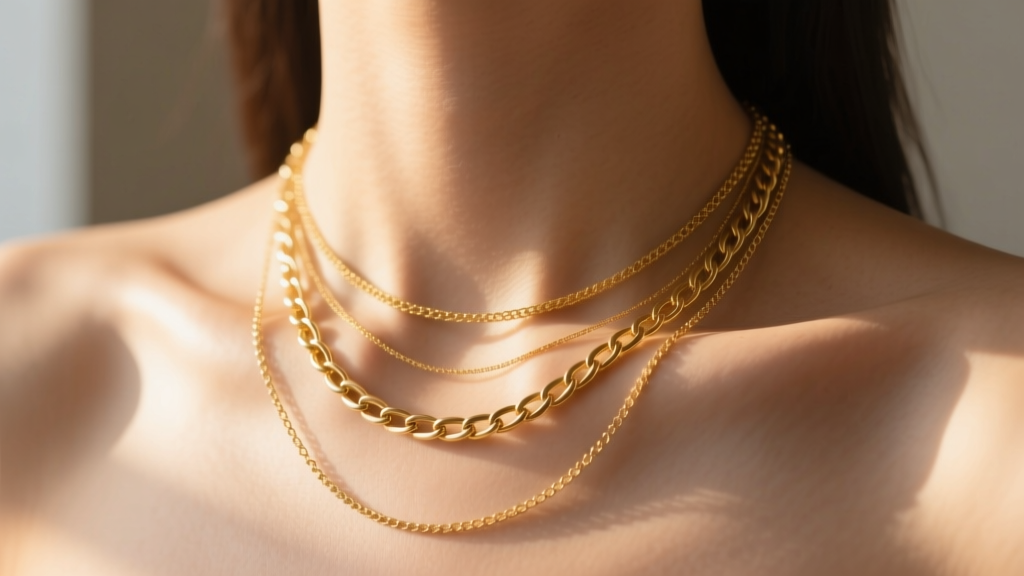
The Economics of the Layered Look in 2026
As we navigate the 2026 jewelry market, the demand for curated, multi-strand looks continues to dominate street style and editorial spreads alike. However, with precious metal spot prices remaining at historic highs, building a layered stack entirely from solid 14k or 18k gold is financially prohibitive for most consumers. A standard 16-inch solid gold cable chain weighing just 3 grams can easily exceed $220. Layering three of these pushes the investment well past $650. This is where strategic budgeting becomes essential. By exploring smart necklace layering ideas that blend alternative materials, precise gauge sizing, and clever visual weight distribution, you can achieve a high-end, bespoke aesthetic for a fraction of the cost. The goal is not simply to buy 'cheap' jewelry, but to maximize cost-per-wear and visual impact through informed material science and structural pairings.
Material Grade Breakdown: Where to Save and Where to Splurge
The foundation of any budget-friendly layering strategy is understanding modern metallurgy and plating technologies. Traditional electroplated brass (often labeled as 'gold dipped') typically features a microscopic 0.1-micron layer of gold that tarnishes within weeks when exposed to skin acidity and friction. For a durable budget stack, you must look toward PVD (Physical Vapor Deposition) coatings on 316L stainless steel, or gold-filled alternatives.
PVD coating utilizes a vacuum chamber to vaporize and bond titanium nitride or real gold onto a stainless steel base at the molecular level. This results in a 0.5 to 1.0-micron coating that is highly resistant to sweat, water, and friction. According to the Gemological Institute of America (GIA), understanding the base metal and coating thickness is the most critical factor in predicting a piece's lifespan. While your anchor pendant should ideally be solid gold or heavy gold vermeil to prevent skin irritation, your structural base chains can safely be PVD stainless steel.
| Material Type | Base Metal | Coating / Purity | Avg Price (16') | Tarnish Risk | Expected Lifespan |
|---|---|---|---|---|---|
| Solid 14k Gold | Gold Alloy | 58.5% Pure Gold | $200 - $350 | None | Lifetime |
| Gold Vermeil | Sterling Silver | 2.5 Microns 14k/18k | $65 - $120 | Moderate | 2 - 5 Years |
| Gold Filled | Brass Core | 5% Solid Gold Bond | $45 - $85 | Low | 5 - 10 Years |
| PVD Gold Plated | 316L Steel | 0.5 - 1.0 Micron PVD | $25 - $50 | Very Low | 2 - 4 Years |
| Flash Plated | Brass / Zinc | 0.05 Micron | $10 - $20 | High | 1 - 3 Months |
Strategic Length and Gauge Pairings for Visual Depth
The most common failure mode in budget layering is severe tangling, which ruins the aesthetic and stresses the chain links, leading to breakage. Tangling occurs when necklaces share the same length, gauge (thickness), and link pattern. To create visual depth and prevent friction, you must adhere to the 'Two-Inch, Three-Gauge' rule.
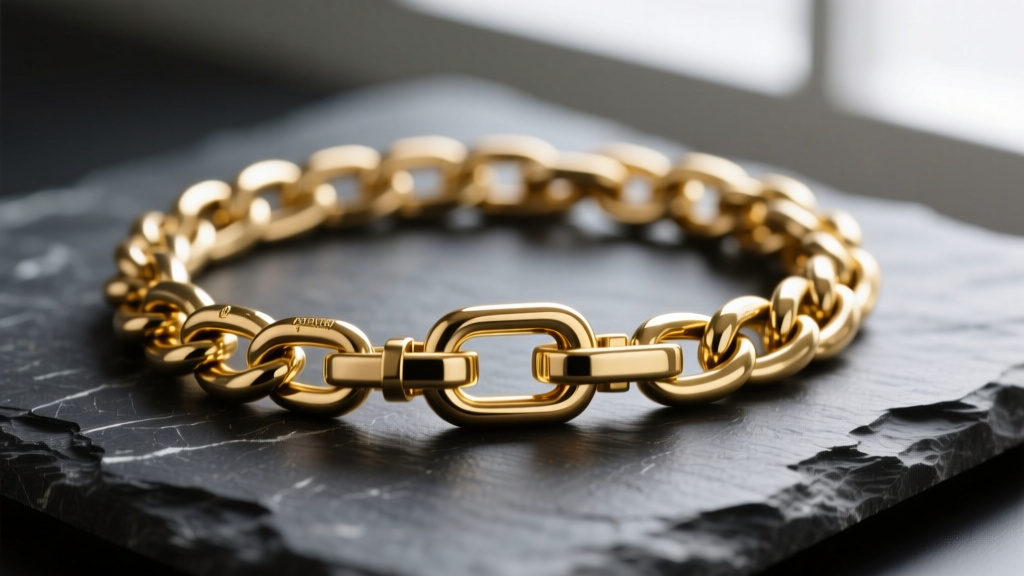
- Layer 1 (The Choker/Collar): 14 to 15 inches in length. Opt for a thicker gauge (1.5mm to 2.0mm) such as a Cuban or Figaro link. This sits snugly against the neck and acts as the visual anchor.
- Layer 2 (The Base): 16 to 17 inches in length. Drop the gauge to 1.0mm to 1.2mm. A box chain or herringbone works perfectly here, providing a smooth, reflective surface that contrasts with the textured Layer 1.
- Layer 3 (The Pendant Drop): 18 to 20 inches in length. Use the most delicate gauge (0.7mm to 0.9mm), like a fine cable or snake chain, terminating in a high-value focal pendant (e.g., a gemstone or solid gold initial).
By staggering both the drop length and the physical thickness of the metal, the chains naturally repel one another, maintaining their individual silhouettes throughout the day.
Budget Necklace Layering Ideas: 3 High-Value Formulas
To put these principles into practice, here are three actionable layering formulas that balance cost, texture, and visual weight. These setups rely on mixing affordable PVD chains with one or two higher-quality statement pieces.
Formula 1: The Textural Triad (Everyday Minimalist)
This formula relies entirely on chain geometry rather than pendants. Start with a 14-inch 1.8mm PVD stainless steel bead chain. Add a 16-inch 1.2mm gold-filled herringbone chain for a liquid-metal reflection. Finish with an 18-inch 0.8mm sterling silver cable chain. The mixed-metal approach is highly trending in 2026, and mixing silver and gold tones masks the fact that the base materials are budget-friendly, as the eye reads it as an intentional, eclectic styling choice.
Formula 2: The Asymmetric Anchor (Statement Focus)
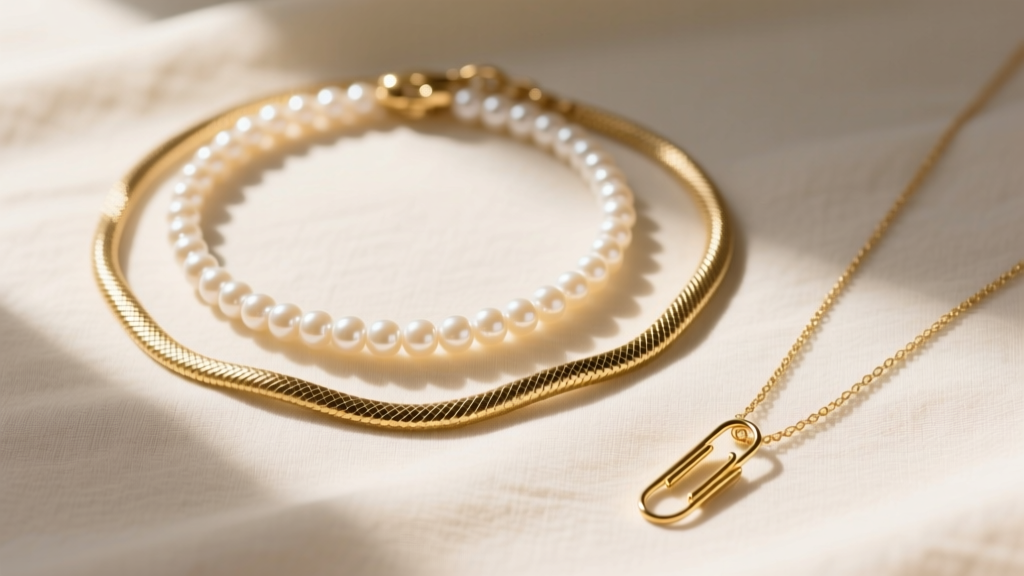
Allocate 70% of your budget to a single, high-quality pendant, and 30% to the supporting chains. Use a 16-inch 1.0mm PVD rope chain as your base. Layer it with an 18-inch 1.5mm brass paperclip chain featuring an off-center, asymmetrical baroque pearl drop. The paperclip chain provides a modern, architectural feel, while the pearl adds organic luxury. This draws the eye downward and creates a flattering V-neck illusion without requiring multiple expensive gemstones.
Formula 3: The Vintage Revival (Mixed Eras)
Combine a 15-inch 2.0mm oxidized sterling silver chain (which is naturally budget-friendly due to the darkening process hiding imperfections) with a 17-inch delicate gold-filled snake chain holding a vintage-inspired glass intaglio or enamel pendant. The contrast between the heavy, dark, rustic silver and the bright, sleek, delicate gold creates a museum-curated look that costs under $90 total to assemble.
Expert Styling Tip: To prevent 'clasp migration'—the annoying phenomenon where all your necklace clasps slide to the front of your neck and tangle together—attach a tiny, 2mm clear silicone earring back to the clasp of your shortest chain. This creates just enough friction against the skin to keep the clasps separated at the nape of your neck.
Maintenance and Failure Modes of Affordable Chains
Budget chains are most vulnerable at their connection points. When assessing a budget chain for layering, always inspect the jump rings (the small circles connecting the chain to the clasp). Many mass-produced, affordable chains use 'open' split jump rings, which can easily pull apart under the cumulative tension of a layered stack. If your budget chain has open jump rings, take it to a local jeweler to have them soldered shut—a service that typically costs less than $15 and will extend the life of the necklace by years.
Furthermore, proper maintenance is critical. The Jewelers of America strongly advises against using ultrasonic cleaners or harsh chemical dips on plated or gold-filled jewelry, as the high-frequency vibrations can literally shake the microscopic plating off the base metal. Instead, clean your layered stack weekly using a few drops of mild, phosphate-free dish soap, warm water, and an extra-soft baby toothbrush. Dry them immediately with a microfiber cloth to prevent water spots, which can etch into PVD coatings over time.
Final Verdict: Building a Capsule Layering Wardrobe
Achieving a luxurious layered look does not require a luxury bank account; it requires a strategic approach to materials, proportions, and maintenance. By investing in PVD-coated stainless steel for your structural base chains and reserving your budget for solid gold or vermeil focal pendants, you can build a versatile capsule wardrobe of necklaces. Mastering these budget necklace layering ideas ensures that your jewelry stack remains dynamic, durable, and undeniably chic, proving that true style lies in curation, not just carat weight.


