2026 Style Guide: Mastering the Layered Necklace Look
Discover the 2026 rules for the layered necklace look. Learn exact chain lengths, gauge sizes, mixed-metal techniques, and anti-tangle secrets.


The evolution of jewelry styling has officially moved past the era of uniform, mass-produced chain stacking. As we navigate the fashion landscape of 2026, the layered necklace look has matured into an exercise of curated dissonance and intentional asymmetry. No longer is it sufficient to simply clasp three identical 14-karat gold cable chains of varying lengths around your neck. Today’s most sophisticated jewelry collectors and stylists are treating the décolletage as a canvas for mixed metallurgy, contrasting gauges, and complex textural interplay.
According to recent market analyses highlighted by Vogue Jewelry Trends, consumers are increasingly investing in modular, high-quality individual pieces designed specifically to interact with one another. But achieving a flawless, tangle-free cascade requires a deep understanding of jewelry mechanics, metal properties, and spatial geometry. This comprehensive guide breaks down the exact science and art behind mastering the modern layered necklace look.
The 2026 Shift: Beyond Basic Chain Stacking
For the past decade, the standard formula for layering involved matching chain types—usually delicate cable or box chains—in incrementally longer lengths. In 2026, this approach feels dated and visually flat. The contemporary layered necklace look relies heavily on textural contrast. Stylists are now pairing highly reflective, fluid chains like herringbone or snake chains with structural, shadow-catching links like rope, figaro, or paperclip chains.
This shift is driven by a desire for depth. A fluid herringbone chain lays flat against the collarbone, acting as a mirror that catches ambient light. When layered beneath a twisted rope chain, the rope creates microscopic shadows that give the overall composition a three-dimensional, sculptural quality. Furthermore, mixing link structures prevents the chains from acting like interlocking gears, which is the primary mechanical cause of severe tangling.
The Mathematics of Layering: Lengths and Gauges
The most common failure in executing a layered necklace look is ignoring the spatial mathematics of chain drops and wire thickness (gauge). If chains are too close in length, they bunch at the clavicle. If they are too similar in gauge, they compete for visual dominance. The golden rule for 2026 is the Two-Inch Minimum Drop combined with the Inverse Gauge Principle.
The Inverse Gauge Principle dictates that the shortest chain (the anchor) should possess the thickest gauge, while the longest chain (the pendant bearer) should feature the most delicate gauge. This manipulates the center of gravity, ensuring the heavier, shorter chain stays securely at the base of the neck, while the lighter, longer chain drapes elegantly without pulling the top layers downward.
| Layer Position | Style Name | Optimal Length | Recommended Gauge | Best Chain Types |
|---|---|---|---|---|
| Layer 1 (Anchor) | Choker / Collar | 14 - 15 inches | 2.5mm - 4.0mm | Figaro, Curb, Paperclip |
| Layer 2 (Bridge) | Princess | 16 - 18 inches | 1.2mm - 2.0mm | Rope, Bead, Box |
| Layer 3 (Focal) | Matinee | 20 - 24 inches | 0.8mm - 1.2mm | Herringbone, Snake, Cable |
Mixed Metals and Texture Clashing
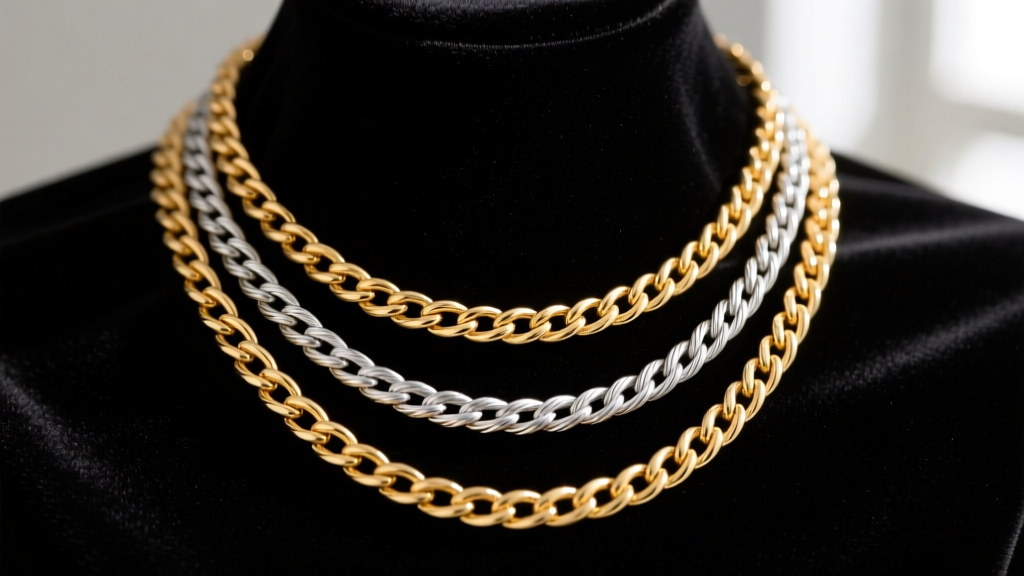
The antiquated rule of never mixing yellow gold and silver has been entirely dismantled. The modern layered necklace look thrives on mixed-metal alchemy. However, combining 18k yellow gold with rhodium-plated 925 sterling silver or platinum requires an understanding of metallurgy to prevent long-term damage to your pieces.
When dissimilar metals rest against each other on the skin, they are exposed to moisture, sweat, and cosmetic chemicals. According to material science principles documented by the Gemological Institute of America (GIA), this environment can trigger a micro-galvanic reaction. The more reactive metal (usually the copper alloy within sterling silver) can oxidize at an accelerated rate when in constant physical contact with a nobler metal like 18k gold.
Best Practices for Mixed-Metal Layering
- The Bridge Piece: Use a single chain or pendant that incorporates both metals (e.g., a two-tone gold and silver link) to visually justify the mix.
- Plating Awareness: Avoid layering bare sterling silver directly against rhodium-plated white gold. The friction will wear down the rhodium plating prematurely.
- Post-Wear Care: Always wipe mixed-metal layers down with a dry microfiber cloth before storing them, and never store them tangled together in a humid bathroom environment.
Neckline Pairings for the Modern Layered Necklace Look
A meticulously curated layered necklace look can be entirely ruined if it clashes with the geometry of your clothing's neckline. In 2026, fashion silhouettes have become more architectural, requiring precise jewelry pairings.
The Crew Neck and Turtleneck
High, horizontal necklines create a visual block. To break this up, avoid 16-inch princess chains that will just sit awkwardly on the fabric hem. Instead, utilize a tight 14-inch choker layered with an extra-long 24-inch matinee chain featuring a heavy, vertical pendant. This creates a vertical line that elongates the torso and draws the eye downward.
The Deep V-Neck and Wrap Dress
These necklines naturally create a focal point at the sternum. Your layered necklace look should mimic this geometry. Use a 15-inch collar, an 18-inch chain with a small solitaire diamond or gemstone drop, and a 20-inch chain with a larger, V-shaped or pear-cut pendant. The chains should cascade perfectly within the negative space of the fabric without touching the garment's edges.
Asymmetrical and One-Shoulder Tops
Asymmetry in clothing demands balance in jewelry. If the right shoulder is bare, shift the visual weight of your necklaces to that side by using chains with off-center clasps or side-draping lariat elements, a trend heavily featured in recent Town & Country Jewelry editorials.
Troubleshooting Tangling and Clasp Slippage
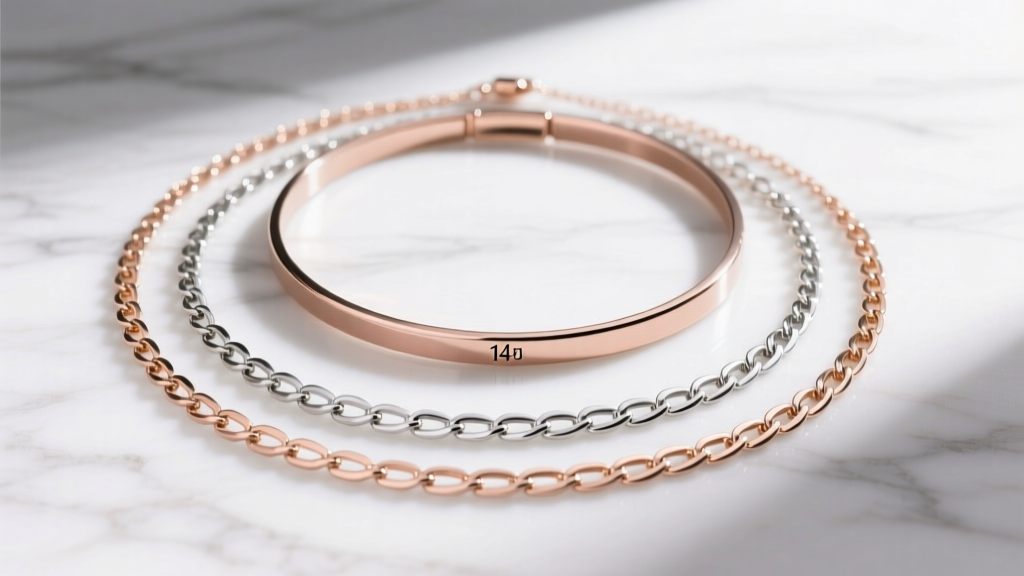
The most frustrating aspect of the layered necklace look is the inevitable tangling and the annoying migration of the clasp to the front of the neck. Both issues are rooted in physics and can be solved with strategic hardware choices.
The Physics of Tangling
Chains tangle when their links are of similar sizes and possess a high coefficient of friction. For example, layering a 1.5mm cable chain with a 1.5mm box chain is a recipe for disaster; the open links of the cable chain will easily slip into the hollow spaces of the box chain. To prevent this, ensure that if one chain has open, articulated links, the adjacent chain must be a closed, fluid weave like a snake or herringbone chain, which offers no entry points for other links to catch.
Solving Clasp Migration
The clasp slides to the front because it is often the heaviest or most awkwardly shaped component of the chain, and gravity pulls it to the lowest point of the curve (the center of the chest). To counteract this:
- Counterweight Pendants: Ensure the pendant on the longest chain is slightly heavier than the clasp of that same chain. This anchors the pendant at the bottom and keeps the clasp at the nape.
- Neodymium Magnetic Clasps: Upgrade your top layer (the 14-inch choker) to a high-strength magnetic clasp with a silicone grip sleeve. The silicone creates friction against the skin and hair, anchoring the clasp at the back of the neck, while the magnet makes taking the layers on and off effortless.
- Silicone Spacers: For a permanent solution, utilize a leather or silicone necklace spacer clasp at the back of the neck. These devices feature three distinct holes to feed your chains through, locking them into their proper spatial arrangement and making it physically impossible for them to cross over and tangle during wear.
Conclusion: The Art of Intentional Styling
Mastering the layered necklace look in 2026 is less about accumulating as many chains as possible and more about understanding the interplay of weight, texture, and geometry. By respecting the mathematics of chain drops, embracing the visual tension of mixed metals, and engineering your hardware to prevent tangling, you elevate your jewelry from mere accessories to a cohesive, personalized statement. Whether you are pairing a chunky vintage figaro with a whisper-thin diamond-cut cable, the key is intentionality—ensuring every piece earns its place in the cascade.


