Best Budget Pink Necklaces for Women: 2026 Value Guide
Discover the true value of pink necklaces for women in 2026. Compare gemstone grades, metal plating standards, and pricing to avoid overpaying.

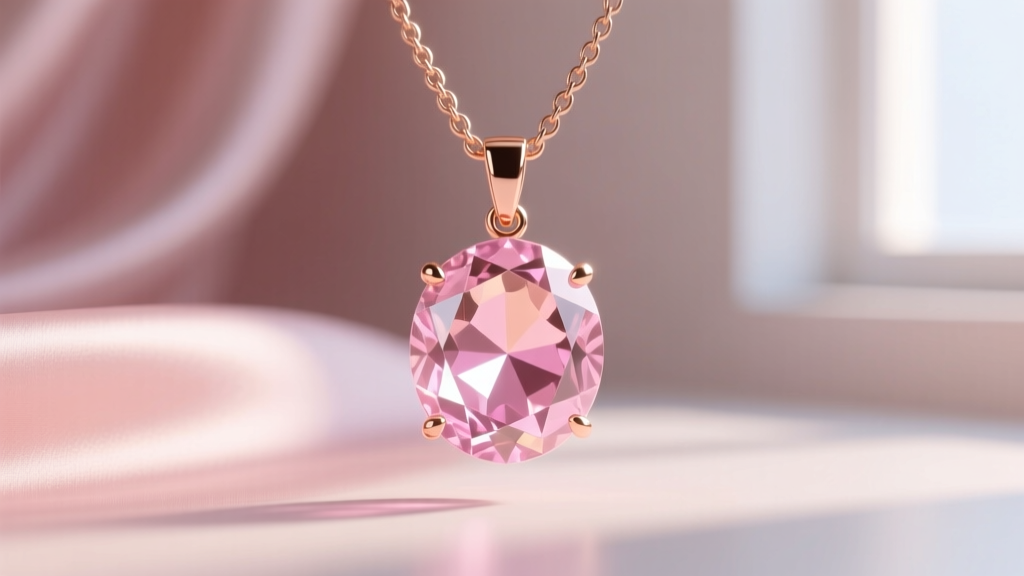
The market for pink necklaces for women is vast, ranging from $12 fast-fashion accessories to $12,000 luxury investments. But when you are shopping on a budget—typically defined as the $50 to $350 range—the line between genuine value and overpriced costume jewelry becomes incredibly blurry. In 2026, with the rise of advanced lab-grown gemstones and shifting precious metal markets, assessing the true value of a pink pendant requires looking past the initial sparkle and examining material grades, treatment disclosures, and structural integrity.
This guide strips away the marketing fluff to provide a rigorous budget and value assessment of pink necklaces. We will break down exactly what you should expect to pay for specific gemstones, how to evaluate the metalwork, and the hidden red flags that indicate a poor return on your investment.
Decoding the Stones: Where Your Money Actually Goes
The centerpiece of any pink necklace is the gemstone. Budget buyers often make the mistake of chasing 'precious' stones (like pink sapphires) at rock-bottom prices, which almost always results in purchasing heavily treated, low-grade, or synthetic stones misrepresented as natural. To maximize value, you must align your budget with the right semi-precious or lab-created alternatives.
1. Morganite: The Budget Luxury Sweet Spot
Morganite, a member of the beryl family (cousin to emerald and aquamarine), offers a stunning peach-pink hue that rivals high-end pink diamonds at a fraction of the cost. According to the Gemological Institute of America (GIA), virtually all morganite on the market is heat-treated to remove yellowish tones and stabilize the pink color—a permanent and widely accepted practice.
- Value Sweet Spot: $80 - $250 for a 2 to 4-carat pendant.
- What to look for: 'Eye-clean' clarity. Morganite is a Type I clarity gemstone, meaning visible inclusions are a sign of poor cutting or low-grade rough.
- Durability: 7.5 to 8 on the Mohs scale. Excellent for daily wear, though it can chip if struck against hard surfaces.
2. Rose Quartz: The Ultra-Budget Option
Rose quartz is abundant and inherently inexpensive. If you are spending over $40 on a simple rose quartz pendant, you are paying for the brand name, not the material. However, the budget market is flooded with dyed quartz. Natural rose quartz is usually a pale, cloudy, translucent pink. If the stone is a vivid, hot pink and perfectly transparent, it has likely been fracture-filled with dye.
3. Pink Sapphire (Lab-Created): The Ethical Compromise
Natural pink sapphires are exceptionally rare and command premium prices. In the sub-$200 market, you are almost exclusively looking at lab-created pink sapphires grown via the Verneuil (flame fusion) process. These stones are chemically and optically identical to mined sapphires, boasting a 9 on the Mohs scale. Buying a lab-created pink sapphire set in solid gold is one of the highest-value purchases you can make in the 2026 jewelry market, offering lifetime durability without the $2,000+ natural markup.
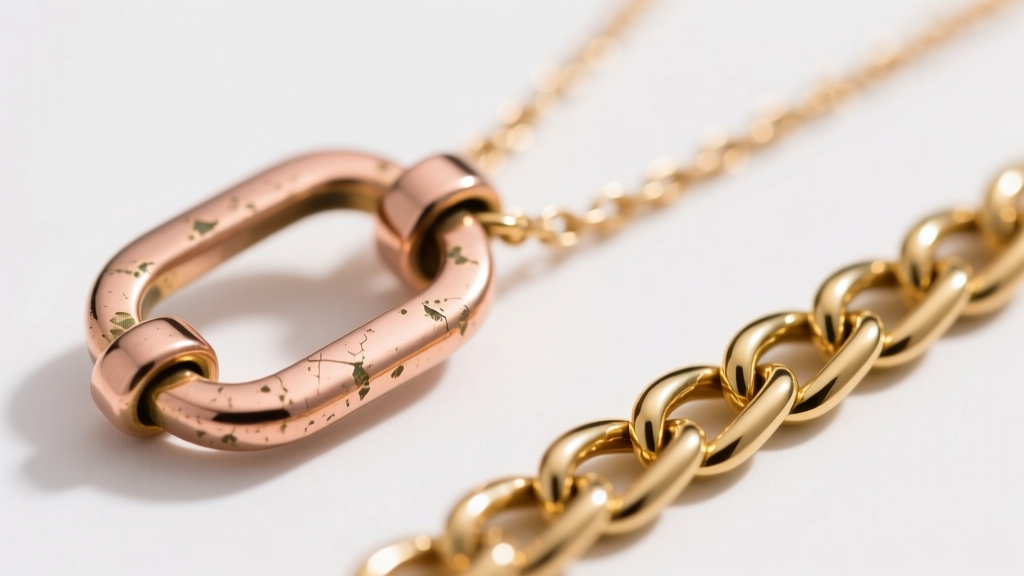
Metalwork Assessment: Plating vs. Solid Alloys
A beautiful pink gemstone is worthless if the chain snaps or the setting turns your skin green. The metalwork is where budget brands cut corners, leading to the most common failure modes in affordable jewelry. Understanding the Federal Trade Commission (FTC) Jewelry Guides is critical for assessing metal value.
The Plating Hierarchy
When buying pink necklaces for women in the $50–$150 range, you will frequently encounter 'rose gold' metals. True rose gold is an alloy of yellow gold and copper. However, budget pieces are usually plated. Here is how to assess the lifespan and value of the plating:
| Metal Finish | Base Material | Gold Thickness | Expected Lifespan | Value Verdict |
|---|---|---|---|---|
| Flash Plated | Brass or Copper | < 0.5 microns | 1 - 3 Months | Avoid. High failure rate, causes skin discoloration. |
| Gold Vermeil | Sterling Silver (925) | > 2.5 microns | 1 - 3 Years | Good Value. FTC regulated standard. Safe for sensitive skin. |
| Gold-Filled | Brass Core | 5% solid gold by weight | 5 - 10+ Years | Best Budget Value. Extremely durable, can be polished. |
| Solid 10k/14k | Solid Alloy | N/A (Solid) | Lifetime | Premium. Usually pushes necklace price above $250. |
Expert Tip: Always check the jump ring (the small loop connecting the pendant to the chain) and the clasp. In cheap necklaces, these are made of base metals that oxidize and become brittle, snapping within weeks. A high-value budget necklace will feature a stamped '925' or '14k GF' mark directly on the clasp and jump ring.
Red Flags: Identifying Overpriced 'Fashion' Jewelry
Many brands market 'fashion jewelry' at luxury prices by using deceptive lighting and vague terminology. When evaluating pink necklaces, run the piece through this quick E-E-A-T (Expertise, Experience, Authoritativeness, and Trustworthiness) checklist to ensure you aren't being overcharged.
The Acetone Test for Dyed Stones: If you suspect a pale gemstone (like quartz or howlite) has been dyed to mimic pink tourmaline or pink sapphire, gently wipe the stone with a cotton swab dipped in nail polish remover (acetone). If the swab turns pink, the color is superficial and the stone's value is virtually zero.
Beware of 'Composite' or 'Filled' Stones
Some budget pink necklaces feature 'opal triplets' or 'filled rubies'. A pink opal triplet consists of a microscopic slice of cheap opal glued between a clear quartz dome and a pink backing. While they look vibrant, they have no resale value and will eventually delaminate when exposed to moisture or ultrasonic cleaners. Always demand disclosure on whether a stone is 'solid', 'doublet', or 'triplet'.
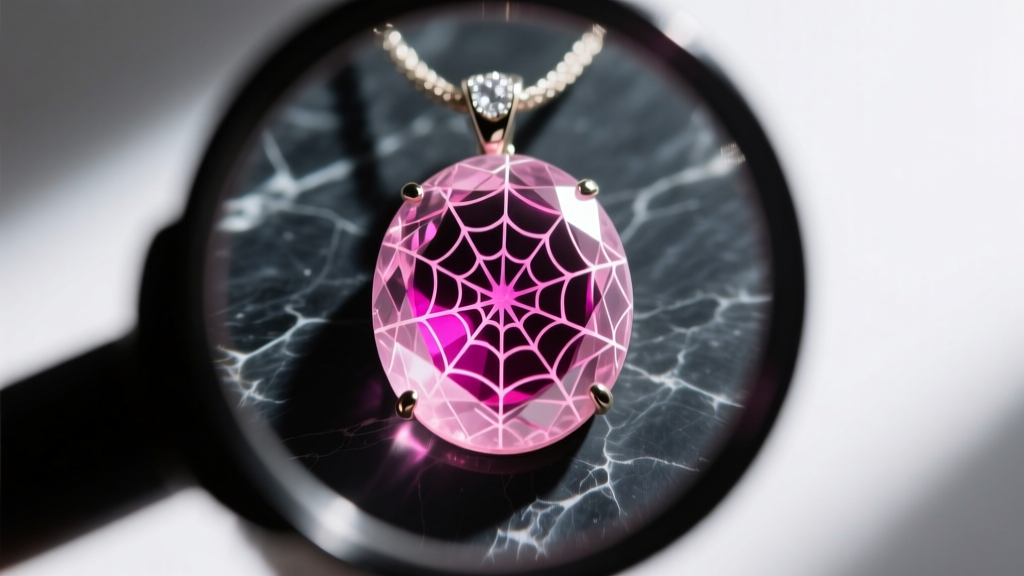
Strategic Buying: How to Allocate Your $150 Budget
If your strict budget is $150, how do you get a piece that looks and lasts like a $500 necklace? The secret lies in strategic allocation. You must decide whether to prioritize the stone's visual impact or the metal's longevity.
Strategy A: The Heirloom Metal Approach
Spend 70% of your budget on a solid 10k or 14k rose gold chain (approx. $100) and 30% on a modest, high-clarity semi-precious stone like a 1-carat natural pink tourmaline or morganite pendant ($50). This guarantees the chain will never tarnish or break, and the stone, while small, will be genuinely natural and well-cut.
Strategy B: The Statement Stone Approach
Spend 80% of your budget on a large, lab-created pink sapphire (approx. $120) and 20% on a heavy 14k gold-filled chain ($30). Lab sapphires offer incredible size and brilliance for the price, and gold-filled chains provide a lifetime of durability without the solid gold markup. This is the optimal route for maximizing visual impact while maintaining structural integrity.
Final Verdict on 2026 Pink Necklace Values
The landscape of pink necklaces for women has evolved. You no longer need to compromise on quality to stay within a reasonable budget, provided you understand the material science behind the jewelry. Avoid flash-plated brass and dyed quartz at all costs. Instead, direct your capital toward FTC-compliant vermeil or gold-filled chains paired with naturally colored morganite or lab-grown sapphires. By focusing on Mohs hardness, plating microns, and treatment disclosures, you can confidently acquire a pink necklace that offers both enduring beauty and genuine financial value.


