How to Make a Slip Knot for Necklace: Best Cord Materials Compared
Learn how to make a slip knot for necklace adjustability. We compare leather, silk, nylon, and hemp cords for friction and durability.

The Mechanics of a Perfect Necklace Slip Knot
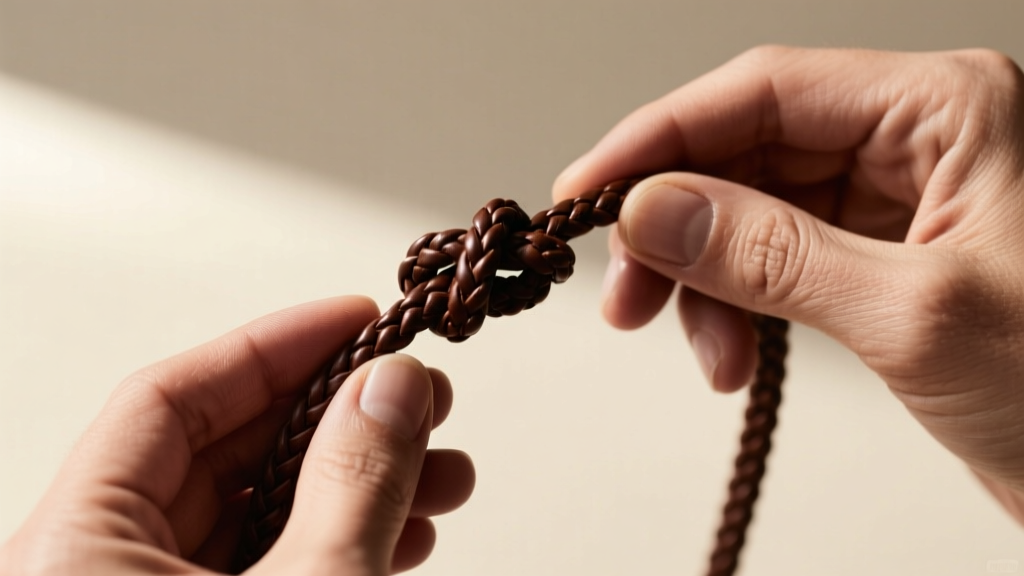
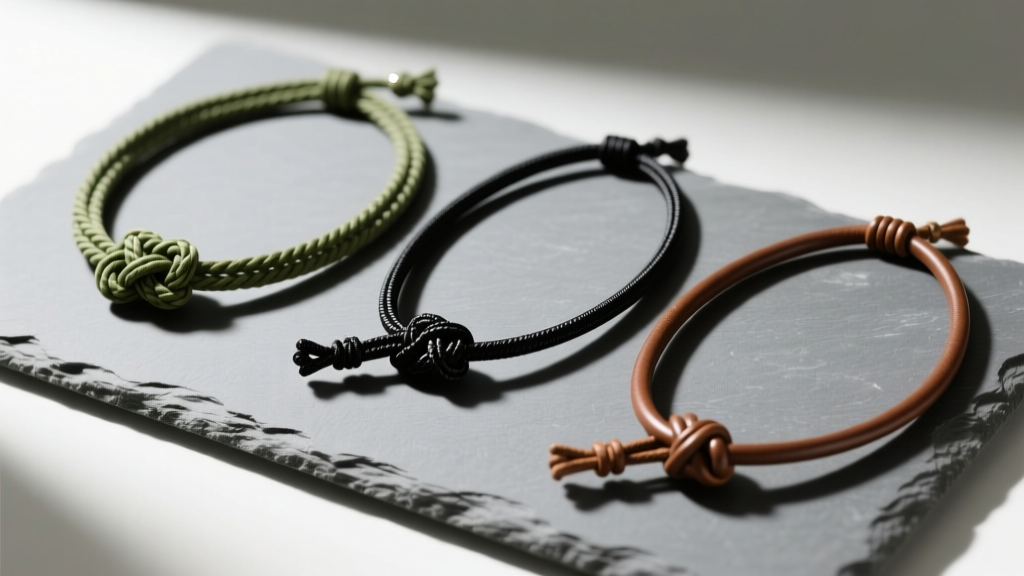
When learning how to make a slip knot for necklace adjustability, most tutorials focus solely on the folding technique. However, as any professional jeweler will tell you, the physical properties of your cord material dictate whether that knot will slide smoothly, hold its position, or fail catastrophically. The industry standard for adjustable necklaces is the sliding square knot (often called a macrame slip knot). This knot relies on static friction to grip the base cords while allowing enough kinetic give to be adjusted by the wearer.
The physics of this closure depend on the coefficient of friction ($\mu$) between the knotting cord and the base cord. If the material is too slick, you experience "knot creep," where the necklace slowly loosens throughout the day. If the material is too abrasive, the knot binds, making it impossible to adjust without fraying the fibers. Below, we break down the exact material science behind the four most popular necklace cords and how to adapt your knotting technique for each.
Material Properties That Dictate Knot Performance
Choosing the right cord requires balancing tensile strength, surface friction, memory (the tendency to retain its coiled shape), and environmental resistance. Here is a deep dive into the top four materials used for slip knot necklaces in 2026.
1. Nylon (Chinese Knotting Cord)
Nylon is the undisputed workhorse of adjustable jewelry. Typically sold in 0.8mm to 1.5mm thicknesses, nylon boasts a tensile strength exceeding 15 lbs for the 1.0mm variant. Its surface is naturally smooth, meaning it has a low friction coefficient. To compensate, jewelers use more wraps (typically 4 to 6) when tying the sliding square knot. Nylon's greatest advantage is its melting point (around 420°F / 215°C), allowing you to seal the tails cleanly with a thread burner or lighter, creating a microscopic bead that prevents unraveling without the need for toxic adhesives.
2. 100% Silk (Griffin Silk Cord)
Silk offers an unmatched luxurious drape and a subtle luster that synthetic fibers cannot replicate. Usually available in sizes #6 to #10 (0.7mm to 1.1mm), silk has a high surface friction, meaning a slip knot will grip aggressively—often requiring only 2 or 3 wraps. However, silk is highly susceptible to degradation from acidic environments (human sweat has a pH of 4.5 to 7.0) and loses up to 20% of its tensile strength when wet. Furthermore, silk cannot be melted; tails must be secured with a flexible jeweler's adhesive like GS Hypo Cement.
3. Genuine Leather (Round Calfskin)
Leather provides a rugged, organic aesthetic and excellent natural grip. For slip knots, round calfskin in 1.5mm to 2.0mm is preferred. Leather has high "memory" and stiffness, which can make tying a tight, small slip knot difficult. Critical failure mode: If the bend radius of the leather inside the knot is less than 5mm, the outer layer of the hide will experience micro-fractures, eventually leading to an "abrasion snap" where the cord breaks cleanly at the knot line.
4. Waxed Cotton and Hemp
Waxed cotton (1.0mm) and natural hemp offer a matte, bohemian finish. The wax coating significantly lowers water absorption and increases the cord's stiffness, making it easier to manipulate than raw hemp. The wax also acts as a mild lubricant during the tying process but provides excellent static grip once the knot is set and the wax cools to room temperature.
Cord Material Comparison Chart
Use this data table to select the correct material and knotting parameters for your specific pendant weight and design.
| Material | Ideal Thickness | Relative Friction | Water Resistance | End Finishing Method | Avg. Price (per spool/hank) |
|---|---|---|---|---|---|
| Nylon (Chinese) | 0.8mm - 1.0mm | Low | Excellent | Heat / Melt | $4.00 - $8.00 |
| Silk (Griffin) | 0.7mm - 1.1mm | High | Poor | GS Hypo Cement | $12.00 - $25.00 |
| Leather (Calfskin) | 1.5mm - 2.0mm | Very High | Fair | Crimp Ends / Glue | $15.00 - $30.00 |
| Waxed Cotton | 1.0mm | Medium-High | Good | Heat / Glue | $6.00 - $12.00 |
Step-by-Step: Tying the Knot Based on Your Material
The fundamental geometry of the sliding square knot remains the same, but your execution must adapt to the material's properties. According to the Fire Mountain Gems Jewelry-Making Encyclopedia, adjusting your tension and wrap count is the key to professional-grade durability.
Adjusting for High-Slip Materials (Nylon & Waxed Cotton)
- Cut your knotting cord: Use a piece exactly 10 inches long for a standard 1-inch finished knot.
- Wrap count: Make 4 to 5 complete passes around the two base cords.
- Tensioning: Pull the knotting cord taut after every single pass. Nylon stretches slightly under tension; if you don't pull tight on each wrap, the final knot will be spongy and prone to creep.
- Finishing: Trim the tails to 2mm. Apply a flame briefly until the nylon bubbles and forms a glass-like bead. Press the bead flat against the knot with a pair of flat-nose pliers to lock it in place.
Adjusting for High-Friction Materials (Silk & Leather)
- Cut your knotting cord: Silk requires less length; 7 inches is sufficient. For leather, use a separate, thinner strip (1.0mm) to tie the knot over the thicker 2.0mm base cords to prevent excessive bulk.
- Wrap count: Limit to 2 or 3 passes. High-friction materials will bind if wrapped too many times, making the necklace impossible to adjust.
- Tensioning: Use moderate tension. Over-tightening silk can cause the fibers to shear against each other, weakening the structural integrity of the cord.
- Finishing: Do not use heat. Apply a micro-drop of cyanoacrylate (super glue) or flexible jeweler's epoxy to the tails, press them flat, and let cure for 24 hours before wearing.
Common Failure Modes and How to Prevent Them
Even with perfect technique, material fatigue can ruin an adjustable necklace. Here is how to troubleshoot the three most common issues documented by jewelry conservationists and the GIA Gem Encyclopedia regarding organic material degradation.
Pro-Tip: Never use standard household super glue on silk or hemp. The rigid cyanoacrylate crystals will act like microscopic glass shards, cutting through the natural fibers over time. Always use flexible adhesives formulated for textiles.
- Knot Creep: The knot slowly slides open, lengthening the necklace. Cause: Using a low-friction cord (like unwaxed nylon) with too few wraps. Fix: Increase wrap count to 6, or switch to a waxed cotton cord to increase the surface grip.
- Abrasion Snap: The base cord frays and breaks exactly where the slip knot rests. Cause: The knotting cord is too abrasive (like raw hemp) or the knot is left tightly cinched in one spot for months. Fix: Instruct the wearer to slide the knot to different positions periodically, and ensure the knotting cord is slightly softer or smoother than the base cord.
- Tail Fraying: The sealed ends of the knot catch on clothing and pull apart. Cause: Incomplete melting of synthetic cords or adhesive failure on natural cords. Fix: For nylon, ensure the melted bead is pressed flat with metal pliers, not just left as a round blob. For silk, tuck the glued tails back inside the final wrap of the knot before the glue cures.
Final Verdict: Choosing Your Cord
Mastering how to make a slip knot for necklace closures is only half the battle; material selection is the other. For everyday, waterproof durability and easy finishing, 0.8mm nylon knotting cord remains the superior choice for 90% of pendant designs. If you are stringing high-end pearls or vintage gemstones where synthetic fibers would detract from the value, invest in Griffin silk, but be prepared to maintain the adhesive seals and advise the wearer to remove the piece before swimming or exercising. By matching the physical properties of your cord to the mechanical demands of the slip knot, you ensure your jewelry remains both beautiful and functional for years to come.


