Do Amber Teething Necklaces Work? A Value & Safety Guide
We analyze if amber teething necklaces work, breaking down the science, safety risks, and pricing tiers to help you assess their true value.

The Short Answer: Science vs. Tradition
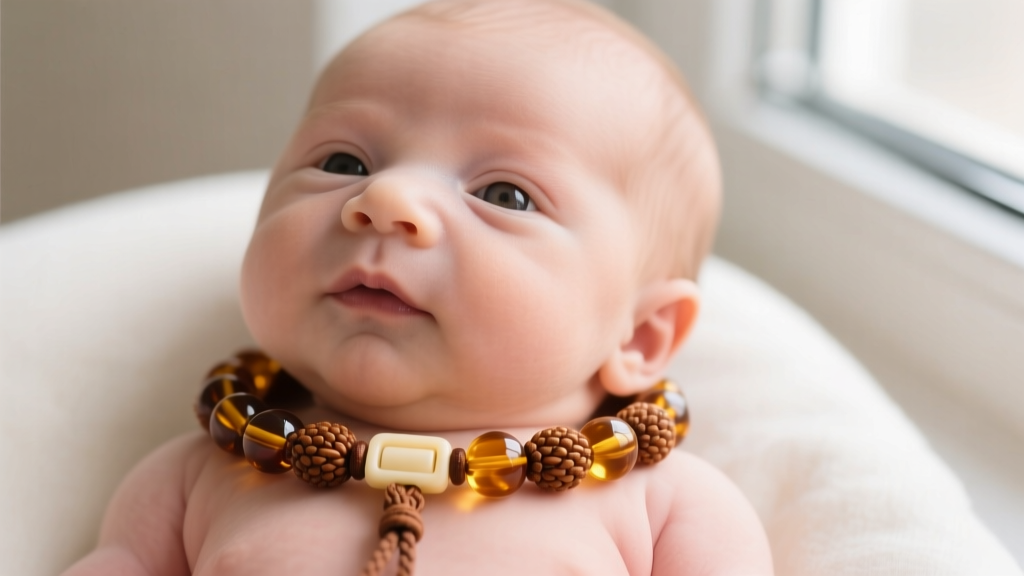
When browsing online marketplaces or boutique baby stores, countless parents find themselves asking a very specific question: do amber teething necklaces work? The short answer, backed by pediatric science and material chemistry, is no. There is no peer-reviewed clinical evidence demonstrating that amber beads provide physiological pain relief for teething infants. However, as a budget and value assessment, the conversation requires a deeper dive into what you are actually paying for, the material science of Baltic amber, and the severe hidden costs associated with safety risks.
Proponents of amber teething jewelry claim that when the beads are warmed by a baby’s skin, they release trace amounts of succinic acid—a compound historically used as a mild analgesic and anti-inflammatory agent. The theory suggests that this oil is absorbed transdermally, soothing inflamed gums. While Baltic amber (derived from the extinct Pinus succinifera tree) does indeed contain between 3% and 8% succinic acid by weight, the thermodynamics of this claim fall apart under scrutiny.
Human skin temperature rests around 34°C (93°F). Succinic acid, however, requires temperatures exceeding 200°C (392°F) to sublimate or release meaningful volatile compounds. Simply wearing the beads against the skin does not generate enough thermal energy to extract the acid, let alone facilitate transdermal absorption in therapeutic doses. Therefore, any perceived soothing effect is largely attributed to the placebo effect experienced by the parents, or the simple distraction of the baby playing with a novel object.
Breaking Down the Cost: Pricing Tiers & Value
If we accept that the medical efficacy is negligible, we must evaluate the product purely as a traditional accessory and assess its market value. The teething necklace market is flooded with counterfeit materials, making price a critical indicator of authenticity. Below is a breakdown of what you can expect to pay across different material grades.
| Material Grade | Average Price | Authenticity | Safety Features |
|---|---|---|---|
| Colored Plastic / Glass | $8 - $15 | Fake | Rarely knotted, weak clasps |
| Immature Copal | $15 - $25 | Not true amber | Inconsistent knotting |
| Genuine Baltic Amber | $25 - $45 | Authentic | Individually knotted, safety clasp |
| Certified Premium Baltic | $50 - $85 | Lab-verified | Hand-knotted, reinforced breakaway |
From a purely financial perspective, spending $50+ on a certified Baltic amber necklace is an investment in a natural, historically significant resin. However, because the item cannot be safely worn by an infant without direct supervision, its functional value as a "hands-free" teething remedy is virtually zero. You are essentially paying a premium for a decorative object that must be stored away when the child is unattended or sleeping.
The Hidden Costs of Cheap Alternatives (Safety Risks)
The most significant factor in the value assessment of amber teething necklaces is the potential cost of safety failures. The true "cost" of these necklaces is not just the retail price, but the severe risk of strangulation and choking. In 2018, the U.S. Food and Drug Administration (FDA) issued a stark warning against the use of any teething jewelry, citing reports of serious injuries and at least one infant death related to strangulation.
Furthermore, the American Academy of Pediatrics (AAP) strongly advises parents to avoid placing any jewelry on infants, noting that the choking hazard far outweighs any unproven benefits. If you are budgeting for baby’s comfort, allocating $30 to an amber necklace that poses a lethal hazard is a misallocation of funds that introduces unnecessary liability into your home.
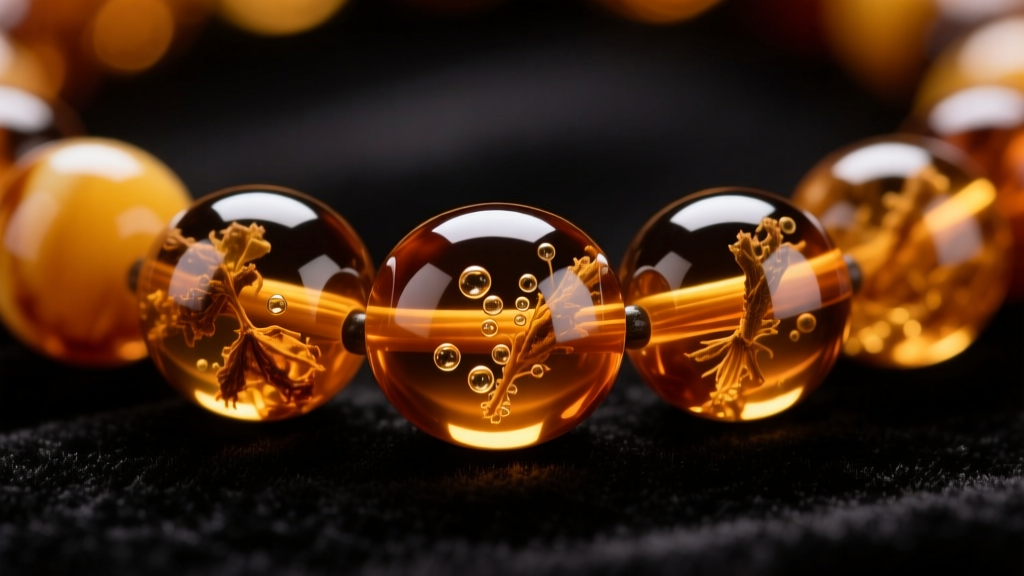
For those who still choose to purchase genuine amber as a keepsake or for highly supervised, brief periods of wear, understanding the anatomy of a safe necklace is non-negotiable. A high-value, safely constructed amber necklace must include:
- Individual Knotting: Every single bead must be separated by a hand-tied knot on a silk or high-tensile nylon cord. If the cord snaps, only one bead should fall loose, minimizing the choking hazard.
- Pop-Open Barrel Clasps: The clasp must be a specialized breakaway mechanism designed to separate instantly when subjected to 5 to 7 pounds of tensile force. Screw-top clasps are incredibly dangerous and should be avoided entirely.
- Proper Sizing: The necklace should measure between 11 and 12.5 inches. It must be tight enough that the baby cannot lift it over their chin or mouth it, but loose enough to fit two adult fingers underneath.
How to Spot Fake Amber (Protecting Your Investment)
If you decide that the traditional and aesthetic value of Baltic amber justifies the budget, you must ensure you are not paying premium prices for cheap imitations. The market is saturated with copal (immature tree resin that hasn't fully fossilized) and dyed plastics masquerading as Baltic amber. Here are three actionable, non-destructive tests to verify your purchase:
1. The Saltwater Flotation Test
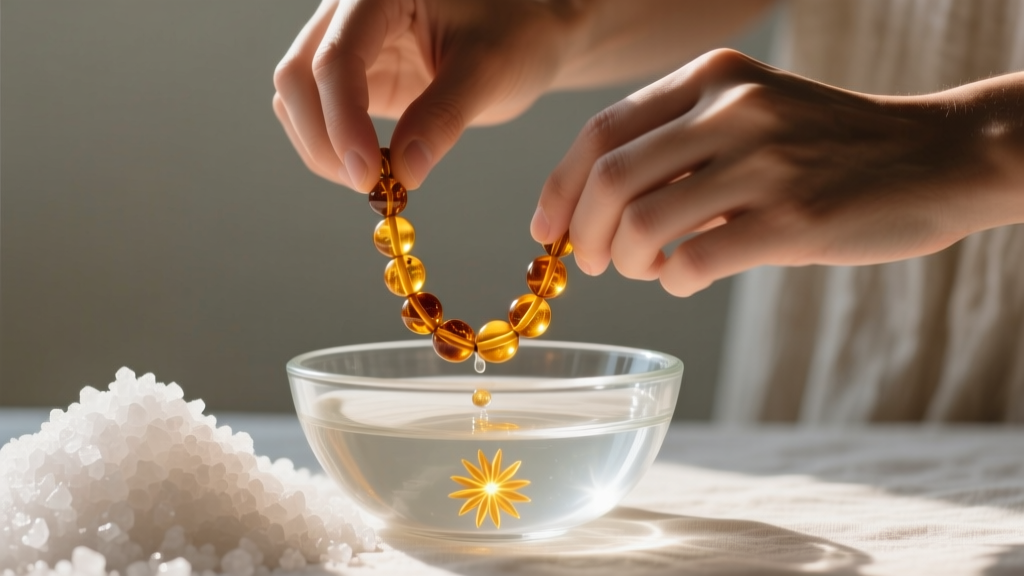
Genuine Baltic amber has a specific gravity of 1.05 to 1.09, meaning it is incredibly close to the density of water. By mixing 1 part coarse sea salt with 2 parts warm water, you create a solution with a specific gravity of roughly 1.10. When dropped into this saturated solution, true amber will float to the surface. Glass, heavy plastics, and most synthetic resins will sink immediately. Note: Copal will also float, so this test must be combined with others.
2. The Electrostatic Rub Test
Amber is highly electrostatic. If you wrap the beads in a soft wool cloth and rub them vigorously for 10 to 15 seconds, genuine amber will build up a static charge capable of picking up small pieces of tissue paper or making the hairs on your arm stand up. Plastics and copal do not hold this charge effectively.
3. The UV Light Test
Under a standard ultraviolet (blacklight), authentic Baltic amber will fluoresce a distinct, pale milky-blue or greenish hue. Copal tends to fluoresce a bright, stark white, while plastics and glass will show no fluorescence at all, simply reflecting the purple light of the bulb.
Final Verdict: Budgeting for Baby's Comfort
So, do amber teething necklaces work? From a medical and physiological standpoint, the answer is a definitive no. The thermodynamics of succinic acid release simply do not align with human body temperature. When evaluating these items through a budget and value lens, the financial cost of a genuine, safely constructed Baltic amber necklace ($30 to $85) is difficult to justify when weighed against the severe safety warnings issued by the FDA and the AAP.
If your goal is to soothe a teething infant safely and cost-effectively, your budget is far better spent on FDA-approved, solid silicone teething rings, chilled damp washcloths, or pediatrician-recommended infant acetaminophen. These alternatives cost a fraction of the price of premium amber, offer scientifically proven relief, and carry zero risk of strangulation. If you are drawn to amber for its natural beauty and historical significance, treat it as a decorative keepsake to be displayed on a shelf, rather than a functional medical device to be worn by a child.


