How to Clean and Maintain Your 316L Necklace Safely
Discover expert tips to clean, polish, and maintain your 316L necklace. Learn how to prevent corrosion, remove buildup, and keep surgical steel shining.

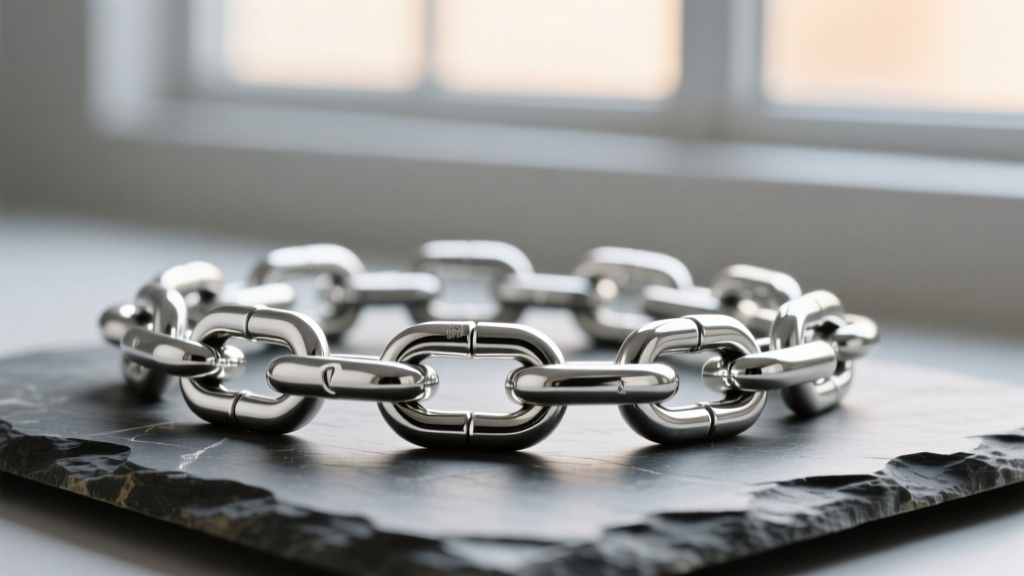
The Metallurgy of 316L: Why Surgical Steel is the Benchmark for Jewelry
When you invest in a 316L necklace, you are purchasing an accessory forged from one of the most resilient alloys in modern metallurgy. Often marketed as 'surgical stainless steel,' 316L is an austenitic chromium-nickel alloy that contains a crucial addition: molybdenum. While standard 304 stainless steel lacks this element, the 2-3% molybdenum content in 316L drastically increases its resistance to chlorides and industrial solvents. The 'L' stands for low carbon (typically under 0.03%), which prevents carbide precipitation during welding and ensures the metal remains highly resistant to intergranular corrosion.
Despite its legendary durability, a 316L necklace is not entirely invincible. The metal owes its corrosion resistance to a microscopic, self-healing passive layer of chromium oxide. When this layer is compromised by extreme chemical exposure, physical abrasion, or prolonged contact with harsh chlorides, the underlying iron can oxidize, leading to unsightly rust spots or micro-pitting. Understanding how to properly clean and maintain this passive layer is the difference between a necklace that lasts a season and an heirloom piece that survives a lifetime. According to the British Stainless Steel Association, proper maintenance of the passive layer is the single most important factor in the longevity of 316-grade steel.
The Daily Maintenance Routine for 316L Necklaces
Daily maintenance for a 316L necklace is remarkably low-effort compared to sterling silver or brass, which require constant polishing to stave off oxidation. However, a proactive daily routine will prevent the accumulation of sebum, dead skin cells, and cosmetic residues that can trap moisture against the metal, creating localized environments ripe for crevice corrosion.
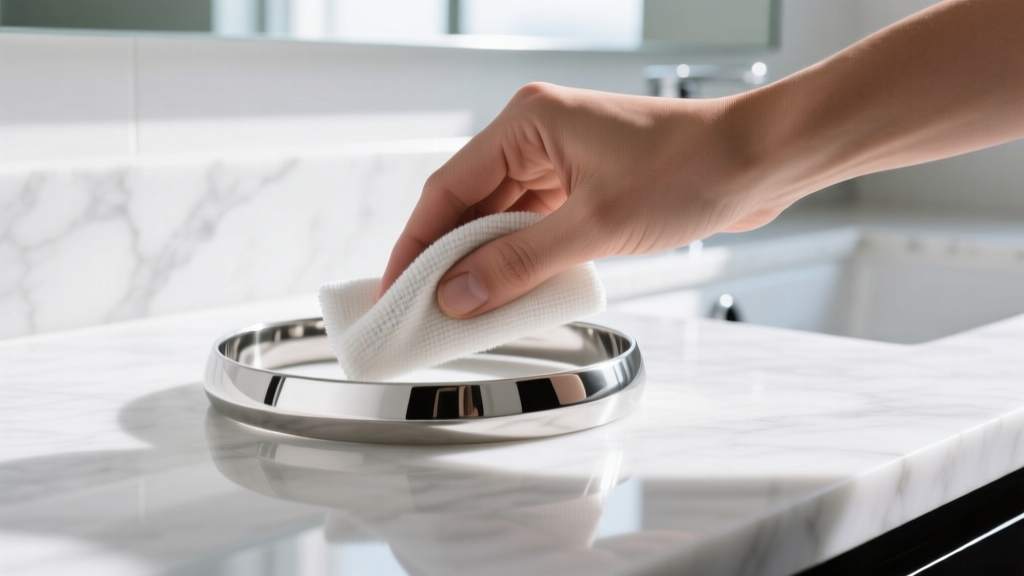
- The Post-Wear Wipe Down: After removing your necklace, gently wipe the chain and pendant with a clean, lint-free microfiber cloth. This removes acidic sweat and lotion residues before they can dry and harden within the chain links.
- Strategic Storage: While 316L does not tarnish in the traditional sense, storing it in a humid environment (like a bathroom hook) can encourage water spotting. Store your necklace in a dry jewelry box or a sealed polyethylene bag. Keep it separated from harder gemstones or abrasive metals to prevent micro-scratches on the mirror finish.
- The 'Last On, First Off' Rule: Always put your 316L necklace on after applying perfumes, hairsprays, and lotions, and take it off first when showering or swimming. This minimizes chemical exposure to the clasp and jump rings, which are the most vulnerable points of the piece.
Step-by-Step Deep Cleaning Protocol
Every few weeks, or whenever your necklace loses its high-polish luster, it requires a deep clean. The goal is to dissolve organic buildup without stripping the chromium oxide layer. Avoid harsh commercial silver dips or abrasive jewelry pastes, which are formulated for entirely different metals and can permanently dull surgical steel.
The Mild Soap Soak (For Sebum and Lotions)
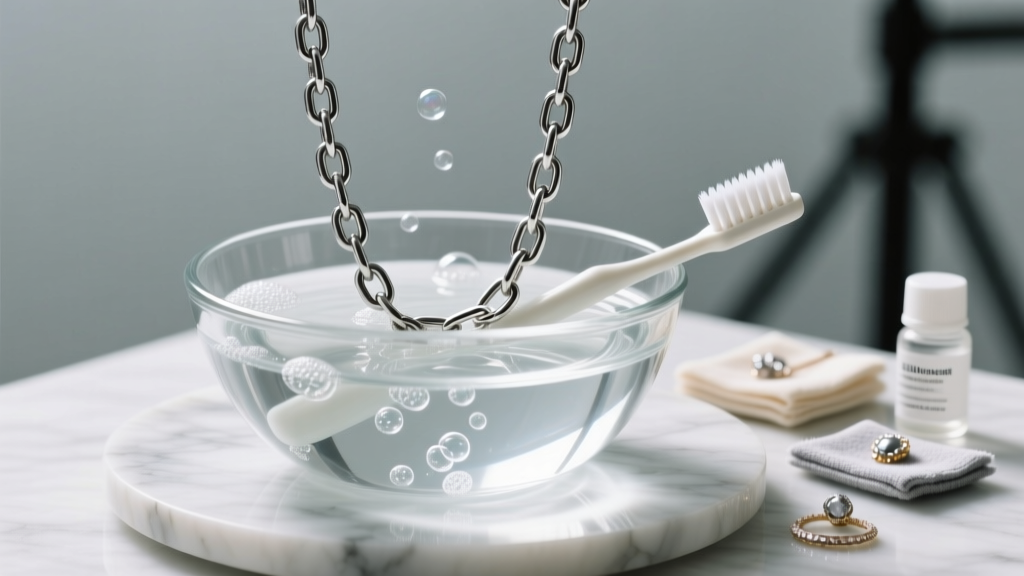
Fill a small glass bowl with warm (not boiling) water and add three drops of a pH-neutral, phosphate-free dish soap. Submerge the 316L necklace and let it soak for 15 to 20 minutes. The warm water will soften hardened sebum and cosmetic residues. After soaking, use a soft-bristled baby toothbrush to gently agitate the links, paying special attention to the clasp mechanism and the jump ring connecting the pendant. Rinse thoroughly under distilled or filtered water to prevent hard water mineral deposits, and pat dry with a microfiber cloth.
The Baking Soda Paste (For Stubborn Oxidation)
If your necklace has developed stubborn water spots or minor surface discoloration from environmental pollutants, a mild baking soda paste can help. Mix two parts baking soda with one part water to form a thick paste. Apply it to the affected areas using a cotton swab, rubbing gently in the direction of the metal's grain (if visible) or in small circular motions. Rinse immediately and dry. Do not use this method on brushed or matte finishes, as the mild abrasion will alter the texture.
Ultrasonic Cleaning: Is It Safe for 316L?
Ultrasonic cleaners use high-frequency sound waves to create microscopic cavitation bubbles that blast away dirt from hard-to-reach crevices. While the 316L steel itself is entirely safe in an ultrasonic bath, the Gemological Institute of America (GIA) warns that the intense vibrations can loosen adhesives used in gemstone settings. If your 316L necklace features glued-in cubic zirconia, onyx, or porous stones like turquoise, avoid ultrasonic cleaning entirely to prevent stone loss.
Chemicals to Avoid: The 316L Corrosion Matrix
The greatest threat to a 316L necklace is chloride-induced pitting. Chloride ions are small and highly aggressive; they can penetrate the passive chromium oxide layer and attack the iron matrix beneath. Below is a breakdown of common environments and their specific effects on 316L surgical steel.
| Chemical / Environment | Chloride Concentration | Effect on 316L Steel | Recovery / Action Required |
|---|---|---|---|
| Tap Water | < 50 ppm | None; safe for daily wear | Standard wipe down |
| Human Sweat | ~ 1,000 ppm | Surface smudging, sebum buildup | Mild soap soak |
| Ocean Saltwater | ~ 19,000 ppm | Micro-pitting over prolonged exposure | Rinse immediately, polish |
| Hot Tub Chlorine | 3,000 - 5,000 ppm | Passive layer breakdown, crevice corrosion | Citric acid passivation |
| Household Bleach | > 50,000 ppm | Severe pitting, irreversible rust spots | Replace chain if deeply pitted |
Focusing on the Weak Points: Clasps and Jump Rings
When maintaining a 316L necklace, the chain links are rarely the first point of failure. The clasp (usually a lobster or spring ring) and the jump rings are the most susceptible to 'crevice corrosion.' Crevice corrosion occurs in tight, shielded areas where oxygen cannot easily reach to replenish the passive chromium oxide layer. Dirt, soap scum, and dead skin easily become trapped inside the tiny hinges of a lobster clasp.
To maintain these components, use a wooden toothpick or a specialized jewelry cleaning brush to gently clear debris from the clasp hinge. Apply a microscopic drop of mineral oil or specialized jewelry hinge lubricant to the clasp mechanism every six months to ensure smooth operation and displace trapped moisture. Never use WD-40 or petroleum-based lubricants, as they attract dust and degrade over time, turning into a sticky residue that will jam the clasp.
Polishing and Restoring the Mirror Finish
Over time, microscopic scratches from daily wear will dull the brilliant mirror finish of a polished 316L necklace, giving it a hazy or satin-like appearance. To restore the high-polish luster, you need to use a jeweler's rouge (specifically red rouge, which is iron oxide) applied to a soft muslin or felt polishing cloth.
Rub the rouge onto the steel using moderate pressure and consistent, overlapping strokes. The abrasive particles in the rouge are fine enough to smooth out micro-scratches without removing significant amounts of metal. Once the desired shine is achieved, wash the necklace using the mild soap soak method detailed above to remove all traces of the polishing compound, which can otherwise stain clothing or irritate the skin. For brushed or sandblasted 316L finishes, avoid rouge entirely; instead, use a Scotch-Brite pad or a dedicated stainless steel finishing pad to gently re-texture the surface in the original direction of the grain.
Expert Troubleshooting: Surface Rust and Passivation
If you notice small, orange-brown rust spots on your 316L necklace, do not panic. In most cases, this is not the 316L steel itself rusting, but rather 'free iron' contamination. This happens when microscopic iron particles from manufacturing tools, environmental dust, or contact with carbon steel surfaces embed themselves into the surface of the necklace and oxidize.
To resolve this and restore the metal's natural corrosion resistance, you must perform a process called 'passivation.' While industrial passivation uses nitric acid, you can safely achieve excellent results at home using a citric acid solution. Dissolve food-grade citric acid powder in warm distilled water to create a 5% concentration (roughly one tablespoon per cup of water). Submerge the cleaned necklace in the solution for 20 to 30 minutes at room temperature. The citric acid will selectively dissolve the free iron particles without harming the chromium. Rinse thoroughly with distilled water and allow the piece to air dry in a well-oxygenated room for 24 hours. This resting period allows the chromium in the 316L alloy to react with the ambient oxygen, rebuilding a pristine, impenetrable chromium oxide passive layer. For more advanced metallurgical insights on stainless steel passivation, refer to resources like AZoM Materials Science.
Final Thoughts on Longevity
A 316L necklace is a masterclass in functional jewelry design, offering hypoallergenic properties, immense tensile strength, and a brilliant aesthetic. By understanding the specific chemical vulnerabilities of the alloy and adopting a targeted, science-backed cleaning routine, you ensure that your surgical steel pieces remain as flawless as the day they were forged. Treat the passive layer with respect, avoid the chloride matrix, and your 316L jewelry will effortlessly outlast softer, more traditional precious metals.


