Copper Necklace Benefits: Separating Health Myths From Style
Discover the real copper necklace benefits, from antimicrobial properties to styling tips. Learn the science of oxidation and how to choose pure copper.

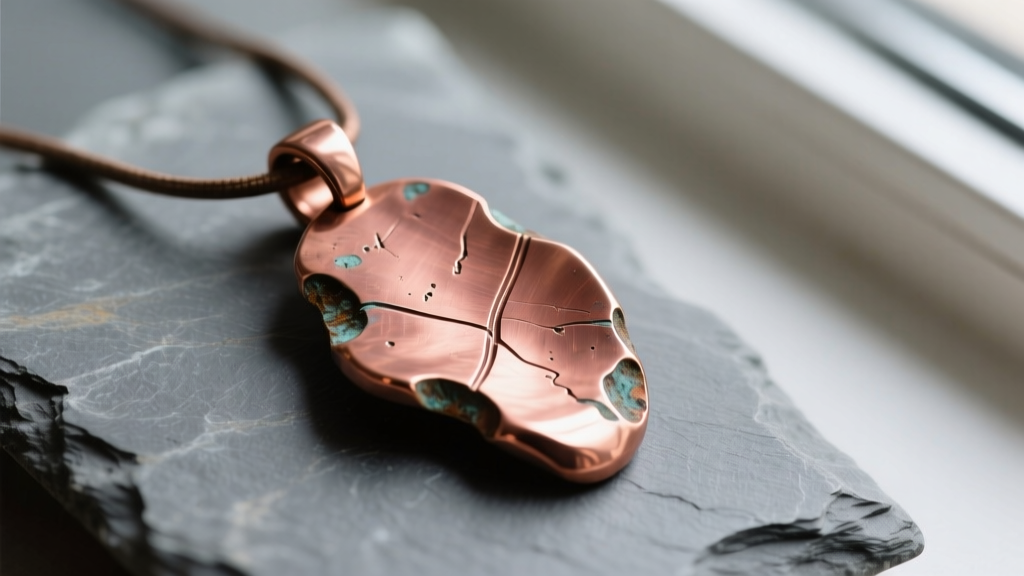
When browsing holistic wellness boutiques or artisan jewelry markets, you have likely encountered the bold claims surrounding copper jewelry. From easing joint stiffness to improving circulation, the purported copper necklace benefits have made this ancient metal a staple in the modern wellness wardrobe. But as a discerning jewelry enthusiast, it is crucial to separate peer-reviewed science from marketing folklore. Copper (Cu, atomic number 29) is a fascinating, highly reactive transition metal with a rich history in human adornment and medicine. In this comprehensive guide, we will explore the actual dermatological and antimicrobial realities of wearing copper, decode the infamous 'green skin' phenomenon, and provide actionable advice on how to buy, maintain, and style high-quality copper necklaces.
The Science Behind Copper Necklace Benefits: Fact vs. Fiction
The most pervasive claim in the wellness jewelry market is that wearing copper against the skin alleviates arthritis and joint pain. The theory suggests that trace amounts of copper are absorbed transdermally (through the skin) via sweat, replenishing mineral deficiencies that contribute to inflammation. However, clinical science paints a different picture.
A landmark randomized, double-blind study published in PLOS One evaluated the efficacy of copper bracelets and magnetic wrist straps for osteoarthritis and rheumatoid arthritis. The researchers concluded that copper provides no statistically significant pain relief beyond a placebo effect. The transdermal absorption rate of solid copper is virtually negligible when it comes to impacting systemic mineral levels or joint inflammation.
However, copper does possess one scientifically undeniable superpower: the oligodynamic effect. According to the U.S. Environmental Protection Agency (EPA), copper alloys are the first solid surface materials registered as antimicrobial. Copper ions actively disrupt the cellular membranes of bacteria and viruses, neutralizing them on contact. While a necklace will not sanitize your entire body, the metal itself remains inherently hygienic and resistant to bacterial colonization, making it an excellent choice for those prone to skin infections or contact dermatitis from dirty jewelry.
The 'Green Skin' Reality: Oxidation and Chemistry
Ask any jeweler about copper, and the first question they will receive is, 'Will it turn my neck green?' The answer is yes, and understanding why is key to appreciating the metal.
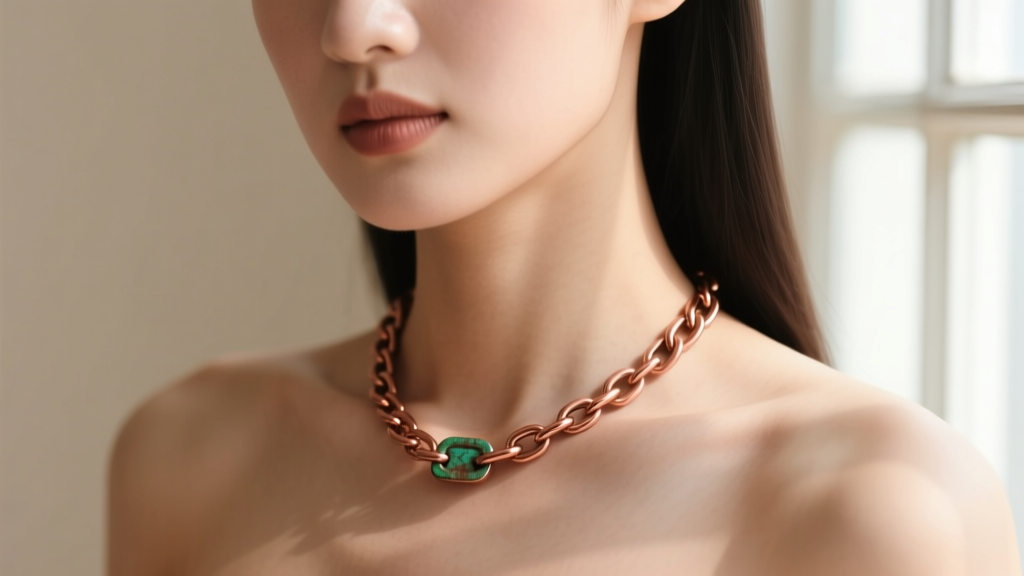
The green discoloration is not a sign of cheap manufacturing or toxic dyes; rather, it is a basic chemical reaction. Human sweat is mildly acidic, typically ranging from a pH of 4.0 to 6.0, and contains salts and amino acids. When these acids react with pure copper, they form copper chloride and copper carbonate—compounds that manifest as a green or blue-green residue on the skin. This reaction is accelerated by heat, humidity, and the use of acidic skincare products or perfumes applied near the collarbone.
Expert Insight: If your copper necklace leaves a green mark, it is actually a reliable indicator that you are wearing high-purity, unsealed copper. Cheap, nickel-based alloys plated to look like copper will not oxidize this way, but they are far more likely to trigger severe allergic contact dermatitis.
The green tint is entirely harmless and washes off easily with soap and water. If you wish to prevent it without compromising the metal, apply a thin layer of jewelry shield (a clear acrylic spray designed for metals) or a coat of clear nail polish to the back of the pendant. Be aware that these barriers will eventually wear off and require reapplication.
Buying Guide: Solid Copper vs. Plated vs. Alloys
Not all 'copper' jewelry is created equal. The market is flooded with misleading terminology. To ensure you are getting the aesthetic and hygienic benefits of true copper, you must understand material grades and construction methods.
| Material Type | Composition | Durability & Wear | Skin Reaction | Average Price Range |
|---|---|---|---|---|
| 99.9% Pure Copper (C11000) | Pure elemental copper | Soft, scratches easily, develops rich patina | Will turn skin green; hypoallergenic | $30 - $120 |
| Brass | Copper + Zinc alloy | Harder, more rigid, golden-yellow hue | Mild green tint; possible zinc sensitivity | $25 - $80 |
| Bronze | Copper + Tin alloy | Very durable, dark brownish-gold tone | Rarely turns skin green; highly durable | $40 - $150 |
| Copper-Plated Steel | Stainless steel base with copper flash | Extremely hard, plating wears off over time | No green tint; nickel allergy risk if plated poorly | $15 - $40 |
For those seeking the authentic, rustic look and the antimicrobial properties of the metal, C11000 grade pure copper is the gold standard. Artisan jewelers often use thick 14-gauge or 12-gauge solid copper wire for chain links and pendants to ensure the piece holds its shape despite the metal's natural softness.
Care and Maintenance: Managing the Patina
Copper is a 'living' metal. When exposed to oxygen and moisture, it oxidizes, transitioning from a bright, salmon-pink shine to a deep, mottled brown, and eventually to a dark, antique patina. Some collectors prize this aged look, while others prefer the high-polish gleam.
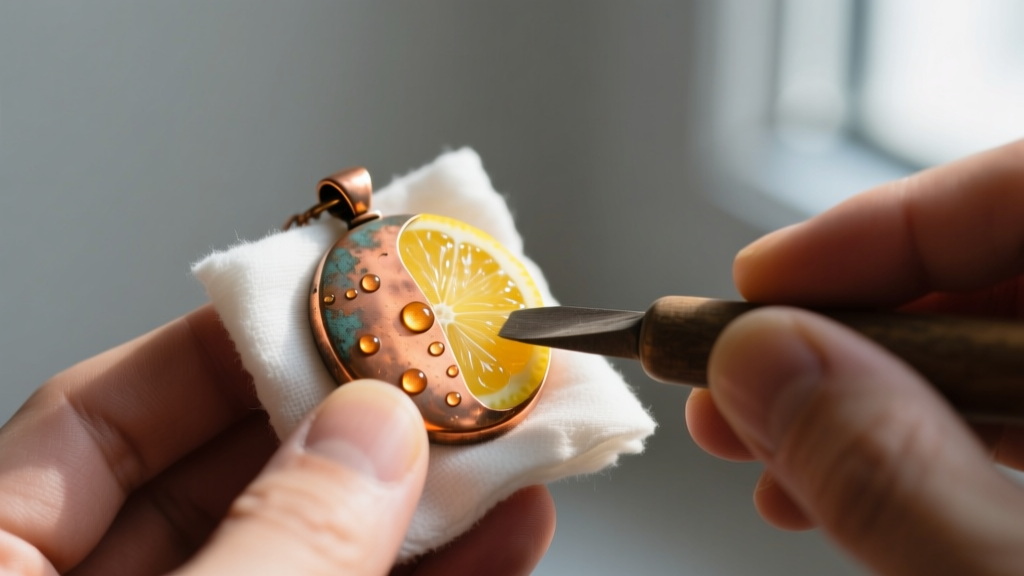
If you want to restore your copper necklace to its original brilliance, skip the harsh commercial chemical dips, which can strip the metal and leave a porous, easily tarnished surface. Instead, use these gentle, acid-based household methods:
- The Ketchup Method: The acetic acid and citric acid in ketchup perfectly break down copper oxide. Coat the pendant, let it sit for 10 minutes, rinse with warm water, and buff dry with a microfiber cloth.
- Lemon and Salt Paste: Mix equal parts coarse sea salt and fresh lemon juice. Gently rub the mixture onto the copper using a soft-bristled toothbrush. This provides mild mechanical abrasion alongside the citric acid.
- Vinegar Soak: For heavy chains with intricate links, submerge the necklace in white vinegar for 15 minutes, agitate gently, rinse thoroughly, and dry completely to prevent water spots.
Crucial Storage Tip: Always store your copper necklaces in an airtight ziplock bag with an anti-tarnish silica gel packet. Humidity is the primary catalyst for oxidation; removing it from the equation will keep your jewelry bright for months.
The Magnetic Copper Necklace Variation
A popular subcategory in the wellness market is the magnetic copper necklace. These designs typically feature a thick, solid copper cable chain with a clasp housing small neodymium magnets. While the copper provides the aesthetic and antimicrobial benefits mentioned above, the magnets are added for 'magnetotherapy.' Much like the transdermal copper theory, static magnetic field therapy lacks robust clinical backing for pain relief. However, the heavy, substantial feel of a 10mm solid copper cable chain with a magnetic clasp offers a fantastic, rugged aesthetic for menswear or bold, industrial styling, regardless of the therapeutic claims.
Styling Your Copper Necklace for Every Occasion
Copper’s warm, reddish-orange undertones make it an incredibly versatile styling tool, particularly for those with warm or olive skin tones. Here is how to integrate copper into your daily wardrobe:
- The Bohemian Layer: Pair a 20-inch hammered copper pendant with a 24-inch oxidized silver chain. The contrast between the warm copper and cool, darkened silver creates a rich, earthy aesthetic perfect for linen shirts and V-necklines.
- The Minimalist Collar: A 14-inch or 16-inch solid copper snake chain sits flush against the collarbone. This style pairs beautifully with scoop necks and off-the-shoulder garments, acting as a warm, glowing frame for the face.
- Mixed Metals: Do not be afraid to mix copper with rose gold. Because both metals share a pinkish-red base hue, a delicate copper lariat necklace layered with a thin 14k rose gold chain creates a cohesive, monochromatic look that elevates everyday office wear.
Ultimately, the true value of a copper necklace lies not in unproven medical miracles, but in its unique chemical personality, its rich historical significance, and its undeniable, warm aesthetic. By understanding how to select pure grades and manage its natural oxidation, you can confidently wear this ancient metal as a striking, modern statement piece.


