The Link Necklaces Buying Guide: Top Chain Styles 2026
Discover the ultimate 2026 link necklaces buying guide. Learn about wire gauges, metal grades, clasp mechanics, and how to spot hollow chains.

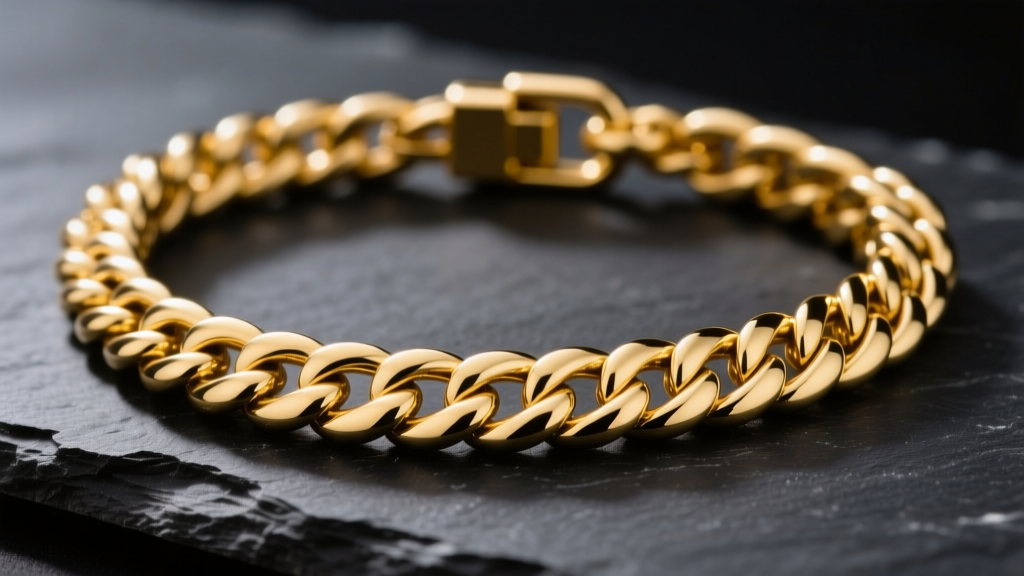
The Enduring Appeal and Structural Reality of Link Necklaces
Link necklaces have transcended their utilitarian origins to become the cornerstone of modern jewelry wardrobes. Whether you are seeking a delicate 1.2mm cable chain for a minimalist diamond pendant or a heavy 10mm Cuban curb for a standalone statement piece, understanding the structural integrity of these chains is paramount. The market is currently flooded with visually identical chains that possess vastly different lifespans and tensile strengths. In this comprehensive 2026 buying guide, we bypass the marketing fluff and dissect the exact specifications, metallurgy, and mechanical failure points you must evaluate before investing in link necklaces.
Unlike solid bangles or cast rings, link chains are dynamic structures. They are subjected to constant multidirectional tension, friction against the skin, and sudden shock loads when caught on clothing. A chain's longevity is not determined by its metal purity alone, but by the geometry of its links, the precision of its soldering, and the engineering of its clasp assembly.
Decoding the Anatomy: Gauge, Soldering, and Core Density
Wire gauge, typically measured in millimeters (mm) in modern jewelry, dictates the chain's baseline tensile strength. A 1.0mm chain might comfortably hold a 2-gram pendant, but it will inevitably snap under the 15-gram dynamic pull of a heavy gemstone setting. For everyday pendant wear, a 1.5mm to 2.5mm gauge is the optimal sweet spot, balancing delicate aesthetics with structural resilience. For standalone statement pieces, look for gauges exceeding 4.0mm.
Soldering is the next critical, yet frequently overlooked, factor. Unsoldered links—where the wire is simply bent into a closed loop without fusing the seam—are highly prone to pulling apart when subjected to lateral tension. Always inspect the macro-photography of the chain or use a jeweler's loupe to ensure each individual link features a microscopic soldered seam. Furthermore, you must distinguish between solid, semi-solid, and hollow links. Hollow link necklaces are manufactured using a resin core that is burned out during casting, leaving a fragile metallic shell. While they offer a massive look for a fraction of the weight and price, hollow links will crush irreparably if subjected to blunt force or heavy pendant loads.
Core Link Profiles: A Comparative Breakdown
The geometry of the link dictates how the chain drapes, how it catches the light, and how it resists kinking. Below is a structural comparison of the most prevalent link profiles available in the 2026 market.
| Link Profile | Geometry & Construction | Tensile Strength | Kink Resistance | Ideal Use Case |
|---|---|---|---|---|
| Cable | Uniform round or oval links connected at 90-degree angles. | Medium | High | Lightweight pendants, minimalist layering. |
| Curb / Cuban | Twisted and flattened links that interlock tightly and lay flush. | Very High | Medium | Standalone statement pieces, heavy pendants. |
| Figaro | Patterned sequence of flattened links (usually three short, one long). | High | Medium | Vintage aesthetics, medium-weight pendants. |
| Rope | Small links twisted into a continuous helix or double-helix pattern. | Very High | Low (Prone to catching) | Maximum light refraction, secure pendant holding. |
| Box | Square, geometric links fitted tightly into one another. | Low to Medium | Very Low (Kinks easily) | Sleek, modern pendants; requires careful storage. |
| Mariner | Oval links featuring a reinforcing vertical bar across the center. | Extremely High | High | Nautical themes, high-tension pendant mounting. |
Metal Grades and Long-Term Tarnish Resistance
The metallurgical composition of your link necklace will dictate its color retention, scratch resistance, and allergenic properties. According to the Federal Trade Commission Jewelry Guides, gold purity must be accurately marked, but understanding the alloy mix is crucial for chain selection.
- 14k Gold (58.5% Pure Gold): The industry standard for durable link chains. The higher percentage of alloy metals (copper, zinc, silver) provides superior scratch and deformation resistance, making it ideal for heavy curb and Figaro chains that endure daily friction.
- 18k Gold (75% Pure Gold): Offers a richer, deeper yellow hue but is significantly softer. While beautiful, 18k gold link chains are more susceptible to micro-abrasions and link stretching over time, especially in gauges under 2.0mm.
- 925 Sterling Silver: An alloy of 92.5% silver and 7.5% copper. The copper provides necessary tensile strength but makes the chain susceptible to sulfur-induced tarnishing. Look for sterling silver link necklaces that feature a thick rhodium plating to seal the surface and maintain a bright white luster.
- 316L Surgical Stainless Steel: The benchmark for budget-friendly, hypoallergenic link necklaces. It will never oxidize, tarnish, or react with skin acids, though its rigid nature makes it difficult to resize or repair if a link snaps.
Clasp Mechanics: The Most Common Point of Failure
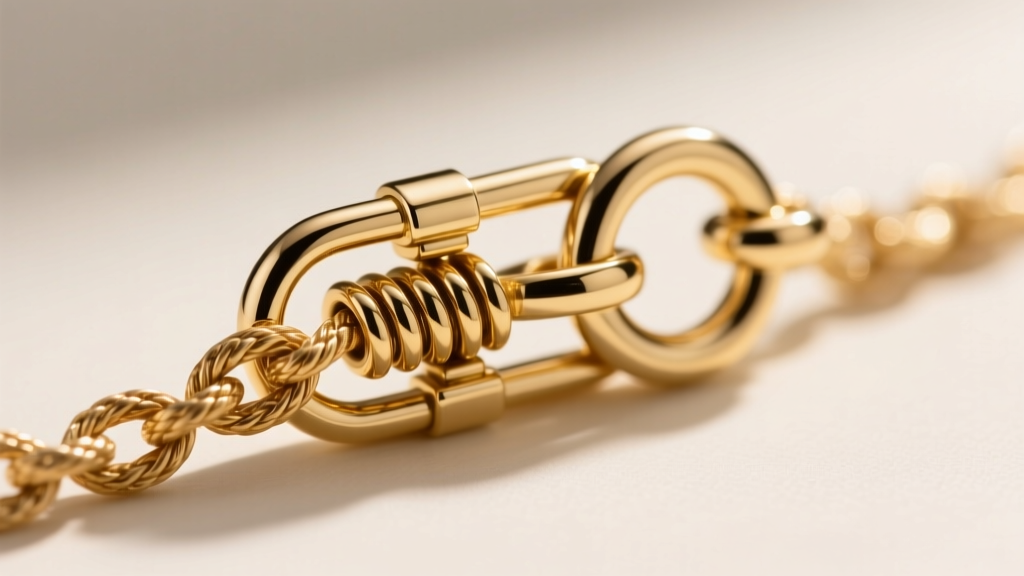
A chain is only as strong as its weakest connection, which is almost always the clasp assembly. Spring ring clasps are entirely inadequate for chains exceeding 2.5mm in thickness; their internal tension springs degrade rapidly, and the small jump rings easily pull open under the weight of a heavy chain. The lobster claw clasp is the standard for mid-weight link necklaces, but you must verify that the jump ring connecting the clasp to the chain is fully soldered. An unsoldered jump ring will inevitably gap open when the necklace is pulled.
For heavy statement chains (8mm and above), a standard lobster clasp is a liability. You must insist on a box clasp equipped with a dual figure-eight safety latch. This mechanism locks the tongue into a grooved housing and provides two secondary wire latches that catch the main ring if the primary lever fails, preventing catastrophic loss of the jewelry.
Strategic Sizing and Layering Frameworks
Proper sizing is critical for both comfort and visual proportion. A standard choker sits at 14 to 16 inches, resting tightly against the base of the neck. A princess length (18 inches) falls just below the collarbone, serving as the universal anchor for most pendants. When layering link necklaces, you must adhere to the "2-inch minimum rule." Layering a 16-inch chain with an 18-inch chain ensures the clasps and links do not constantly collide and abrade one another. Furthermore, avoid layering chains of vastly different hardness levels; a hardened stainless steel rope chain will act as a file against a softer 18k gold cable chain, causing severe micro-scratching over time.

Red Flags: How to Avoid Counterfeit and Hollow Chains
When shopping for link necklaces online or in secondary markets, vigilance is required to avoid deceptive manufacturing practices. Be highly skeptical of chains marketed as "gold-filled" or "electroplated" if they are sold at a fraction of the market melt value. Electroplated layers are often less than 0.5 microns thick and will wear through to the brass or copper base metal within months of daily wear.
Always verify the hallmark. As detailed by The London Assay Office, a legitimate hallmark consists of the sponsor's mark, the fineness number (e.g., 585 for 14k), and the assay office symbol. A simple "14k" stamp without a maker's mark is often a red flag for unregulated, imported jewelry. Finally, perform the weight-to-volume assessment: if a 10mm Cuban link chain feels suspiciously light or yields slightly when squeezed between the fingers, it is a hollow-core chain that will dent upon minor impact.
Expert Insight: "Never use a silver polishing cloth on an oxidized or antique-finish link chain. The mild abrasives in the cloth will strip the intentional darkening from the crevices of the links, ruining the contrast and depth of the chain's profile. Instead, use a soft-bristled brush with a mild, non-abrasive dish soap solution to clean the interior of the links without compromising the patina."
By prioritizing soldered links, appropriate wire gauges, and secure clasp mechanics over superficial aesthetics, you can invest in link necklaces that will endure decades of daily wear while maintaining their structural and visual integrity.


