The Ultimate Buying Guide to Authentic Western Beaded Necklaces
Discover how to choose authentic western beaded necklaces. Learn about turquoise grades, heishi craftsmanship, stringing, and pricing.

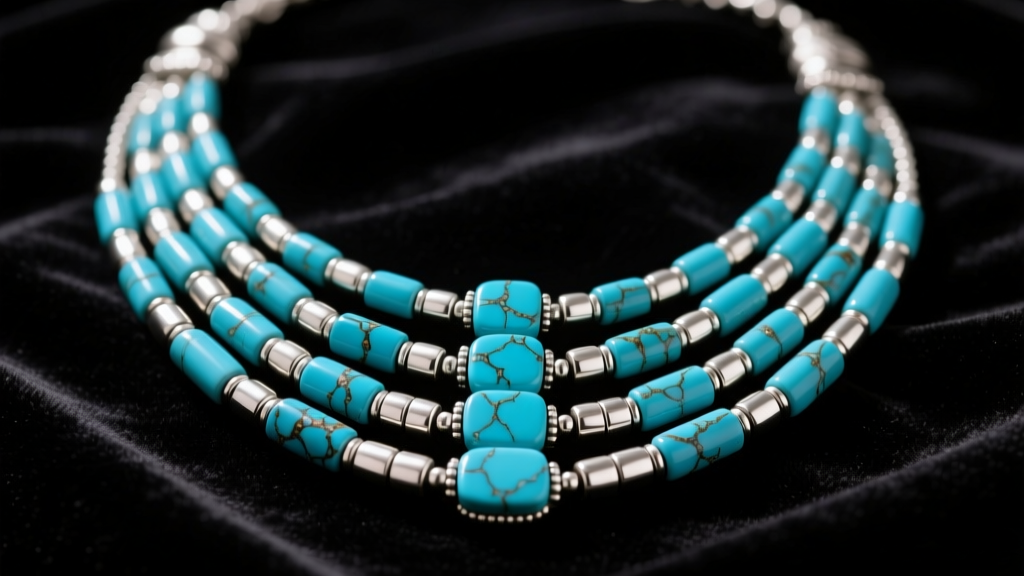
The Anatomy of a High-Quality Western Necklace
Western and Southwestern jewelry represents a rich intersection of Native American heritage, frontier durability, and striking natural aesthetics. When shopping for western beaded necklaces, the difference between a mass-produced tourist trinket and a master-crafted heirloom lies in the microscopic details of stone selection, bead shaping, and structural hardware. As we navigate the 2026 market, where synthetic imitations are increasingly sophisticated, understanding the foundational anatomy of these pieces is critical for any serious collector or style enthusiast.
Stone Selection and Grading
The soul of any western beaded necklace lies in its gemstones. Turquoise remains the undisputed king of this category, but not all turquoise is created equal. Natural, untreated turquoise is incredibly rare and commands a premium. Because turquoise is a porous, relatively soft stone (rating 5 to 6 on the Mohs scale), lower-grade chalk turquoise is often stabilized using epoxy resins to prevent cracking and color fading. While stabilization is an accepted industry practice, buyers must ensure they are paying for stabilized natural stone, not reconstituted 'block' turquoise made from dyed dust and plastic binders.
Look for highly prized mines like Royston, known for its deep green stones with heavy brown matrix webbing, or Kingman, famous for its brilliant sky-blue nuggets. Red coral is another staple, but due to strict CITES environmental regulations, genuine Mediterranean precious coral is scarce and expensive. Most modern western necklaces utilize bamboo coral, which is naturally white and dyed red. While dyed bamboo coral is standard, it should be priced significantly lower than genuine precious coral. Lapis lazuli, sourced primarily from Afghanistan, should feature a deep, saturated royal blue with natural, sparkling pyrite inclusions and minimal white calcite streaks.
The Art of Heishi and Shell Beads
Heishi (pronounced hee-shee) refers to the ancient technique of crafting flat, disc-shaped beads from shell or stone. Originating with the Kewa Pueblo (formerly Santo Domingo) artisans of New Mexico, genuine hand-rolled heishi is a masterclass in patience. Artisans drill holes into raw materials, string them, and grind them against sandstone until they form uniform, liquid-like strands. When evaluating heishi in western beaded necklaces, run the strand through your fingers. Machine-cut heishi will feel rigid and perfectly uniform, while authentic handcrafted heishi will have a subtle, organic variation in thickness that gives the necklace a beautiful, fluid drape.
Stringing Materials and Hardware: The Hidden Durability Factors
A necklace is only as strong as its weakest link. Heavy multi-strand squash blossom necklaces or dense turquoise bead strands can easily weigh over 150 grams. If the internal stringing material or the clasp fails, the financial and sentimental loss is catastrophic.
Modern Stringing Technologies
Traditional silk thread, while historically accurate, is highly susceptible to moisture degradation and snapping under heavy stone loads. Today's premier western jewelry artisans rely on advanced synthetic materials. The gold standard is 49-strand micro-fused stainless steel wire with a nylon coating (often sold under brand names like Soft Flex). This material offers the drape of silk with the tensile strength of steel.
| Stringing Material | Tensile Strength | Drape Quality | Best Use Case |
|---|---|---|---|
| 49-Strand Coated Steel | Extremely High | Excellent | Heavy turquoise & multi-strand necklaces |
| 7-Strand Tiger Tail | Moderate | Stiff / Kinks Easily | Budget fashion jewelry (Avoid for heirlooms) |
| Nylon / Silk Cord | Low to Moderate | Superior | Lightweight shell heishi & vintage restoration |
| Leather Thong | High | Rigid | Single focal pendants & rustic bolo styles |
Clasps and Findings
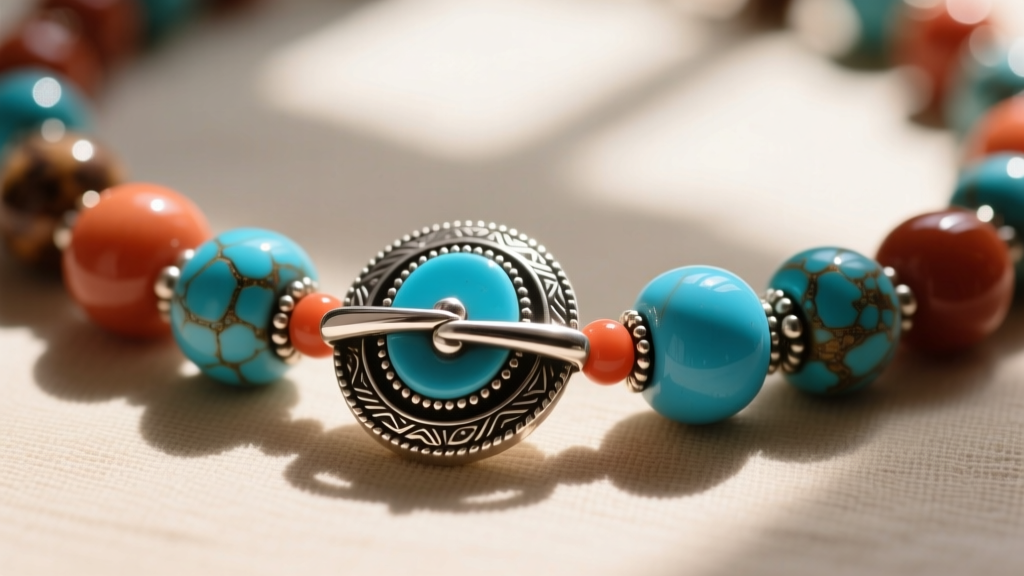
Always inspect the clasp. Standard lobster clasps are insufficient for heavy western beadwork; the internal spring mechanism will eventually fail under constant tension. Instead, look for heavy-duty sterling silver toggle clasps, hook-and-eye closures, or traditional Navajo-style button loops. Ensure all metal findings are stamped '.925' to guarantee sterling silver, as base metals plated in silver will quickly oxidize and turn the skin green when exposed to sweat and natural skin oils.
Spotting Fakes: Treated vs. Natural Stones
The market is flooded with deceptive alternatives. According to the Indian Arts and Crafts Board, it is illegal to misrepresent the origin and materials of Native American jewelry, but imported knockoffs frequently bypass these regulations. Here is how to protect your investment:
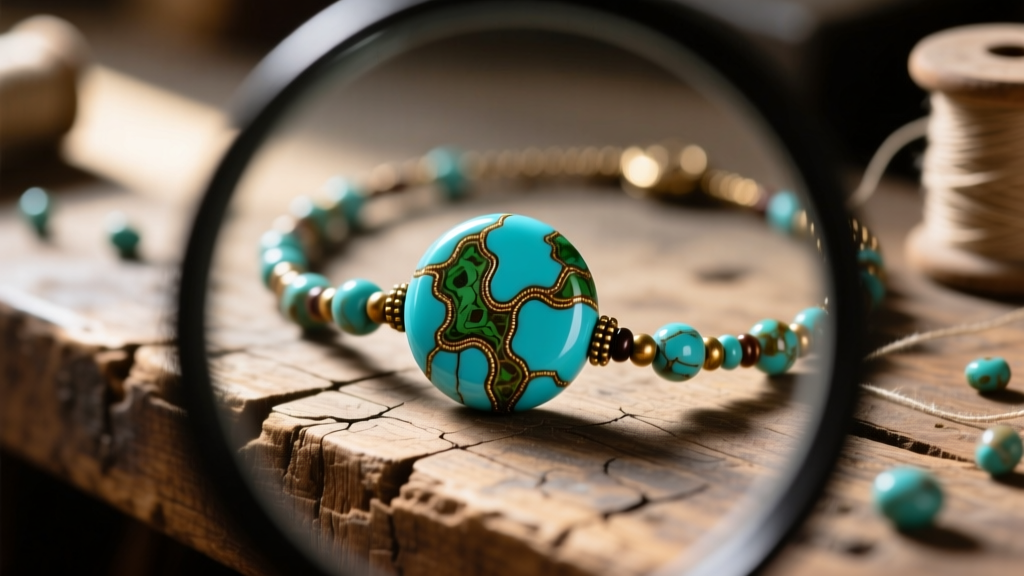
- The Howlite Trap: Howlite is a cheap, white borate mineral that is highly porous. When dyed blue and stamped with a fake black matrix, it perfectly mimics turquoise to the untrained eye. Genuine turquoise matrix is usually angular and integrated into the stone, whereas dyed howlite matrix often looks like surface-level spiderwebbing that pools in the cracks.
- The Zachery Treatment: This is a proprietary, high-end stabilization method that enhances turquoise without using polymers or dyes, adding potassium to the stone. It is highly respected but should be disclosed by the seller.
- The Acetone Test: If you suspect a stone is dyed howlite or magnesite, lightly dabbing an inconspicuous area with acetone (nail polish remover) on a cotton swab will lift the dye, revealing the stark white stone beneath. Never do this on a finished piece without the seller's permission, but it is a standard gemological troubleshooting step.
For definitive verification of high-value stones, always request documentation or rely on gemological standards outlined by the Gemological Institute of America (GIA).
Pricing Tiers and What to Expect in 2026
Understanding the pricing landscape prevents overpaying for mass-produced goods and helps you recognize true artisan value.
Budget Tier ($50 - $150)
In this range, expect stabilized turquoise, dyed bamboo coral, and magnesite. The beads are typically machine-cut, and the stringing will be basic tiger-tail wire with cast-metal clasps. These are perfectly fine for casual, seasonal wear but hold no long-term collectible value.
Mid-Range Artisan ($150 - $600)
This is the sweet spot for authentic, handcrafted western beaded necklaces. You will find genuine Kewa Pueblo shell heishi, high-grade stabilized Kingman or Sleeping Beauty turquoise, and solid .925 sterling silver findings. The craftsmanship will feature tight, uniform beadwork and professional crimping techniques.
High-End / Collectible ($600 - $2,500+)
At the apex of the market, you are paying for natural, untreated, high-grade turquoise (such as Lander Blue or Bisbee), master-level hand-rolled stone heishi, and custom-forged silver accents. These pieces are often signed by renowned Native American lapidary artists and come with certificates of authenticity. They appreciate in value over time and are considered wearable investments.
Care and Maintenance for Porous Gemstones
Western gemstones are notoriously sensitive to chemicals and environmental stressors. Turquoise, coral, and lapis lazuli are all porous. Never clean these necklaces in an ultrasonic cleaner or use commercial jewelry dips; the high-frequency vibrations will shatter the stones, and the harsh chemicals will strip their natural waxes and oils, leaving them dull and brittle.
To clean your western beaded necklace, simply wipe the beads gently with a slightly damp, lint-free microfiber cloth after wearing them to remove skin oils and lotions. Store the necklace flat or hung in a climate-controlled environment away from direct, prolonged sunlight, which can cause certain treated stones and dyed corals to fade over time. By respecting the organic nature of these materials, your necklace will maintain its vibrant Southwestern character for generations.


