The Panther Link Necklace: An Expert Guide to Articulated Chains
Master the panther link necklace. Our expert guide covers articulation, gold karat durability, hidden clasps, and maintenance for luxury chains.

The Engineering Behind the Panther Link Necklace
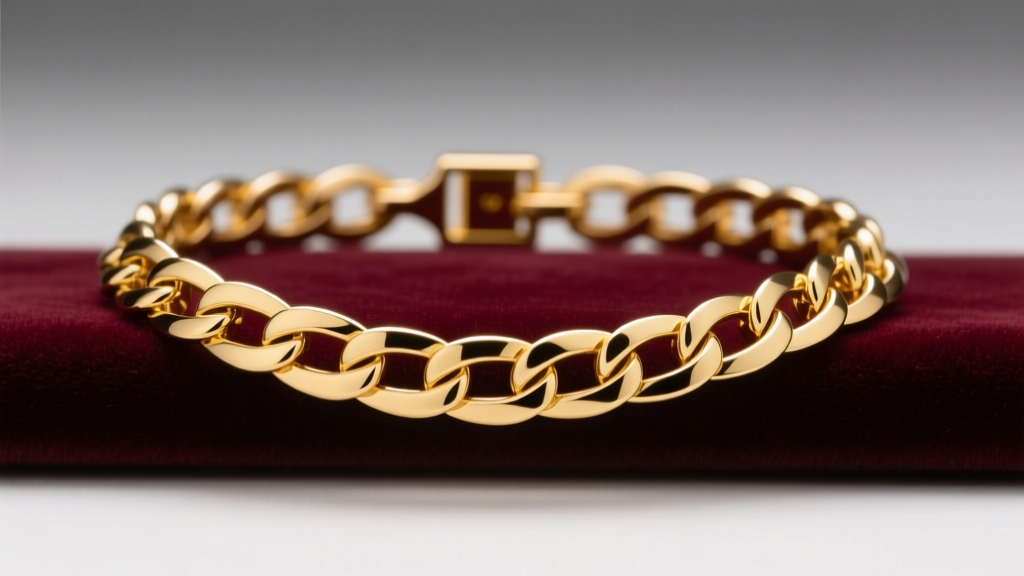
When discussing luxury chain styles, the panther link necklace stands in a league of its own. Often referred to interchangeably as a brick link or articulated flat chain, this design is a marvel of micro-engineering. Unlike traditional cable or curb chains that rely on interlocking loops, a true panther chain is constructed from flat, geometric segments connected by internal transverse hinge pins. The result is a necklace that mimics the fluid, supple movement of a panther's spine while laying perfectly flat against the clavicle.
From a technical standpoint, manufacturing a high-quality panther link necklace requires precision stamping, micro-machining, and advanced laser welding. Each link features a 'male' tongue that slots into a 'female' cavity of the adjacent link. A sub-millimeter pin—typically ranging from 0.3mm to 0.6mm in diameter—is inserted through the joint and secured. In modern 2026 jewelry manufacturing, these pins are frequently laser-welded at the microscopic level to prevent them from backing out during wear, a significant upgrade from the traditional friction-fit or soft-solder methods of the late 20th century.
Anatomy of Articulation: Hinge Mechanics and Tolerances
The defining characteristic of the panther link necklace is its articulation. The chain must flex smoothly in two dimensions while resisting torsional twisting. If the tolerances between the male and female link components are too tight, the chain will feel stiff and bind when exposed to natural skin oils and microscopic debris. If the tolerances are too loose, the chain will suffer from 'link wobble,' leading to premature wear of the hinge pins and a loss of the signature sleek silhouette.
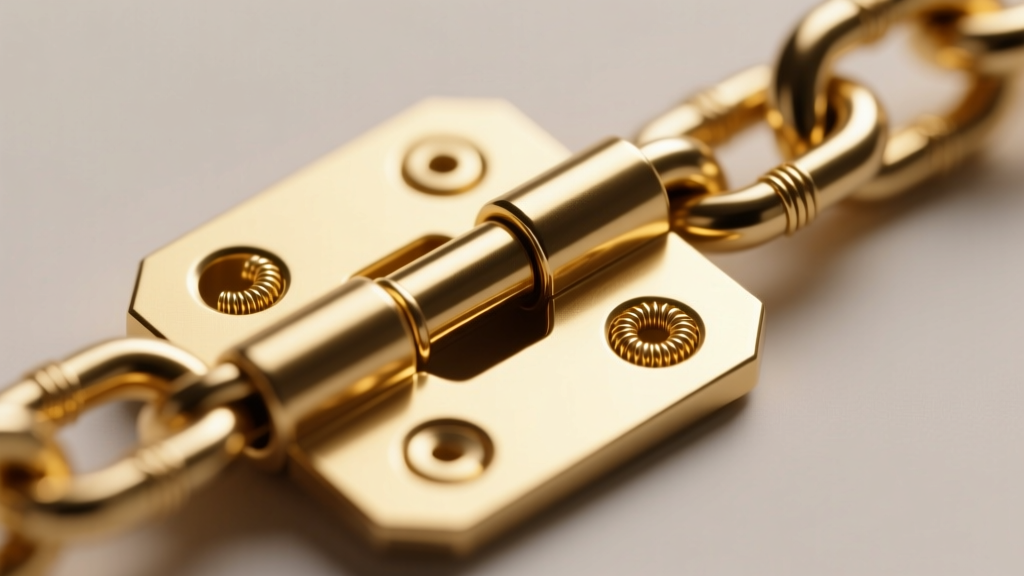
Master bench jewelers evaluate a panther chain's articulation by performing the 'drape test.' A properly engineered 16-inch chain should pool into a perfect, continuous circle when laid on a flat surface, with no links jutting out or overlapping. The beveling on the edges of each geometric block is also critical; sharp 90-degree edges will catch on silk garments and hair, whereas a micro-chamfered edge (usually polished at a 15-degree angle) ensures the chain glides seamlessly over skin and fabric.
Metallurgy and Weight: Choosing the Right Alloy
The choice of metal in a panther link necklace drastically affects both its durability and its drape. Because the chain relies on sheer strength at the microscopic hinge points, the alloy composition is just as important as the karat weight. According to the Gemological Institute of America (GIA), the alloying metals used in gold jewelry dictate its tensile strength and malleability.
While 18k gold (75% pure gold) is the standard for high-end luxury houses due to its rich color and superior polish retention, it is inherently softer. This means the hinge pins in an 18k panther chain are more susceptible to shear stress if the chain is yanked. Conversely, 14k gold (58.5% pure gold), especially when alloyed with nickel or palladium, offers significantly higher tensile strength, making it a more pragmatic choice for heavy, everyday-wear panther chains.
Technical Comparison: Metal Alloys in Articulated Chains
| Metal Alloy | Purity | Hinge Shear Strength | Polish Retention | Approx. Price Range (16', 10mm) |
|---|---|---|---|---|
| 14k Yellow Gold | 58.5% | High | Moderate | $1,800 - $3,200 |
| 18k Yellow Gold | 75.0% | Moderate | Excellent | $4,500 - $9,000 |
| Platinum 950 | 95.0% | Very High | High (Develops Patina) | $12,000 - $22,000 |
| Sterling Silver | 92.5% | Low (Prone to Bending) | Low (Tarnishes) | $250 - $600 |
Clasp Engineering: Securing Heavy Flat Chains
A heavy panther link necklace can easily weigh between 40 and 85 grams, depending on the width and length. Attaching a standard lobster clasp to a chain of this magnitude is a catastrophic design flaw. Lobster claws disrupt the continuous flat line of the necklace, create an uncomfortable pressure point at the nape of the neck, and are not rated for the dynamic sheer load of a heavy, articulated chain.
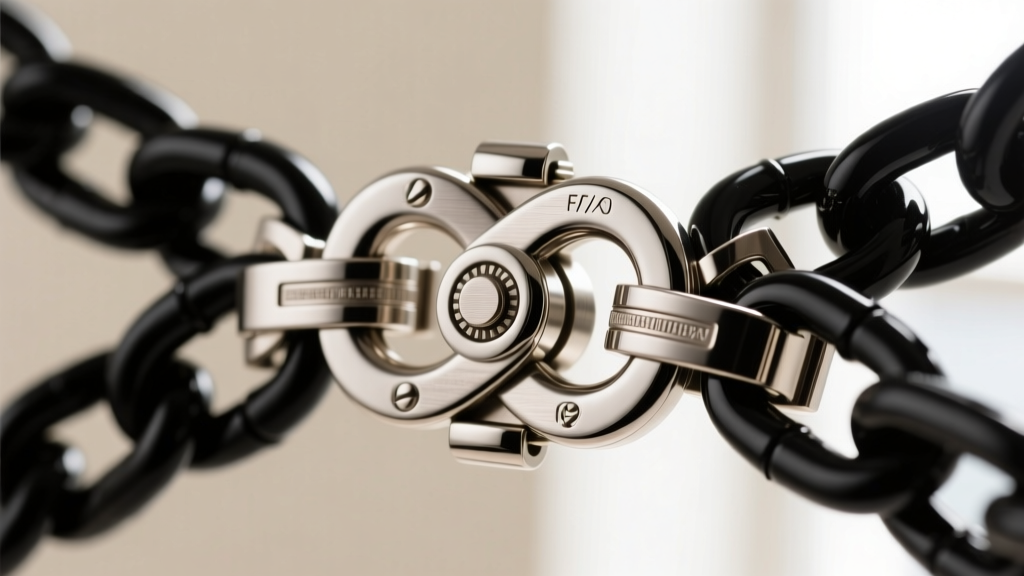
Expert jewelers exclusively use concealed box clasps with integrated figure-8 safety catches for panther chains. The box clasp features a V-shaped spring lever that clicks securely into a reinforced catch box, distributing the tension across the entire width of the terminal link rather than a single micro-ring. The dual figure-8 safety wires act as a redundant fail-safe. When evaluating a vintage or pre-owned panther link necklace, always inspect the safety catches; if the wire is stretched or the hinge is loose, the clasp requires immediate bench servicing to prevent catastrophic loss.
Maintenance, Failure Modes, and Professional Care
The most common failure mode of a panther link necklace is 'hinge lock.' This occurs when microscopic debris—such as dead skin cells, lotion residue, and environmental dust—becomes impacted inside the tight tolerances of the articulation joints. Over time, this debris hardens, causing the chain to stiffen and lose its fluid drape.
Many owners mistakenly attempt to fix a stiff panther chain by applying household oils or pulling the chain taut to 'break' the stiffness. Never pull or stretch an articulated chain. Applying lateral tension to a locked hinge will bend the internal micro-pin, permanently warping the link and requiring a complex surgical repair by a master jeweler.
Proper Cleaning Protocol
- Ultrasonic Warning: While ultrasonic cleaners are excellent for removing impacted debris from hinges, they should only be used on chains that have been recently inspected for pin integrity. High-frequency vibrations can exacerbate micro-fractures in worn hinge pins, causing them to snap.
- The Soak Method: Submerge the necklace in a lukewarm solution of distilled water and a few drops of ammonia-free dish soap for 15 minutes.
- Agitation: Use an extra-soft baby toothbrush to gently agitate the seams between the links. Never scrub the flat faces aggressively, as this can induce micro-scratches on high-polish gold.
- Drying: Pat dry with a lint-free microfiber cloth. Use a can of compressed air to blow out any remaining moisture from the hinge joints to prevent water spots.
For long-term storage, the official care guidelines from luxury houses like Cartier recommend storing articulated chains laid completely flat in a lined jewelry box. Hanging a heavy panther chain on a standard jewelry stand places constant gravitational stress on the lower hinge pins, accelerating wear.
Sizing and Drape: Calculating the Right Length
Because of its flat, wide geometry, a panther link necklace sits differently on the neck than a round chain of the exact same measurement. A 16-inch rope chain will drape softly into a V-shape, but a 16-inch, 10mm-wide panther chain will act more like a rigid choker, sitting high on the collarbone due to the structural resistance of the wide links.
Jeweler's Sizing Rule: When transitioning from a standard round chain to a wide panther link necklace (8mm or wider), always add 0.5 to 1.5 inches to your preferred length to achieve the exact same neckline drape. For a standard collarbone rest, a 17.5-inch length is the technical sweet spot for most 10mm panther chains.
By understanding the micro-mechanics, alloy properties, and maintenance requirements of the panther link necklace, collectors and enthusiasts can make highly informed purchasing decisions. This isn't just a piece of jewelry; it is a wearable feat of precision engineering that, when properly cared for, will retain its fluid grace for generations.


