S Chain Necklace Buying Guide: What to Look For & Sizing
Discover everything about the S chain necklace in our 2026 buying guide. Learn about metal grades, link vulnerabilities, and ideal sizing for daily wear.

The Anatomy of an S Chain Necklace
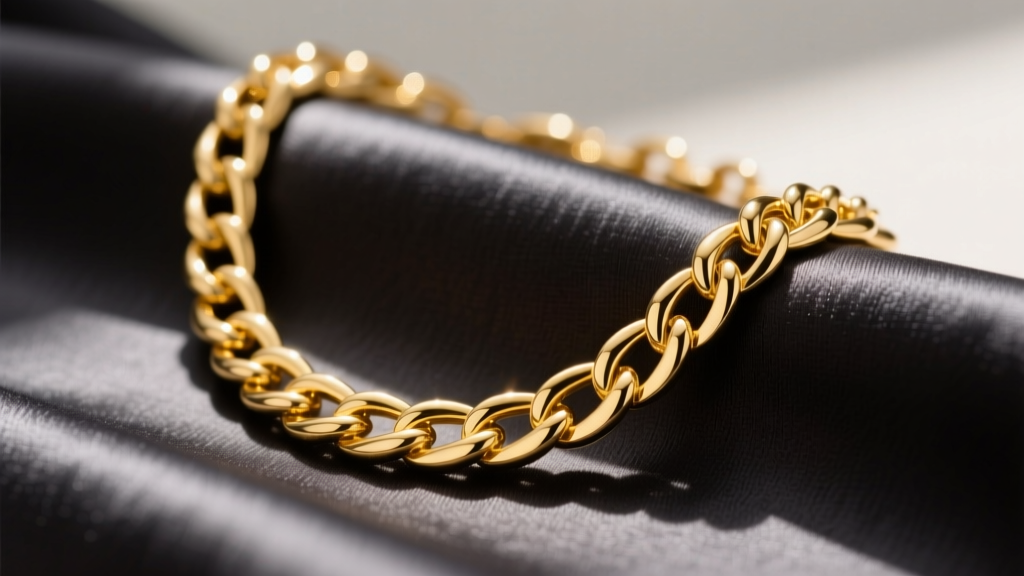
The S chain necklace, frequently referred to as an S-link or wave chain, is a masterclass in fluid jewelry design. Unlike traditional cable or curb chains that rely on closed oval links, the S chain is constructed from continuous wire bent into a sinusoidal, letter-S shape. These interlocking hooks create a remarkably supple, ribbon-like drape that mimics the movement of a snake chain but with a distinct, textured visual rhythm. As we navigate the jewelry market in 2026, the S chain has seen a massive resurgence, favored for its ability to transition seamlessly from minimalist layering pieces to heavy, standalone statement jewelry. However, the very geometry that gives the S chain its elegant drape also introduces unique structural vulnerabilities that buyers must understand before investing.
Material Grades and Hardness Metrics
Because S-links are essentially open curves rather than soldered closed loops, the metal's yield strength and memory are the only things keeping the necklace intact. When lateral tension is applied, softer metals will permanently deform, unhooking the links. Therefore, understanding the Vickers hardness (HV) of your chosen metal is critical. According to the Gemological Institute of America (GIA), the alloy composition of gold drastically alters its durability. Pure 24k gold is far too soft for S-links, while 14k and 18k offer varying degrees of structural integrity. For buyers prioritizing longevity in an open-link design, metal hardness should dictate your purchase.
| Metal Alloy | Vickers Hardness (HV) | Tarnish Resistance | Tensile Risk | Ideal Width for S-Links |
|---|---|---|---|---|
| 925 Sterling Silver | 65 - 90 HV | Low (Requires rhodium plating) | High (Prone to stretching) | 3mm - 5mm |
| 18k Yellow Gold | 115 - 125 HV | High | Moderate | 2mm - 4mm |
| 14k White/Yellow Gold | 135 - 150 HV | High | Low | 1.5mm - 6mm |
| 316L Stainless Steel | 150 - 190 HV | Very High | Very Low | 1mm - 8mm+ |
Sizing, Gauge, and Drape Characteristics
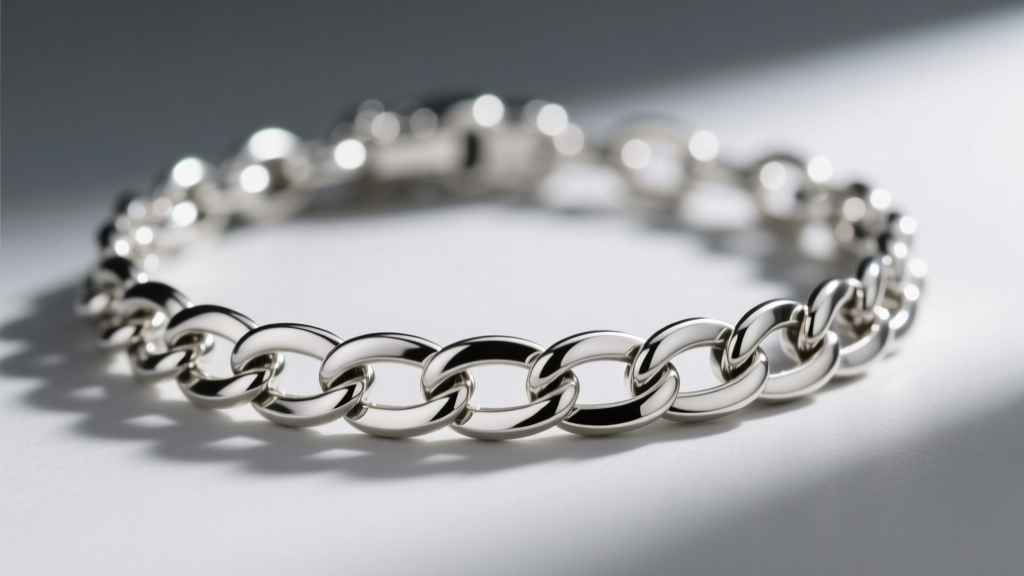
The width of an S chain necklace fundamentally alters both its aesthetic and its structural viability. When shopping, you will generally encounter three distinct size categories, each serving a specific styling purpose.
Delicate (1.0mm - 2.0mm)
At this gauge, the S chain offers a barely-there, shimmering effect. It is ideal for layering with longer pendant necklaces or wearing in multiples. However, in precious metals like 18k gold or sterling silver, sub-2mm S-links are highly susceptible to stretching if tugged. If you opt for this size, ensure the clasp is lightweight so the chain does not pull on its own links.
Standard (3.0mm - 5.0mm)
This is the sweet spot for daily wear. A 4mm S chain provides enough metal mass to resist casual snagging while maintaining a fluid, flexible drape. It is thick enough to support small to medium pendants, provided the pendant bail is large enough to slide over the wider S-link joints.
Statement (6.0mm - 10.0mm+)
Heavy S chains are architectural and bold. Because of the increased wire thickness, these chains are incredibly durable and resist deformation. They are best worn as standalone pieces, as their weight and stiffness make them less suitable for delicate layering.
Structural Vulnerabilities and Failure Modes
To buy an S chain necklace intelligently, you must understand how they fail. The most common failure mode is the 'knitwear snag.' Because the links are open hooks, the microscopic loops of wool or cashmere sweaters can easily catch inside the S-curve. When the wearer moves, the lateral force pulls the S-link open, permanently distorting the wire. Unlike a curb chain that might just snap at a soldered joint, a distorted S-link loses its geometric integrity and will continually unhook from adjacent links until repaired by a jeweler.
Another critical vulnerability lies in the clasp connection. Many mass-market jewelers attach S chains using standard spring-ring clasps and unsoldered jump rings. The open jump ring is a weak point that can easily be pulled apart by the heavy drape of the S chain. Always inspect the jump rings connecting the chain to the clasp; they must be laser-welded or traditionally soldered shut.
Clasp Mechanics and Hallmarking
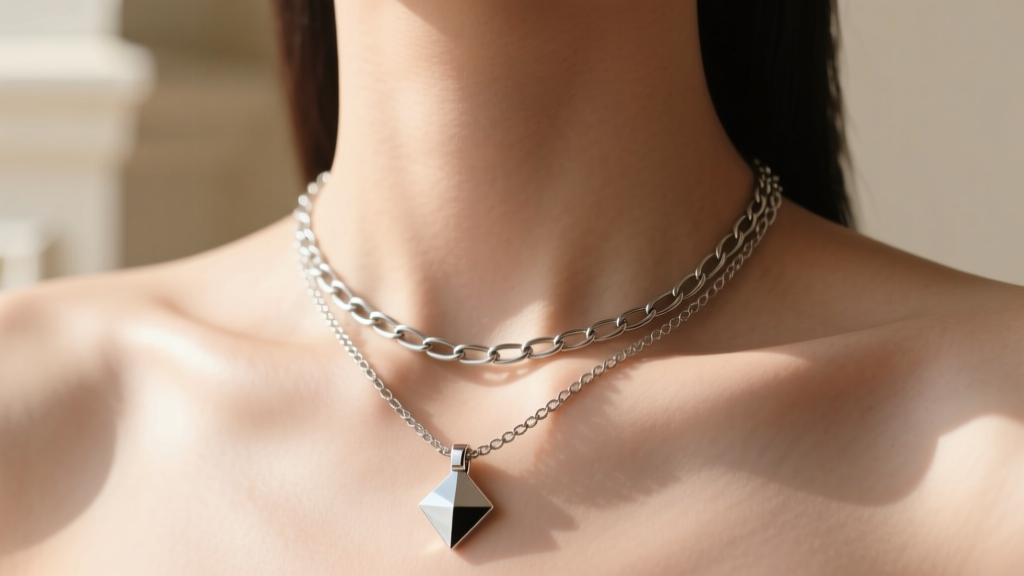
For any S chain necklace wider than 2.5mm, a spring-ring clasp is entirely inadequate. The tension required to open a small spring ring, combined with the fluid weight of the S-links, leads to premature clasp failure. You must look for a lobster claw clasp or a fold-over box clasp. These mechanisms provide a secure, locking closure that can handle the kinetic movement of the chain.
Furthermore, as of 2026, verifying the authenticity of precious metal chains has become more streamlined. According to The Goldsmiths' Company Assay Office, traditional hallmarks are increasingly being supplemented by micro-laser stamping on the clasp tags. Always ensure your gold or silver S chain features a clear 750 (18k), 585 (14k), or 925 stamp to guarantee you are paying for the correct alloy density.
The 2026 Buyer’s Inspection Checklist
Before finalizing your purchase, run the S chain necklace through this physical inspection framework:
- The Drape Test: Hold the necklace by the clasp and let it hang. It should fall in a smooth, continuous spiral without any stiff, jutting links.
- The Tension Check: Gently run your thumb and forefinger along the chain. You should not feel any sharp, protruding wire ends that indicate poorly finished links.
- The Solder Inspection: Examine the jump rings at the clasp under a loupe or macro lens. If you see a visible slit in the ring, reject the piece or ask the jeweler to solder it shut before purchase.
- The Polish Uniformity: Because S-links have deep inner curves, poorly manufactured chains will have dull, unpolished recesses. Ensure the high-polish finish reaches the interior of every hook.
Care and Maintenance Protocols
Maintaining an S chain requires a departure from standard jewelry care routines. Never use an ultrasonic cleaner on a vintage or heavily worn S chain. The high-frequency vibrations can shake weakened, open links out of their interlocking alignment. Instead, clean your S chain using a soft-bristled baby toothbrush and a mild, phosphate-free dish soap solution. Scrub gently in the direction of the links to avoid catching the bristles in the hooks.
When storing the necklace, never toss it into a communal jewelry box. The open S-links will inevitably tangle with other chains, and attempting to untangle them is the primary cause of link distortion. Store your S chain necklace flat in a dedicated anti-tarnish pouch, or hang it vertically on a padded jewelry stand to preserve its sinusoidal geometry and ensure it remains ready to wear for years to come.