Expert Guide to Buying a Gold Necklace for Girlfriend
Discover the metallurgical and structural secrets to choosing the perfect gold necklace for your girlfriend. Expert guide on karats, chains, and clasps.

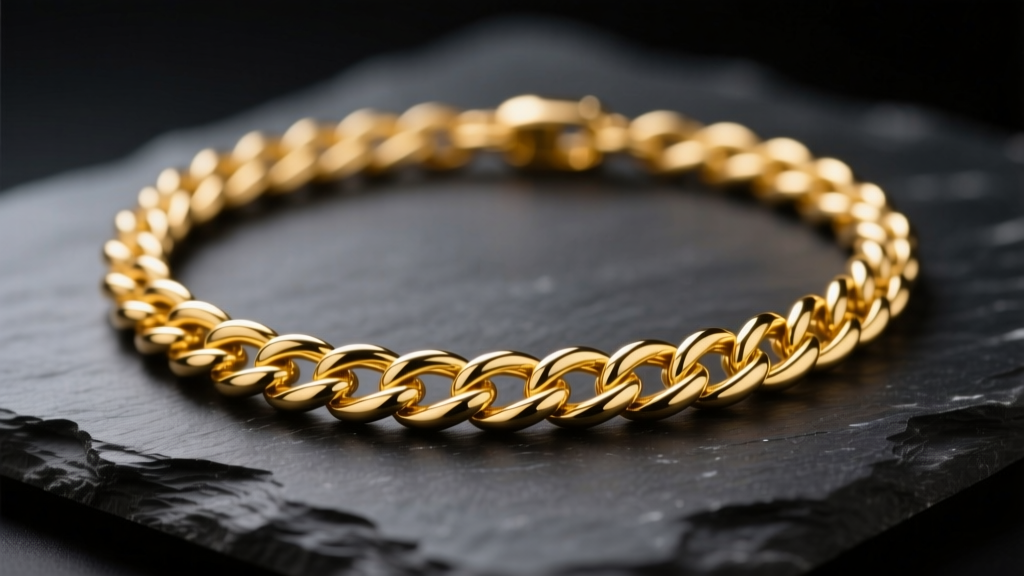
Selecting the ideal gold necklace for your girlfriend is rarely as simple as walking into a boutique and pointing at the shiniest object in the display case. Behind the romantic gesture lies a complex matrix of applied metallurgy, structural engineering, and lifestyle compatibility. A necklace is a high-wear item that will endure friction, chemical exposure from skincare routines, and varying tensile stresses. To make an investment that lasts a lifetime, you must look beyond the aesthetic and evaluate the piece on a technical level. This expert guide deconstructs the precise specifications you need to consider—from alloy compositions and chain weave tensile strengths to clasp mechanics and hallmark verification—ensuring your gift is both beautiful and structurally sound.
The Metallurgy of Romance: Decoding Gold Karats and Alloys
Pure 24-karat gold is far too malleable for daily wear; it will scratch, bend, and lose its shape within weeks. Therefore, gold jewelry is created by alloying pure gold with other metals to increase its Vickers hardness (HV) and durability. Understanding these alloy ratios is the first critical step when buying a gold necklace for girlfriend gifts that endure.
14k vs. 18k Gold: The Durability Threshold
An 18k gold necklace contains 75% pure gold and 25% alloy metals. It offers a rich, saturated color and is highly hypoallergenic, making it ideal for sensitive skin. However, its Vickers hardness sits around 120-140 HV, meaning it is more prone to micro-scratches. Conversely, 14k gold (58.3% pure gold) boasts a hardness of 140-160 HV. According to the Gemological Institute of America (GIA), 14k gold is the industry standard for everyday chain necklaces because the higher alloy content provides superior resistance to the mechanical stress of daily wear.
The White Gold and Rose Gold Variables
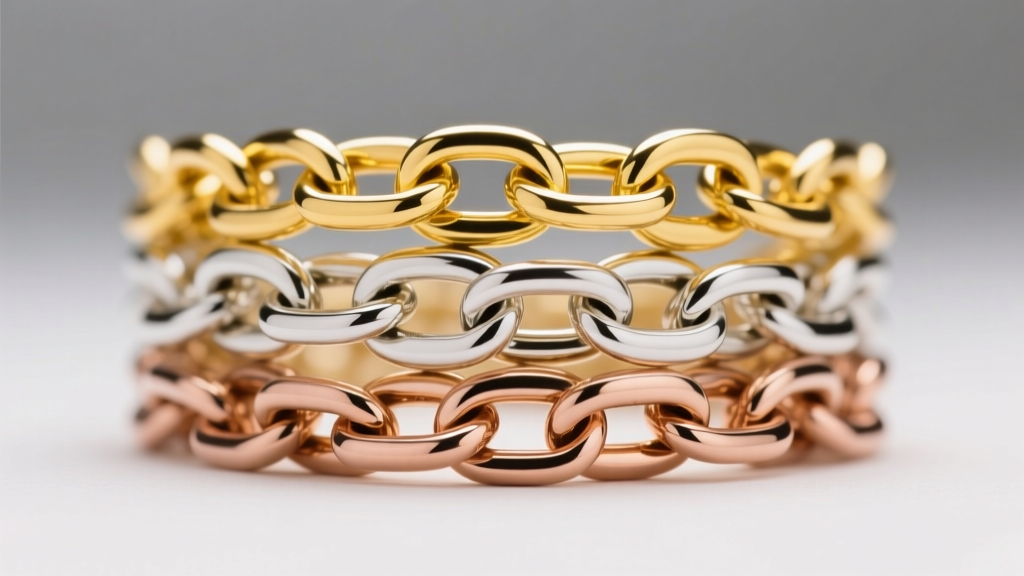
If your partner prefers white gold, you must investigate the specific alloy mixture. Historically, white gold was alloyed with nickel to achieve a silvery hue, but nickel is a primary contact allergen. In 2026, high-end jewelers increasingly use palladium-based alloys for white gold, which are hypoallergenic but command a 20-30% price premium. Furthermore, all white gold is plated with rhodium. You must factor in the maintenance cost of re-plating the necklace every 12 to 18 months as the rhodium inevitably wears away to reveal the faint yellowish-grey alloy beneath.
Rose gold achieves its blush tone through a high copper content. A standard 14k rose gold alloy contains roughly 58.3% gold, 35% copper, and 6.3% silver. While beautiful, copper can oxidize when exposed to high acidity or chlorine, occasionally leaving a harmless but unsightly greenish residue on the skin if the wearer's pH levels are highly acidic.
Structural Integrity: Chain Weaves and Tensile Strength
The chain weave dictates not only the visual light play of the necklace but also its structural failure points. A delicate chain might look elegant, but if it cannot support the weight of a pendant or resist the pulling force of a snagged sweater, it is a poor investment. Below is a technical breakdown of the most common chain weaves and their mechanical properties.
| Chain Weave | Tensile Strength | Snag Risk (Hair/Fabric) | Repair Difficulty | Best Use Case |
|---|---|---|---|---|
| Cable | Moderate | Low | Easy | Lightweight pendants, everyday minimalism |
| Box | High | Moderate | Moderate | Medium pendants, geometric aesthetic |
| Rope | Very High | High | Difficult | Heavy pendants, standalone statement pieces |
| Curb | High | Low | Easy | Daily wear, streetwear, no pendants |
| Snake | Low | Low | Nearly Impossible | Light pendants only, sleek modern looks |
Expert Warning on Snake Chains: While snake chains offer a beautifully smooth, liquid-metal appearance, their tightly interlocking rings create a structural vulnerability. If bent past a 45-degree angle, the internal links can kink and permanently fracture. Never buy a snake chain for a girlfriend who is active, sleeps in her jewelry, or frequently wears high-collared clothing.
Clasp Engineering and Bail Mechanics
The clasp is the single most common point of failure on any necklace. When evaluating a gold necklace for girlfriend wear, inspect the clasp mechanism and the jump rings connecting it to the chain.
Clasp Types: Lobster vs. Spring Ring
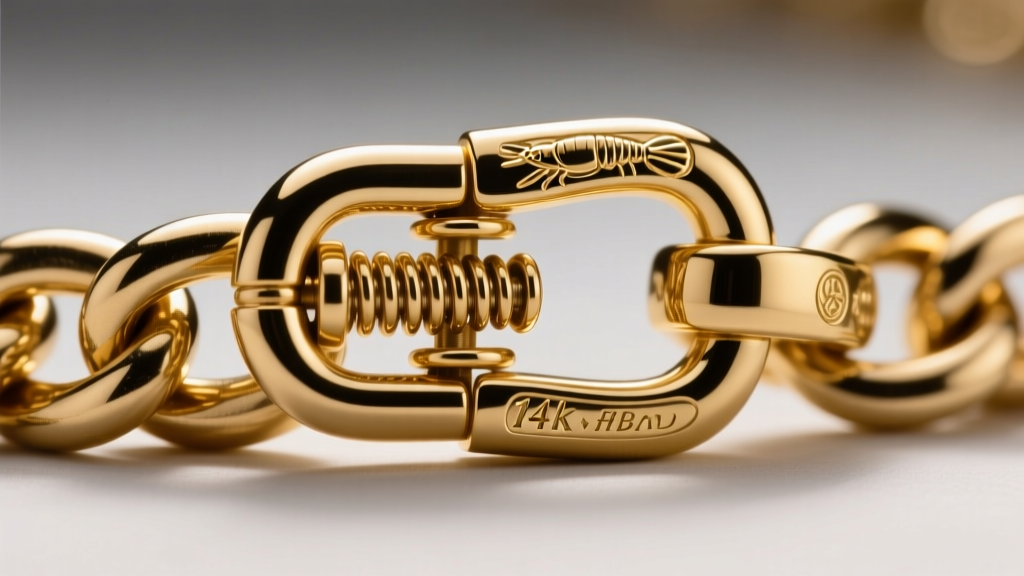
Spring ring clasps are small, circular, and rely on a tiny internal coil spring. They are notoriously difficult to operate with one hand and are prone to mechanical failure if the internal spring degrades. For any chain exceeding 1.5mm in width, or any necklace bearing a pendant heavier than 5 grams, a lobster claw clasp is mandatory. Lobster clasps feature a robust, self-closing lever mechanism that provides vastly superior shear strength and security.
The Importance of Soldered Jump Rings
Examine the small ring connecting the clasp to the chain (the jump ring). If the jump ring has a visible split or gap, it will eventually pull apart under tension. High-quality necklaces utilize soldered jump rings, where the gap has been fused shut with gold solder. If the necklace features a pendant, ensure the bail (the loop the chain passes through) is smooth and free of sharp interior edges that could act like a saw against the chain links over time.
Lifestyle Mapping: The Chemical Exposure Test
Gold itself is a noble metal and will not tarnish, but the alloy metals mixed with it are highly reactive. Before finalizing your purchase, map the necklace to her daily routine.
- The Skincare Enthusiast: If she uses chemical exfoliants (AHAs/BHAs), retinols, or vitamin C serums daily, avoid lower-karat gold (10k or 14k) near the neckline, as the acids can cause the copper and zinc alloys to oxidize and dull the metal's finish. Stick to 18k or platinum.
- The Gym-Goer: Chlorine in swimming pools and heavy salts in sweat are highly corrosive to copper and silver alloys. If she refuses to take her necklace off before swimming, you must choose a highly inert metal like 18k palladium white gold or platinum, as standard 14k yellow gold will suffer from stress corrosion cracking over time.
- The Minimalist Sleeper: If she never takes her jewelry off, avoid any chain with hollow links (like large, lightweight tubular ropes). Hollow chains will crush irreparably if she rolls onto them while sleeping. Always opt for solid-core chains.
Pricing Tiers and Authenticity Verification
In the current 2026 market, gold prices remain at a premium. Be highly skeptical of any 'solid gold' necklace that seems underpriced. The Federal Trade Commission (FTC) strictly regulates gold hallmarking in the United States. According to the FTC Jewelry Guides, any piece sold as karat gold must bear a quality mark (e.g., 14k, 18k, 585, 750) and, ideally, a registered maker's mark.
What to Expect to Pay
Pricing is calculated based on the spot price of gold, the weight of the piece in grams, and the manufacturing labor. A high-quality, solid 14k gold cable chain (1.5mm width, 18 inches) should weigh approximately 3 to 4 grams and retail between $250 and $400. An 18k gold box chain of the same dimensions will weigh slightly more due to gold's density and typically ranges from $450 to $700. If a retailer is selling a 14k chain of this size for under $100, it is almost certainly gold-plated brass or gold vermeil, which will wear through to the base metal within months of daily friction.
Quick Reference: The Buyer's Technical Checklist
- Verify the Stamp: Look for '585' (14k) or '750' (18k) stamped on the clasp tag or the first link.
- Pull Test the Clasp: Ensure it is a lobster clasp with a snappy, resilient spring action.
- Check the Jump Rings: Confirm they are soldered shut with no visible gaps.
- Evaluate the Bail: Ensure the pendant bail has a smooth interior to prevent chain abrasion.
- Match the Karat to the Lifestyle: 18k for sensitive skin and low-impact wear; 14k for high-impact, everyday durability.
By applying these technical parameters, you elevate the act of gifting from a simple transaction to a demonstration of profound care and understanding. A structurally sound, metallurgically appropriate gold necklace is not just an accessory; it is a resilient artifact of your relationship, engineered to withstand the rigors of daily life while maintaining its brilliance for decades.


