Cardinal Necklace Troubleshooting: Fixing Tarnish, Enamel, and Chains
Is your favorite cardinal necklace tarnishing or chipping? Learn expert troubleshooting steps to clean delicate metals, fix red enamel, and repair chains.

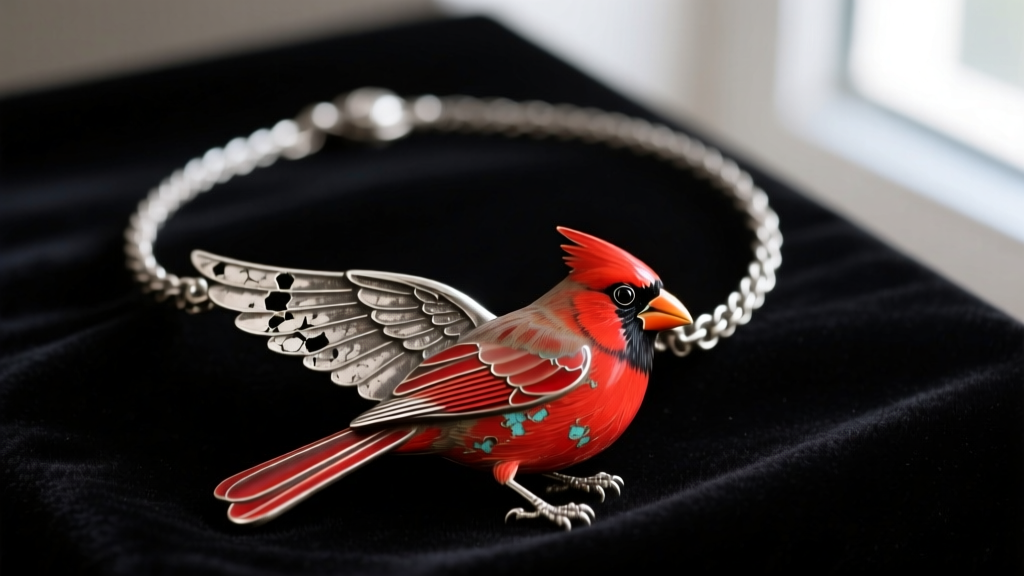
The Anatomy of a Cardinal Pendant: Where Failures Occur
The cardinal necklace is a deeply symbolic piece of jewelry, often worn as a memorial token or a celebration of winter wildlife. However, the intricate design of a cardinal pendant—characterized by deep crevices in the feathers, delicate enamel work, and a top-heavy silhouette—makes it uniquely prone to specific types of wear and tear. Unlike simple geometric pendants, a cast cardinal motif traps moisture, skin oils, and environmental pollutants in its textured wings and beak. Over time, this leads to accelerated oxidation, enamel fracturing, and disproportionate stress on the chain bail. To properly troubleshoot your cardinal necklace, we must first break down the piece into its three most vulnerable components: the base metal alloy, the enamel pigment, and the structural chain hardware.
Troubleshooting Metal Tarnish and "Green Neck" Syndrome
Tarnish on a cardinal necklace is rarely uniform. Because the pendant features deep recesses to mimic feathers, polishing compounds often get trapped in the grooves, leaving a chalky white residue that ruins the contrast of the piece. Furthermore, many affordable cardinal pendants are cast in brass or copper alloys and plated with silver or gold. When the plating wears thin, the underlying copper reacts with the acidity in your sweat and the chemicals in your lotions, creating cupric chloride—the compound responsible for the dreaded "green neck" stain.
Identifying Your Base Metal and Tarnish Profile
Before applying any chemical dip or polishing cloth, you must identify the metal grade. According to the Gemological Institute of America (GIA), sterling silver (.925) tarnishes due to a reaction with hydrogen sulfide in the air, forming black silver sulfide. Brass, on the other hand, oxidizes into a dull, brownish-green patina. Using a harsh abrasive on a silver-plated brass cardinal will strip the plating entirely, exposing the raw copper underneath.
| Metal Grade | Tarnish Color | Primary Cause | Recommended Cleaning Method |
|---|---|---|---|
| Sterling Silver (.925) | Black / Yellowish | Sulfur exposure, humidity | Microfiber polishing cloth, mild dish soap soak |
| Solid Brass / Bronze | Dark Brown / Green | Oxygen, skin acids, moisture | Brasso or lemon juice/baking soda paste (avoid enamel) |
| Silver-Plated Brass | Black with copper showing | Plating wear, friction | Non-abrasive silver dip (requires immediate rinsing) |
| Stainless Steel (316L) | Dull gray (rarely tarnishes) | Surface dirt, body oils | Ultrasonic cleaner or warm soapy water |
Pro-Troubleshooting Step: If your cardinal pendant has deep crevices that have turned black, do not use liquid silver polish. Instead, use a soft-bristled baby toothbrush dipped in a mixture of warm water and a single drop of phosphate-free dish soap. Gently agitate the crevices, rinse thoroughly, and immediately dry with a hairdryer on a cool setting to prevent water spots.
Rescuing Chipped Red Enamel on Cardinal Motifs
The vibrant red crest and wings are the defining features of a cardinal necklace. This color is typically achieved through either vitreous (kiln-fired glass) enamel or cold (epoxy/resin) enamel. Vitreous enamel is highly durable but can shatter if dropped on a hard surface. Cold enamel is more common in modern, mid-range jewelry but is prone to chipping, peeling, and UV yellowing over time. As noted by Lang Antiques, understanding the enamel type is critical before attempting any repair, as applying heat or harsh solvents to cold enamel will melt the resin and ruin the pendant.
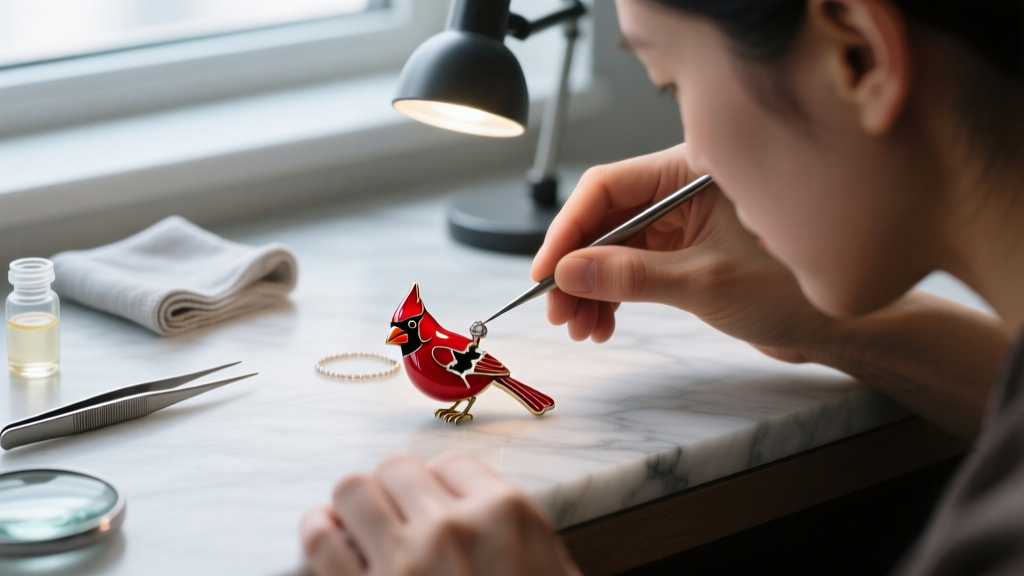
Step-by-Step Cold Enamel Touch-Up
If your cardinal's red enamel is chipping, you can perform a micro-repair at home using jewelry-grade UV resin and mica powder. Avoid using standard nail polish, as the solvents will degrade the surrounding metal finish and the color will quickly fade.
- Step 1: Prep the Chip. Use a wooden toothpick to gently clear any loose debris or lifting enamel from the chipped area. Do not use metal tools, as they will scratch the silver or brass bezel.
- Step 2: Color Match. Mix a tiny drop of clear, non-yellowing UV jewelry resin with a pinch of crimson red mica powder. Test the color on a piece of white paper; it should match the existing cardinal wing.
- Step 3: Application. Using a fine-tipped silicone sculpting tool or a toothpick, carefully drop the pigmented resin into the chip. Capillary action will help it settle. Ensure the resin is slightly domed above the metal bezel to account for shrinkage during curing.
- Step 4: Cure and Seal. Cure the resin under a 36W UV lamp for 60 seconds. Once hardened, lightly buff the surface with a micro-mesh pad (up to 12000 grit) to blend the repair with the surrounding enamel.
Chain and Clasp Failures: Preventing Pendant Loss
A cardinal pendant is inherently top-heavy. The cast metal required to form the bird's body and wings often results in a pendant weighing between 8 and 15 grams. Many manufacturers pair these heavy pendants with delicate 0.8mm or 1.0mm cable chains to keep production costs low. This is a structural mismatch that inevitably leads to chain stretching, bail wear, and eventual snapping.

Upgrading the Bail and Chain Gauge
To troubleshoot a failing chain setup, you must evaluate both the chain gauge and the clasp mechanism. The Jewelers of America recommends matching the chain's tensile strength to the weight of the pendant. For a standard 12-gram cardinal pendant, a minimum chain thickness of 1.2mm is required, though 1.5mm is ideal for daily wear.
The Bail Problem: The bail (the loop connecting the pendant to the chain) is often cast as a thin, integrated piece of the pendant. Over time, the friction of the chain rubbing against the bail acts like a saw, slowly cutting through the metal. If you notice the bail thinning, take the piece to a jeweler to have a heavy-duty sterling silver or 14k gold soldered bail attached. A soldered bail with an interior diameter of at least 4mm will accommodate thicker, stronger chains like a 1.5mm rolo or wheat chain, distributing the weight evenly and preventing the chain from kinking.
Clasp Upgrades: Discard the standard spring-ring clasp that came with the necklace. Spring rings rely on a tiny internal spring that frequently fails or catches on hair. Replace it with a 12mm or 14mm lobster clasp, which features a solid internal mechanism and a larger lever, making it significantly more secure for heavy pendants.
Preventative Care and Storage Frameworks
Once you have cleaned the tarnish, repaired the enamel, and upgraded the chain, implementing a strict storage protocol will prevent future failures. Cardinal necklaces should never be tossed into a communal jewelry box where the heavy pendant can swing and chip its own enamel against other pieces.
Store the necklace in an anti-tarnish flannel pouch infused with silver nitrate or activated charcoal. Before sealing the pouch, apply a micro-thin layer of microcrystalline wax (such as Renaissance Wax) to the metal portions of the pendant using a cotton swab. This museum-grade wax creates an invisible, inert barrier against humidity and sulfur, drastically slowing the oxidation process without altering the visual depth of the red enamel. By treating your cardinal necklace as a precision-engineered object rather than a simple accessory, you ensure its structural integrity and symbolic beauty endure for decades.


