Expert Buying Guide: Choosing Baroque Necklace Pearls
Discover how to evaluate luster, nacre, and origin when shopping for baroque necklace pearls. Expert tips to find authentic, high-quality irregular gems.

Understanding the Allure of Organic Asymmetry
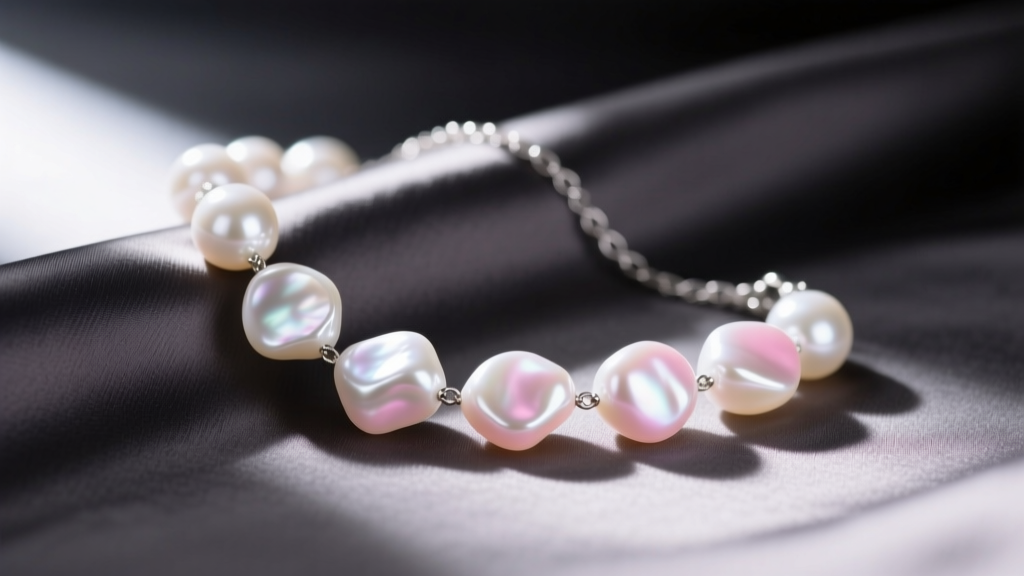
In the contemporary jewelry landscape of 2026, the pursuit of flawless, perfectly spherical gems has taken a backseat to the raw, unfiltered beauty of organic asymmetry. Baroque necklace pearls—defined by their irregular, non-symmetrical shapes—have become the cornerstone of modern, expressive fine jewelry. But purchasing these unique gems requires a completely different evaluative framework than buying traditional round strands. Because no two baroque pearls are identical, assessing their value, durability, and craftsmanship demands a keen eye and specialized knowledge. This comprehensive guide will walk you through the exact metrics gemologists use to evaluate baroque pearls, ensuring your investment is both beautiful and enduring.
The 4 Pillars of Baroque Pearl Valuation
Unlike round pearls, where symmetry and perfect sphericity dictate the highest premiums, baroque pearls are judged on a different set of criteria. The Gemological Institute of America (GIA) outlines specific quality factors that apply to all pearls, but their weight shifts dramatically when evaluating irregular shapes.
1. Luster and Orient: The True Indicator of Quality
Luster is the sharpness and intensity of light reflected from the pearl's surface. In baroque pearls, the undulating surface can create a mesmerizing play of light known as "orient"—an iridescent rainbow effect that dances just below the surface. When evaluating a baroque strand, look for "excellent" luster, where reflections are sharp and distinct. Avoid pearls with a "chalky" or dull appearance, as this indicates poor nacre crystallization or premature harvesting. The irregular ridges of a high-luster baroque pearl will catch the light in ways a perfectly round pearl simply cannot.
2. Nacre Thickness and Structural Integrity
Nacre is the crystalline substance the oyster secretes to form the pearl. Its thickness dictates both the gem's longevity and its optical depth. For bead-nucleated saltwater baroques (like Tahitian or South Sea varieties), a minimum nacre thickness of 0.8mm is critical. Anything thinner risks peeling or flaking over time, eventually exposing the dull shell bead inside. Freshwater baroques, however, are tissue-nucleated, meaning they are composed of 100% solid nacre all the way through, granting them exceptional structural durability.
3. Surface Quality and Blemish Mapping
It is a fundamental rule of gemology that virtually all natural pearls possess some surface blemishes. In baroque pearls, the line between a "blemish" and a "characteristic shape" is often blurred. Minor pits, bumps, and grooves are expected and contribute to the organic charm. However, you must strictly avoid pearls with deep cracks, chalky spots, or severe chips, particularly near the drill holes, as these compromise the structural integrity of the strand.
4. Color and Overtone Complexity
Baroque shapes excel at showcasing complex overtones. The ridges and valleys of the pearl's surface refract light at multiple angles, intensifying secondary colors. A Tahitian baroque might display a dark charcoal body color with vibrant peacock green and aubergine overtones, while a freshwater baroque might show a soft peach body with lavender and rose hints.
Freshwater vs. Saltwater Baroque: A Comparative Breakdown
The origin of the pearl drastically impacts its price, size potential, and nacre structure. According to the American Gem Society (AGS), understanding the biological differences between freshwater and saltwater mollusks is key to making an informed purchase. Below is a data-driven comparison of the most common baroque necklace pearls on the market.
| Pearl Type | Nucleation Method | Average Baroque Size | Price Range (18" Strand) | Durability & Nacre Notes |
|---|---|---|---|---|
| Freshwater | Tissue (Solid Nacre) | 8mm - 14mm | $150 - $1,200 | Extremely high; 100% nacre means no internal bead to expose if scratched. |
| Akoya | Bead (Round Shell) | 6mm - 9mm | $400 - $2,500 | Moderate; thin nacre (often 0.3-0.5mm) requires careful wear to prevent peeling. |
| Tahitian | Bead (Round Shell) | 9mm - 16mm | $1,500 - $15,000+ | High, provided nacre exceeds 0.8mm. Prized for dark body colors and intense orient. |
| South Sea | Bead (Round Shell) | 11mm - 20mm | $3,000 - $30,000+ | Very high; thick nacre (2-4mm) with a luxurious, satiny luster rather than sharp reflections. |
Evaluating Craftsmanship: Drilling and Stringing
The physical construction of a baroque pearl necklace is just as important as the gems themselves. Because of their uneven geometry, baroque pearls are notoriously difficult to drill and string.
Precision Drilling Techniques
Drilling an irregular surface requires immense skill. If a standard bit slips on a curved ridge, it can cause a "blowout"—a jagged chip on the exit side of the hole. Master jewelers use diamond-coated twist bits and often drill from both sides, meeting perfectly in the center to prevent chipping. When inspecting a strand, look closely at the drill holes. They should be clean, cylindrical, and free of jagged edges or white stress marks in the nacre.
Stringing Materials and Knotting
For high-value baroque strands, traditional Japanese silk thread (Size F or G, depending on the drill hole diameter) remains the gold standard. Silk provides a soft drape that complements the organic shapes. Crucially, there must be a hand-tied knot between every single pearl. This prevents the irregular shapes from grinding against one another and ensures that if the strand breaks, you only lose one pearl. Additionally, the ends of the silk should be protected by "French wire" (a tiny coiled metal spring) where it loops through the clasp, preventing the metal from cutting the thread over time.
Red Flags: How to Spot Fakes and Treated Pearls
As the demand for baroque necklace pearls has surged, so has the market for imitations and heavily treated stones. Here is how to protect your investment:
- The Tooth Test: Gently rub the pearl against the biting edge of your front tooth. Real nacre feels distinctly gritty or sandy, like fine sandpaper. Glass or plastic imitations (like Majorica pearls) will feel perfectly, unnaturally smooth.
- Uniform Irregularity: If you are looking at a strand where every single baroque pearl has the exact same "unique" shape and identical blemish patterns, you are likely looking at molded shell-powder composites or cast glass.
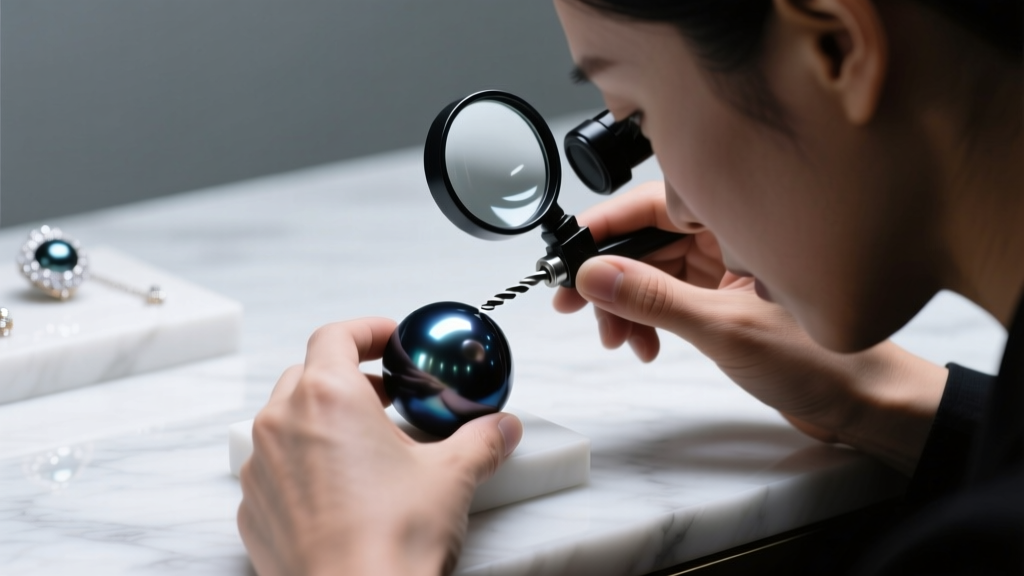
- Dye and Irradiation: Many lower-quality freshwater baroques are dyed to mimic expensive Tahitian or Golden South Sea pearls. Look for dye concentration in the crevices, drill holes, or surface pits. A jeweler's loupe will reveal unnatural color pooling in these areas.
Expert Insight: When examining a high-value Tahitian or South Sea baroque strand, always request an X-ray fluorescence (XRF) or optical coherence tomography (OCT) scan if the nacre thickness is in question. Reputable dealers in 2026 routinely provide these non-destructive imaging reports to prove the nacre exceeds the critical 0.8mm threshold, ensuring the necklace will last generations.
Styling and Sizing Your Baroque Pearl Strand
Because baroque pearls are asymmetrical, their weight distribution is uneven. A traditional 18-inch princess-length strand might twist on the neck as the heavier sides of the pearls naturally gravitate downward. To combat this, modern jewelers often employ "floating" designs, where baroque pearls are individually wire-wrapped or set in small gold bezels and linked together, rather than strung on silk. This locks the orientation of each pearl in place, ensuring the most beautiful, lustrous angles always face forward.
If you prefer a traditional silk-strung baroque necklace, opt for a slightly longer length (20 to 24 inches). The extra length allows the heavier, irregular gems to drape naturally without pulling uncomfortably against the collarbone, creating a relaxed, bohemian silhouette that perfectly matches the organic nature of the stones.
Final Verdict: Investing in Organic Asymmetry
Purchasing baroque necklace pearls is an exercise in appreciating the imperfect. By prioritizing sharp luster, verifying nacre thickness, and scrutinizing the stringing craftsmanship, you can acquire a piece of jewelry that is not only a striking fashion statement but a durable, heirloom-quality asset. Whether you choose the accessible, solid-nacre durability of freshwater baroques or the deep, mysterious orient of a Tahitian strand, these irregular gems offer a level of individuality that perfectly spherical pearls simply cannot match.


