Hammered Cross Necklace Metals: Durability & Care Guide
Compare metals for your hammered cross necklace. Explore silver, gold, and steel properties, tarnish rates, and expert care tips.

The Metallurgy of the Hammered Finish
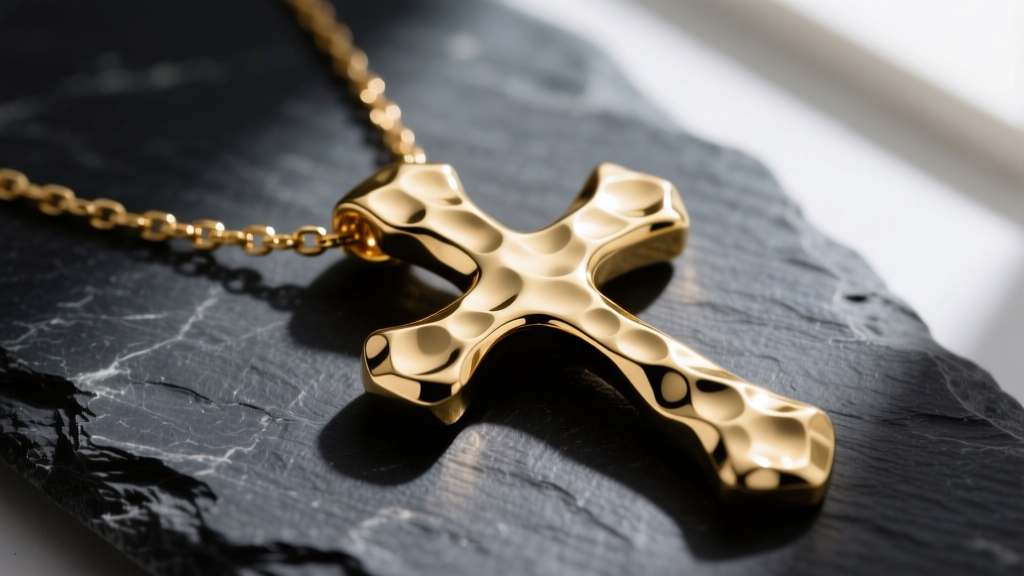
When selecting a hammered cross necklace, the aesthetic appeal of the rustic, light-catching texture often overshadows a critical metallurgical reality: the hammering process fundamentally alters the physical properties of the metal. Artisans use planishing or ball-peen hammers to strike the surface, a technique known as work-hardening. This process compresses the metal's grain structure, increasing its tensile strength and resistance to bending. However, it also increases the microscopic surface area of the pendant by up to 30%.
This expanded surface area is a double-edged sword. While it creates the brilliant, multifaceted light reflection that makes a hammered cross so visually striking, it also exposes more of the metal to oxygen, moisture, and skin acids. Consequently, the base material you choose dictates not only the price and color of the necklace but also its long-term tarnish rate and structural wear. Understanding these material properties is essential for making an informed investment in your everyday jewelry.
Material Breakdown: How Metals React to Hammering
925 Sterling Silver: The Traditional Choice
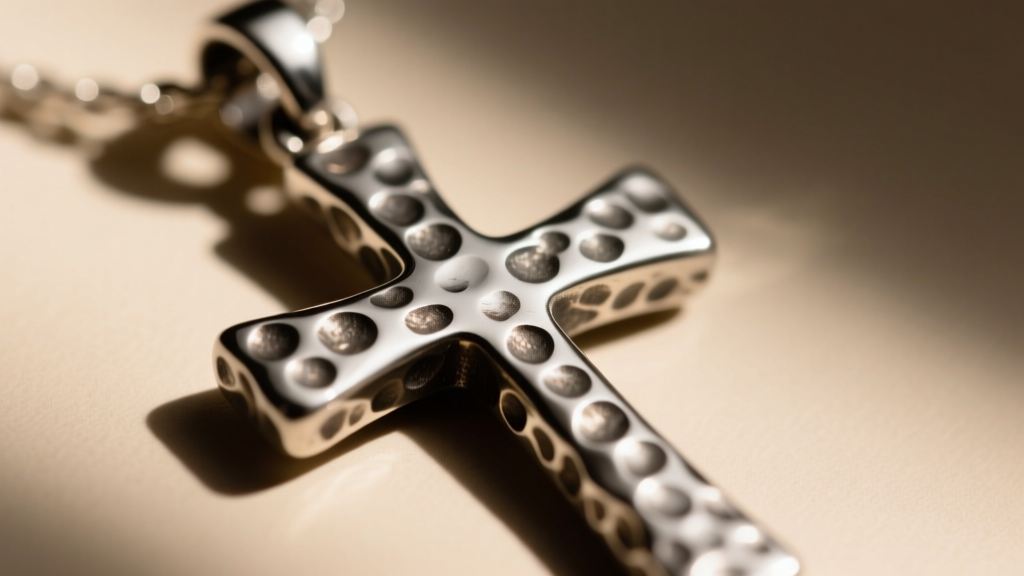
Sterling silver (92.5% pure silver, 7.5% copper) is the most common metal for hand-forged hammered crosses. The copper alloy provides the necessary hardness for the silver to hold the deep, overlapping dimples created by a planishing hammer. However, according to the Silver Institute, silver is highly susceptible to sulfur compounds in the air, forming silver sulfide (tarnish). Because a hammered texture traps moisture and airborne pollutants in its microscopic crevices, an un-plated hammered silver cross will tarnish significantly faster than a high-polish, smooth-finish pendant. Many manufacturers apply a thin rhodium plating to prevent this, but this can dull the sharp, organic edges of the hammer marks.
14k and 18k Solid Gold: The Premium Standard
Gold offers superior tarnish resistance, but the karat weight drastically changes how the metal behaves under the hammer. 18k gold (75% pure gold) is relatively soft. When hand-hammered, it yields deep, pronounced craters with soft, rounded edges, giving the cross a highly organic, almost molten appearance. Conversely, 14k gold (58.5% pure gold) is alloyed with higher amounts of copper, silver, and zinc. As noted by the Gemological Institute of America (GIA), these alloying metals increase the Vickers hardness of the gold. A hammered 14k cross will feature sharper, more defined facets that catch the light more aggressively, while offering better resistance to surface scratching during daily wear.
316L Stainless Steel: The Modern Workhorse
For those seeking maximum durability and zero maintenance, 316L surgical stainless steel is the optimal choice. With a Vickers hardness rating of roughly 150-190 HV (compared to silver's 60-70 HV), steel is incredibly difficult to hand-hammer using traditional bench tools. Therefore, most hammered steel crosses are actually die-struck or machine-stamped to mimic the textured look. While they lack the unique, asymmetric imperfections of a hand-forged piece, they offer absolute immunity to tarnish, rust, and skin discoloration, making them ideal for active lifestyles or exposure to saltwater.
Brass and Bronze: The Patina Seekers
Brass (copper and zinc) and bronze (copper and tin) are frequently used for heavy, rustic hammered crosses. These metals are chosen specifically for their reactivity. The hammered divots will quickly oxidize and darken, creating natural antiquing that provides high visual contrast against the raised, polished high-points of the cross. The trade-off is high maintenance; without regular polishing and a protective wax coating, these metals will develop a deep, sometimes uneven patina and can leave a green copper-carbonate residue on the skin due to acidic sweat reacting with the expanded surface area.
Comparative Data: Hardness, Tarnish, and Pricing
To help you weigh your options, the table below outlines the core metallurgical and economic differences between the most common metals used for hammered cross pendants in 2026.
| Material | Vickers Hardness (HV) | Tarnish Susceptibility | Avg. Price Range | Texture Method |
|---|---|---|---|---|
| 925 Sterling Silver | 65 - 75 HV | High (Silver Sulfide) | $45 - $150 | Hand-Forged |
| 14k Solid Gold | 130 - 150 HV | Very Low | $280 - $650 | Hand-Forged |
| 18k Solid Gold | 110 - 125 HV | None | $400 - $900+ | Hand-Forged |
| 316L Stainless Steel | 150 - 190 HV | None | $15 - $45 | Die-Struck / Stamped |
| Jeweler's Brass | 80 - 110 HV | Extreme (Copper Oxide) | $25 - $60 | Hand-Forged / Cast |
Chain Pairing and Gauge Considerations
A hammered cross pendant is rarely delicate. The work-hardening process and the visual weight of the texture usually result in a pendant that weighs between 4 grams and 15 grams. Pairing this with an inadequate chain is a common failure point that leads to broken links or bail wear.
- Under 5 Grams: A 1.2mm to 1.5mm cable chain (typically 20-gauge to 18-gauge wire) is sufficient. Box chains are not recommended, as the sharp internal edges of the box links can act like a file against the pendant's bail over time.
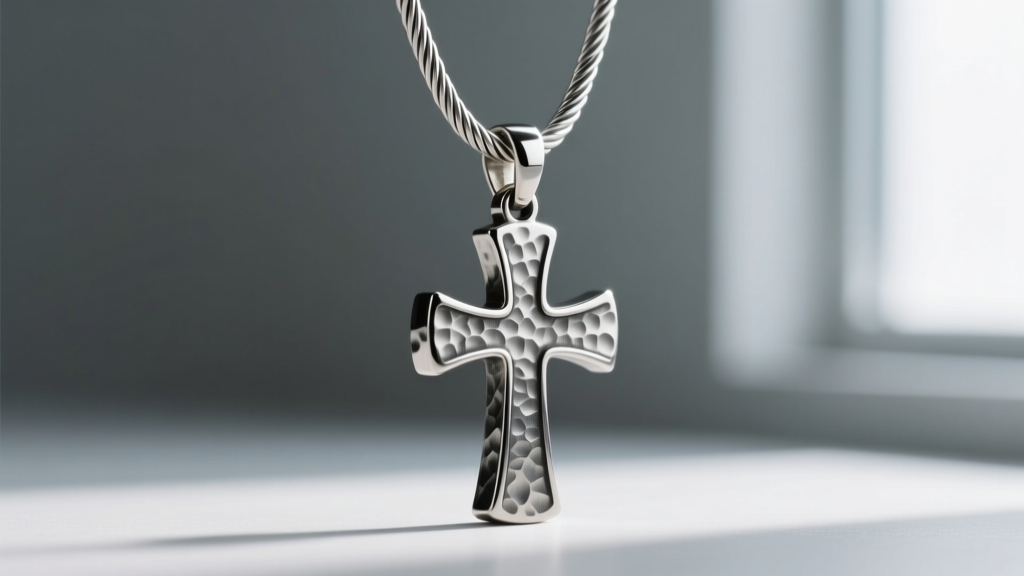
- 5 to 12 Grams: Upgrade to a 1.8mm to 2.2mm rope or curb chain. The twisting of a rope chain distributes the weight of the heavy textured cross evenly, preventing the chain from kinking or stretching at the clasp.
- Over 12 Grams: You require a heavy-duty chain, such as a 2.5mm+ Figaro or thick Cuban link. Ensure the clasp is a lobster claw with a reinforced soldered ring, rather than a spring-ring clasp, which will easily snap under the pendulum effect of a heavy hammered cross.
Maintenance Protocols for Textured Pendants
Cleaning a hammered cross requires a different approach than cleaning a smooth, high-polish piece of jewelry. The primary goal is to remove oils and tarnish without stripping the intentional antiquing or scratching the delicate high-points of the texture.
What to Avoid
Never use liquid chemical silver dips on a hammered sterling silver cross. These dips contain thiourea, which strips all oxidation instantly. This will remove the dark contrast trapped in the hammered divots, leaving the pendant looking flat, overly bright, and artificially washed out. Furthermore, avoid ultrasonic cleaners if your hammered cross features any micro-pave gemstones or if the piece is made of brass, as the high-frequency vibrations can loosen adhesives or accelerate stress-corrosion cracking in reactive alloys.
The Proper Cleaning Technique
- The Soak: Mix warm water with a few drops of mild, phosphate-free dish soap. Let the necklace soak for 5 to 10 minutes to loosen sebum and skin cells trapped in the textured crevices.
- The Agitation: Use an extra-soft baby toothbrush to gently agitate the hammered divots. Do not use a medium or hard bristle brush, as it will leave micro-scratches on the raised, polished facets of the cross.
- The Polish (Silver Only): If the high-points of the silver cross have tarnished, use a treated jeweler's polishing cloth. Gently glide the cloth over the raised surfaces. The cloth will not reach deep into the divots, preserving the dark, rustic contrast that gives the hammered finish its depth and character.
Expert Insight: If you live in a high-humidity environment or frequently swim in chlorinated pools, apply a thin coat of Renaissance Wax or microcrystalline wax to your hammered sterling silver or brass cross. The wax fills the microscopic pores of the hammered texture, creating an invisible barrier against sulfur and chlorine without altering the metal's natural luster.
Ultimately, the best metal for your hammered cross necklace depends on your willingness to engage with the material. Choose 14k gold or 316L steel for a zero-maintenance, lifelong accessory that retains its brilliant, light-catching facets. Opt for sterling silver or brass if you appreciate a living metal that evolves, darkens, and tells a story through the unique topography of its hammered surface.


