The Anatomy of a Genuine Turquoise Crystal Necklace: Grading & Care
Discover the technical grading, stabilization methods, and authentication frameworks for a genuine turquoise crystal necklace. Expert gemology guide.

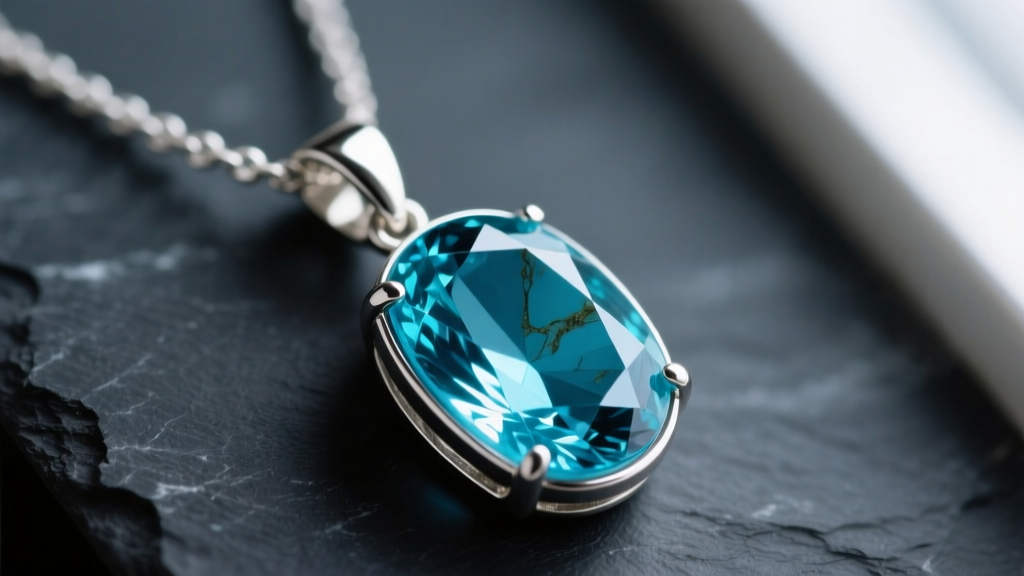
When collectors, gemologists, and jewelry enthusiasts evaluate a turquoise crystal necklace, they are engaging with one of the oldest and most chemically complex ornamental materials in human history. However, the commercial terminology often obscures the mineralogical reality. To make informed purchasing decisions in the 2026 market, buyers must look beyond superficial aesthetics and understand the structural integrity, treatment protocols, and setting mechanics that dictate a turquoise necklace's longevity and value.
The Mineralogical Reality: Turquoise as a Cryptocrystalline Mass
From a strict gemological perspective, searching for a "turquoise crystal necklace" involves a slight misnomer. Turquoise (CuAl6(PO4)4(OH)8·4H2O) is a hydrous phosphate of copper and aluminum. Unlike quartz or beryl, it rarely forms distinct, macroscopic crystalline structures. Instead, it is a cryptocrystalline to microcrystalline mineral, meaning its crystal structure is so fine it cannot be seen without high-powered magnification.
This cryptocrystalline nature gives turquoise its characteristic waxy to sub-vitreous luster but also makes it inherently porous. According to mineralogical data from Mindat.org, turquoise registers between 5 and 6 on the Mohs hardness scale. This relative softness and high porosity mean that up to 85% of mined turquoise is too chalky or fragile to be cut and polished for jewelry without some form of stabilization.
Technical Grading Framework for Turquoise Pendants
Gemologists and high-end lapidaries grade turquoise based on four intersecting variables: color saturation, matrix distribution, luster (hardness indicator), and origin. Below is the industry-standard grading framework used to evaluate premium turquoise necklaces.
| Grade | Mohs Hardness | Porosity & Luster | Matrix Characteristics | Market Application |
|---|---|---|---|---|
| AAA (Gem Grade) | 5.5 - 6.0 | Low porosity; high waxy/vitreous luster | Clear or precise, high-contrast spiderweb | High-end collector necklaces, investment pieces |
| AA (Jewelry Grade) | 5.0 - 5.5 | Moderate porosity; good waxy luster | Moderate matrix, well-distributed | Premium commercial turquoise crystal necklaces |
| A (Stabilized Grade) | 4.0 - 5.0 | High porosity; requires polymer stabilization | Heavy matrix, chalky base | Standard retail jewelry, fashion beads |
| B/C (Chalk/Block) | < 4.0 | Extremely porous; requires dye and heavy epoxy | N/A (often reconstituted) | Mass-market imitations, low-tier accessories |
The Role of the Matrix
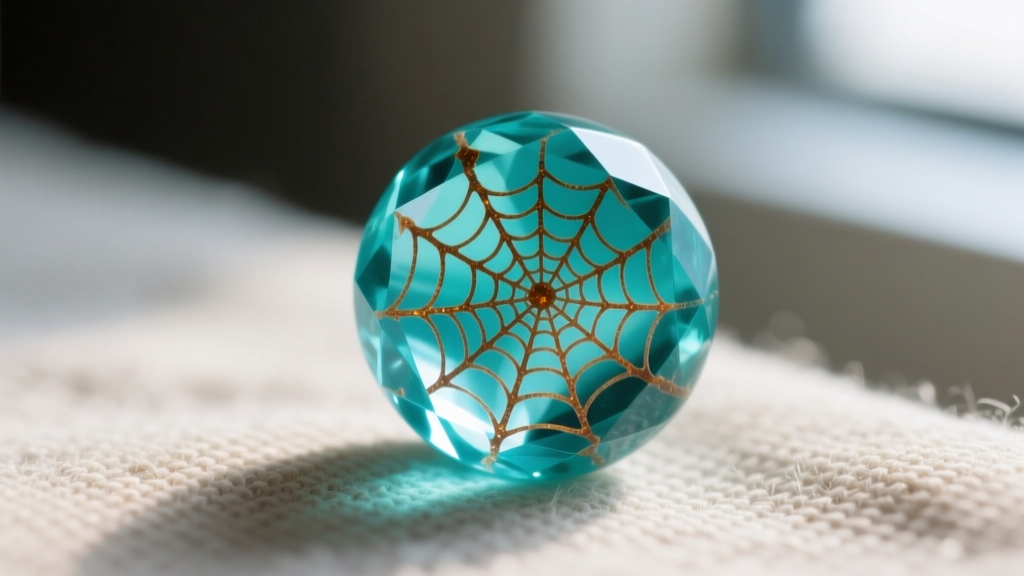
The matrix is the host rock trapped within the turquoise during its formation. While "clear" turquoise (like the famous Sleeping Beauty mine output) is highly prized for its uniform robin’s-egg blue, a precise "spiderweb" matrix—typically composed of brown limonite or black iron pyrite—can exponentially increase the value of the stone if the webbing is symmetrical and tightly contrasted.
Stabilization and Enhancement Protocols
Because natural, gem-grade turquoise is exceptionally rare, the Gemological Institute of America (GIA) recognizes stabilization as a standard, acceptable market practice, provided it is disclosed. However, buyers must understand the difference between structural stabilization and deceptive enhancement.
- Polymer Impregnation (Standard Stabilization): A chalky turquoise is submerged in a liquid polymer or epoxy resin under a vacuum. The resin fills the microscopic pores, hardening the stone to a Mohs 5.5 and allowing it to take a high polish without altering its natural color.
- The Zachery Method: A proprietary, highly sought-after treatment that uses a non-toxic chemical bath to reduce porosity and enhance the stone's natural electrical conductivity. Zachery-treated turquoise can be polished to a brilliant luster without introducing foreign polymers, making it a favorite among purists.
- Dyeing and Color Enhancement (Deceptive): Lower-grade chalk turquoise is soaked in blue dyes to mimic high-grade Persian or Sleeping Beauty stones. Over time, UV exposure and skin oils will cause these dyes to break down, resulting in a greenish, mottled appearance.
Identifying Imitations: Howlite and Magnesite
The market is saturated with dyed howlite and magnesite sold as genuine turquoise. Howlite is a borate mineral with a distinct, bold grey or black veining that superficially resembles turquoise matrix. To differentiate a genuine turquoise crystal necklace from a howlite imitation, examine the dye concentration. In dyed howlite, the dark veins will absorb the blue dye more heavily than the white surrounding material, resulting in unnaturally dark, saturated veins. Furthermore, howlite has a Mohs hardness of 3.5; a standard steel needle (Mohs 5.5) will easily scratch howlite, whereas it will glide over genuine, stabilized turquoise.
Metallurgy and Setting Mechanics
The structural vulnerability of turquoise dictates strict requirements for jewelry setting mechanics. Because turquoise lacks a defined crystal cleavage plane but is highly sensitive to localized pressure, prong settings are strongly discouraged. The point-load pressure exerted by metal prongs can cause micro-fractures that eventually lead to the stone splitting.
Expert lapidaries utilize bezel settings or flush channels. A properly engineered bezel distributes pressure evenly across the perimeter of the cabochon. Furthermore, the backing of the bezel cup should feature a small ventilation hole or a moisture-resistant barrier (like a thin layer of clear jeweler's epoxy) to prevent skin acids and lotions from penetrating the porous back of the cabochon.
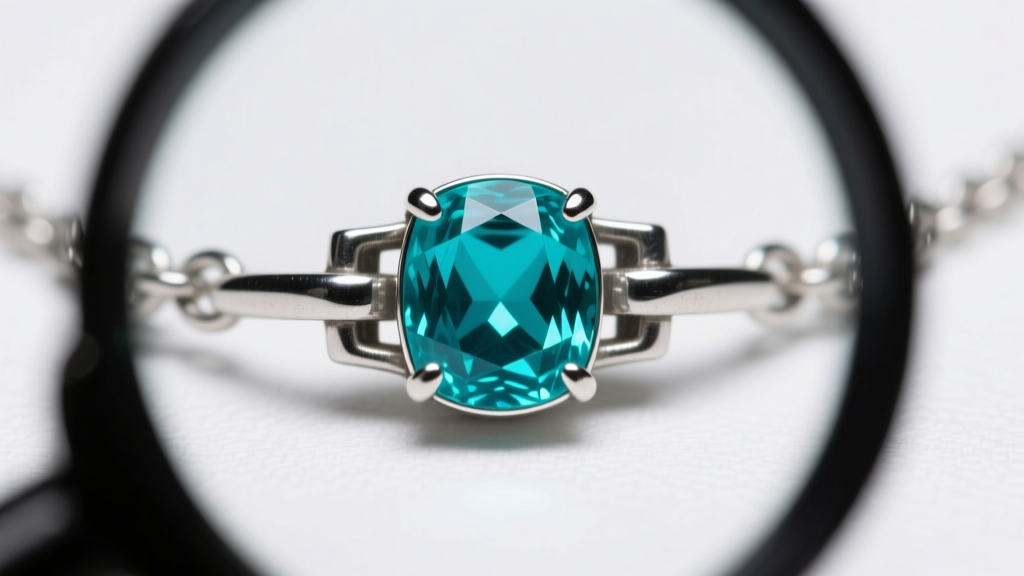
Sterling silver (925) remains the metallurgical standard for turquoise necklaces. The sulfur in sterling silver can oxidize, creating an antiqued contrast that complements the earthy tones of the matrix. While 14k and 18k gold are increasingly popular in 2026, gold's higher cost often restricts the budget available for sourcing AAA-grade turquoise, leading some manufacturers to pair gold with lower-grade, heavily stabilized stones.
Chemical Vulnerabilities and Long-Term Care
Turquoise is highly reactive to its environment. Its porous nature means it acts as a sponge for environmental chemicals.
Expert Care Directive: Never clean a turquoise necklace in an ultrasonic cleaner or use commercial silver dips. The high-frequency vibrations can shatter micro-fractures, and the acidic silver dips will strip the stone's natural waxy luster, leaving it permanently dull and chalky.
To maintain the structural and aesthetic integrity of your turquoise crystal necklace, adhere to the "Last On, First Off" rule. Apply perfumes, hairsprays, and cosmetics before putting on the necklace. When removing the jewelry, gently wipe the cabochon with a dry, untreated microfiber cloth to remove microscopic skin oils and environmental pollutants. Over decades, natural, untreated turquoise will slowly absorb trace skin oils, developing a deeper, greener patina—a process highly valued by vintage collectors but easily avoided through rigorous, proactive cleaning routines.


