How to Clean and Care for Your 14k Gold Bee Necklace
Learn expert techniques to clean, polish, and store your 14k gold bee necklace. Protect delicate wings and gemstone accents from tarnish and damage.

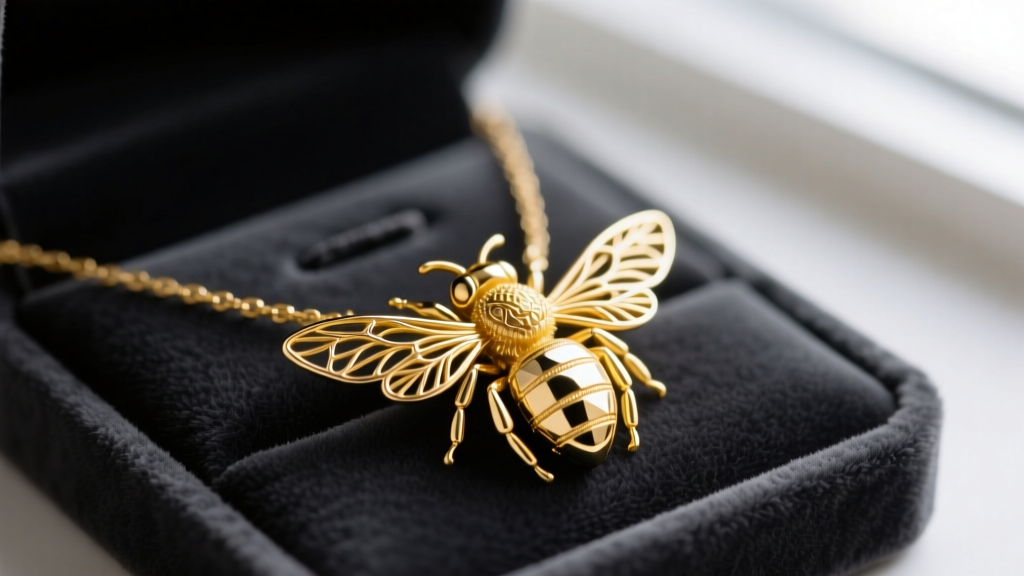
Nature-inspired jewelry has seen a massive resurgence, with the 14k gold bee necklace emerging as a definitive staple in modern collections. Whether your piece features intricate filigree wings, cold enamel detailing, or micro-pavé diamond accents, maintaining its structural integrity and brilliant luster requires specialized knowledge. Unlike simple gold hoops or solid bar pendants, insect motifs possess complex geometries, deep undercuts, and fragile appendages that trap debris and are highly susceptible to mechanical damage during improper cleaning. According to the Gemological Institute of America (GIA), 14k gold is an alloy comprising 58.5% pure gold and 41.5% strengthening metals like copper, silver, and zinc. While this composition offers excellent durability for daily wear, the alloyed metals are still vulnerable to oxidation and chemical corrosion. This comprehensive guide will walk you through the exact protocols required to clean, untangle, and store your 14k gold bee necklace to ensure it remains a pristine heirloom for decades.
Understanding 14k Gold Alloys and Bee Pendant Construction
Before applying any cleaning solution, you must identify the specific alloy of your 14k gold bee necklace and the secondary materials used in its construction. 14k yellow gold is typically alloyed with silver and copper, giving it a warm hue but making it prone to surface tarnish when exposed to sulfur. 14k rose gold contains a higher copper concentration, which can darken significantly if exposed to harsh chlorines. Conversely, 14k white gold is alloyed with nickel or palladium and plated with a microscopic layer of rhodium to achieve its bright white finish; aggressive polishing will strip this rhodium layer, revealing the slightly yellowish alloy beneath.
Furthermore, the bee pendant itself dictates the cleaning method. A solid cast 14k gold bee can withstand more rigorous brushing than a bee featuring cold-painted enamel wings or a abdomen set with fragile gemstones like black onyx or opal. Micro-pavé settings, where tiny diamonds are held in place by minuscule gold beads, are particularly vulnerable to vibration and chemical loosening.
The Chemical Threat Matrix: Daily Wear Precautions
Preventative care is always superior to corrective cleaning. The Jewelers of America consistently advises removing fine jewelry before exposure to household chemicals, but the intricate crevices of a bee pendant make it a magnet for aerosolized particles and skin oils. Below is a breakdown of common chemical threats and their specific effects on your necklace.
| Chemical Agent | Source | Impact on 14k Gold & Bee Motif |
|---|---|---|
| Chlorine | Swimming pools, bleach | Causes 'stress corrosion cracking' in the alloy, potentially snapping delicate bee antennae or chain links. |
| Sulfur | Hot springs, rubber bands | Reacts with copper/silver alloys to form black silver sulfide tarnish, deeply embedding in filigree wing grooves. |
| Cosmetic Aerosols | Hairspray, dry shampoo | Creates a sticky, opaque film over gemstone accents and traps dead skin cells in the bee's undercarriage. |
| Mercury | Broken thermometers | Causes immediate 'amalgamation', permanently turning the gold white and brittle upon contact. |
Why Ultrasonic Cleaners Are the Enemy of Insect Motifs
Many consumers mistakenly believe that commercial ultrasonic jewelry cleaners are the ultimate solution for intricate designs. While a 40kHz ultrasonic bath is excellent for shaking dirt out of a solid diamond solitaire, it is exceptionally dangerous for a 14k gold bee necklace. The high-frequency cavitation bubbles created by the machine can easily fracture cold enamel wings, shatter included gemstones like emeralds or onyx, and vibrate micro-pavé diamonds completely out of their settings. Furthermore, if your bee pendant features any glued components—a common practice in lower-tier manufacturing for attaching pearl abdomens or enamel drops—the ultrasonic vibrations will dissolve the adhesive, resulting in catastrophic loss of the design elements. Always default to manual cleaning for nature-inspired, multi-material pendants.
The Manual Cleaning Protocol for 14k Gold Bee Necklaces
For a safe, deep clean that preserves every detail of your bee pendant, follow this exact manual protocol. You will need distilled water, a phosphate-free mild dish soap (such as original Dawn), a bowl, and an extra-soft baby toothbrush. Never use standard toothbrushes, as their medium or hard bristles will leave microscopic scratches on the gold alloy and dull the polish.
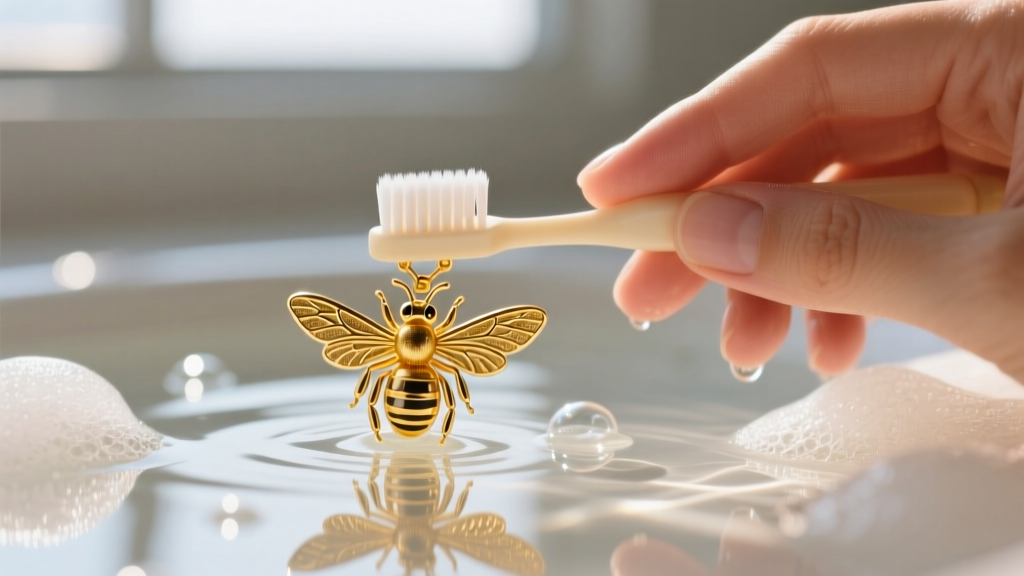
- Prepare the Solution: Mix three drops of phosphate-free dish soap into one cup of lukewarm distilled water. Avoid hot water, which can cause thermal shock to any gemstone accents.
- Soak Briefly: Submerge the 14k gold bee necklace for exactly 3 to 5 minutes. This allows the surfactants to break down sebum and cosmetic buildup trapped in the filigree wings without prolonged exposure to moisture.
- Agitate Gently: Using the extra-soft baby toothbrush, lightly sweep the bristles across the pendant. Always brush in the direction of the metal grain or wing venation. Pay special attention to the bail (the loop connecting the bee to the chain), as this area accumulates the most friction and dirt.
- Rinse Thoroughly: Rinse the necklace under a gentle stream of lukewarm distilled water. Ensure the drain is securely plugged or use a fine-mesh strainer to prevent accidental loss.
Rescuing Delicate Chains from Kinks and Tangles
Bee pendants are frequently suspended on delicate 14k gold chains, such as 0.9mm cable or box chains, to maintain a proportional, dainty aesthetic. These thin chains are notoriously prone to kinking and knotting, especially when stored improperly. If your chain develops a tight knot, do not pull it. Instead, lay the chain flat on a glass surface. Apply a single drop of baby oil or mineral oil directly to the knot. Using two fine sewing needles, gently work the center of the knot outward. The oil reduces the friction coefficient between the gold links, allowing them to slide apart without stretching or snapping the soft 14k gold wire. Once untangled, proceed with the soapy water cleaning protocol to remove the oil residue.
Drying, Polishing, and Lint Removal
Drying a textured bee necklace requires specific materials to avoid leaving behind unsightly fibers. Never use cotton balls, Q-tips, or standard bath towels, as the cotton fibers will snag on the bee's legs, antennae, and wing edges, leaving difficult-to-remove lint. Instead, use a clean, lint-free microfiber cloth to gently pat the piece dry. To ensure no moisture remains trapped in the deep undercuts of the pendant's abdomen, use a hairdryer on the 'cool' and 'low' setting to blow out hidden water droplets. If the solid gold areas require extra shine, use a specialized jeweler's polishing cloth impregnated with mild rouge. Avoid using liquid silver dips or harsh chemical polishing pastes, which can strip the oxidized antiquing often applied to the crevices of insect motifs to enhance their three-dimensional detail.
Archival Storage: Preventing Tarnish and Physical Snags
How you store your 14k gold bee necklace when not wearing it is just as critical as how you clean it. The intricate wings and legs of the bee act as natural hooks, easily tangling with other chains or snagging on fabric-lined jewelry boxes.
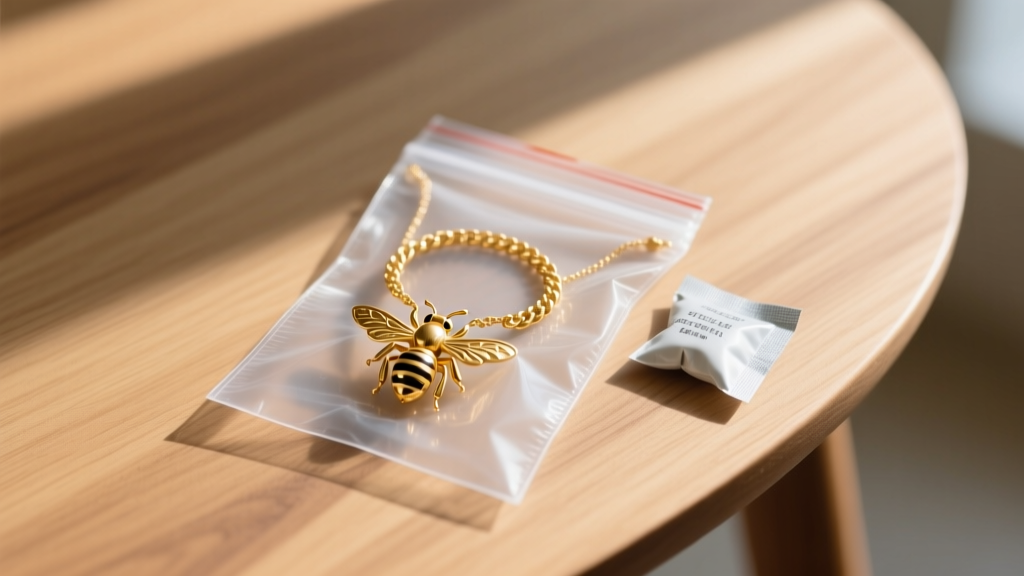
For optimal preservation, store the necklace in an individual, zip-seal polyethylene bag. Polyethylene is chemically inert and does not off-gas sulfur or acidic vapors. Before sealing the bag, drop in a 3M anti-tarnish strip and a small silica gel desiccant packet to control humidity and neutralize airborne corrosive gases. Never store your gold bee necklace in cardboard boxes, wooden chests with felt linings, or wrapped in rubber bands, as these materials emit sulfur compounds that will rapidly accelerate the tarnishing of the copper and silver alloys present in the 14k gold. Always fasten the clasp before storage to prevent the chain from threading through the bee's appendages.
Professional Maintenance Intervals
Even with meticulous at-home care, a 14k gold bee necklace requires professional evaluation. If your bee features gemstone accents, take the piece to a certified bench jeweler every 18 to 24 months. They will use a 10x loupe to inspect the integrity of the micro-prongs and bezels, tightening them before a stone is lost. If your necklace is crafted from 14k white gold, expect to have the rhodium plating reapplied every 1 to 2 years, depending on your skin's pH and friction levels, to maintain its brilliant, reflective white finish. By combining gentle manual cleaning with strategic storage and professional oversight, your 14k gold bee necklace will retain its intricate beauty and structural perfection for a lifetime.


