Ultimate Care Guide for Your Cross With Crown Necklace
Learn expert techniques to clean, polish, and maintain your cross with crown necklace. Protect intricate details and gemstones from tarnish and damage.

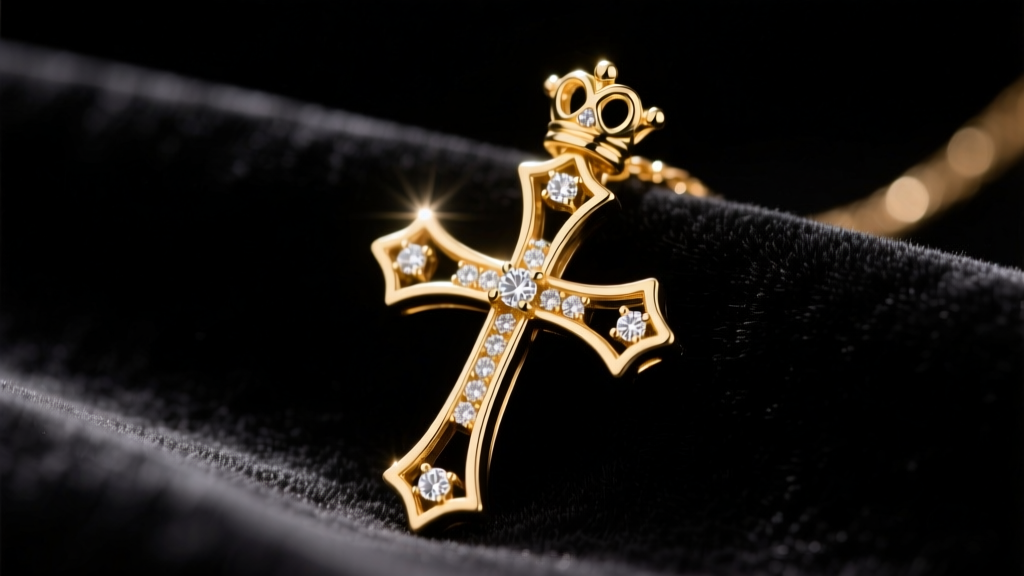
A cross with crown necklace is more than just a striking piece of jewelry; it is a complex intersection of faith, royalty, and intricate metallurgy. Whether your pendant features a classic cruciform base topped with a royal arch, or a crown motif woven directly into the crossbars, the geometric complexity of this design creates unique maintenance challenges. The arches, orbs, and intersecting angles act as natural traps for sebum, cosmetic lotions, and environmental pollutants. Over time, this buildup not only dulls the metal but can also compromise the structural integrity of delicate gemstone prongs and enamel work.
This comprehensive care guide provides actionable, expert-level protocols to clean, protect, and store your cross with crown necklace, ensuring it retains its brilliance and structural integrity for decades.
The Anatomy of a Cross With Crown Necklace: Why It Needs Special Care
Unlike a simple flat pendant, a cross with crown necklace features deep undercuts and micro-crevices. The "crown" element—often featuring fleur-de-lis details, sweeping arches, or a central orb—creates sheltered areas where moisture and debris accumulate. When water or sweat becomes trapped in these crevices via capillary action, it can lead to localized galvanic corrosion, especially if the piece is gold-plated or vermeil. Furthermore, the underside (pavilion) of any gemstones set within the crown's arches is highly susceptible to lotion buildup, which drastically reduces the stone's light return and makes it appear cloudy.
Material-Specific Risks and Vulnerabilities
Before applying any cleaning solution, you must identify the base metal and finishing of your necklace. The Assay Office mandates specific purity standards, but the care requirements vary wildly between solid metals and plated alternatives.
925 Sterling Silver and Oxidation
Sterling silver contains 92.5% pure silver and 7.5% copper. The copper alloy is highly reactive to hydrogen sulfide in the air and the acidic pH of human sweat, resulting in silver sulfide (tarnish). In a cross with crown design, tarnish often appears first in the deep recesses of the crown's arches, creating a dark, uneven patina that is difficult to reach with a standard polishing cloth.
Gold Vermeil and Plated Layers
Gold vermeil consists of a sterling silver base coated with a minimum of 2.5 microns of gold. Because the crown motif requires extensive polishing and buffing during manufacturing, the gold layer on the high points (the edges of the cross and the tips of the crown) is often thinner than in the recesses. Aggressive scrubbing or chemical dips will strip this micron-thin layer, exposing the silver beneath and causing rapid, localized tarnishing.
Enamel and Gemstone Settings
Many royal cross pendants incorporate guilloché enamel or micro-pavé diamonds. Enamel is essentially fused glass; it is highly vulnerable to thermal shock (sudden temperature changes) and harsh chemicals. Gemstones set in the crown's arches are held by microscopic prongs that can easily snag on microfiber cloths or be bent out of shape by ultrasonic vibrations.

The Step-by-Step Cleaning Protocol
To safely remove buildup without damaging the intricate architecture of your cross with crown necklace, follow this meticulous, non-abrasive cleaning protocol.
- Prepare the Solution: Mix three drops of mild, phosphate-free dish soap (like Dawn) into a bowl of distilled water. Distilled water is critical; tap water contains dissolved minerals (calcium and magnesium) that leave hard water spots in the crown's crevices upon evaporation.
- Targeted Soaking: Submerge the pendant for 3 to 5 minutes. This softens sebum and cosmetic buildup. Note: Do not soak gold vermeil or pieces with glued-in stones for more than 3 minutes to prevent adhesive degradation.
- Micro-Agitation: Using an extra-soft baby toothbrush, gently agitate the soapy water into the crevices. Brush the underside of the cross and the interior arches of the crown using circular motions. Never apply heavy downward pressure on gemstone prongs.
- The Distilled Rinse: Rinse the necklace thoroughly under a gentle stream of distilled water to remove all soap residue.
- Thermal and Air Drying: Pat the flat surfaces dry with a lint-free microfiber cloth. To remove trapped moisture from the crown's deep undercuts, use a hair dryer on the cool air setting. Blowing cool air into the crevices forces out hidden water droplets that would otherwise cause oxidation or water spots.
Chemical Compatibility Chart
Using the wrong chemical agent can permanently ruin the finish of your pendant. Refer to this compatibility matrix before applying any commercial jewelry cleaner.
| Cleaning Agent | Solid 14k/18k Gold | 925 Sterling Silver | Gold Vermeil / Plated | Enamel Details |
|---|---|---|---|---|
| Mild Dish Soap & Distilled Water | Highly Recommended | Highly Recommended | Safe (Short Soak) | Safe |
| Baking Soda Paste | Avoid (Causes Micro-Scratches) | Safe for Heavy Tarnish | NEVER (Strips Plating) | NEVER (Abrasives Ruin Finish) |
| Commercial Silver Dip | NEVER | Use Sparingly, Rinse Well | NEVER | NEVER (Causes Clouding) |
| Ultrasonic Cleaner | Safe (Only if no gems) | Safe (Only if no gems) | NEVER (Cavitation Strips Gold) | NEVER (Shatters Enamel) |
| Isopropyl Alcohol (70%) | Safe for Degreasing | Safe | Avoid (Dries out base metal) | NEVER (Dissolves Epoxy) |
Troubleshooting Common Maintenance Issues
Cloudy Gemstones in the Crown Arches
If the diamonds or cubic zirconia in your crown motif look dull even after washing, the issue is likely trapped hand lotion on the pavilion (the bottom cone of the stone). Dip a wooden toothpick in isopropyl alcohol and very gently scrape the underside of the stone. Never use a metal needle, as it will scratch the gold setting and weaken the prong tension.
Green Discoloration on the Skin
If your sterling silver cross with crown necklace leaves a green mark on your chest, it is a reaction between the copper alloy and your skin's acidity, exacerbated by trapped sweat in the pendant's flat back. Wipe the back of the pendant with an alcohol pad daily, or apply a micro-thin layer of clear nail polish to the back of the cross to create a hypoallergenic barrier.
Proper Storage to Prevent Tarnish
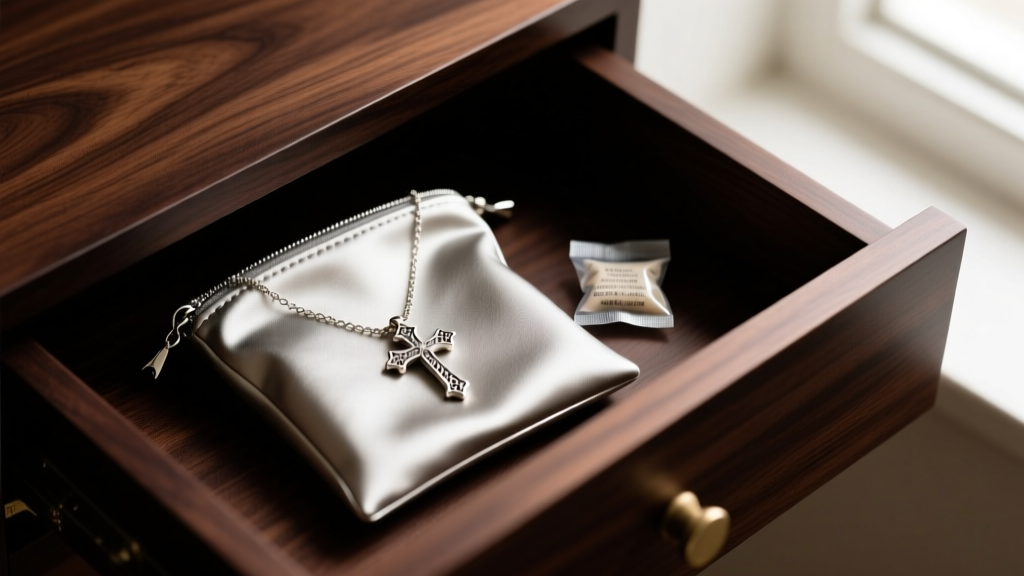
How you store your cross with crown necklace is just as important as how you clean it. The intricate crown arches can easily become tangled with other chains, bending the delicate tips of the crossbars.
Expert Storage Rule: Never store sterling silver or vermeil jewelry in PVC or polyvinyl chloride plastic bags. PVC emits chemical gases that accelerate tarnishing and can cause irreversible pitting on the metal's surface. Always use polyethylene or specialized anti-tarnish polyurethane bags.
For optimal preservation, place the fully dried necklace inside an anti-tarnish ziplock pouch alongside a small silica gel desiccant packet to control ambient humidity. Store the pouch flat in a dark, climate-controlled drawer. According to the Gemological Institute of America (GIA), keeping jewelry away from direct sunlight and extreme temperature fluctuations is vital for preserving both metal luster and gemstone color stability.
When to Seek Professional Jewelry Maintenance
While home maintenance is excellent for surface cleaning, a cross with crown necklace requires professional attention every 12 to 18 months. Because the crown motif features multiple intersecting angles, the prongs holding the accent stones endure uneven stress when the necklace is put on or taken off. A professional jeweler will use a microscope to check for prong fatigue, tighten any lifted settings, and safely polish the recessed areas using specialized tapered muslin buffs that cannot be replicated at home. If your piece is white gold, this is also the ideal time to have the rhodium plating refreshed to restore its bright, reflective white finish.