How to Clean and Care for Your Gold Coin Pendant Necklace
Learn expert techniques to clean, polish, and store your gold coin pendant necklace. Discover safe solutions for 14k, 18k, and 24k gold finishes.

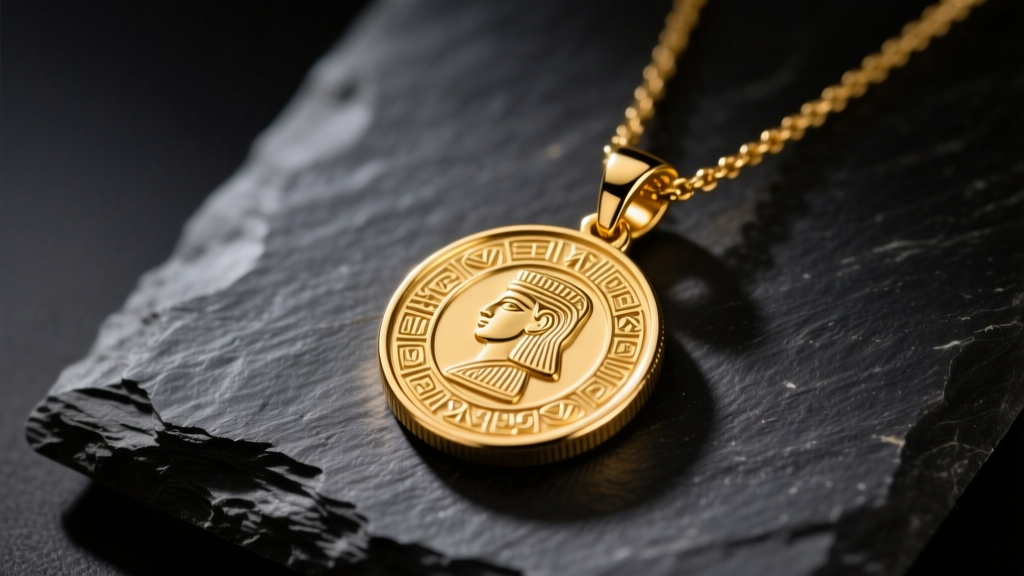
The Metallurgy of Your Gold Coin Pendant Necklace
Before applying any cleaning solution to your gold coin pendant necklace, you must understand its exact metallurgical composition. Pure 24k gold is exceptionally soft (Mohs hardness of 2.5) and rarely used for wearable coin pendants because intricate relief details would quickly wear down. Instead, jewelers and mints utilize specific alloys to balance durability with that signature warm luster.
Solid 14k gold contains 58.5% pure gold, with the remaining 41.5% composed of copper, silver, and zinc. It is the copper content that makes 14k gold susceptible to oxidation and tarnishing over time. Solid 18k gold (75% pure gold) offers a richer yellow hue but is slightly more prone to scratching. Conversely, gold vermeil or gold-plated coin pendants feature a sterling silver or brass base coated with a microscopic layer of gold (usually 1.5 to 2.5 microns thick). According to the Gemological Institute of America (GIA), treating a plated coin pendant with harsh chemicals designed for solid gold will strip the finish entirely, exposing the base metal beneath.
The Environmental Threat Matrix
Gold itself is a noble metal and does not corrode, but the alloyed metals in your necklace react aggressively to everyday environmental factors. Below is a breakdown of common threats and their chemical impact on your jewelry.
| Environmental Threat | Chemical Reaction on Gold Alloys | Prevention Strategy |
|---|---|---|
| Chlorine (Pools/Cleaners) | Causes stress corrosion cracking in copper/zinc alloys, leading to brittle prongs and chains. | Always remove your necklace before swimming or using household bleach. |
| Sulfur (Hot Springs/Pollution) | Reacts with silver alloys in 14k/18k gold, creating a dark silver sulfide tarnish layer. | Store in airtight bags with anti-tarnish strips when not in use. |
| Cosmetics & Perfumes | Alcohol and oils create a cloudy film, dulling the coin's high-polish or brushed finish. | Apply perfumes and lotions at least 10 minutes before putting on your jewelry. |
| Perspiration (Lactic Acid) | Accelerates copper oxidation, potentially leaving a green residue on your skin. | Wipe the pendant and chain with a microfiber cloth immediately after heavy sweating. |
The Professional Cleaning Protocol
Forget internet hacks involving toothpaste or boiling water. To safely restore your gold coin pendant necklace, follow these metallurgist-approved methods based on your specific karat and finish.
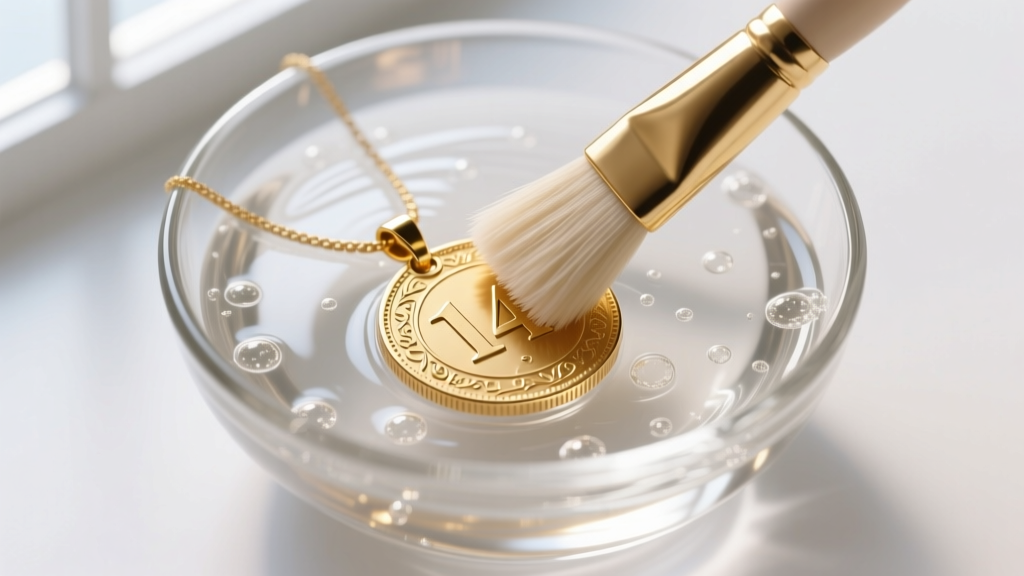
The Mild Surfactant Soak (Safe for All Gold Types)
This method is universally safe for solid 14k, 18k, 22k, and even gold vermeil or plated pendants. The Jewelers of America recommends this as the primary maintenance routine for everyday wear.
- Prepare the Solution: Mix three drops of pH-neutral dish soap (like Dawn, pH ~8.0) into a bowl of lukewarm distilled water. Avoid tap water, as heavy minerals can leave micro-deposits.
- The Soak: Submerge the necklace for exactly 5 to 10 minutes. This loosens sebum, dead skin cells, and lotion trapped in the chain links and the coin's crevices.
- Agitation: Using a baby-soft toothbrush or a dedicated jewelry brush, gently sweep across the face of the coin. Always brush in the direction of the metal grain if the coin features a brushed or matte background.
- Rinse and Dry: Rinse thoroughly under lukewarm distilled water. Pat dry with a lint-free microfiber cloth. Never air-dry, as water spots will form on the high-polish edges.
The Ammonia Flash (Strictly for Solid 14k/18k ONLY)
If your solid gold coin pendant has lost its brilliance due to stubborn hard water stains or heavy oil buildup, an ammonia-based cleaner can restore it. Warning: Never use this on gold vermeil, gold-filled, or gold-plated coins, as the high pH (around 11) will dissolve the gold layer.
Pro Tip: Mix one part clear household ammonia to six parts lukewarm water. Submerge the solid gold necklace for no more than 60 seconds. Remove immediately, rinse with distilled water, and buff with a jeweler's cloth. Prolonged ammonia exposure can cause 14k gold alloys to become brittle over time.
Preserving the Coin's Relief and Patina
Many gold coin pendants, especially replicas of ancient Roman, Greek, or Byzantine coins, feature an intentional dark patina in the recessed areas to highlight the raised relief (the cameo effect). Using abrasive polishing pastes, baking soda, or ultrasonic cleaners will strip this antiquing, leaving the coin looking flat and washed out.
If your coin features a high-polish mirror finish, it is highly susceptible to micro-scratches. Avoid using standard tissue paper or paper towels to dry your pendant; the wood pulp fibers are hard enough to leave swirl marks on 18k gold. Always rely on 100% cotton flannel or microfiber jewelry cloths impregnated with gentle jeweler's rouge for the final buff.
Chain Maintenance and Storage Mechanics
The chain holding your gold coin pendant requires just as much attention as the coin itself. Different chain weaves trap debris differently:
- Box Chains: The hollow, geometric links easily trap lotion and soap. Use a wooden toothpick to gently dislodge buildup from the corners before soaking.
- Rope Chains: The twisted design acts like a net for dead skin and dust. An ultrasonic cleaner is highly effective here, but only if the coin pendant is solid gold with no glued-in gemstones or enamel.
- Cable Chains: The most durable and easiest to clean, though the jump rings can weaken if subjected to repetitive friction.
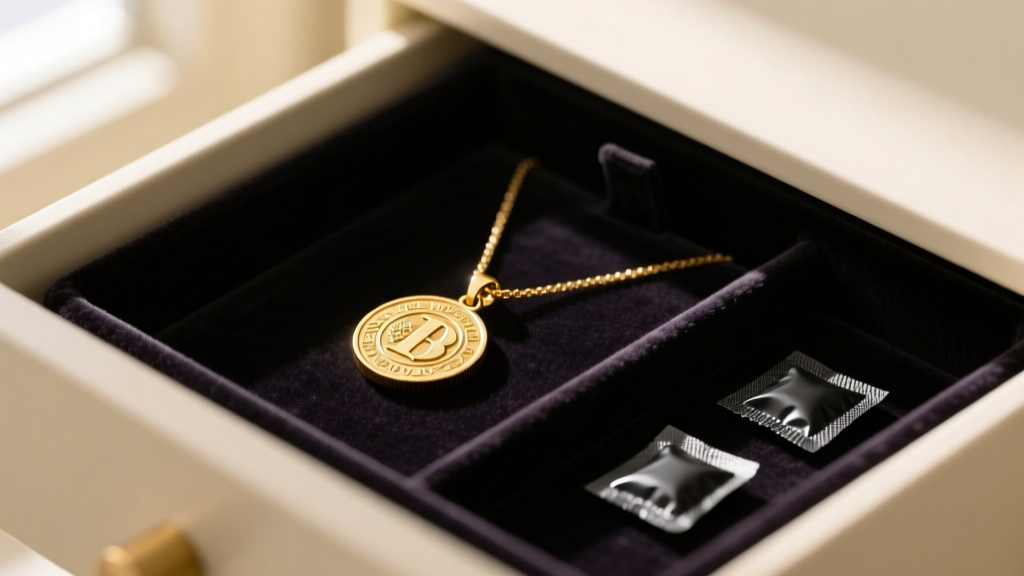
When storing your necklace, never toss it into a communal jewelry box. The friction of other pieces will scratch the coin's face. Store it flat in a dedicated velvet pouch or compartment. For long-term storage, include a 3M anti-tarnish strip in the enclosure to absorb ambient sulfur gases.
Expert Troubleshooting Guide
Even with meticulous care, issues can arise. Here is how to troubleshoot common problems specific to gold coin necklaces:
- Green Skin Discoloration: This is not a sign of fake gold, but rather a reaction between your skin's acidity and the copper alloy in 14k gold. Coat the back of the coin pendant with a thin layer of clear nail polish or jewelry shield to create a barrier.
- Stuck Spring Ring Clasps: If the tiny clasp mechanism becomes stiff, it is likely clogged with sebum. Place a single drop of mineral oil on the clasp lever, work it back and forth, and wipe away the excess. Do not use WD-40, which contains harsh solvents.
- Cloudy or Scratched Coin Face: If the surfactant soak does not restore the shine, the coin has likely accumulated micro-scratches. Take the necklace to a professional jeweler for a light machine polish. They will use a muslin buffing wheel with red rouge, removing less than a micron of gold while restoring the mirror finish.
By understanding the specific alloy composition of your jewelry and adhering to these targeted cleaning protocols, your gold coin pendant necklace will retain its historical charm and brilliant luster for generations.


