How to Clean and Care for Your Gold and Diamond Heart Necklace
Learn expert techniques to clean, maintain, and protect your gold and diamond heart necklace. Discover safe solutions, storage, and prong care.

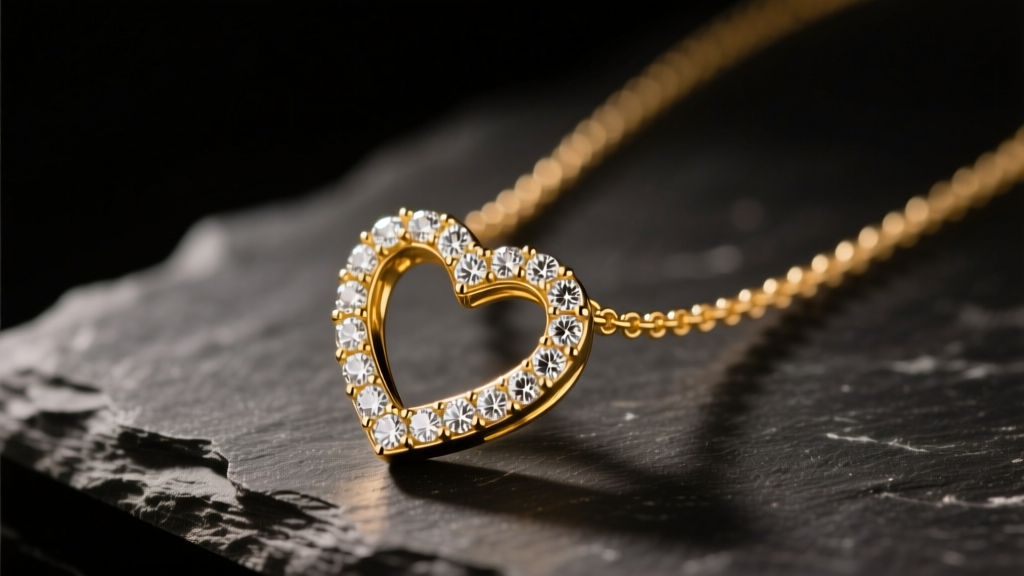
A gold and diamond heart necklace is more than just a piece of jewelry; it is often a deeply sentimental investment, symbolizing love, commitment, or a significant personal milestone. However, the intricate anatomy of a heart-shaped pendant—complete with its delicate cleft, hidden diamond pavilions, and vulnerable prongs—makes it uniquely susceptible to dirt accumulation, alloy degradation, and structural wear. To maintain the fiery brilliance of the diamonds and the rich luster of the gold, you must move beyond generic jewelry cleaning advice and adopt a specialized, metallurgically sound maintenance routine.
The Anatomy of Vulnerability: Why Heart Pendants Need Special Care
Heart-shaped pendants present specific structural challenges that standard round or square pendants do not. The superior cleft (the dip at the top of the heart) acts as a natural trap for cosmetic residues, dead skin cells, and environmental dust. Furthermore, the bail—the loop that connects the pendant to the chain—experiences constant kinetic friction, which can slowly wear down the gold over years of daily use.
Equally critical is the diamond itself. Diamonds are highly oleophilic, meaning they naturally attract and hold onto oils and grease. The pavilion (the underside of the diamond) is particularly prone to trapping sebum from the skin and heavy creams. When this microscopic layer of oil builds up, it drastically reduces the diamond’s refractive index, causing your once-sparkling stone to appear dull, cloudy, or even gray. According to the Gemological Institute of America (GIA), regular, targeted cleaning of the pavilion is the single most effective way to restore a diamond’s natural brilliance.
Step-by-Step Cleaning Protocol for Gold and Diamond Heart Necklaces
Forget harsh commercial dips or abrasive polishing pastes. The safest and most effective method for cleaning a gold and diamond heart necklace involves a gentle, multi-step process that respects both the karat weight of the gold and the setting integrity.
Step 1: The Safe Soak Method
Fill a small glass bowl with warm distilled water. Tap water contains trace minerals and chlorine that can leave microscopic water spots on the gold. Add exactly two to three drops of a mild, ammonia-free liquid dish soap (such as Dawn). Ammonia can be overly harsh on certain gold alloys and may degrade the rhodium plating on white gold. Allow the necklace to soak for 15 to 20 minutes. This crucial step softens the hardened sebum and cosmetic buildup lodged in the heart’s cleft and underneath the diamond.
Step 2: Precision Brushing
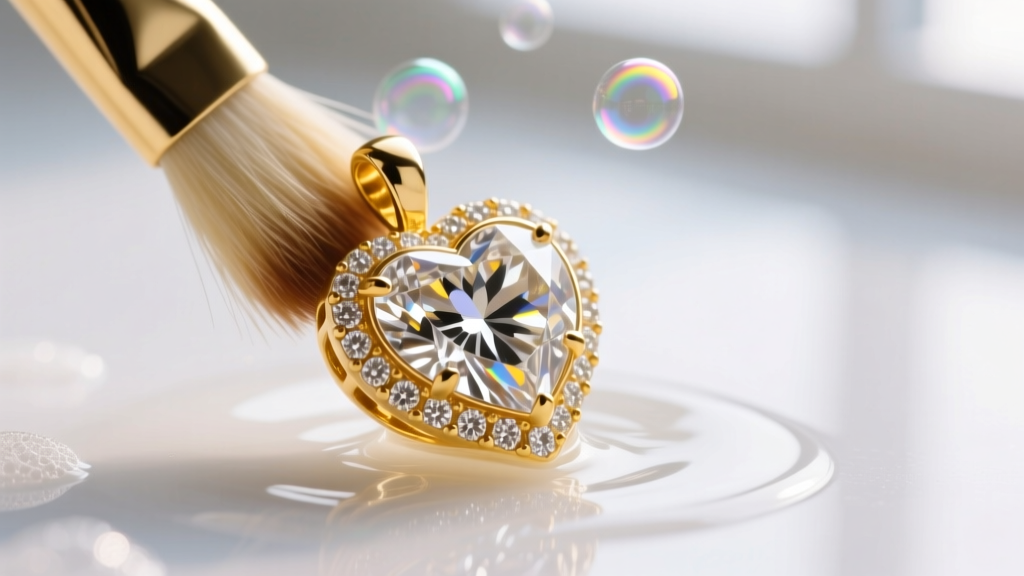
Remove the necklace from the solution. Using an extra-soft baby toothbrush, gently agitate the diamond and the gold setting. Pay special attention to the pavilion beneath the diamond and the interior curve of the heart’s cleft. Never use a standard adult toothbrush, as the stiffer bristles can induce micro-scratches on high-polish 14k or 18k gold surfaces.
Step 3: The Rinse and Dry
Rinse the pendant thoroughly under a gentle stream of lukewarm distilled water to wash away the suspended oils and soap residue. To dry, lay the necklace flat on a clean, lint-free microfiber cloth. Never use paper towels or tissue paper. These products are made from wood pulp and contain microscopic fibers that act like sandpaper on precious metals, leaving a web of fine, circular scratches on the gold over time.
Chemical and Mechanical Hazards: What to Avoid
The alloy composition of your gold dictates its chemical vulnerabilities. Pure 24k gold is highly resistant to tarnish, but it is too soft for jewelry. Therefore, your necklace is likely crafted from 14k (58.5% gold) or 18k (75% gold) alloy, mixed with metals like copper, silver, zinc, or nickel. These secondary metals are highly reactive to everyday chemicals.
| Hazardous Substance | Effect on Gold Alloys | Effect on Diamonds |
|---|---|---|
| Chlorine (Pools/Spas) | Causes stress corrosion cracking, making prongs brittle and prone to snapping. | No direct damage, but weakens the setting holding the stone. |
| Bleach / Cleaners | Pits the surface of the gold and permanently strips white gold rhodium plating. | Can dull the polish of the diamond over prolonged exposure. |
| Hairspray & Perfume | Creates a sticky film that traps dust and accelerates tarnish on copper-heavy alloys. | Coats the crown and pavilion, severely reducing light return and sparkle. |
| Sunscreen & Lotions | Builds up in the cleft and bail, creating a hardened, cement-like residue. | Creates an opaque, oily film on the diamond, mimicking a lower clarity grade. |
To protect your investment, always adhere to the “Last On, First Off” rule. Your gold and diamond heart necklace should be the very last thing you put on after applying cosmetics, perfumes, and hair products, and the first thing you remove when returning home.
Prong Maintenance and Structural Integrity Checks
Heart-shaped diamonds typically require three, four, or five prongs to secure them. The prong located at the superior cleft is the most vulnerable, as it naturally catches on the collars of shirts, scarves, and loose threads. If this prong lifts even a fraction of a millimeter, the diamond is at immediate risk of falling out.
The 6-Point Inspection Checklist
Perform this visual and tactile inspection once a month:
- The Silk Test: Gently glide the pendant across a piece of fine silk or sheer nylon. If the jewelry snags or catches the fabric, a prong is lifted and requires immediate professional burnishing.
- The Rattle Check: Hold the pendant close to your ear and gently tap it with your fingernail. Any audible clicking or rattling indicates the diamond is loose within the setting basket.
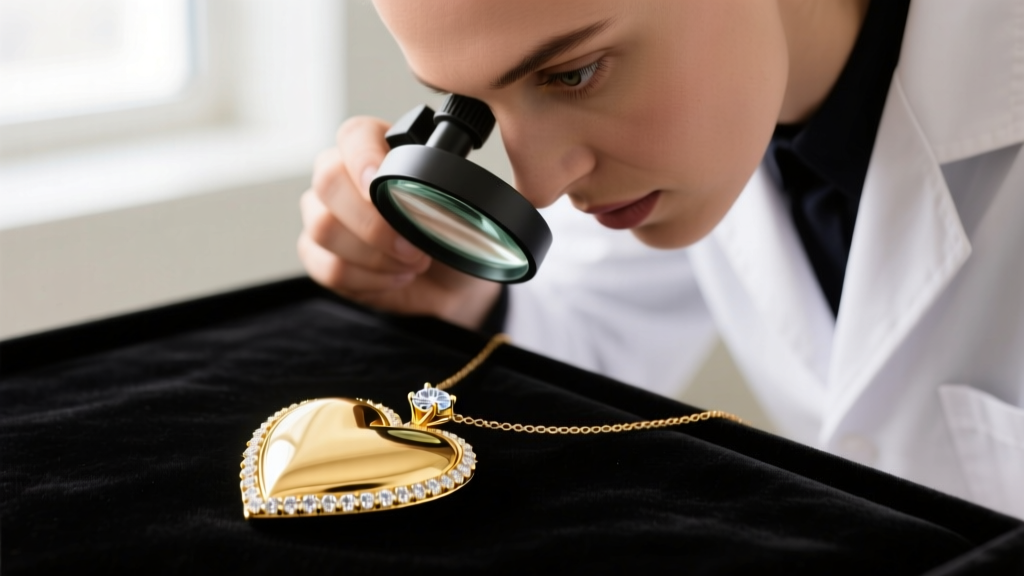
- Prong Alignment: Use a 10x jeweler’s loupe to ensure all prongs are resting flush against the diamond’s crown. There should be no visible gaps between the metal and the stone.
- Bail Thickness: Inspect the interior of the bail where the chain rubs. If the gold has worn down by more than 30% of its original thickness, it needs to be reinforced by a jeweler.
- Chain Link Integrity: Check the jump ring connecting the clasp to the chain. Ensure it is fully soldered and closed.
- Clasp Tension: Test the spring ring or lobster clasp to ensure it snaps back with firm, reliable tension.
White, Yellow, and Rose Gold: Specific Care Nuances
The color of your gold fundamentally alters its long-term maintenance requirements. Understanding these nuances is vital for preserving the aesthetic integrity of your necklace.
White Gold: White gold is naturally a pale yellow alloy that is electroplated with rhodium to achieve its bright, silvery-white finish. Over time, friction from the skin and clothing will wear this plating away, revealing the warm undertones beneath. Avoid aggressive polishing, which accelerates rhodium loss. Plan to have your white gold heart necklace professionally re-rhodium plated every 18 to 24 months.
Yellow Gold: High-polish yellow gold is prone to showing micro-scratches and fingerprints. To restore its mirror finish at home, use a dedicated jeweler’s polishing cloth impregnated with fine rouge. Always polish in a single, unidirectional motion rather than in circles to maintain a uniform grain.
Rose Gold: The beautiful pink hue of rose gold comes from a high copper content. Copper is prone to oxidation, which can cause the metal to develop a darker, antique-looking patina over time. While some collectors appreciate this vintage look, you can safely restore the bright pink luster by using a mild, non-abrasive jewelry dip specifically formulated for copper alloys, followed by a thorough distilled water rinse.
Long-Term Storage Strategies
How you store your necklace when it is not being worn is just as important as how you clean it. Tossing your gold and diamond heart necklace into a crowded jewelry box is a recipe for disaster. Diamonds are a 10 on the Mohs hardness scale, meaning they can easily scratch the gold of your own necklace, as well as any adjacent jewelry.
Pro-Tip: Store your necklace in an individual, airtight polyethylene zip-lock bag. Squeeze out all excess air before sealing to minimize oxidation. For added protection, include a small 3M anti-tarnish strip in the bag to absorb airborne sulfur compounds that cause gold alloys to dull.
Always fasten the clasp before storing to prevent the chain from tangling. If the chain is particularly fine (such as a delicate cable or box chain under 1.2mm), thread it through a plastic drinking straw before clasping to guarantee it remains perfectly straight and knot-free.
Professional Servicing: When to See a Jeweler
While at-home maintenance is highly effective for daily upkeep, professional servicing is non-negotiable for long-term preservation. The Jewelers of America recommends having fine jewelry professionally inspected and cleaned at least once a year.
A professional jeweler has access to ultrasonic cleaners and high-pressure steam machines. However, caution is required. If your heart-shaped diamond has been fracture-filled or laser-drilled to improve its clarity, ultrasonic vibrations can shatter the stone or boil out the glass-like fillers. Always provide your jeweler with any existing gemological certificates (such as a GIA or AGS report) so they know exactly what treatments the diamond has undergone before placing it in an ultrasonic bath.
By combining gentle, consistent at-home cleaning with mindful wearing habits and annual professional check-ups, your gold and diamond heart necklace will retain its structural integrity and breathtaking brilliance for generations to come.


