Ultimate Care Guide for Your Gold Hummingbird Necklace
Learn expert cleaning and maintenance tips for your gold hummingbird necklace. Protect intricate enamel, gemstones, and delicate chains.

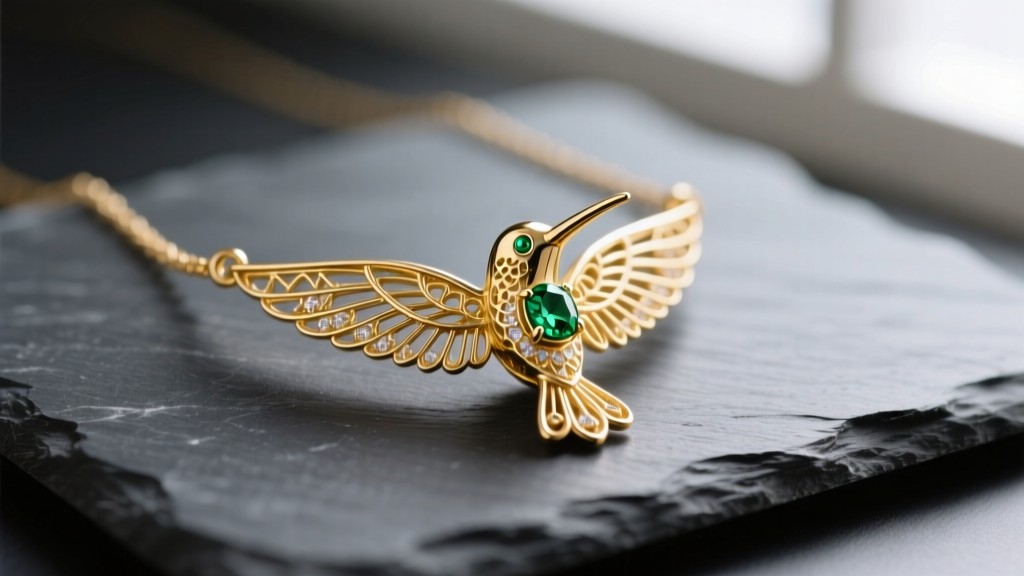
A gold hummingbird necklace is more than just a piece of jewelry; it is a symbolic talisman representing joy, resilience, and lightness of being. Because these pendants often feature intricate metalwork, delicate gemstone inlays, and fine chains, they require a specialized approach to maintenance. As of 2026, with precious metal prices near historic highs, preserving the structural and aesthetic integrity of your fine jewelry is a vital investment protection strategy.
Whether your piece is a solid 14k gold casting, an 18k gold frame with vitreous enamel wings, or a micro-pavé diamond design, improper cleaning can cause irreversible damage. This comprehensive guide details the exact protocols for cleaning, storing, and maintaining your gold hummingbird necklace to ensure it remains vibrant for generations.
The Anatomy of a Hummingbird Pendant: Why Specialized Care Matters
Unlike simple geometric pendants, a hummingbird motif relies on complex topography. The wings often feature deep recesses, filigree cutouts, or channel-set gemstones like turquoise, opal, or sapphire. The Gemological Institute of America (GIA) notes that the alloy metals mixed with pure gold—such as copper and silver in 14k yellow gold—can oxidize or react poorly to harsh chemicals, leading to surface dullness or localized tarnishing.
Furthermore, the bail (the loop connecting the pendant to the chain) experiences high friction. Over time, microscopic debris accumulates here, causing wear on both the bail and the chain. Understanding the specific materials used in your pendant is the first step toward establishing a safe cleaning routine.
Routine Cleaning: The Safe Soak Method for Solid Gold
For solid gold hummingbird pendants without porous gemstones or enamel, a gentle aqueous cleaning solution is the safest and most effective method. Avoid commercial jewelry dips, which often contain thiourea and ammonia that can strip the natural luster from gold alloys and degrade solder points.
Step-by-Step Cleaning Protocol
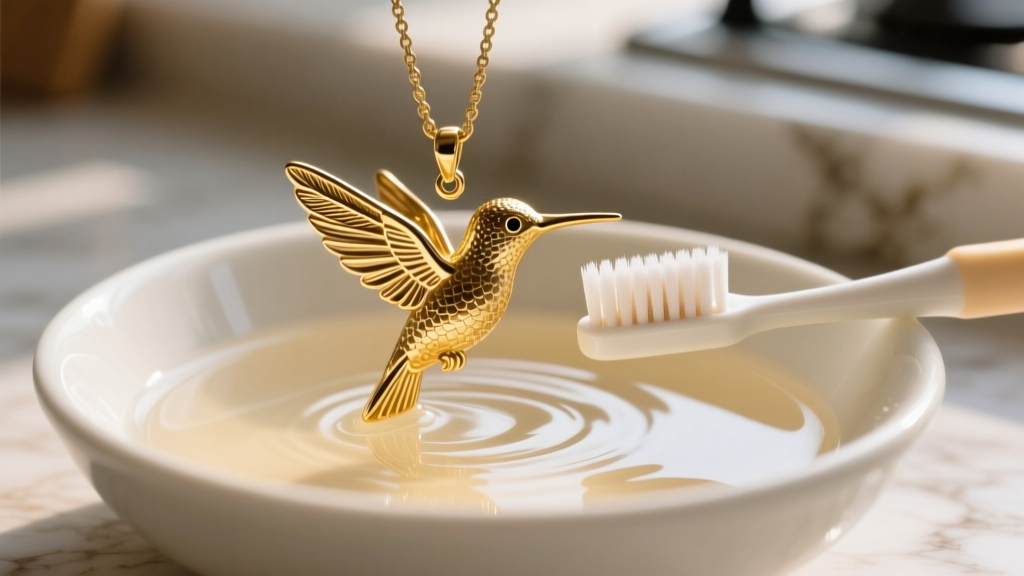
- Prepare the Solution: Mix three drops of mild, phosphate-free dish soap (such as Dawn) into a bowl of lukewarm distilled water. Tap water contains chlorine and hard minerals that can leave microscopic deposits on the gold.
- The Soak: Submerge the necklace for exactly 10 to 15 minutes. This loosens sebum, cosmetic residue, and environmental dust trapped in the intricate feather detailing.
- Agitation: Use a brand-new, extra-soft baby toothbrush. Gently brush the recesses of the wings and the bail in a circular motion. Never use a standard toothbrush, as the stiff nylon bristles can induce micro-scratches on high-polish gold surfaces.
- Rinsing: Rinse thoroughly under a gentle stream of lukewarm distilled water. Ensure the drain is securely plugged or use a mesh strainer to prevent catastrophic loss.
- Drying: Pat dry with a lint-free microfiber cloth. Avoid paper towels, which are made from wood pulp and will scratch the metal.
Material-Specific Maintenance: Enamel, Gemstones, and Pavé
Many artisan gold hummingbird necklaces incorporate secondary materials to bring the design to life. These materials drastically alter the cleaning protocol. According to the Federal Trade Commission (FTC) Jewelry Guides, consumers must be wary of universal cleaning claims, as treatments that benefit diamonds can destroy softer materials.
| Material / Inlay | Cleaning Method | Ultrasonic Safe? | Steam Safe? | Primary Risks |
|---|---|---|---|---|
| Solid 14k/18k Gold | Mild soap soak, soft brush | Yes | Yes | Scratching from abrasive brushes |
| Vitreous Enamel | Damp microfiber wipe only | No | No | Thermal shock causing crazing/cracks |
| Turquoise / Opal | Dry, soft cloth polishing | No | No | Chemical absorption, dehydration, color shift |
| Diamond Micro-Pavé | Soap soak, careful brush | Yes (with caution) | Yes | Vibrations loosening micro-prongs |
Expert Warning: Never place an enameled gold hummingbird necklace in an ultrasonic cleaner. The high-frequency cavitation bubbles can shatter the glass-like enamel coating, and the heat generated can melt the adhesive used in cold-enamel techniques.
Chain Care: Preventing Kinks and Clasp Failure
The chain supporting your pendant is just as critical as the motif itself. Hummingbird pendants are typically suspended on delicate 14k or 18k gold cable, rolo, or box chains ranging from 0.8mm to 1.2mm in thickness.
Managing Chain Kinks and Tangles
Fine gold chains are highly susceptible to kinking, which weakens the structural integrity of the individual links. If your chain becomes tangled, do not pull. Lay it flat on a glass surface, apply a single drop of baby oil or specialized jewelry detangler to the knot, and use two fine sewing needles to gently tease the links apart. Once untangled, clean the oil off using the soap soak method detailed above.
Lobster Clasp Lubrication
The internal spring mechanism of a gold lobster clasp can become stiff due to lotion buildup or oxidation. If the clasp lever feels rigid, do not force it. Apply a microscopic amount of powdered graphite (from a mechanical pencil) or a dry PTFE lubricant directly into the clasp joint. Work the lever back and forth until smooth. Avoid liquid oils like WD-40, which attract dust and create a grinding paste inside the mechanism.
Storage and Environmental Hazards
How you store your gold hummingbird necklace when it is not being worn dictates its long-term condition. Environmental factors are the silent destroyers of fine jewelry.
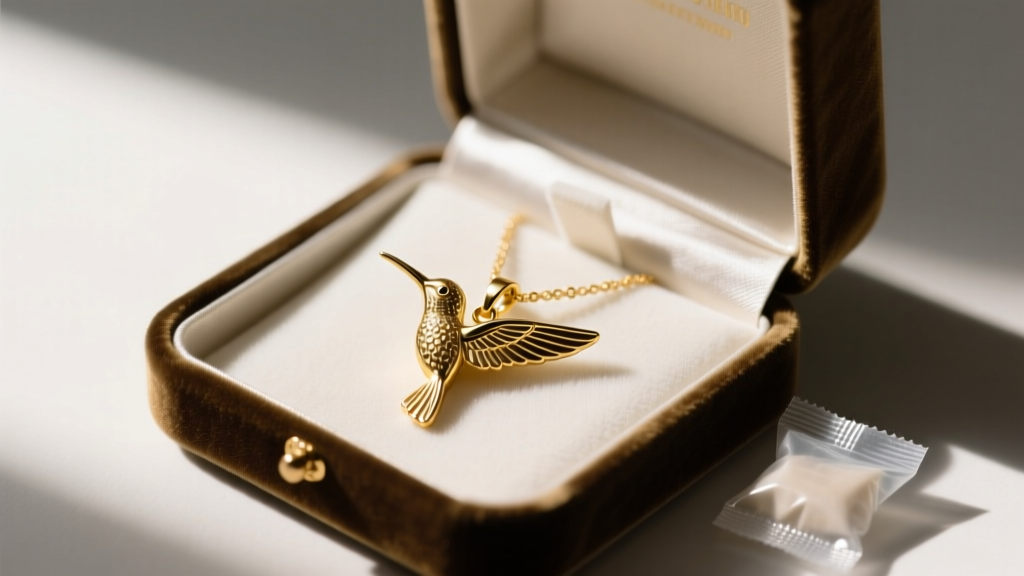
- Avoid Hanging Storage: While hanging necklaces on a jewelry tree seems practical, the constant gravitational pull on a fine chain supporting a weighted pendant can cause the links to stretch and oval out over time. Always store the necklace laid flat or loosely coiled.
- Anti-Tarnish Environments: Store the piece in a sealed polyethylene bag or a jewelry box lined with Pacific cloth (a specialized anti-tarnish fabric). Include a small silica gel packet to control ambient humidity, which accelerates the oxidation of the copper alloys in 14k gold.
- The Chlorine Threat: Never wear your necklace in swimming pools or hot tubs. Chlorine reacts violently with the alloy metals in gold, causing a phenomenon known as 'stress corrosion cracking,' which can cause the prongs holding your gemstones to snap without warning.
When to Seek Professional Jewelry Maintenance
While home maintenance is excellent for surface cleaning, it cannot replace professional structural inspections. You should take your gold hummingbird necklace to a certified bench jeweler every 18 to 24 months. The jeweler will use a loupe to inspect the bail for thinning, check the integrity of any micro-prongs holding pavé diamonds, and professionally polish out deeper scratches using a rouge wheel. If your piece features white gold, this is also the time to have it re-rhodium plated to restore its bright, reflective white finish.
By adhering to these meticulous care standards, your gold hummingbird necklace will retain its intricate beauty, ensuring that its symbolic message of joy and agility continues to shine brilliantly for years to come.


