Expert Care Guide: Cleaning Your Long Statement Necklace
Learn expert cleaning and maintenance tips for your long statement necklace. Protect beads, chains, and clasps from tarnish and tangling.

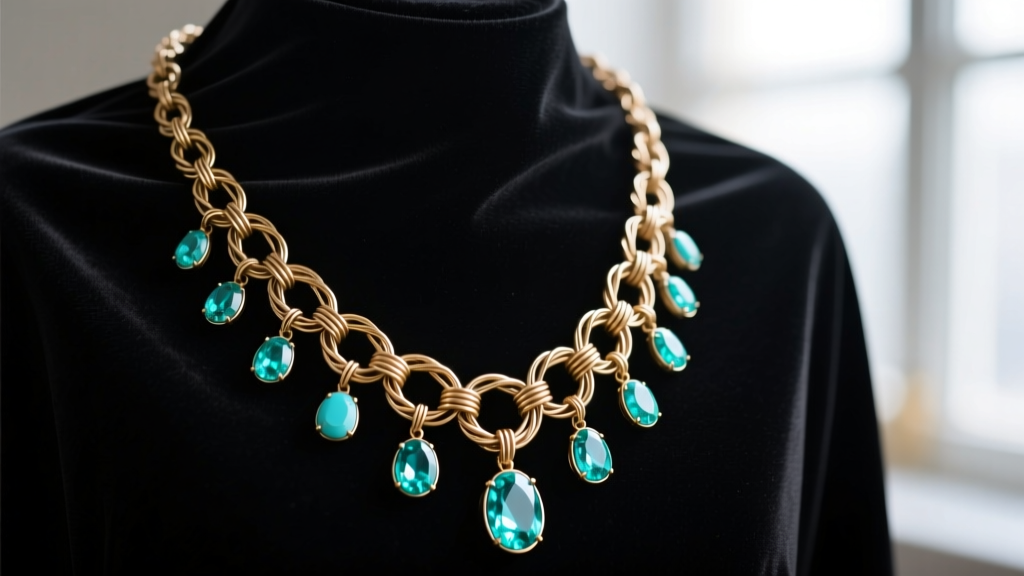
The Anatomy of Vulnerability in Long Statement Necklaces
Owning a long statement necklace is an exercise in bold styling, but maintaining one requires an understanding of structural physics. Unlike standard 16-inch chokers or 18-inch princess chains, a 30-to-36-inch statement piece is subject to the 'pendulum effect.' Every step you take generates kinetic energy that travels down the chain, placing disproportionate stress on the lowest jump rings, wire-wrapped links, and the primary clasp. Furthermore, these pieces often feature multi-material constructions—pairing porous gemstones with base metals or delicate resins—which makes blanket cleaning approaches disastrous. To preserve the structural integrity and visual brilliance of your long statement necklace, you must adopt a targeted, material-specific maintenance routine that addresses both chemical tarnishing and physical fatigue.
Material-Specific Cleaning Protocols
The most common mistake jewelry enthusiasts make is submerging complex, multi-material pieces in commercial silver dips or ultrasonic cleaners. According to the Gemological Institute of America (GIA), porous organic gems and treated stones can be permanently damaged by harsh chemicals and high-frequency vibrations. Below is a definitive guide to cleaning the most common materials found in statement pieces.
| Material | Cleaning Agent | Method | Warning / Failure Mode |
|---|---|---|---|
| Oxidized Silver | Dry microfiber cloth | Gentle surface buffing | Liquid polishes will strip the intentional dark patina from the crevices. |
| Raw Brass / Bronze | Lemon juice & baking soda paste | Apply for 5 mins, rinse with distilled water | Leaving acidic residue will cause rapid, uneven green oxidation. |
| Porous Stones (Turquoise, Lapis, Malachite) | Damp, lint-free cotton swab | Spot clean individual beads only | Submersion causes waterlogging, leading to cracking and color leaching. |
| Acrylic / Resin Components | Mild dish soap (e.g., Dawn) & lukewarm water | Wipe with a soft baby toothbrush | Alcohol-based cleaners will cause micro-fractures and clouding. |
| Rhodium-Plated Base Metal | Warm water & mild soap | Quick dip, immediate pat dry | Friction from polishing cloths will wear away the thin rhodium layer. |
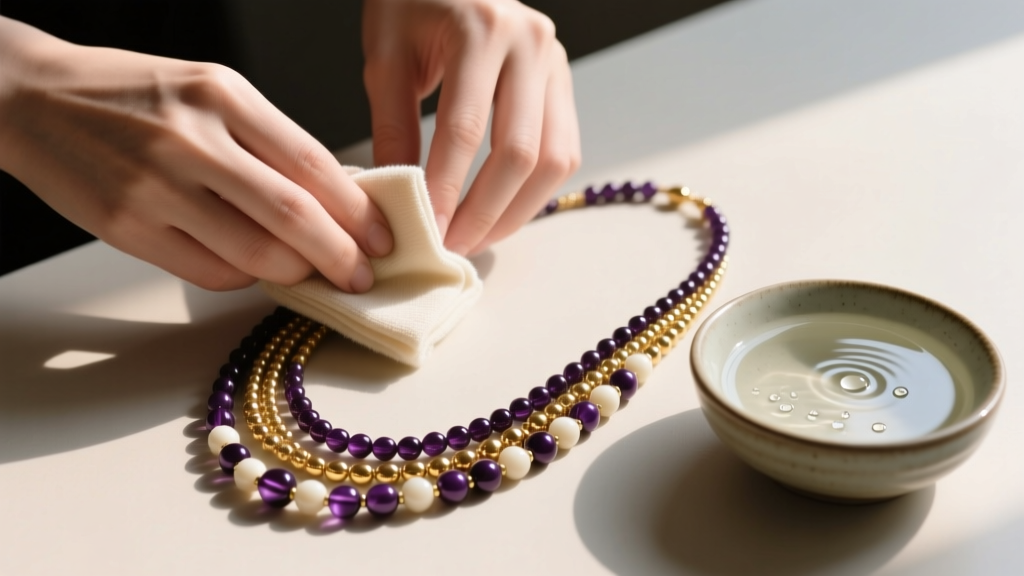
For general grime removal on metal chains that do not feature porous stones, mix one part mild dish detergent with ten parts lukewarm distilled water. Use an extra-soft baby toothbrush to gently agitate the dirt from the chain links, then rinse and immediately dry with a microfiber cloth to prevent water spots.
The Detangling and Storage Framework
The sheer length of a statement necklace makes it highly susceptible to tangling, often resulting in a frustrating 'bird's nest' effect that can permanently kink delicate chains or snap wire-wrapped connections. Proper storage is not just about organization; it is a critical component of physical maintenance.
- The Velvet Roll Method: Lay the necklace flat on a soft velvet jewelry roll, ensuring the clasp is fastened. Roll it loosely. The velvet creates enough friction to prevent the chain from sliding and knotting, while the loose roll prevents sharp bends in the metal.
- The PVC Pipe Hack: For heavy, chunky chain necklaces that cannot be rolled, cut a 4-inch section of a clean, 2-inch diameter PVC pipe. Wrap the pipe in acid-free tissue paper or felt, and drape the necklace over it. This maintains the structural curve of heavy links without stressing the clasp.
- Isolate Heavy Pendants: If your long statement necklace features a massive focal pendant (e.g., a large geode or heavy brass casting), store it hanging vertically on a padded hook. Laying a heavy pendant flat causes the chain to bear the dead weight unevenly, stretching the links directly above the bail.
According to Jewelers of America, storing jewelry in a climate-controlled environment with anti-tarnish silica gel packets can reduce metal oxidation rates by up to 70%, significantly extending the time between deep cleaning sessions.
Clasp and Jump Ring Maintenance
The weakest point of any long statement necklace is the connection hardware. The kinetic swing of a long piece often distorts standard, unsoldered jump rings, pulling them apart and resulting in lost pendants or broken chains. You must inspect the jump rings and clasps every three months.
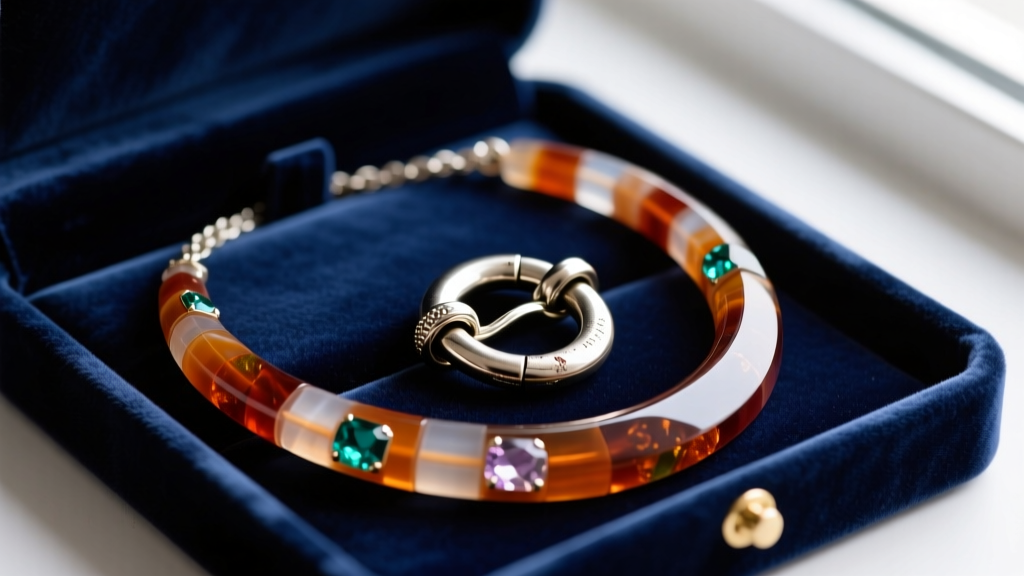
Use a jeweler's loupe (10x magnification) to check the seam of the jump ring connecting the clasp to the chain. If you see daylight in the seam, the ring is compromised. For heavy statement pieces, always upgrade standard split rings to soldered jump rings or heavy-duty lobster clasps. If a lobster clasp becomes stiff or fails to snap shut, do not force it. Apply a microscopic drop of synthetic watch oil to the internal spring mechanism using a needle oiler. Avoid using WD-40 or household lubricants, as they contain solvents that will degrade surrounding gemstone treatments and attract abrasive dust.
Chemical Hazards and the 'Last On, First Off' Rule
The longevity of your long statement necklace is heavily dictated by your daily dressing routine. Perfumes, hairsprays, and body lotions contain alcohols and emulsifiers that create a microscopic film on gemstones, dulling their refractive index and accelerating the tarnishing of base metals. Because long necklaces rest against the chest—an area prone to perspiration and where perfume is frequently applied—they are at high risk for chemical exposure.
Always adhere to the golden rule of jewelry maintenance: your long statement necklace should be the very last item you put on when getting dressed, and the very first item you take off when returning home.
By removing the necklace before showering, exercising, or applying skincare, you prevent the accumulation of sebum and lactic acid, which are highly corrosive to alloys like Zamak and unprotected brass. If your necklace does come into contact with heavy perspiration or chlorinated pool water, rinse it immediately with distilled water and pat it completely dry before storing. Implementing these rigorous, detail-oriented care protocols will ensure your statement pieces remain structurally sound and visually captivating for years to come.


