Expert Care Guide for Necklaces with Cameras & Tech Pendants
Learn how to safely clean, maintain, and protect necklaces with cameras. Expert tips on lens care, battery maintenance, and avoiding moisture.

The Intersection of Fine Jewelry and Micro-Electronics
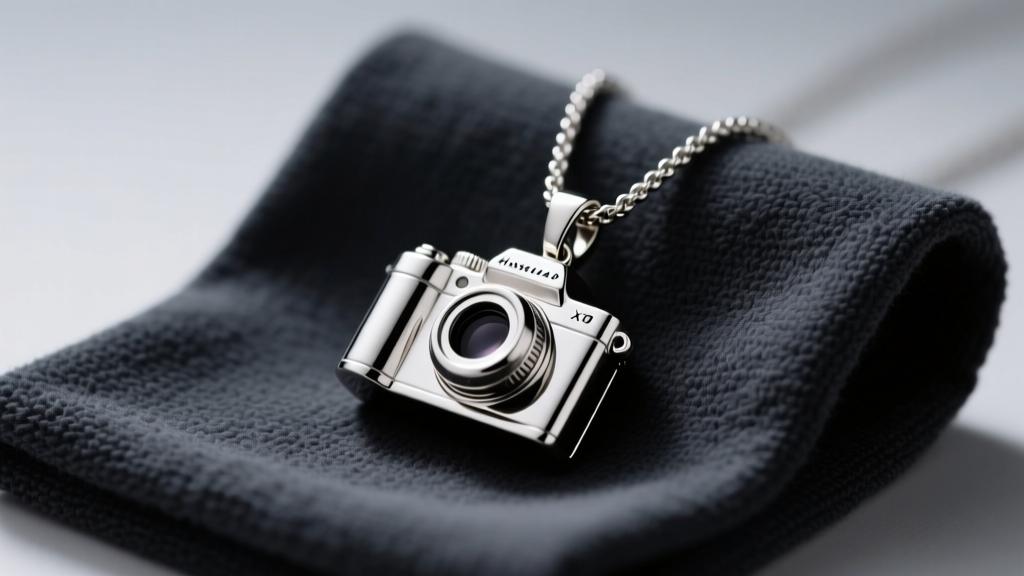
The evolution of wearable technology has blurred the lines between functional gadgets and fashion accessories. Today, necklaces with cameras—ranging from discreet spy camera pendants to digital photo-lockets and body-cam jewelry—are increasingly popular for content creators, security professionals, and tech enthusiasts. However, caring for these hybrid pieces requires a highly specialized approach. You are no longer just maintaining a piece of metal; you are preserving a delicate micro-electronic ecosystem encased in a jewelry shell.
Traditional jewelry maintenance protocols are not only ineffective for these devices, but they are often outright destructive. A standard ultrasonic cleaning bath that works wonders for a diamond solitaire will instantly shatter the microscopic wire bonds inside a CMOS camera sensor. As a senior technician and jewelry stylist, I have developed this comprehensive 2026 maintenance framework to help you clean, protect, and extend the lifespan of your tech-infused neckwear without compromising its optical or electronic integrity.
Why Traditional Jewelry Cleaning Methods Destroy Camera Pendants
Before diving into the correct cleaning protocol, it is vital to understand why standard jewelry care must be abandoned when dealing with electronic pendants. According to the Gemological Institute of America (GIA), ultrasonic and steam cleaners are staples for removing sebum and dirt from precious metals. However, applying these to tech-jewelry results in catastrophic failure modes:
- Ultrasonic Cavitation: The high-frequency sound waves create microscopic vacuum bubbles that implode against the metal. While this dislodges dirt from a gold chain, the shockwaves will easily crack the polycarbonate lens cover or detach the delicate ribbon cables connecting the camera module to the micro-motherboard.
- Steam Cleaning: Pressurized steam easily bypasses the IP54 splash-resistant silicone O-rings found on most camera necklaces. Once moisture breaches the housing, it corrodes the lithium-polymer (LiPo) battery contacts and shorts the logic board.
- Chemical Dips: Silver dip solutions and harsh ammonia-based cleaners will strip the anti-reflective (AR) coatings off the camera lens, leaving it cloudy and prone to flare, while simultaneously degrading the waterproof gaskets.
Step-by-Step Cleaning Protocol for Tech-Infused Necklaces
To safely maintain necklaces with cameras, you must treat the piece as a precision optical instrument first, and a jewelry accessory second. Below is the exact protocol used by electronics repair specialists and horologists.
1. The Optical Lens and Sensor Glass
The lens is the most vulnerable exterior component. Dust, fingerprint oils, and makeup can easily obscure the tiny aperture. Never use your shirt or a standard tissue, as wood fibers will cause micro-scratches on acrylic or polycarbonate lens covers.
Instead, use a specialized optical brush to gently sweep away abrasive particulate matter. Follow this with a dedicated optical lens wipe, such as those manufactured by Zeiss, which utilize a fast-evaporating isopropyl alcohol blend that is safe for AR coatings. As recommended by optical experts at B&H Photo Video, always wipe in a concentric circular motion starting from the center of the lens to push oils outward, rather than grinding them into the edges.

2. The Metal Housing and PVD Coatings
Most premium camera necklaces utilize 316L surgical stainless steel or zinc alloys finished with PVD (Physical Vapor Deposition) coatings for black, rose gold, or gunmetal aesthetics. PVD is highly scratch-resistant but can be chemically degraded by chlorides and harsh acids.
To clean the metal housing, dampen a lint-free microfiber cloth with a 50/50 mixture of distilled water and mild, phosphate-free dish soap. Gently wipe the metallic surfaces, avoiding the microphone grilles and charging ports. Immediately dry the housing with a separate, bone-dry microfiber cloth to prevent water spots and mineral buildup.
3. Charging Ports and Microphone Grilles
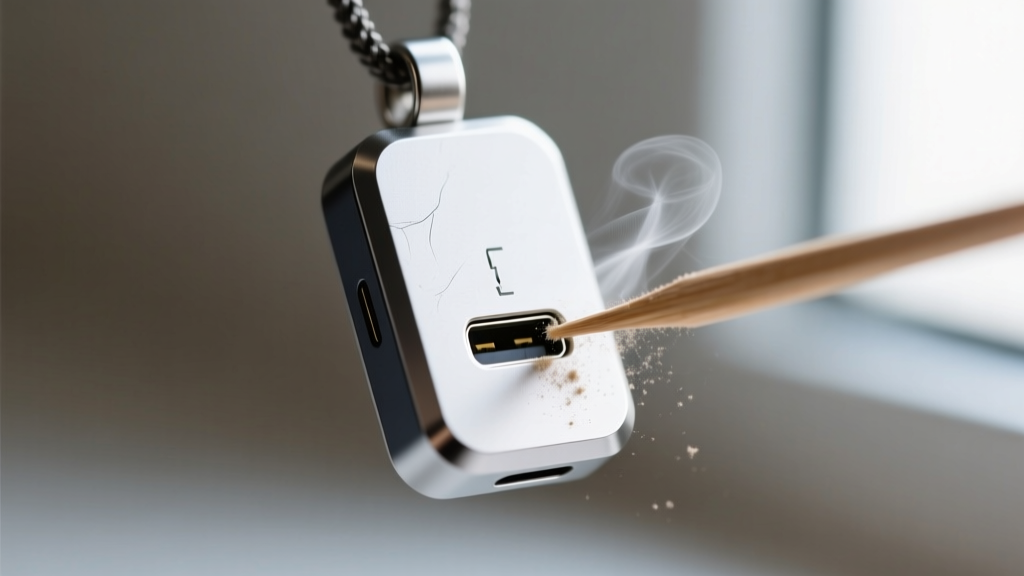
As of 2026, the majority of high-end tech pendants utilize USB-C micro-ports, which are notorious for accumulating pocket lint and skin cells. Moisture and debris in the charging port will trigger the device's short-circuit protection, rendering the necklace useless.
Never insert metal objects like paperclips or SIM-ejector tools into the port, as this can bend the delicate charging pins or cause a short if the battery is active. Instead, use a dry, shaved wooden toothpick to gently lift out compacted debris, followed by a brief burst of compressed air held at a 45-degree angle. For microphone grilles, use a piece of adhesive cleaning slime or Blu-Tack to press into the mesh and lift out dust without pushing it deeper into the acoustic membrane.
Chemical Compatibility Chart for Tech-Jewelry
Using the wrong chemical agent is the fastest way to ruin both the jewelry finish and the internal electronics. Refer to this compatibility matrix before applying any solution to your device.
| Cleaning Agent | Effect on 316L Steel / PVD | Effect on Camera Lens & Seals | Verdict |
|---|---|---|---|
| 70% Isopropyl Alcohol | Safe; evaporates quickly | Safe for glass; degrades silicone O-rings over time | Use sparingly on lens only |
| Ammonia (e.g., Windex) | Can cause PVD discoloration | Destroys AR coatings; melts adhesives | Never Use |
| Mild Dish Soap & Water | Safe; removes sebum | Safe if kept away from unsealed ports | Best for housing |
| Ultrasonic Bath | Excellent for bare metals | Shatters lenses; detaches internal ribbons | Never Use |
| Chlorine / Bleach | Causes severe pitting and rust | Destroys polycarbonate and rubber gaskets | Never Use |
Battery and Circuit Maintenance Framework
The internal lithium-polymer (LiPo) micro-batteries used in necklaces with cameras are highly sensitive to environmental stress. Because these batteries are incredibly small (often under 200mAh), they lack the robust thermal management systems found in smartphones.
Expert Warning: Never leave your camera necklace on the charger overnight. Micro-batteries are susceptible to 'trickle-charge bloat.' Once a LiPo cell swells, it exerts outward pressure on the jewelry housing, which can crack the lens glass or break the waterproof seal, permanently compromising the device.
To maximize battery longevity, store the necklace with a 40% to 60% charge if you do not plan to use it for more than a month. Furthermore, avoid exposing the pendant to extreme heat, such as leaving it on a car dashboard in direct sunlight, as temperatures exceeding 45°C (113°F) will permanently degrade the battery's chemical capacity and risk thermal runaway.
Storage and Environmental Protection
Proper storage is the final pillar of tech-jewelry maintenance. When not in use, your camera necklace should be stored in a climate-controlled environment with moderate humidity. Silica gel packets placed inside the storage box will help absorb ambient moisture that could otherwise cause internal condensation when the device heats up during recording.
Always store the pendant in a dedicated hard-shell case or a soft flannel pouch to prevent the lens from rubbing against other jewelry pieces. Chains should be clasped and laid flat or hung to prevent tangling, which can put undue stress on the pendant's bail (the loop connecting the chain to the camera body). By treating your tech-infused jewelry with the precision of a watchmaker and the care of a gemologist, you ensure that your device remains both a stunning accessory and a reliable optical tool for years to come. For more insights on maintaining complex wearable tech, repair communities like iFixit offer excellent teardown guides that reveal exactly where moisture is most likely to infiltrate your specific device model.