Ultimate Care Guide: Cleaning Your Spider Web Necklace
Learn how to safely clean, polish, and store your delicate spider web necklace. Expert tips for silver, gold, and gemstone filigree jewelry care.

The Unique Challenge of Spider Web Filigree
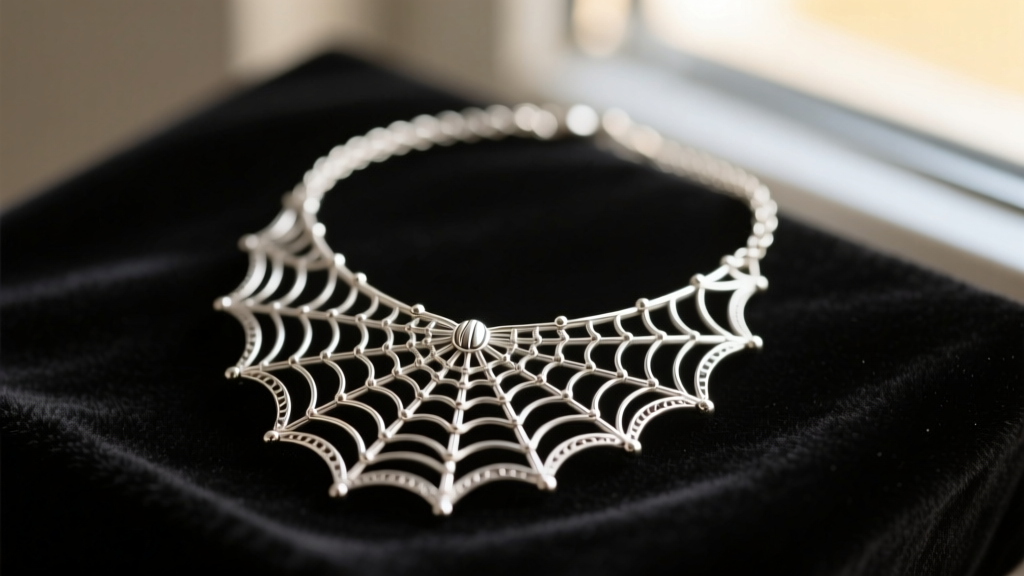
Spider web necklaces are a masterclass in jewelry design, blending gothic elegance with intricate geometric precision. However, their very structure makes them uniquely challenging to maintain. The anatomy of a spider web pendant typically mimics a real web, featuring radial threads that extend from a central hub and spiral capture threads that intersect them. In jewelry manufacturing, these intersections are secured via microscopic solder joints or laser welding. Over time, the high surface area and tiny crevices of this filigree work act as a magnet for sebum (skin oils), dead skin cells, cosmetic powders, and environmental dust.
When this organic debris accumulates at the solder joints, it not only dulls the metal's reflectivity but can also trap moisture against the skin, leading to accelerated tarnishing or even contact dermatitis. Furthermore, many spider web necklaces incorporate delicate 22-gauge or 24-gauge wirework. Applying the wrong amount of mechanical pressure during cleaning can easily warp the radial threads or snap the spiral connections. To preserve the structural integrity and visual brilliance of your piece, you must adopt a cleaning protocol tailored to its specific metal and gemstone composition.
Step-by-Step Cleaning Guide by Material
The approach to cleaning your spider web necklace depends entirely on the base metal and any applied finishes. According to the Jewelers of America, using a one-size-fits-all cleaning method is the fastest way to ruin specialized jewelry finishes. Below is a material-specific breakdown for safe maintenance.
Oxidized & High-Polish Sterling Silver
Sterling silver (92.5% pure silver, 7.5% copper) is highly prone to tarnishing due to the copper content reacting with hydrogen sulfide in the air, forming a layer of black silver sulfide. Many spider web necklaces utilize an intentional oxidized finish—a chemically induced patina that darkens the recesses of the web to create high contrast against polished radial threads.
- The Safe Wash: Mix a few drops of phosphate-free, ammonia-free dish soap (like Dawn) into a bowl of lukewarm water. Submerge the necklace for exactly 3 to 5 minutes to loosen debris.
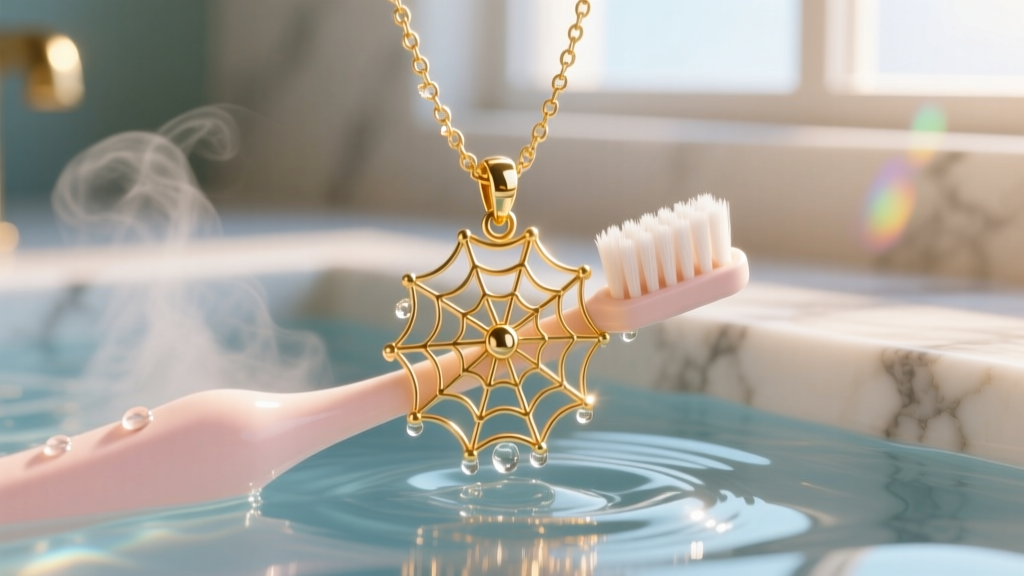
- The Mechanical Action: Use an extra-soft baby toothbrush. Gently brush along the radial threads, moving from the center hub outward. Do not scrub aggressively at the spiral intersections.
- The Drying Process: Rinse under distilled water (tap water contains chlorine and minerals that cause spotting) and pat dry with a lint-free microfiber cloth. Use a hairdryer on the 'cool' setting to blow moisture out of the tight web crevices.
Critical Warning: Never use commercial 'silver dip' liquids or the popular aluminum foil and baking soda electrolysis bath on an oxidized spider web necklace. These methods rely on chemical reduction that will strip the intentional black patina, leaving your web design looking flat and washed out.
Solid Gold, Gold-Plated, & Vermeil Web Designs
Gold does not tarnish, but gold-plated and vermeil (gold over sterling silver) spider web necklaces are highly susceptible to friction wear. The web's intricate edges can easily rub against clothing, wearing away the micron-thin gold layer over time.
- Clean solid gold webs with a dedicated, ammonia-free jewelry cleaning foam. Apply the foam to a soft brush, not directly onto the piece, to prevent liquid from pooling in the central gemstone settings.
- For vermeil or plated webs, avoid brushing entirely. Instead, use a damp microfiber cloth to gently wipe the surface, followed by a dry polishing cloth. Aggressive brushing will accelerate the removal of the gold plating from the raised spiral threads.
Gemstone & Enamel Accents (Onyx, Diamonds, & Glass)
Gothic and vintage-inspired spider web necklaces frequently feature a central black onyx cabochon, small diamond chips, or guilloché enamel work. The Gemological Institute of America (GIA) emphasizes that gemstone care must be dictated by the Mohs hardness scale and the stone's internal structure.
- Black Onyx & Agates (Mohs 6.5-7): While relatively hard, onyx is often dyed and can be porous. Never soak an onyx-centered web necklace. Clean only the metal surrounding the bezel setting with a barely damp cotton swab.
- Diamonds (Mohs 10): Diamonds attract grease. If your web features diamond accents, a drop of isopropyl alcohol on a soft brush will dissolve the sebum film blocking the stone's light return without harming the metal.
- Enamel: Enamel is essentially fused glass. It is highly sensitive to thermal shock and harsh chemicals. Wipe enamel sections with a dry, untreated jeweler's cloth only.
What to Avoid: The Ultrasonic & Chemical Trap
Many jewelry owners assume that ultrasonic cleaners are the ultimate solution for intricate filigree. In an ultrasonic machine, high-frequency sound waves create microscopic bubbles in a solvent that rapidly implode—a process called cavitation. While this blasts dirt out of tiny crevices, it is exceptionally dangerous for spider web necklaces for three reasons:
- Solder Joint Fatigue: The intense vibrations can cause microscopic stress fractures in the delicate solder points holding the web's spiral threads together, leading to catastrophic structural failure.
- Gemstone Shattering: If your web necklace features black onyx, emeralds, or opals, the cavitation shockwaves can exploit natural inclusions and cleavage planes, shattering the stone from the inside out.
- Plating Delamination: For gold-plated or rhodium-plated web pendants, the ultrasonic waves can cause the plated layer to peel or blister away from the base metal.
| Cleaning Method | Solid Gold / Silver | Oxidized Silver | Plated / Vermeil | Gemstone / Enamel |
|---|---|---|---|---|
| Mild Soap & Soft Brush | Safe (Low Risk) | Safe (Low Risk) | Moderate Risk | Safe (Avoid Soaking) |
| Ultrasonic Cleaner | Moderate Risk | High Risk (Vibrations) | High Risk (Peeling) | Extreme Risk (Shattering) |
| Chemical Silver Dip | N/A | Extreme Risk (Strips Patina) | Extreme Risk | High Risk (Chemical Burn) |
| Steam Cleaner | Safe | Safe | High Risk | High Risk (Thermal Shock) |
Proper Storage to Prevent Tangling & Tarnish
The physical geometry of a spider web pendant makes it a notorious culprit for chain tangling. The radial threads act like tiny hooks that can easily catch on the links of a delicate cable or rolo chain. Once tangled, attempting to pull the chain free often results in bending the 22-gauge web wires or snapping the jump ring.
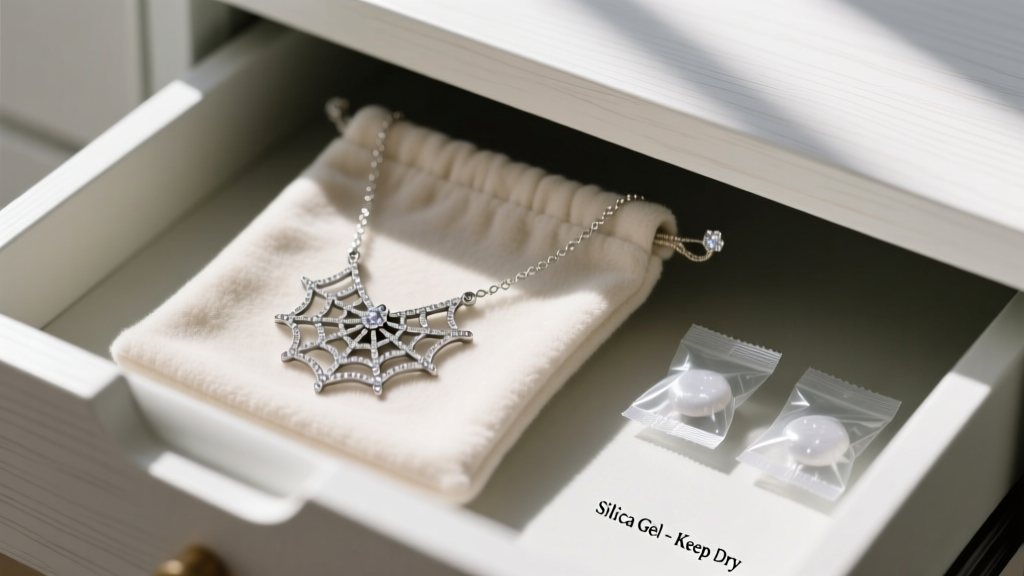
To prevent this, always store your spider web necklace completely fastened. If the piece has a delicate chain, thread one end of the chain through a plastic drinking straw before clasping it; this creates a rigid barrier that makes knotting physically impossible. For long-term storage, place the necklace inside an anti-tarnish flannel pouch. These pouches are impregnated with zinc or silver salts that act as sacrificial metals, intercepting hydrogen sulfide gas before it can reach your sterling silver web. Avoid storing the necklace in humid environments like bathrooms, as moisture accelerates the tarnishing process exponentially.
Routine Maintenance Schedule
To keep your spider web necklace looking pristine without over-cleaning it, adhere to this expert-recommended maintenance schedule:
- After Every Wear: Gently wipe the pendant and chain with a dry, untreated microfiber cloth to remove skin oils and perfume residue before putting it away.
- Monthly: Inspect the jump ring connecting the web pendant to the chain. Ensure it is fully closed and shows no signs of gapping. Check the central gemstone bezel for any lifting of the metal.
- Bi-Annually: Perform the mild soap and distilled water wash detailed above. Use a wooden toothpick (never metal) to gently dislodge any stubborn debris trapped in the deepest web crevices.
- Annually: Take the piece to a professional jeweler for a microscopic inspection of the solder joints and a professional polishing of the high-polish radial threads, taking care to mask off any oxidized or enameled sections.
By respecting the delicate architecture of your spider web necklace and avoiding harsh, automated cleaning shortcuts, you ensure that this striking piece of wearable art remains structurally sound and visually captivating for decades to come.


