How to Clean and Maintain a Cross Necklace with Crown of Thorns
Learn expert cleaning and maintenance tips for your cross necklace with crown of thorns. Protect intricate details and prevent metal tarnish.


The Unique Challenges of Intricate Religious Jewelry
A cross necklace with crown of thorns is more than just a symbol of faith; it is a complex piece of metalwork that demands specialized care. Unlike flat-stamped pendants or simple solitaire chains, the crown of thorns motif introduces significant structural complexity. Whether the thorns are hand-forged from wire, carved into wax and lost-wax cast, or laser-sintered, the design inherently features deep undercuts, micro-crevices, and sharp textural points.
These intricate details act as magnets for environmental debris. Sebum, dead skin cells, cosmetic lotions, and airborne sulfur compounds become trapped in the woven or spiked sections of the thorns. Over time, this accumulation not only dulls the metal's luster but can also accelerate localized corrosion, particularly in sterling silver and lower-karat gold alloys. Furthermore, the sharp points of the thorns pose a mechanical risk during routine polishing, as standard jewelry cloths can easily snag, pull, and permanently bend delicate wire accents.
Understanding Porosity and Tension Points
If your pendant was created using lost-wax casting, microscopic porosity can occur within the thickest parts of the thorn wrapping. This porosity traps moisture and cleaning chemicals, leading to delayed tarnishing or skin irritation. Conversely, if the crown is wire-wrapped, the tension points where the wire crosses itself are highly susceptible to metal fatigue. Aggressive scrubbing or the use of ultrasonic cleaners can exacerbate this fatigue, eventually leading to micro-fractures and broken wires.
Material-Specific Cleaning Protocols
The chemical composition of your necklace dictates the exact cleaning agents you should use. According to the Gemological Institute of America (GIA), matching the cleaning solution to the specific metal alloy is critical to avoid stripping intentional patinas or causing chemical pitting.
| Metal Type | Primary Risk Factor | Recommended Cleaning Agent | Tools & Chemicals to Avoid |
|---|---|---|---|
| Sterling Silver (.925) | Silver sulfide tarnish (blackening) | pH-neutral dish soap & distilled water | Thiourea-based silver dips, baking soda paste |
| 14k / 18k Yellow Gold | Alloy oxidation (copper/silver spotting) | Mild ammonia-free jewelry wash | Chlorine bleach, hard-bristle brushes |
| 14k / 18k White Gold | Stripping of rhodium plating | Warm water & baby shampoo | Ultrasonic cleaners, abrasive polishing compounds |
| Platinum (950) | Surface patina development | Commercial platinum cleaning solution | Silver polishing cloths (can leave dark residue) |
The Danger of Ultrasonic Cleaners
While ultrasonic cleaners are highly effective for simple diamond solitaires, they are notoriously dangerous for a cross necklace with crown of thorns. The high-frequency sound waves create microscopic bubbles that implode with intense localized force (cavitation). If your piece features micro-pavé accent stones (such as small rubies or sapphires set into the crossbar), this cavitation can easily shake them loose. Additionally, the vibrations can weaken the solder joints where the thorns meet the main body of the cross.
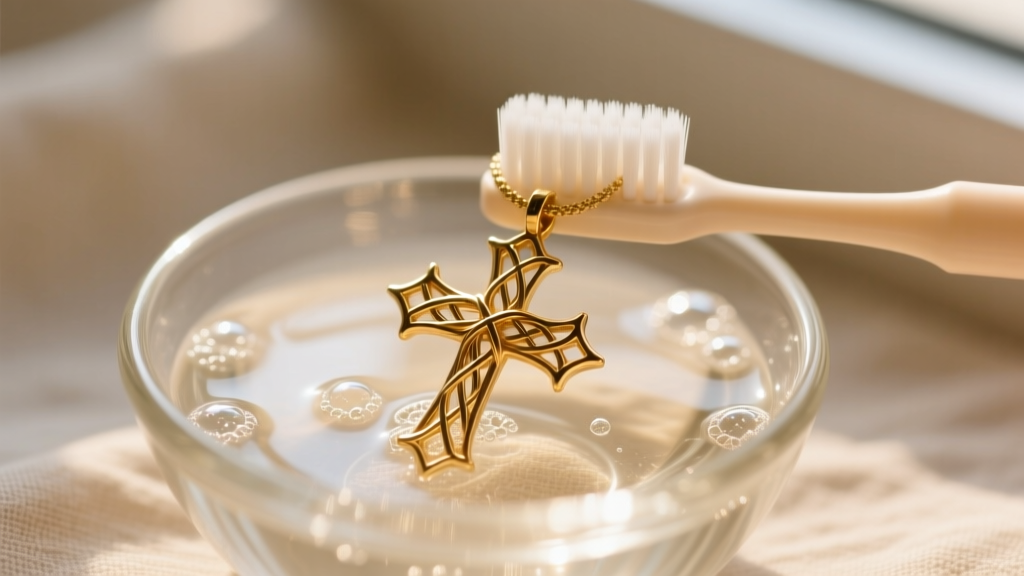
Step-by-Step Deep Cleaning Guide
To safely remove trapped debris without compromising the structural integrity of the thorns, follow this manual deep-cleaning protocol. This method relies on chemical softening rather than mechanical force.
Tools You Will Need
- Extra-soft baby toothbrush (never use standard or 'medium' bristles)
- pH-neutral liquid dish soap (e.g., original blue Dawn)
- Distilled water (tap water contains minerals that leave hard water spots)
- Wooden toothpicks or plastic dental picks
- Lint-free microfiber cloths
- Can of compressed air
The Soaking and Agitation Method
Step 1: The Softening Soak. Fill a small glass bowl with lukewarm distilled water and add three drops of pH-neutral dish soap. Submerge the necklace completely and let it soak for exactly 15 to 20 minutes. This allows the surfactants to break down the lipid bonds of trapped skin oils and lotions within the thorn crevices.
Step 2: Targeted Agitation. Remove the pendant from the solution. Using the extra-soft baby toothbrush, gently brush the metal. Critical Technique: Always brush with the grain and direction of the thorn wrapping, never against it. Brushing against the thorns can catch the bristles on the sharp points, bending the wire or pulling it away from the solder joint.
Step 3: Crevices Detailing. For stubborn debris lodged deep between intersecting thorns, use a wooden toothpick or plastic dental pick. Avoid metal needles or safety pins, as steel is harder than gold and silver and will leave permanent micro-scratches on the surface.
Step 4: The Distilled Rinse. Rinse the necklace thoroughly under a slow stream of distilled water to ensure all soap residue is removed. Soap left in the crevices will dry into a dull, white film.
Step 5: Drying. Do not rub the piece dry with a towel, as the loops of the towel will snag on the thorns. Instead, lay the necklace on a dry microfiber cloth and use a can of compressed air to blow the moisture out of the deep undercuts.
Polishing Without Damaging the Thorns
Polishing a textured pendant requires a departure from standard jewelry care routines. Standard treated silver polishing cloths are designed for flat, smooth surfaces. If you drag a treated cloth across a crown of thorns design, the cloth will catch on the spikes. This not only ruins the cloth but can also snap delicate wire details.
Instead, use a specialized jewelry polishing wand equipped with a treated micro-tip. These wands allow you to selectively polish the high, flat surfaces of the crossbar and the bail while intentionally avoiding the deep recesses of the thorns. According to finishing experts at Rio Grande, preserving the dark oxidation (patina) in the recessed areas of textured jewelry is actually desirable, as it provides visual contrast that makes the raised, polished elements stand out more vividly. By only polishing the high points, you maintain this factory-applied contrast.
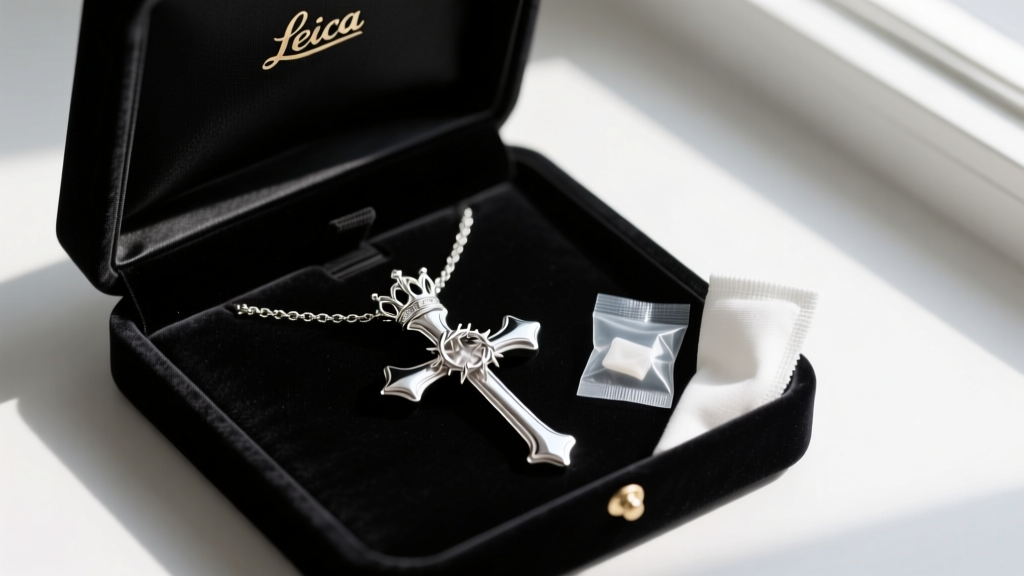
Storage and Preventative Maintenance
Proper storage is the most effective way to reduce the frequency of deep cleanings. The primary enemy of sterling silver and copper-alloyed gold is hydrogen sulfide in the ambient air, which causes tarnish. Moisture accelerates this chemical reaction exponentially.
Anti-Tarnish Strategies
Never store your cross necklace in a standard cardboard jewelry box or a plastic poly-bag, as both can trap moisture and emit off-gassing chemicals that accelerate tarnishing. Instead, utilize a dedicated anti-tarnish storage system:
- Pacific Silvercloth: Store the necklace inside a pouch made of Pacific Silvercloth, which is embedded with microscopic silver particles that absorb sulfur gases before they can reach your jewelry.
- 3M Anti-Tarnish Strips: Place a 3M anti-tarnish strip inside your jewelry box drawer. These strips absorb airborne sulfides and typically last for 6 to 12 months before needing replacement.
- Silica Gel Packets: Include a small, rechargeable silica gel desiccant packet in your storage container to control ambient humidity, keeping the environment below the 40% relative humidity threshold where tarnish accelerates.
Physical Protection During Storage
Because the thorns are inherently sharp and prone to snagging, never toss this necklace into a communal jewelry box. The thorns will easily catch on delicate cable chains or scratch the surface of softer gemstones like pearls or opals. Always hang the necklace on a padded, velvet-lined jewelry arbor, or lay it completely flat in a dedicated, single-compartment velvet tray. Ensure the clasp is fastened before storage to prevent the chain from slipping through the bail and tangling around the thorns.
When to Seek Professional Jewelry Repair
Despite meticulous care, mechanical failures can occur. You must know when to stop DIY maintenance and consult a professional bench jeweler. Seek immediate professional repair if you observe any of the following failure modes:
- Micro-Fractures in Wire Thorns: If you notice a hairline crack or a lifted wire in the crown wrapping, stop wearing the piece immediately. Continued wear will cause the wire to snap.
- Bail Wear-Through: The bail (the loop that holds the chain) experiences constant friction. If the metal at the top of the bail becomes visibly thinned or grooved, it is at risk of breaking, which will result in the loss of the pendant.
- Deep Chemical Pitting: If the metal surface appears rough, porous, or 'eaten away' (often caused by accidental exposure to chlorine in swimming pools or harsh household cleaners), a jeweler must use laser welding to rebuild the lost metal without melting the surrounding intricate details.
By adhering to these specialized care protocols, your cross necklace with crown of thorns will retain its structural integrity, visual contrast, and profound symbolic beauty for generations to come.


