The Ultimate Care Guide for Custom Charms for Necklaces
Learn how to safely clean, store, and maintain custom charms for necklaces. Expert tips on metals, enamel, and gemstones to prevent damage.

The Unique Vulnerabilities of Custom Charm Jewelry
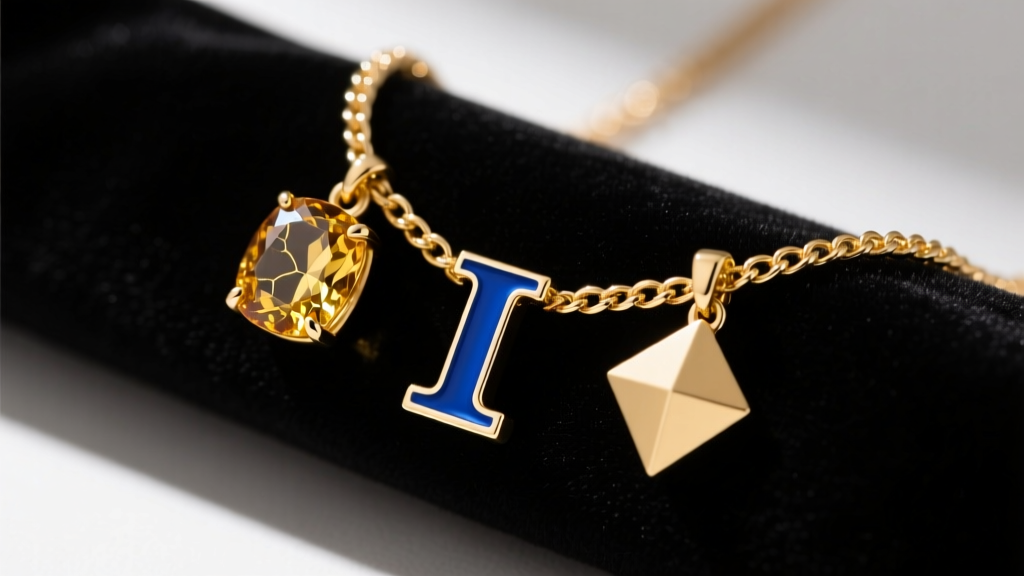
When investing in custom charms for necklaces, you are often dealing with complex, mixed-media jewelry that requires a highly specific approach to maintenance. Unlike a simple, solid-metal chain, custom charms frequently combine disparate materials—such as sterling silver bases with vitreous enamel inlays, or gold vermeil settings holding porous gemstones like turquoise or opal. According to the Gemological Institute of America (GIA), mixed-media jewelry accounts for a significant percentage of accidental consumer damage, primarily because standard cleaning methods for one material can be catastrophic for another.
Beyond material chemistry, the physical structure of custom charms introduces mechanical vulnerabilities. Most custom pieces are attached to the main chain via jump rings. If these are unsoldered 18-gauge or 20-gauge rings, lateral stress during cleaning can pry them open, resulting in a lost charm. Furthermore, intricate custom designs often feature laser-welded bails or delicate prong settings for micro-pave stones. Aggressive polishing or ultrasonic vibrations can easily compromise these structural weak points. Understanding the exact composition and construction of your custom charms for necklaces is the critical first step in establishing a safe, long-term care routine.
Material-Specific Cleaning Protocols
Because custom charms for necklaces are rarely made from a single uniform material, a one-size-fits-all cleaning approach is a recipe for disaster. Below is a quick-reference matrix for the most common charm materials and their required care protocols.
| Material | Safe Cleaning Agent | Recommended Tool | Critical Warning |
|---|---|---|---|
| Sterling Silver (High Polish) | Mild dish soap & warm water | Microfiber cloth | Avoid abrasive pastes |
| Oxidized Silver | Dry polishing cloth only | Untreated cotton swab | Never use liquid silver dips |
| Gold Vermeil | Baby shampoo solution | Extra-soft baby toothbrush | Avoid rouge polishing cloths |
| Vitreous Enamel | Damp lint-free cloth | Fingertip | Avoid thermal shock & ultrasonics |
| Epoxy Resin Inlays | Mild soap suds only | Soft cotton pad | Never submerge in alcohol |
Sterling Silver and Oxidized Details
Sterling silver is a staple for custom charms due to its excellent casting properties and brilliant luster. However, silver is highly susceptible to tarnishing when exposed to sulfur compounds in the air. For high-polish silver charms, a gentle wash in warm water with a few drops of phosphate-free dish soap is usually sufficient. For heavier tarnish, use a dedicated silver polishing cloth impregnated with micro-abrasives.
Crucially, if your custom charms feature intentional oxidation (the dark, antiqued recesses that highlight engraved details or textures), you must never use liquid silver dips. These dips rely on thiourea, a harsh chemical that strips oxidation instantly, leaving the charm looking flat and washed out. Instead, use a dry, untreated cotton swab to carefully polish only the raised, high-polish areas of the charm, leaving the darkened crevices intact.
Gold Vermeil vs. Standard Plating
Many premium custom charms for necklaces are crafted in gold vermeil. The Federal Trade Commission (FTC) strictly defines vermeil as a sterling silver base plated with at least 2.5 microns of 10k or higher gold. This thick layer makes it far more durable than standard gold-plated brass, but it still requires a gentle touch. Never use traditional jewelry polishing cloths that contain jeweler's rouge or chemical cleaners on vermeil. The micro-abrasives in these cloths act like fine sandpaper, gradually wearing away the precious gold layer and exposing the silver beneath. Stick to a mild baby shampoo solution and an extra-soft bristle brush to lift body oils and lotions from the crevices without compromising the micron-thickness of the plating.
Vitreous Enamel and Epoxy Resin Inlays
Color is frequently introduced into custom charms through either vitreous enamel or cold enamel (epoxy resin). Vitreous enamel is essentially crushed glass fired at extreme temperatures (often over 1400°F). While highly scratch-resistant, it is incredibly brittle and susceptible to thermal shock. Dropping an enameled charm into hot water, or exposing it to sudden temperature changes, can cause the glass to craze or pop off the metal backing entirely.
Cold enamel, or epoxy resin, is more impact-resistant but highly vulnerable to chemicals. Alcohol-based cleaners, hand sanitizers, and even certain perfumes can cause resin inlays to cloud, yellow, or soften over time. When cleaning enameled or resin custom charms for necklaces, avoid submersion entirely. Instead, lightly dampen a lint-free microfiber cloth with distilled water and gently wipe the surface, drying it immediately.
Step-by-Step Deep Cleaning Routine
For a thorough, safe deep clean of your mixed-metal and gemstone custom charms, follow this expert-approved methodology recommended by the Jewelers of America.
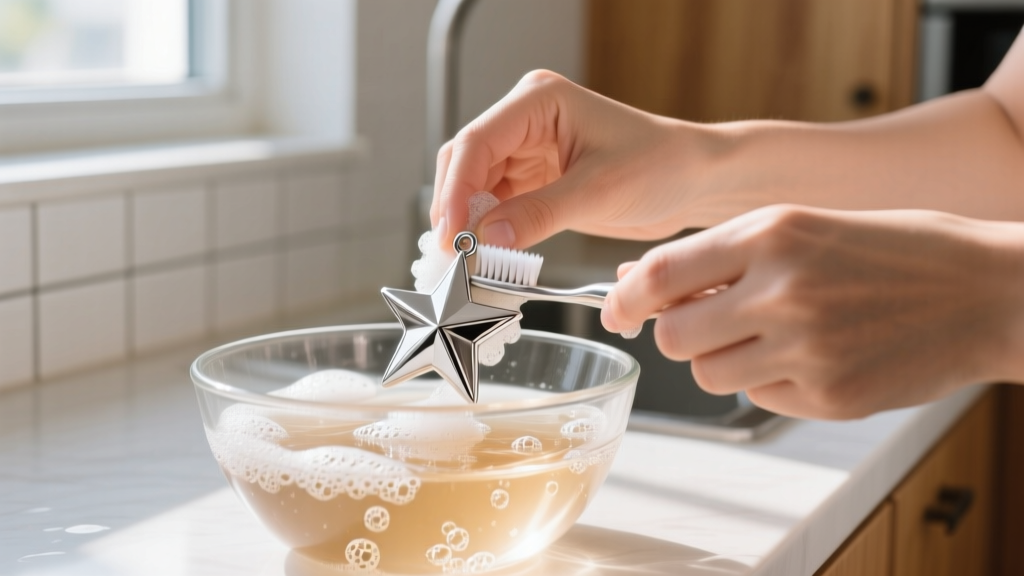
- Preparation: Line a small glass bowl with a soft towel to prevent accidental impacts against the hard glass bottom. Fill the bowl with lukewarm (never hot) distilled water and add three drops of mild, lotion-free dish soap.
- Inspection: Before introducing any liquid, use a jeweler's loupe or your phone's macro camera to inspect the jump rings and prongs. If a jump ring is gaping or a stone is loose, do not wash the charm; take it to a professional jeweler immediately.
- Agitation: Submerge the charms for no more than three to five minutes. This brief soak is enough to loosen sebum, dead skin cells, and cosmetic residue without risking water damage to porous stones or resin.
- Detailing: Using an extra-soft baby toothbrush, gently sweep the bristles across the back of the charm and around the bail. Always brush away from the prongs of any set stones to avoid snagging and lifting the metal.
- Rinsing and Drying: Rinse the charm under a gentle stream of lukewarm distilled water. Pat dry with a lint-free microfiber cloth, and use a hair dryer on the 'cool' setting to blast moisture out of deep, hard-to-reach crevices.
The Charm Killers: What to Strictly Avoid
To preserve the structural and aesthetic integrity of custom charms for necklaces, you must actively avoid the following common hazards:
- Ultrasonic Cleaners: While highly effective for solid diamond and platinum jewelry, ultrasonic cleaners operate at frequencies around 40,000 to 45,000 Hz. These intense microscopic vibrations can easily shatter vitreous enamel, fracture porous gemstones like opals or emeralds, and shake loose the adhesive used in micro-pave or resin-inlaid custom charms.
- Chlorine and Hypochlorite: Swimming pools and hot tubs contain chlorine, which aggressively attacks the copper alloys mixed into sterling silver and karat gold. Prolonged exposure can cause irreversible structural weakening and severe, dark pitting on the metal surface.
- Steam Cleaners: The intense, localized heat and pressure from a jewelry steam cleaner can melt epoxy resins, crack heat-treated gemstones, and force moisture into closed-back settings, leading to hidden internal corrosion.
Proper Storage and Daily Maintenance
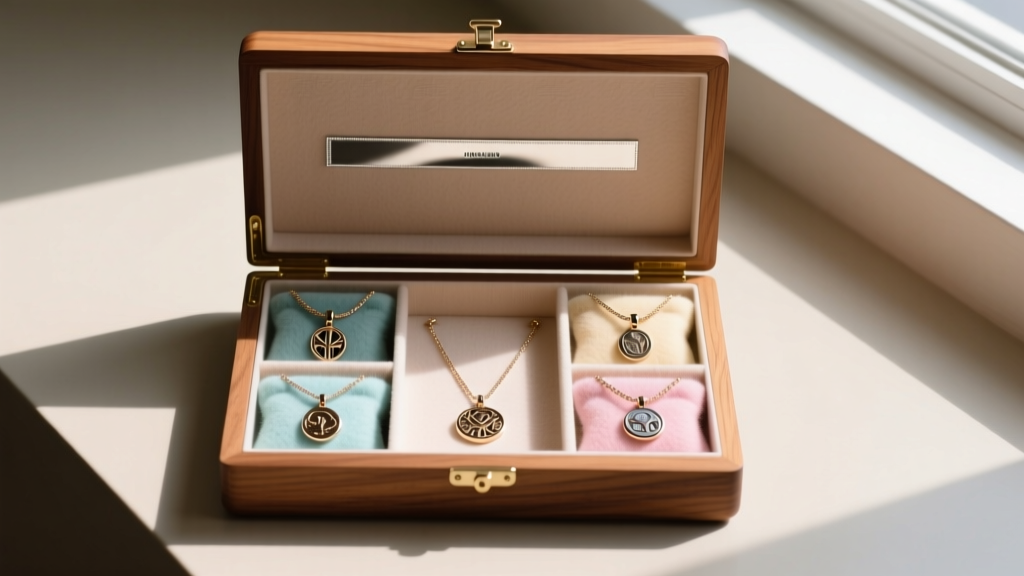
How you store your custom charms for necklaces is just as important as how you clean them. Sterling silver tarnishes primarily due to exposure to hydrogen sulfide and high humidity. Storing your necklaces in a standard velvet-lined jewelry box is often insufficient, as velvet can trap ambient moisture.
For optimal preservation, store each custom charm necklace individually in a sealed polyethylene zip-lock bag. Avoid PVC plastics, which can emit gases that accelerate tarnishing and degrade certain plastics and resins. Inside each bag, include a small strip of 3M anti-tarnish paper. These strips actively absorb sulfur compounds and oxidizing gases from the trapped air, effectively neutralizing the environment for up to six months.
Furthermore, always store your necklaces flat or hanging vertically to prevent the chains from tangling. Tangled chains create friction against the custom charms, leading to micro-scratches on high-polish surfaces and unnecessary stress on the jump rings. Finally, practice the 'last on, first off' rule: put your custom charm necklaces on only after applying perfumes, hairsprays, and lotions, and remove them immediately upon returning home to minimize their exposure to corrosive cosmetic chemicals.
Proper care of custom charms is not just about maintaining shine; it is about preserving the structural integrity of complex, mixed-media jewelry. By tailoring your cleaning methods to the specific materials and avoiding harsh mechanical vibrations, your custom pieces will remain vibrant and secure for generations.


