Expert Care Guide for an Italy 14K Gold Necklace Chain
Learn how to properly clean, store, and maintain your Italy 14K gold necklace. Expert tips to prevent tarnish, tangling, and chain breakage.


An Italy 14K gold necklace represents a perfect intersection of heritage craftsmanship and durable luxury. Italian goldsmiths, particularly those in regions like Vicenza and Arezzo, are globally renowned for their precision in chain weaving and link soldering. However, owning a high-quality piece of Italian jewelry requires more than simply wearing it; it demands a rigorous, science-backed approach to maintenance. In 2026, as environmental pollutants and modern cosmetic formulations become increasingly complex, understanding the metallurgy and specific care requirements of your 14K gold chain is essential to preserving its structural integrity and brilliant luster.
Decoding the "Italy 14K" Stamp and Alloy Metallurgy
To properly care for your necklace, you must first understand what it is actually made of. Pure 24K gold is too malleable for daily wear chains, which is why it is alloyed with other metals. An authentic Italy 14K gold necklace is stamped with "585", indicating that it contains exactly 58.5% pure gold. The remaining 41.5% consists of a carefully calibrated mix of silver, copper, and zinc.
According to the Gemological Institute of America (GIA), this specific alloy matrix gives 14K gold its tensile strength and warm color. However, the copper and zinc within the alloy are highly reactive. When exposed to sulfur compounds in the air, chlorine in water, or the natural acids in human sweat, these base metals oxidize. This oxidation manifests as tarnish—a dark, dull film that robs the chain of its reflectivity. Furthermore, authentic Italian pieces will often feature a maker's mark alongside the 585 stamp, typically a number followed by a two-letter province code (e.g., "1234 VI" for Vicenza), which guarantees the chain's origin and traceability under the Federal Trade Commission (FTC) Jewelry Guides.
The Professional Step-by-Step Cleaning Protocol
Forget harsh commercial jewelry dips or abrasive pastes. Cleaning an Italy 14K gold necklace requires a gentle, pH-balanced approach that lifts sebum and environmental grime without micro-scratching the alloy matrix.
1. The Distilled Water Soak
Fill a small glass bowl with 8 ounces of distilled water. Tap water contains calcium and magnesium, which can leave microscopic mineral deposits on the gold. Add exactly three drops of a phosphate-free, mild dish soap (such as original Dawn). Submerge the necklace and let it soak for 15 to 20 minutes. This loosens trapped oils within the chain links.
2. Targeted Agitation
Remove the chain from the solution. Using an extra-soft baby toothbrush (bristle diameter under 0.1mm), gently brush the chain. For rope or box chains, brush in the direction of the weave to avoid bending delicate links. Pay special attention to the clasp mechanism, where dead skin cells and lint accumulate.

3. The Microfiber Dry
Rinse the chain thoroughly under a gentle stream of lukewarm distilled water. Never use paper towels or tissue paper to dry your gold; the wood fibers in paper products are hard enough to inflict microscopic scratches on 14K gold. Instead, lay the chain flat on a clean, lint-free microfiber cloth and gently pat it dry. Allow it to air dry completely before storage.
Chain-Specific Maintenance Matrix
Italian goldsmiths produce a vast array of chain styles, each with unique structural vulnerabilities. A one-size-fits-all approach to maintenance will lead to damage. Use the matrix below to tailor your care routine to your specific chain type.
| Chain Style | Primary Vulnerability | Recommended Cleaning Tool | Storage Strategy |
|---|---|---|---|
| Figaro | Snagging on fabrics due to alternating link sizes. | Soft bristle brush, focus on the smaller circular links. | Lay flat in a velvet-lined tray; never hang. |
| Rope | Trapping oils and lotions deep within the twisted grooves. | Soak time extended to 30 mins; use a wooden toothpick for deep crevices. | Hang vertically to prevent twisting and kinking. |
| Cuban Link | Flat surfaces are highly prone to visible micro-scratches. | Microfiber cloth only; avoid bristle brushes on the flat faces. | Wrap individually in an anti-tarnish flannel pouch. |
| Box | Sharp 90-degree angles can trap stubborn cosmetic residues. | Interdental brushes (softest grade) for the interior corners. | Coil loosely in a circular motion; avoid sharp folds. |
Environmental Hazards: The Chemistry of Gold Destruction
While pure gold is virtually indestructible, the 41.5% alloy in your Italy 14K gold necklace is highly susceptible to chemical attack. Understanding these hazards is critical for preventing catastrophic chain failure.
- Chlorine and Stress Corrosion Cracking: Never wear your 14K gold chain in a swimming pool or hot tub. Chlorine reacts with the copper and zinc in the alloy, causing a metallurgical phenomenon known as "stress corrosion cracking." This weakens the structural integrity of the links, particularly at the solder joints, leading to sudden, irreparable snapping.
- Mercury Amalgamation: Mercury instantly bonds with gold at room temperature, forming a white, crusty amalgam that ruins the finish. Avoid wearing your necklace while handling broken thermometers, certain fluorescent bulbs, or working in specific dental or laboratory environments.
- Cosmetics and Aerosols: Hairsprays, perfumes, and self-tanners contain alcohols and volatile organic compounds (VOCs) that leave a stubborn, dulling film on gold. Always apply your cosmetics and allow them to dry completely before putting on your necklace.
- Perspiration and pH Levels: Human sweat is mildly acidic. If you wear your chain during intense exercise, the combination of salt, acid, and friction will accelerate tarnishing. Always wipe the chain down with a damp microfiber cloth immediately after a workout.
Advanced Storage and Anti-Tarnish Strategies
Proper storage is just as important as proper cleaning. The goal of storage is to isolate the Italy 14K gold necklace from atmospheric sulfur, humidity, and physical abrasion from other jewelry pieces.
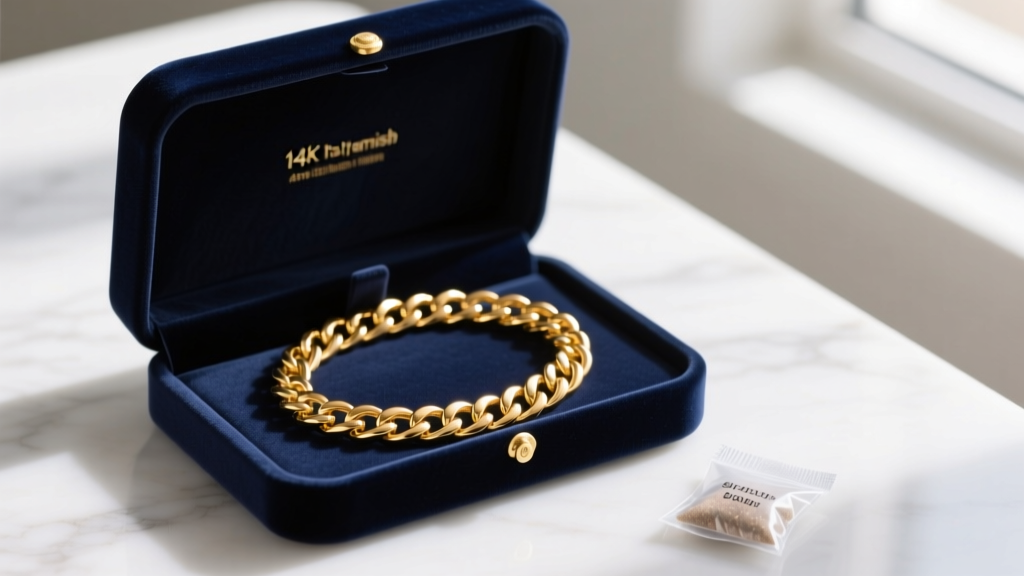
Never store your gold chain in a humid bathroom or in direct sunlight. Instead, utilize a multi-layered storage approach. First, place the clean, completely dry necklace into a small, sealable polyethylene plastic bag. Avoid PVC (polyvinyl chloride) plastics, as they can off-gas chemicals that promote tarnishing. Squeeze as much air out of the bag as possible before sealing it.
Next, place a 3M anti-tarnish strip inside the bag. These strips contain specialized particles that absorb airborne sulfur compounds before they can react with the copper in your 14K gold alloy. Replace these strips every six months. Finally, place the sealed bag into a dedicated compartment in a velvet-lined jewelry box to prevent the chain from tangling with heavier pieces that could cause physical dents.
When to Seek Professional Jeweler Intervention
While routine maintenance can be handled at home, certain situations require the expertise of a professional bench jeweler. If your Italy 14K gold necklace features hollow links (a common technique in Italian rope chains to reduce weight and cost), never place it in an ultrasonic cleaner. The high-frequency vibrations can cause the thin gold walls to fracture or the internal water to become permanently trapped, leading to internal corrosion.
Additionally, if the spring ring or lobster clasp feels stiff, fails to snap shut crisply, or shows visible gaps, take it to a jeweler immediately. A failing clasp is the leading cause of lost pendants and chains. A professional can replace the internal steel spring mechanism or laser-weld a new clasp onto the chain without compromising the surrounding 14K gold links. By combining diligent at-home care with annual professional inspections, your Italian gold necklace will remain a flawless, enduring staple in your collection for decades to come.


