Yin and Yang Necklace Value Guide: Budget vs Fine Jewelry
Discover the true value of a yin and yang necklace. Compare budget alloys vs. solid gold, pricing tiers, and material longevity in our expert guide.

The yin and yang necklace has transcended its mid-century surf culture roots to become a staple of modern minimalist and philosophical jewelry design. Representing the delicate balance of opposing forces, this iconic pendant is available at every conceivable price point in the 2026 jewelry market—from $12 fast-fashion alloy bins to $5,000 high-jewelry showcases. But how do you separate genuine craftsmanship from overpriced base metals? When evaluating a symbolic piece meant to be worn daily, understanding the metallurgy, pricing tiers, and structural longevity is critical. In this comprehensive value assessment, we break down exactly what you are paying for and help you determine which tier offers the best return on investment.
The Symbolism and Market Demand for Yin and Yang Pendants
The ancient Chinese symbol of Taijitu (yin and yang) represents interconnected duality. In jewelry design, this translates to a circular pendant split by an S-curve, typically featuring contrasting materials. The surging demand for meaningful, talismanic jewelry over the past decade has pushed manufacturers to produce these pendants in massive quantities. However, high demand often dilutes quality. The market is currently saturated with visually identical necklaces that possess vastly different material compositions, making it difficult for the average consumer to assess true value without a metallurgical breakdown.
Material Breakdown: What Are You Actually Paying For?
To accurately assess the value of a yin and yang necklace, we must categorize the market into three distinct pricing and material tiers. The contrast between the 'yin' (dark) and 'yang' (light) halves is achieved through different methods depending on the budget.
Tier 1: Budget Alloys and Flash Plating ($15 - $45)
At the entry-level, pendants are cast from brass, zinc, or pewter alloys. The gold or silver tone is achieved through 'flash plating'—an electroplating process that deposits a microscopic layer of gold (usually under 0.5 microns) over the base metal. The contrasting halves are typically filled with cold epoxy resin or painted enamel. While accessible, these pieces have a high cost-per-wear because the plating wears off within 3 to 6 months of daily use, and the epoxy resin yellows or chips easily upon impact.
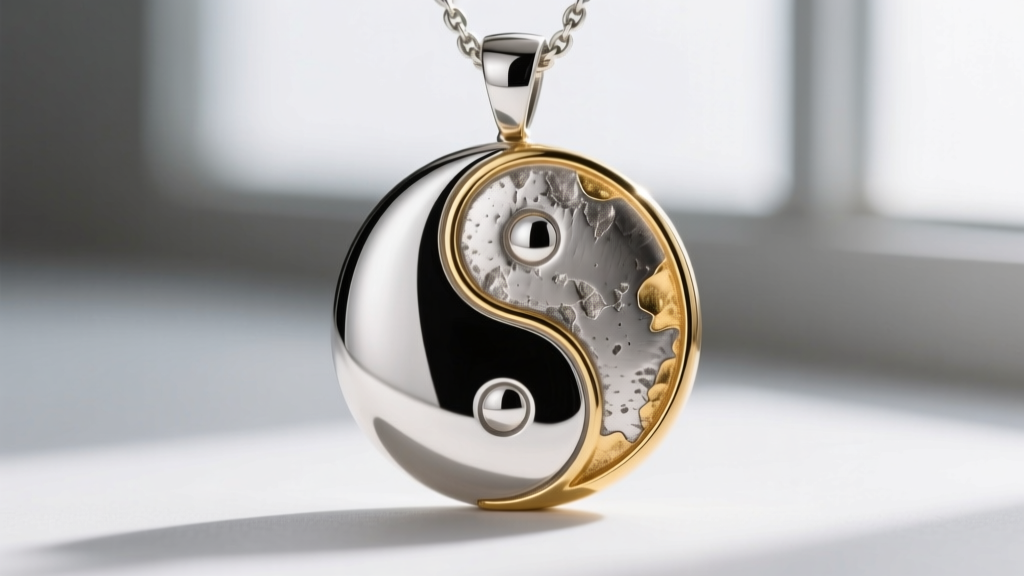
Tier 2: Sterling Silver and Heavy Vermeil ($60 - $180)
The mid-tier offers the best balance of affordability and longevity. These pieces use a solid 925 sterling silver base. According to the The Silver Institute, sterling silver provides excellent structural integrity and natural hypoallergenic properties. When gold-toned, these pieces should be 'gold vermeil,' which the Federal Trade Commission (FTC) strictly defines as having a minimum of 2.5 microns of gold plating over a sterling silver base. The inlays in this tier often upgrade from resin to dyed agate or synthetic spinel, offering better scratch resistance.
Tier 3: Solid Gold and Genuine Gemstone Inlays ($350 - $1,500+)
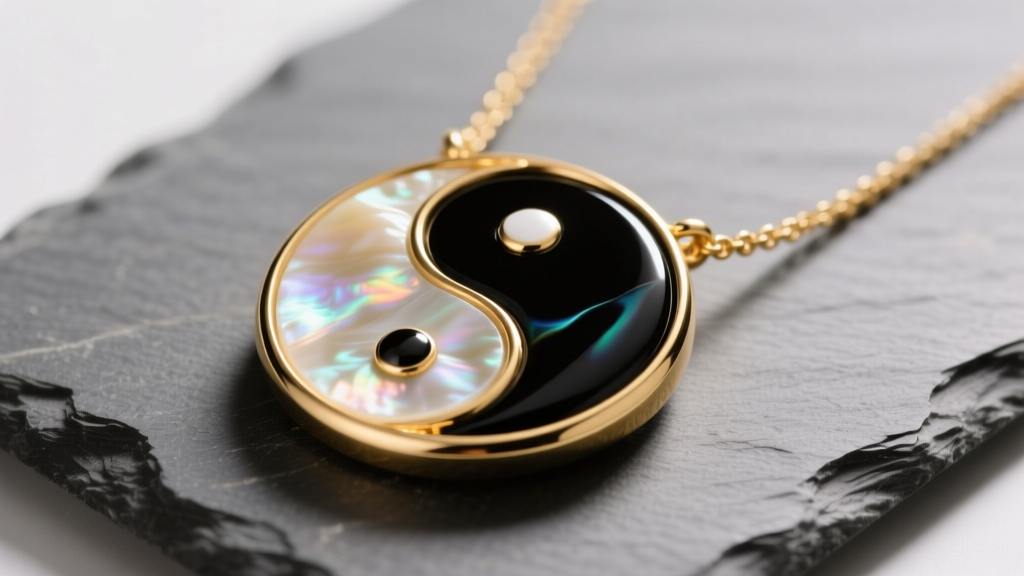
Fine jewelry iterations are cast in solid 14k (585) or 18k (750) gold. The true value marker in this tier is the use of genuine gemstone inlays. High-end jewelers use natural black onyx for the dark half and white Mother-of-Pearl (MOP) for the light half. A crucial E-E-A-T detail here is the Mohs hardness disparity: Onyx ranks at 6.5-7, while MOP is much softer at 2.5-4.5. Master jewelers must use precision bezel settings with varied lip depths to protect the softer MOP from chipping during daily wear. Furthermore, the accompanying chains in this tier are usually solid rope or box chains, adding significant gram weight and intrinsic melt value to the piece.
Cost-Per-Wear and Longevity Analysis
Value is not just about the initial purchase price; it is about how long the piece retains its aesthetic and structural integrity. Below is a comparative analysis of the three tiers based on a 5-year ownership model.
| Material Tier | Avg. Price (2026) | Expected Lifespan | Cost-Per-Wear (Daily) | Resale / Melt Value |
|---|---|---|---|---|
| Brass / Flash Plate | $25 | 6 - 12 Months | $0.13 (over 6 mos) | $0 |
| 925 Silver / Vermeil | $120 | 3 - 5 Years | $0.09 (over 3 yrs) | $15 - $30 |
| Solid 14k Gold / Onyx | $650 | Lifetime / Heirloom | $0.03 (over 50 yrs) | $250 - $400 |
Expert Insight: While the solid gold tier requires a higher upfront capital outlay, its cost-per-wear plummets over time. Furthermore, solid gold yin and yang necklaces can be easily polished and re-tipped by a jeweler, whereas plated alloys cannot be restored once the base metal is exposed.
Common Failure Modes in Budget Yin and Yang Necklaces
When assessing budget options, be aware of the specific mechanical and chemical failures that plague cheaper manufacturing techniques:
- Galvanic Corrosion: When brass alloys mix with the natural salts and acids in human sweat, a galvanic reaction occurs. This not only turns the wearer's skin green but causes the metal to become brittle and crack at the bail (the loop connecting the pendant to the chain).
- Enamel Delamination: Budget pieces use 'cold enamel' (essentially a two-part epoxy). Over time, exposure to UV light and temperature fluctuations causes the epoxy to shrink slightly, pulling away from the metal S-curve divider and trapping dirt underneath.
- Spring Ring Clasp Fatigue: Cheap chains rely on hollow spring ring clasps with weak internal tension springs. These frequently fail to close completely, leading to lost pendants. Always look for a solid lobster clasp on chains thicker than 1.2mm.

How to Authenticate and Assess Value Before Buying
Before purchasing a mid-to-high tier yin and yang necklace, perform a physical and visual audit. First, inspect the hallmark. According to The London Assay Office, genuine precious metals must carry specific purity stamps. Look for '925' for sterling silver, '585' or '14k' for 14-karat gold, and '750' or '18k' for 18-karat gold. These stamps are usually located on the back of the pendant bail or on the clasp tongue.
Second, perform a thermal conductivity test. Precious metals like gold and silver are highly conductive; they will feel distinctly cool to the touch when first picked up and will warm to your body temperature slowly. Brass and zinc alloys feel closer to ambient room temperature and warm up almost instantly. Finally, examine the S-curve divider. In fine jewelry, the metal divider is a separate, soldered wire or a deeply milled channel that ensures a flush fit for the gemstones. In budget pieces, the S-curve is merely stamped into a single sheet of metal, resulting in a flat, lifeless profile.
Final Verdict: Which Tier Offers the Best Value?
If you are buying a yin and yang necklace as a temporary fashion accessory or a festival staple, the Tier 1 budget alloys are acceptable, provided you accept their disposable nature. However, for true value, Tier 2 (Sterling Silver and Vermeil) represents the sweet spot for most consumers. It offers the hypoallergenic benefits and structural weight of precious metals without the steep premium of solid gold.
For those seeking an heirloom piece to mark a significant life transition or philosophical milestone, Tier 3 (Solid Gold with Onyx and MOP) is the only logical choice. The intrinsic melt value, combined with the masterful lapidary work required to seamlessly fit contrasting gemstones into a unified circle, ensures that a fine yin and yang necklace will retain both its physical beauty and its financial worth for generations.


