Expert Care for Your Pear Shaped Diamond Tennis Necklace
Learn expert cleaning and maintenance tips to protect the delicate points, V-prongs, and flexible links of your pear shaped diamond tennis necklace.

The Unique Anatomy and Vulnerabilities of Pear Tennis Necklaces
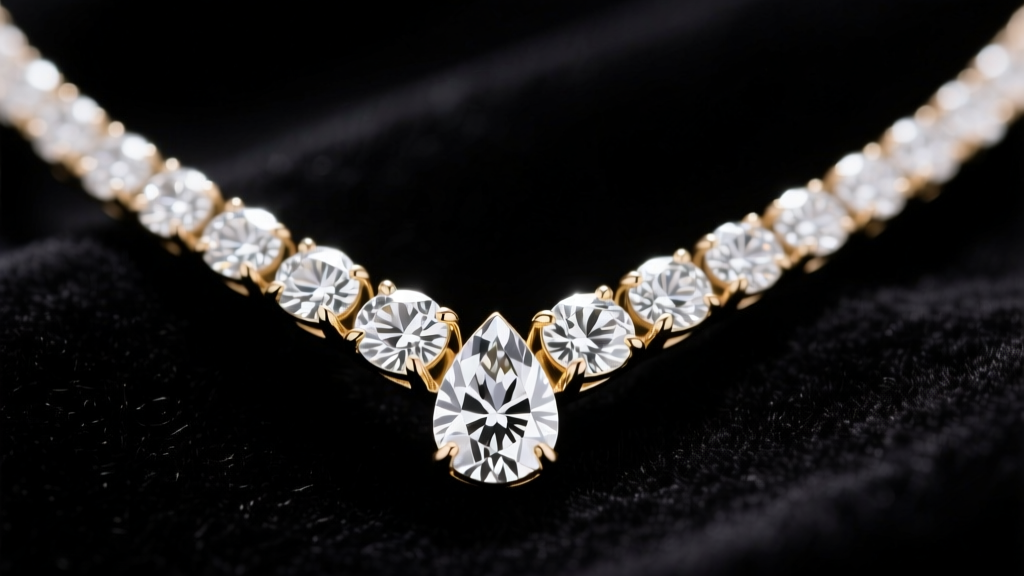
A pear shaped diamond tennis necklace represents the pinnacle of elegant jewelry design, merging the continuous brilliance of a classic tennis chain with the intricate, teardrop geometry of pear-cut stones. However, this exquisite combination introduces unique maintenance challenges that standard jewelry care routines often overlook. Unlike a simple solitaire pendant or a uniform round-brilliant tennis chain, a pear shaped diamond tennis necklace requires a highly specialized approach to cleaning and preservation.
Protecting the Point: V-Prong Mechanics
The defining feature of a pear cut is its single pointed culet. This delicate tip is highly susceptible to chipping if subjected to hard impacts. To mitigate this, master jewelers utilize V-prongs—specially shaped metal caps that wrap around the point to shield it. When cleaning your necklace, these V-prongs are critical areas of focus. Aggressive scrubbing or the use of stiff-bristled brushes can gradually wear down the metal or, worse, catch the bristles and bend the prong away from the stone. According to the Gemological Institute of America (GIA), while diamonds are the hardest natural material, their toughness is compromised by cleavage planes, making the sharp points of pear and marquise cuts particularly vulnerable to fracture if the protective prongs fail.
The Complexity of Flexible Linkages
Furthermore, a tennis necklace is not a static piece; it is a highly flexible chain composed of dozens of individual settings connected by microscopic jump rings or articulated hinges. This flexibility allows the necklace to drape seamlessly against the collarbone, but it also creates hundreds of tiny crevices where skin oils, lotions, and environmental dust accumulate. Over time, this grime acts as an abrasive paste, slowly wearing down the precious metal alloys of the links and dulling the gallery (the underside) of the diamonds.
The Science of Diamond Grime: Why Pear Shapes Dull Faster
Diamonds are composed of crystallized carbon, which makes them inherently lipophilic (oil-attracting) and hydrophobic (water-repelling). This means that the moment you put on your necklace, it begins attracting sebum and cosmetics from your skin. For pear shaped diamonds, this oil buildup is particularly detrimental. Pear cuts are notorious for the 'bow-tie effect'—a dark shadow that can appear across the center of the stone if it is poorly cut or obstructed. When the pavilion (the bottom half of the diamond) becomes coated in oil, light cannot properly reflect back through the crown, exacerbating the bow-tie effect and making the stone appear lifeless and gray.
Step-by-Step Home Cleaning Protocol
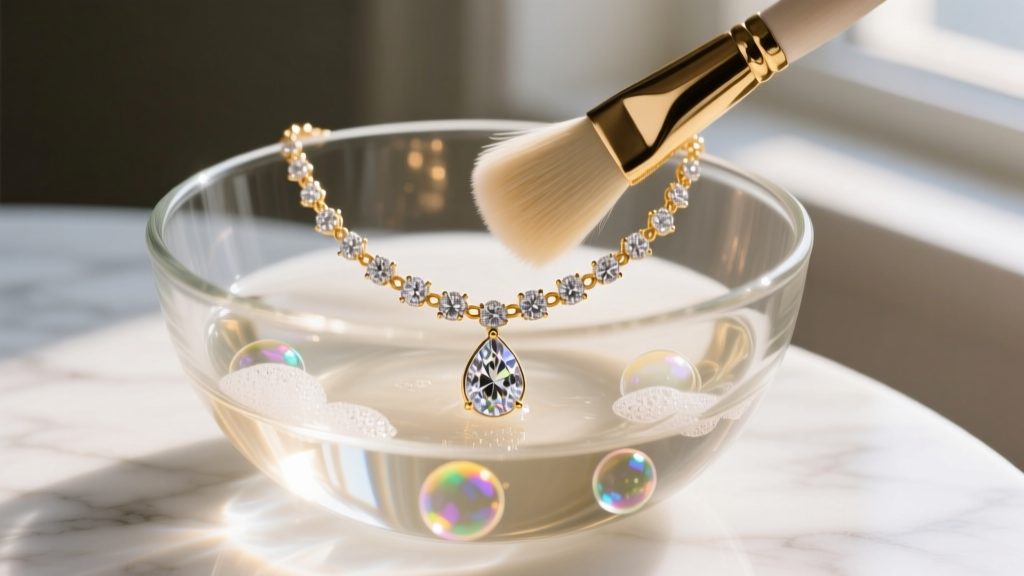
To restore the fiery brilliance of your pear shaped diamond tennis necklace without compromising its structural integrity, follow this meticulous, jeweler-approved cleaning protocol. You will need a few simple tools: a bowl of lukewarm water, a few drops of ammonia-free mild dish detergent (avoid harsh degreasers that can strip rhodium plating from white gold), and an extra-soft baby toothbrush or a dedicated goat-hair jewelry brush.
1. The Soak
Fill a glass or ceramic bowl with lukewarm water. Never use hot water, as extreme thermal shock can cause microscopic inclusions within the diamonds to expand and fracture the stone. Add three to four drops of mild dish soap and stir gently to create suds. Submerge the necklace completely and let it soak for 15 to 20 minutes. This crucial step softens the hardened sebum and cosmetic buildup trapped in the jump rings and beneath the V-prongs, reducing the need for mechanical scrubbing later.
2. The Agitation
After soaking, lift the necklace from the water. Using your extra-soft brush, gently sweep across the surface of the pear shaped diamonds. Always brush from the wide, rounded end of the pear toward the pointed tip. Brushing against the point risks catching the bristles on the V-prong. Flip the necklace over to access the gallery. Use gentle, circular motions to dislodge dirt from the underside of the settings and the articulated links. Do not pull or stretch the chain while brushing, as wet metal is slightly more pliable and prone to warping.
3. The Rinse and Dry
Rinse the necklace thoroughly under a gentle stream of lukewarm water. Ensure the drain is securely plugged or use a mesh strainer to prevent catastrophic loss. To dry, lay the necklace flat on a clean, lint-free microfiber cloth. Gently pat it dry. Avoid using paper towels, tissues, or cotton swabs, as the loose fibers can easily snag on the V-prongs or become wedged in the jump rings. For hard-to-reach moisture trapped in the links, use a can of compressed air held at a safe distance to blow the water droplets out without applying physical stress to the chain.
Cleaning Methods: Safety Comparison Chart
Not all jewelry cleaning methods are created equal. While some techniques are safe for solid gold bands, they can be disastrous for complex, multi-stone pieces like a pear shaped diamond tennis necklace. Refer to the table below before utilizing any mechanical or chemical cleaning agents.
| Cleaning Method | Safety for Pear Settings | Safety for Tennis Links | Expert Verdict |
|---|---|---|---|
| Mild Dish Soap & Warm Water | High | High | Recommended for weekly home care |
| Ultrasonic Cleaners | Low (Vibration Risk) | Low (Loosens Jump Rings) | Avoid unless cleared by a gemologist |
| Steam Cleaners | Medium (Thermal Shock) | High | Use with caution; avoid included stones |
| Commercial Jewelry Dips | Low (Chemical Damage) | Medium | Strictly avoid; harsh acids damage alloys |
Expert Warning: Ultrasonic cleaners use high-frequency sound waves to create microscopic bubbles that implode, blasting dirt away. While effective for solid items, these intense vibrations can easily rattle the delicate micro-prongs of a tennis necklace loose, leading to catastrophic stone loss. Furthermore, if your pear shaped diamonds have been fracture-filled or clarity-enhanced, ultrasonic waves can destroy the filling.
Storage, Tangles, and Link Stress
Proper storage is just as critical as cleaning. A pear shaped diamond tennis necklace should never be tossed loosely into a jewelry box. The exposed points of the pear diamonds act like tiny hooks; if the necklace tangles with other chains or bracelets, attempting to pull them apart can bend the prongs, scratch adjacent gold links, or chip the culet of the stone.
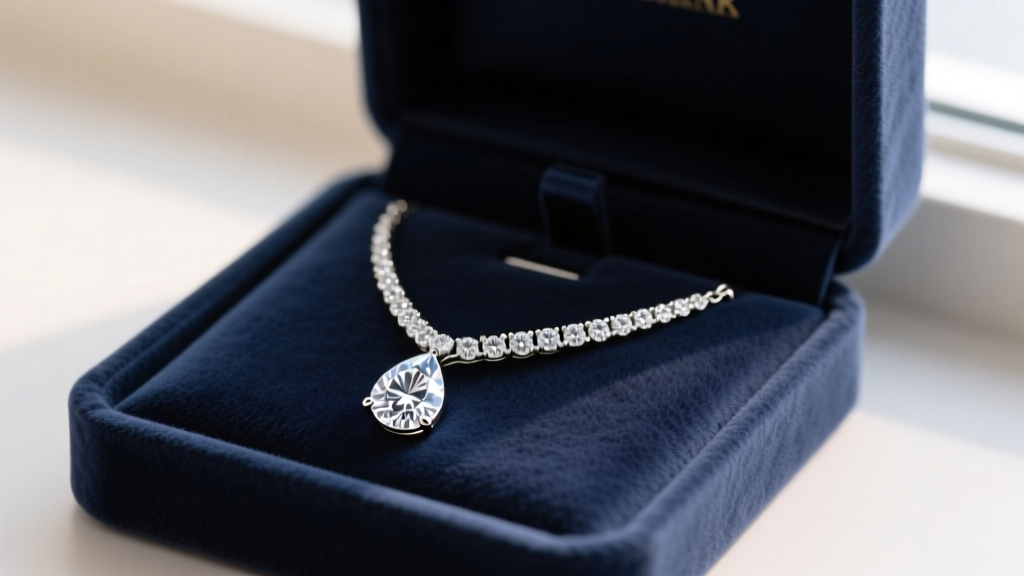
Always store your tennis necklace in a dedicated, suede-lined compartment or a soft anti-tarnish flannel pouch. When placing it in the box, lay it completely flat and fully extended, or coil it in a perfect, loose circle. Never fold the necklace back on itself, as this creates sharp kinks in the articulated links. Over time, repeated kinking will cause metal fatigue at the jump rings, eventually leading to a snapped chain. Additionally, keeping the necklace in an airtight environment with anti-tarnish strips will prevent the oxidation of the alloy metals (like copper and silver in white or yellow gold), keeping the metal settings bright and reflective.
Professional Inspection and Maintenance Schedules
Even with impeccable home care, the mechanical stress of wearing a heavy, flexible diamond necklace necessitates professional oversight. Jewelers of America strongly recommends having intricate diamond pieces professionally inspected at least once a year. For a frequently worn pear shaped diamond tennis necklace, a bi-annual inspection is ideal.
During a professional inspection, a master jeweler will use a 10x loupe and a microscope to check for the following specific failure modes:
- V-Prong Integrity: Ensuring the metal caps over the pear points have not worn thin or lifted away from the stone.
- Jump Ring Friction: Checking the connection points between links for metal-on-metal wear, which can thin the rings until they snap.
- Stone Seating: Verifying that no diamonds have shifted in their bezels or prong baskets, which can cause the girdle to chip against the metal setting.
- Rhodium Replating: If your necklace is crafted in white gold, the jeweler will assess the rhodium plating and re-dip the piece if the underlying yellowish alloy is showing through the high-friction areas near the clasp and links.
By combining a meticulous, gentle home cleaning routine with scheduled professional inspections, you ensure that your pear shaped diamond tennis necklace remains a secure, breathtaking heirloom capable of catching the light—and the eye—for generations to come.


