How to Choose & Style a Sun and Moon Necklace Couple Set
Learn how to choose, customize, and style a sun and moon necklace couple set. Expert guide on metals, chain lengths, and interlocking mechanisms.

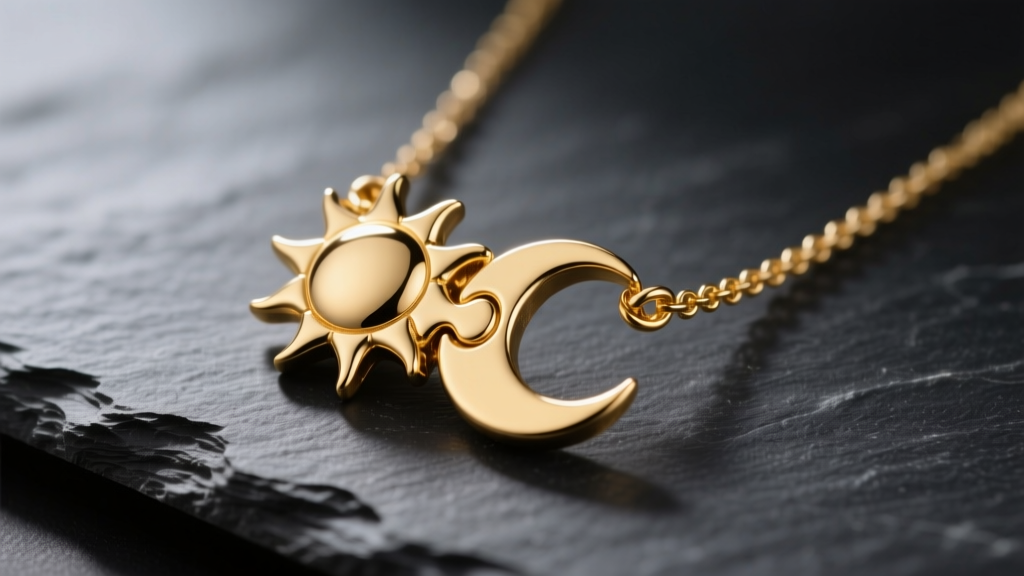
The celestial jewelry trend has firmly rooted itself in the modern accessory landscape, and as we navigate the style preferences of 2026, the sun and moon necklace couple set remains a definitive symbol of duality, balance, and unbreakable connection. Unlike generic matching jewelry, a well-crafted celestial set requires careful consideration of metallurgy, chain mechanics, and gemstone durability. Whether you are purchasing a set for an anniversary, a long-distance relationship, or a daily wear commitment, selecting the right pieces goes far beyond surface-level aesthetics.
This comprehensive, step-by-step guide will walk you through the technical and stylistic decisions required to choose, customize, and maintain a high-quality sun and moon pendant set that withstands the rigors of daily wear while perfectly complementing both partners' individual styles.
Step 1: Selecting the Right Metal Grade for Daily Wear
The foundation of any enduring couple's necklace is the base metal. Because these pendants rest against the sternum and are exposed to body oils, friction, and environmental humidity, choosing the correct alloy is critical to prevent skin irritation and premature degradation.
- 925 Sterling Silver: Composed of 92.5% pure silver and 7.5% copper, this is the most accessible option (typically priced between $40 and $90 for a paired set). However, the copper content makes it susceptible to silver sulfide tarnishing. Pro Tip: Always look for sterling silver that has been plated with a minimum of 0.1 to 0.5 microns of rhodium to create a tarnish-resistant barrier.
- 14k Solid Gold (58.5% Gold): Priced between $180 and $350 for a couple's set, 14k gold offers the ideal compromise between the rich color of pure gold and the structural integrity needed for intricate CNC-machined interlocking pieces. It will not tarnish and is highly resistant to corrosion.
- ASTM F136 Titanium (Grade 5): For partners with severe nickel allergies or active lifestyles, aerospace-grade Ti-6Al-4V titanium is the ultimate choice ($60 to $130). It is 45% lighter than steel, entirely hypoallergenic, and impervious to saltwater corrosion. The failure mode here is purely aesthetic: titanium cannot be resized or easily soldered if a jump ring breaks.
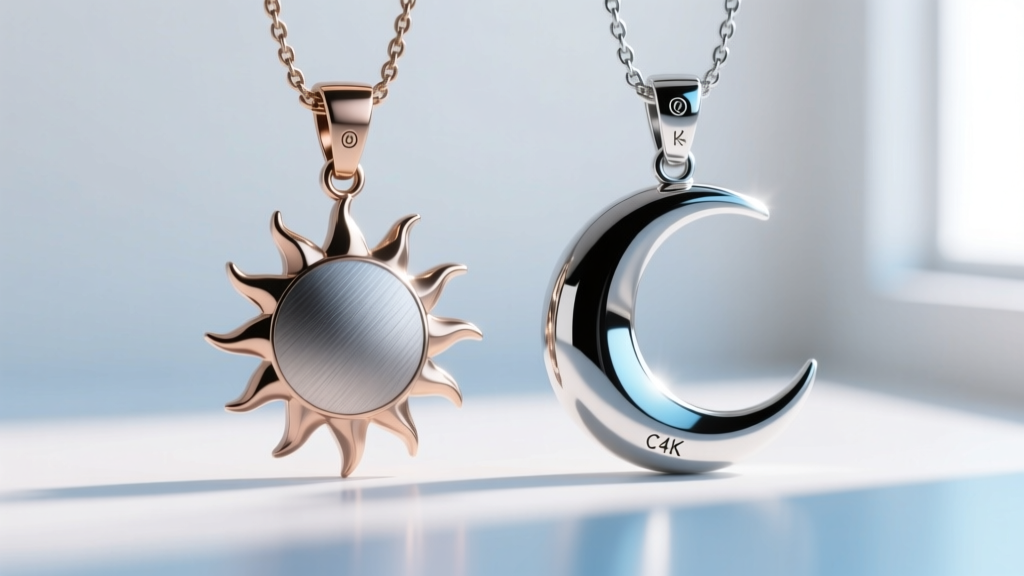
According to the Silver Institute, properly alloyed and plated sterling silver remains the industry standard for accessible luxury, but buyers must verify the hallmark stamp (usually '925') to avoid silver-plated brass imitations that will eventually flake and cause contact dermatitis.
Step 2: Matching Chain Lengths and Thicknesses to Anatomy
A common mistake when buying a sun and moon necklace couple set is ordering identical chain lengths for both partners. Because male and female neck circumferences and torso proportions differ, a 20-inch chain will sit entirely differently on each person. Furthermore, the chain style must support the pendant's weight without tangling.
| Chain Length | Ideal Placement | Best Chain Style & Thickness | Target Wearer Profile |
|---|---|---|---|
| 16 Inches | Collarbone (Choker) | Box Chain (0.8mm - 1.0mm) | Petite frames / High-neck styling |
| 18 Inches | Base of the Neck | Cable Chain (1.0mm) | Average female anatomy / Standard everyday wear |
| 20 Inches | Upper Chest | Curb Chain (1.2mm) | Average male anatomy / T-shirt layering |
| 24 Inches | Mid-Chest | Rope Chain (1.5mm) | Larger frames / Streetwear and outerwear styling |
For the sun pendant, which often features intricate, protruding ray details, a box chain is highly recommended. The rigid, square links prevent the chain from slipping through the pendant bail and tangling in the sun's rays—a frequent frustration with delicate cable chains.
Step 3: Choosing the Interlocking Mechanism
The magic of a couple's celestial set lies in how the two halves unite. There are three primary engineering methods used by jewelers to create the interlocking effect, each with distinct pros and cons.
1. CNC Puzzle-Cut (Mechanical Interlock)
The highest quality sets utilize Computer Numerical Control (CNC) machining to cut a single metal disc into two perfectly mating halves. The tolerance gap is usually kept to an exact 0.05mm. This ensures the sun and moon fit together flush without catching on clothing. This is the most durable method, as it relies on the structural integrity of the metal itself.
2. Neodymium Magnetic Clasps
Some modern sets embed tiny N52-grade neodymium magnets into the edges of the sun and moon. While this creates a satisfying 'snap' when the couple embraces, the failure mode is epoxy degradation. Over 2 to 3 years of exposure to body heat and sweat, the resin holding the magnets can cloud or loosen, requiring professional re-setting.
3. Overlapping Bezel & Jump Ring
In this design, the sun and moon are separate pendants that share a single, oversized soldered jump ring on the same chain. They overlap visually but do not physically lock together. This is the safest option for active individuals who might accidentally snag their necklace and need the pendants to slide apart rather than snap the chain.
'When designing interlocking couple's jewelry, the bail—the loop that connects the pendant to the chain—must be reinforced. A standard 3mm bail will warp under the asymmetric weight of a puzzle-cut sun pendant. We mandate a minimum 5mm reinforced bail for all celestial sets.' — Senior CAD Jewelry Designer
Step 4: Personalizing with Celestial Gemstones
To elevate a sun and moon necklace couple set from mass-produced to deeply personal, integrating specific gemstones adds profound meaning and visual contrast. However, gemstone selection must be dictated by the Mohs hardness scale to ensure the stones survive daily wear.
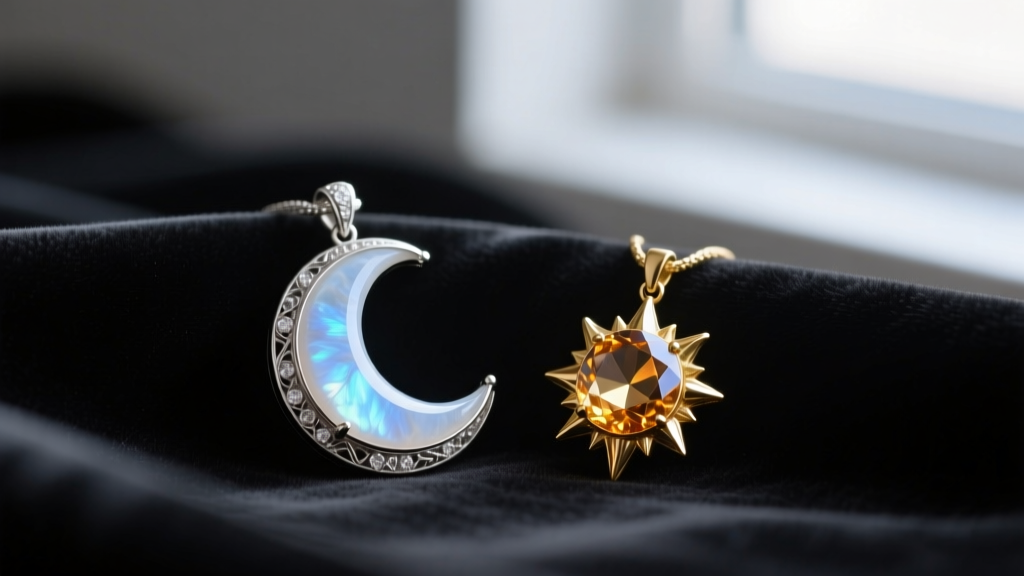
- Rainbow Moonstone (The Moon): A variety of orthoclase feldspar prized for its 'adularescence'—the billowy blue light that seems to float just beneath the surface. According to the Gemological Institute of America (GIA), moonstone ranks 6 to 6.5 on the Mohs scale and has distinct cleavage planes. Critical Setting Rule: Moonstones must always be set in a smooth bezel or half-bezel setting. Prong settings leave the edges exposed to chipping against zippers and desks.
- Sunstone (The Sun): Known for its 'aventurescence' caused by tiny platelet inclusions of copper or hematite that reflect light like glitter. Sunstone ranks slightly higher at 6.5 to 7.2. It can be faceted to catch the light, mimicking the radiant rays of the sun.
- Lab-Grown Diamond Melee: For a more luxurious, scratch-proof alternative, consider a sun pendant accented with 0.01 to 0.02-carat lab-grown diamond melee stones. Diamonds rank a 10 on the Mohs scale, ensuring the sun's 'sparkle' will never dull from micro-abrasions.
Step 5: Care and Maintenance for Paired Pendants
Because couple's necklaces are often worn 24/7 as a symbol of commitment, they are subjected to continuous environmental stressors. Implementing a strict, yet simple, maintenance routine will preserve the metal's luster and the gemstone's optical properties.
The Cleaning Protocol:
Never use ultrasonic jewelry cleaners on sun and moon sets featuring moonstone, sunstone, or magnetic interlocks. The high-frequency vibrations can shatter feldspar gemstones along their natural cleavage lines and shake embedded magnets loose from their epoxy housings. Instead, use a solution of warm water and a few drops of pH-neutral dish soap. Gently agitate the pendants with a soft-bristled baby toothbrush, paying special attention to the interlocking puzzle grooves where dead skin cells and lotion accumulate. Rinse with distilled water to prevent hard water spots and dry with a microfiber cloth.
Storage and Tarnish Prevention:
When traveling or removing the necklaces for sports, store them in individual anti-tarnish flannel bags infused with silver sulfide-absorbing compounds. Never store the two pendants tangled together in a hard plastic box; the friction between a textured sun pendant and a polished moon pendant will result in micro-scratches on the softer metal surfaces.
By meticulously selecting the right metal grade, engineering the correct chain length for each partner's anatomy, and protecting the gemstones with appropriate settings, your sun and moon necklace couple set will transcend being a mere trend. It will become a durable, deeply personal artifact of your shared journey, engineered to last a lifetime.


