How to Clean and Care for a Pearl Necklace with Gold Clasp
Learn expert techniques to clean and maintain your pearl necklace with gold clasp. Discover safe solutions, storage tips, and clasp care to preserve luster.

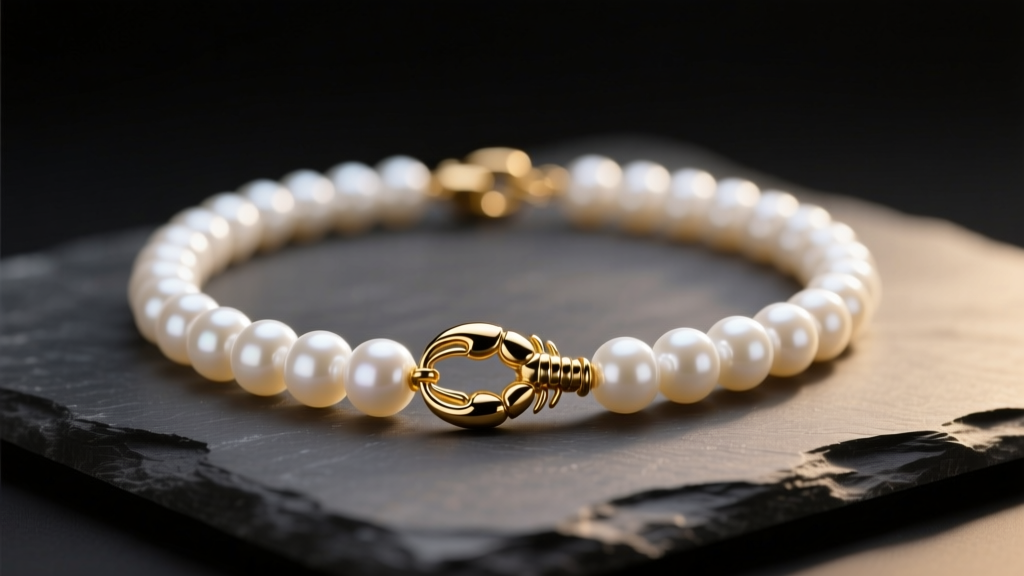
Owning a pearl necklace with gold clasp represents the pinnacle of classic elegance, marrying the organic, luminous beauty of nacre with the enduring prestige of precious metal. However, this specific combination of materials presents a unique maintenance challenge. Pearls are delicate, porous organic gems, while gold clasps feature intricate mechanical components that trap oils, lotions, and environmental debris. Treating the entire strand with a single cleaning method is a recipe for irreversible damage.
In this comprehensive guide, we break down the exact chemistry, mechanical vulnerabilities, and professional-grade cleaning protocols required to maintain your pearl and gold jewelry. By understanding the distinct needs of calcium carbonate, silk thread, and gold alloys, you can preserve your necklace’s structural integrity and radiant luster for generations.
The Dual-Material Dilemma: Nacre vs. Metal
To properly care for your jewelry, you must first understand the fundamental differences in material hardness and chemical reactivity. Pearls are primarily composed of calcium carbonate (CaCO3) held together by an organic protein called conchiolin. On the Mohs scale of hardness, pearls rank between 2.5 and 3.0, making them exceptionally susceptible to scratching and chemical etching.
Conversely, the gold clasp—typically cast in 14k or 18k gold for a balance of durability and prestige—is highly resistant to tarnish but mechanically complex. A standard lobster clasp or box catch contains microscopic springs, hinges, and tongue mechanisms. These crevices act as magnets for sebum, cosmetic powders, and dead skin cells, which can eventually cause the clasp to stick, fail to close securely, or degrade the solder joints.
Chemical Agents: What to Use and What to Avoid
The most common mistake jewelry owners make is using commercial jewelry dips or ultrasonic cleaners. While these are excellent for diamond and gold pieces, they are catastrophic for pearls. The Gemological Institute of America (GIA) strictly warns against exposing pearls to acidic or alkaline solutions, which will strip the nacre and leave the pearl dull and chalky.
| Cleaning Agent | Effect on Nacre (Pearl) | Effect on Gold Clasp | Verdict |
|---|---|---|---|
| Ultrasonic Cleaners | Shatters nacre layers via high-frequency cavitation | Safe for solid gold | NEVER USE |
| Ammonia / Glass Cleaner | Dissolves calcium carbonate, causing permanent etching | Can weaken gold solder joints | NEVER USE |
| Mild Castile Soap | Safe when heavily diluted in distilled water | Safe and effective | APPROVED |
| Isopropyl Alcohol (90%+) | Dehydrates conchiolin, leading to micro-cracking | Excellent for degreasing mechanisms | CLASP ONLY |
| Baking Soda Paste | Acts as an abrasive, scratching the nacre surface | Polishes gold but traps in crevices | NEVER USE |
The Step-by-Step Surface Cleaning Protocol
Routine maintenance should be performed after every 3 to 4 wears to prevent the buildup of acidic perspiration, which can degrade both the pearl surface and the silk thread. Follow this exact protocol to safely clean the strand without compromising the gold hardware.
1. Preparation and Isolation
Lay the necklace flat on a clean, lint-free microfiber towel. Ensure the gold clasp is unfastened and positioned away from the main body of the pearls. You will need a bowl of distilled water (tap water contains chlorine and minerals that can spot the nacre) and a single drop of pH-neutral, unscented liquid castile soap.
2. The Damp Wipe-Down Method
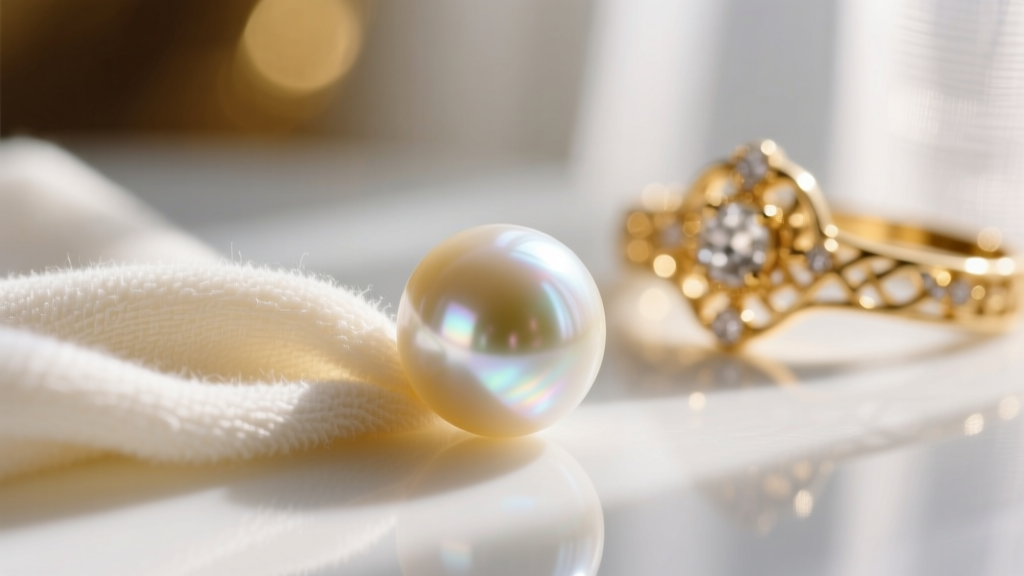
Dip a soft, untreated 100% cotton cloth or high-grade microfiber towel into the soapy distilled water, then wring it out until it is only barely damp. Never submerge a knotted pearl necklace in water. Gently wipe each pearl individually, applying zero pressure. The goal is to lift surface oils, not scrub the gem.
Never use paper towels or tissue paper to clean pearls. These products contain microscopic wood pulp fibers that are harder than nacre and will inflict micro-scratches on the pearl's surface, dulling its orient and luster over time.
3. The Drying Phase
Use a secondary, completely dry microfiber cloth to buff the pearls gently. Allow the necklace to lay flat on a dry towel in a well-ventilated room for at least 12 hours before storing or wearing. This ensures any microscopic moisture trapped near the drill holes evaporates completely, protecting the internal silk thread.
Deep Cleaning the Gold Clasp Mechanism
While the pearls require a gentle, water-based approach, the gold clasp requires targeted degreasing. Over time, the spring mechanism inside a lobster clasp or the friction tongue inside a box catch will accumulate a hardened paste of lotion and skin cells, causing the clasp to feel 'mushy' or fail to click shut.
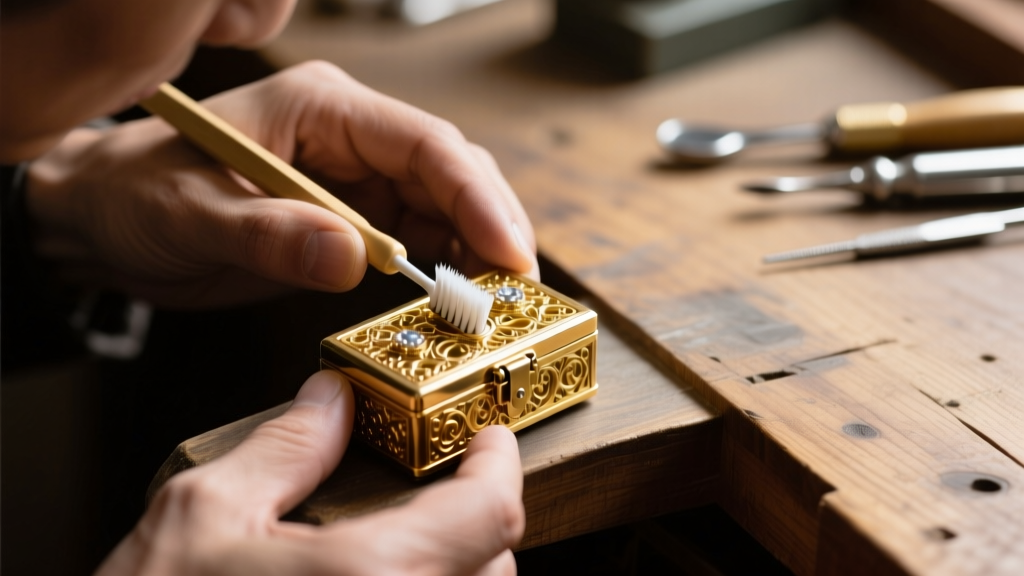
To clean the clasp without endangering the adjacent pearls, follow these specialized steps:
- Isolate the Hardware: Drape the pearl strand over the edge of a table so the clasp hangs freely over a small glass bowl.
- Apply Solvent: Dip an extra-soft baby toothbrush into 90% or higher isopropyl alcohol. The alcohol will instantly break down sebum and cosmetics without leaving a residue.
- Agitate the Mechanism: Gently brush the crevices of the clasp. If it is a box catch, open and close the mechanism repeatedly while brushing to work the alcohol into the internal spring.
- Dry and Lubricate: Pat the gold dry with a cotton swab. If the clasp still feels stiff, apply a microscopic drop of synthetic watch oil to the hinge pin using a needle tip. Wipe away any excess immediately.
Silk Thread, French Wire, and Restringing
The hidden backbone of your pearl necklace with gold clasp is the silk thread. Silk is a natural protein fiber that stretches when exposed to moisture, body heat, and the weight of the pearls. Furthermore, the point where the silk thread passes through the metal loop of the gold clasp is a critical friction point.
According to the American Gem Society (AGS), pearl necklaces worn regularly should be professionally restrung every 12 to 18 months. You can perform the Slide Test at home to check your thread's integrity: gently slide two adjacent pearls apart. If you can see more than 1 millimeter of exposed silk thread between them, or if the thread appears gray and frayed, the necklace requires immediate restringing to prevent a catastrophic break.
When having your piece restrung, ensure your jeweler uses French wire (also known as gimp). This is a microscopic, hollow coil of fine gold or silver wire that acts as a protective sleeve over the silk thread where it loops through the gold clasp. Without French wire, the hard edges of the gold clasp will eventually saw through the silk thread, resulting in lost pearls.
Long-Term Storage Rules to Prevent Degradation
How you store your pearl necklace is just as critical as how you clean it. Pearls are organic and require a certain level of ambient humidity to prevent the conchiolin from drying out and cracking. Conversely, gold clasps can be bent or warped if stored improperly.
- Avoid Airtight Plastics: Never store pearls in sealed plastic bags or safety deposit boxes without a damp cotton ball nearby. Dehydrated pearls will craze and peel.
- Lay Flat, Never Hang: Hanging a pearl necklace on a jewelry stand places constant gravitational tension on the silk thread, causing it to stretch permanently and creating unsightly gaps between the gems.
- Separate from Harder Gems: Store the necklace in a soft chamois pouch, isolated from diamonds, sapphires, or even other gold jewelry. A diamond (Mohs 10) will effortlessly gouge the surface of a pearl (Mohs 2.5) if they rub together in a jewelry box.
Summary Maintenance Checklist
Maintaining a pearl necklace with gold clasp requires a disciplined, dual-pronged approach. By keeping harsh chemicals away from the nacre, utilizing targeted alcohol cleaning for the gold mechanisms, and monitoring the silk thread for stretch, you ensure the piece remains both structurally sound and visually breathtaking. Wipe down after wearing, deep clean the clasp monthly, and commit to an annual professional restringing to protect your investment.


