How to Clean and Care for Your White Jade Bead Necklace
Learn expert techniques to clean, store, and maintain your white jade bead necklace. Protect its luster and structural integrity with our guide.

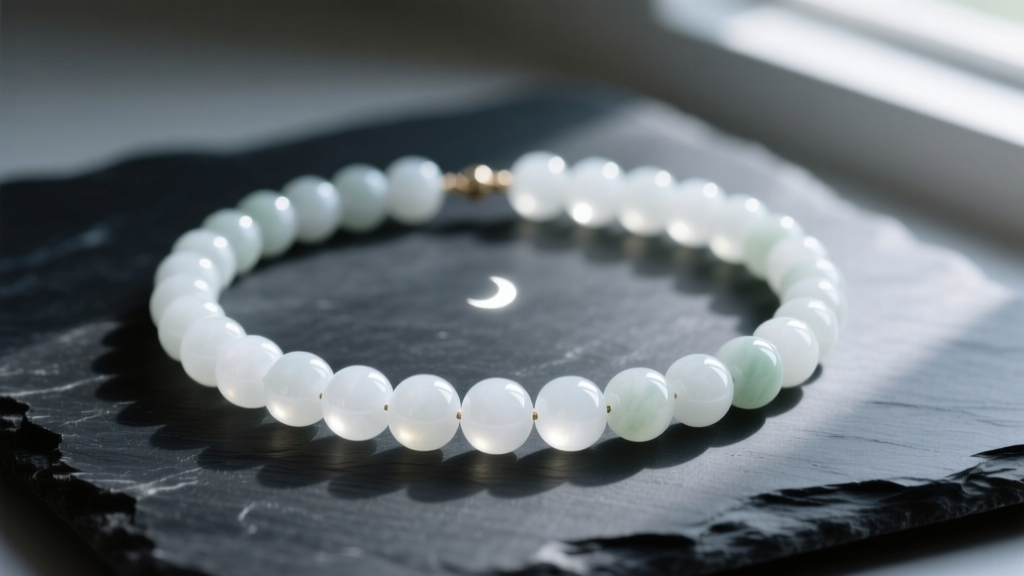
A white jade bead necklace is more than just a piece of jewelry; it is a historical artifact of mineralogy and a timeless investment in personal style. Whether your piece features the creamy, opaque warmth of 'mutton fat' nephrite or the glassy, translucent brilliance of white jadeite, maintaining its structural integrity and surface luster requires a highly specific care regimen. In 2026, with the market flooded with both natural and heavily treated stones, understanding the exact chemical and physical needs of your jade is critical. This comprehensive guide provides actionable, gemologist-backed protocols for cleaning, storing, and maintaining your white jade bead necklace.
The Mineral Reality: Nephrite vs. Jadeite
Before applying any water or cloth to your necklace, you must identify which type of white jade you own. The term 'jade' is a commercial umbrella covering two distinct silicate minerals, each with different vulnerabilities.
- Nephrite (Calcium Magnesium Silicate): Often found in creamy, opaque white varieties. It registers between 6.0 and 6.5 on the Mohs hardness scale. Nephrite is slightly softer and more porous, making it highly susceptible to acidic cleaners and scratches from everyday dust.
- Jadeite (Sodium Aluminum Silicate): White jadeite tends to be more translucent and glassy. It is slightly harder, registering between 6.5 and 7.0 on the Mohs scale, but it is more brittle and prone to chipping upon hard impact.
According to mineralogical data from Mindat.org, the primary enemy of both stones is ambient quartz dust. Quartz sits at a 7.0 on the Mohs scale, meaning that simply wiping a dry, dusty jade bead with a rough cloth will result in micro-scratches that permanently dull the polish over time.
The Danger of Treated Jade (Type B and C)
The cleaning protocol for your white jade bead necklace depends entirely on its treatment grade. The Gemological Institute of America (GIA) classifies jade into three categories:
- Type A: Completely natural, untreated jade. Only traditional wax polishing is used. This is the most durable and valuable.
- Type B: Acid-bleached to remove impurities, then impregnated with a polymer resin to improve translucency.
- Type C: Chemically dyed to enhance color (less common in white jade, but possible in mixed-color beads).
Expert Warning: If your white jade bead necklace is Type B or Type C, you must never use ultrasonic cleaners, steam cleaners, or any alcohol-based solvents. These will dissolve the polymer resin, causing the beads to turn cloudy, brittle, and eventually crack.
Step-by-Step Cleaning Protocol for Type A Jade
For natural, untreated white jade, regular cleaning removes the buildup of skin oils, cosmetics, and environmental pollutants that can trap moisture against the stringing material and degrade the stone's polish.
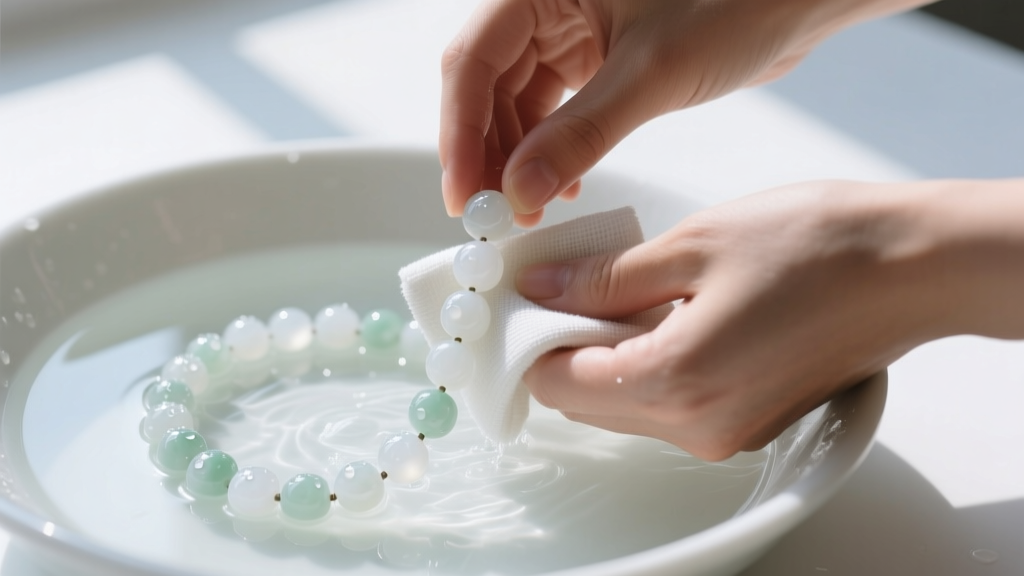
The Safe Wash Method
- Prepare the Solution: Fill a glass bowl with lukewarm distilled water. Tap water contains chlorine and trace minerals that can leave hard water spots on the beads. Add three drops of a pH-neutral, fragrance-free dish soap.
- Submerge and Soak: Place the necklace in the water for exactly 3 to 5 minutes. Do not exceed this time, as prolonged water exposure can weaken the internal stringing cord.
- Gentle Agitation: Using your fingertips, gently massage each bead. Pay special attention to the areas around the drill holes, where sebum and dead skin cells accumulate.
- Rinse Thoroughly: Rinse the necklace under a gentle stream of lukewarm distilled water to remove all soap residue.
- Dry Immediately: Pat the beads dry with a clean, lint-free microfiber cloth. Lay the necklace flat on a dry towel in a well-ventilated area to allow the internal cord to dry completely before storing.
Cleaning Agents to Strictly Avoid
- Vinegar or Lemon Juice: The acetic and citric acids will chemically etch the calcium in nephrite, leaving permanent dull spots.
- Bleach or Ammonia: These harsh alkalines will strip the natural waxes from the jade's surface, resulting in a dry, chalky appearance.
- Commercial Silver or Gold Dips: These contain thiourea and sulfuric acid, which are catastrophic for silicate minerals.
Stringing and Structural Maintenance
The beads are only half of the equation; the structural integrity of a white jade bead necklace relies entirely on its cord. Jade beads are heavy and have sharp internal edges at the drill holes that act like tiny saws against the stringing material.
| Stringing Material | Tensile Strength | Water Resistance | Recommended Restringing Interval |
|---|---|---|---|
| Natural Silk | Moderate | Poor (Degrades with sweat/water) | Every 12 to 18 months |
| Nylon (e.g., Griffin) | High | Excellent | Every 2 to 3 years |
| Steel Wire (Coated) | Very High | Excellent | Every 5+ years (Check for kinks) |
For high-end, heavy white jade bead necklaces, knotted nylon is the industry standard. Knotting between every single bead prevents them from grinding against each other and ensures that if the cord snaps, you lose only one bead rather than the entire strand. If you notice the cord looking frayed near the clasp or if the beads have excess 'play' between the knots, take the necklace to a professional jeweler for immediate restringing.
Environmental Hazards and Storage
Jade is a remarkably tough stone due to its interlocking crystalline structure, but it is not immune to environmental stress. Proper storage is vital for preserving the optical properties of your white jade bead necklace.
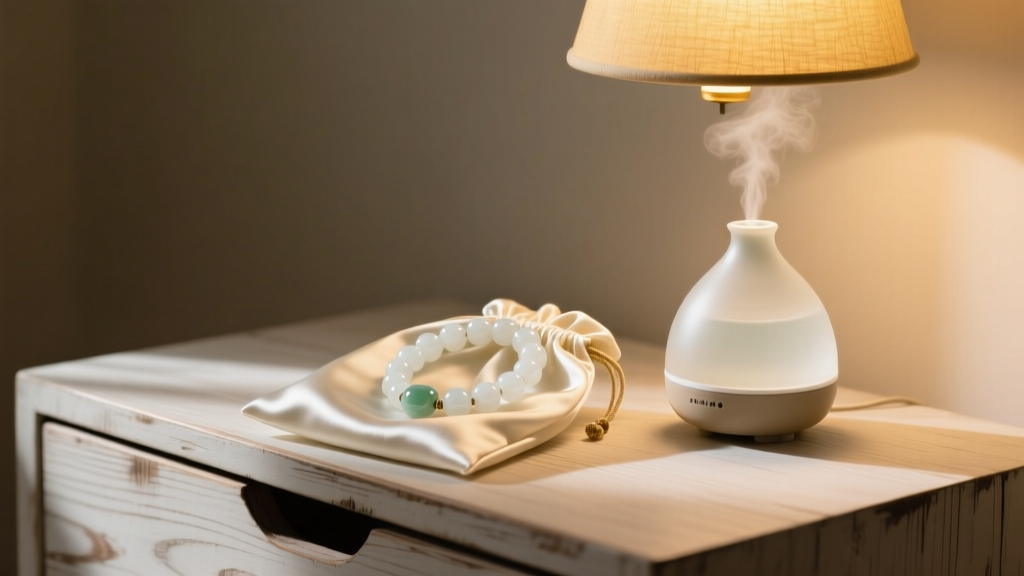
Humidity and Temperature Control
Jade contains trace amounts of structural water. In extremely dry environments—such as a room with constant central heating or an arid climate—the stone can lose this moisture, leading to internal micro-fractures known as 'crazing.' If you live in a dry climate, store your jade in a room with a humidifier maintaining 40-50% relative humidity. Conversely, avoid sudden temperature shocks, such as moving from a freezing outdoor environment directly into a hot sauna, as thermal expansion can cause the beads to crack.
Physical Storage Rules
- Never Toss in a Drawer: Storing your necklace loose in a jewelry box allows it to tangle and scratch against harder gems like diamonds, sapphires, or quartz.
- Use Soft Pouches: Always store the necklace in a dedicated, un-dyed silk or velvet pouch.
- Lay Flat or Hang: If the necklace is heavy, hanging it for long periods can stretch the silk cord. Laying it flat in a dedicated jewelry tray with individual compartments is the optimal storage method.
When to Seek Professional Conservation
While daily maintenance can be handled at home, certain situations require professional intervention. If your white jade bead necklace has suffered a hard impact resulting in a visible fracture, or if a Type B bead has begun to exude a sticky, yellowing resin, do not attempt home repairs. A lapidary professional can assess whether the bead can be stabilized with optically clear, archival-grade epoxy, or if the damaged bead must be replaced to save the rest of the strand. By adhering to these strict, science-backed care protocols, your white jade bead necklace will retain its luminous beauty and structural integrity for generations.


