Ace of Spades Necklace Guide: Meaning, Metals & Styling
Discover the symbolism behind the ace of spades necklace. Learn how to choose the right metal, chain type, and length for your everyday style.

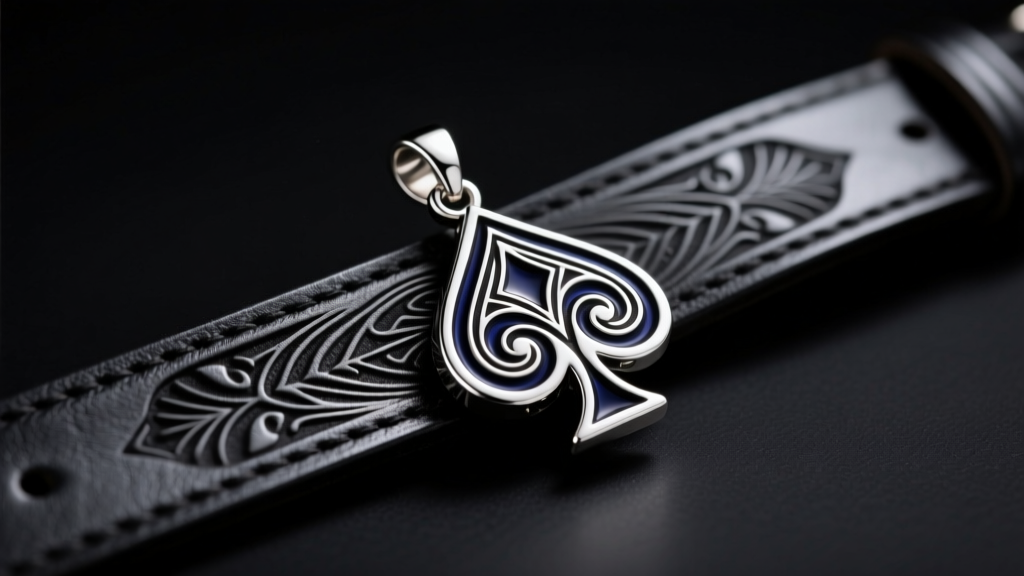
The ace of spades necklace is far more than a simple nod to card games or rock-and-roll aesthetics. It is a deeply symbolic piece of jewelry that bridges military history, counter-culture, and modern streetwear. For beginners looking to purchase their first spade pendant, the market can be overwhelming. You will encounter everything from $15 hollow-stamped alloys to $2,000 diamond-encrusted solid gold pieces. This guide breaks down the exact metallurgy, chain mechanics, and styling proportions you need to know to make an informed, lasting purchase.
The Lore and Symbolism of the Spade
Before selecting a metal, it helps to understand the weight of the symbol you are wearing. Historically, the ace of spades has carried diverse meanings. In military history, it was utilized for psychological operations; during the Vietnam War, U.S. troops reportedly left Bicycle-brand ace of spades cards on fallen enemies, leveraging a cultural superstition that the card was an omen of death. In pop culture, it became immortalized by rock icons like Motorhead’s Lemmy Kilmister and later adopted heavily by skate and streetwear subcultures as a symbol of rebellion, luck, and living on the edge.
When you wear an ace of spades pendant, you are tapping into a motif that represents risk-taking and mortality. Because of its sharp, recognizable silhouette, it also serves as an excellent canvas for jewelers to showcase intricate engraving, enamel work, and gemstone setting.
Material Grades: What Should Your Pendant Be Made Of?
The longevity, weight, and skin-safety of your necklace depend entirely on the base metal. Avoid vague terms like 'Tibetan Silver' or 'Alpaca'—these are often nickel-heavy pot metals that cause contact dermatitis and tarnish irreparably. According to the Gemological Institute of America (GIA), you should look for specific purity stamps. Here is how the top three materials compare for this specific pendant style:
| Material | Grade/Stamp | Pros | Cons | Est. Price Range |
|---|---|---|---|---|
| Surgical Steel | 316L | Hypoallergenic, highly scratch-resistant, budget-friendly, holds a heavy, premium feel. | Cannot be resized or easily soldered if the bail breaks; limited high-end finishes. | $15 - $45 |
| Sterling Silver | .925 | Excellent for intricate detailing and oxidation; classic jewelry standard; easily repaired. | Requires regular polishing; soft enough to dent if dropped on hard surfaces. | $50 - $150 |
| Solid Gold | 14k or 18k | Will never tarnish; heirloom quality; holds gemstones securely. | High cost; 18k can scratch more easily than 14k due to higher pure gold content. | $250 - $800+ |
Expert Tip: If you choose sterling silver, look for a piece with 'oxidized' detailing. Jewelers use a liver of sulfur solution to darken the recessed grooves of the spade, creating a high-contrast, vintage look that makes the card's inner designs pop.
Chain Pairing and Bail Sizing Mechanics
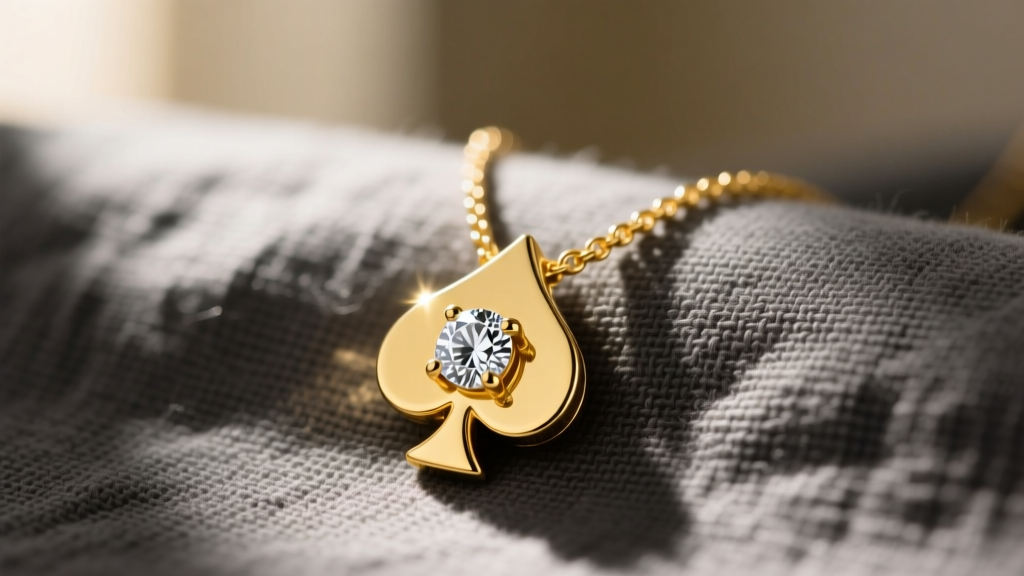
A common beginner mistake is buying a heavy, 5mm stainless steel curb chain, only to realize the pendant’s soldered ring bail has an inner diameter of just 3mm. The 'bail' is the loop at the top of the spade that connects to the chain. Always measure the bail's inner clearance before selecting a chain.
Best Chain Styles for Spade Pendants
- Curb Chains (3mm - 5mm): The interlocking, flattened links lay flush against the chest. This is the most durable option for heavy 316L steel or solid silver spades weighing over 15 grams. Ensure the links are soldered to prevent them from pulling apart under the pendant's weight.
- Box Chains (1.5mm - 3mm): Composed of square, interlocking links, box chains offer a sleek, modern look. However, they are prone to kinking if the pendant is too heavy or if you sleep in them. Reserve box chains for lightweight, minimalist gold or silver spades (under 8 grams).
- Rope Chains (2mm - 4mm): Twisted links that catch the light beautifully. The downside is that the tight twists trap skin oils, lotions, and dirt, requiring more frequent cleaning with a soft brush and mild dish soap.
For clasps, always opt for a lobster clasp over a spring-ring clasp. Lobster clasps feature a solid internal spring mechanism and a larger pull-tab, making them significantly more secure for supporting the pendulum-like swing of a metal spade.
Length and Proportion Guide
The visual impact of an ace of spades necklace changes drastically based on where it sits on your chest. The dimensions of the pendant must scale with the chain length to avoid looking either comically large or entirely lost.
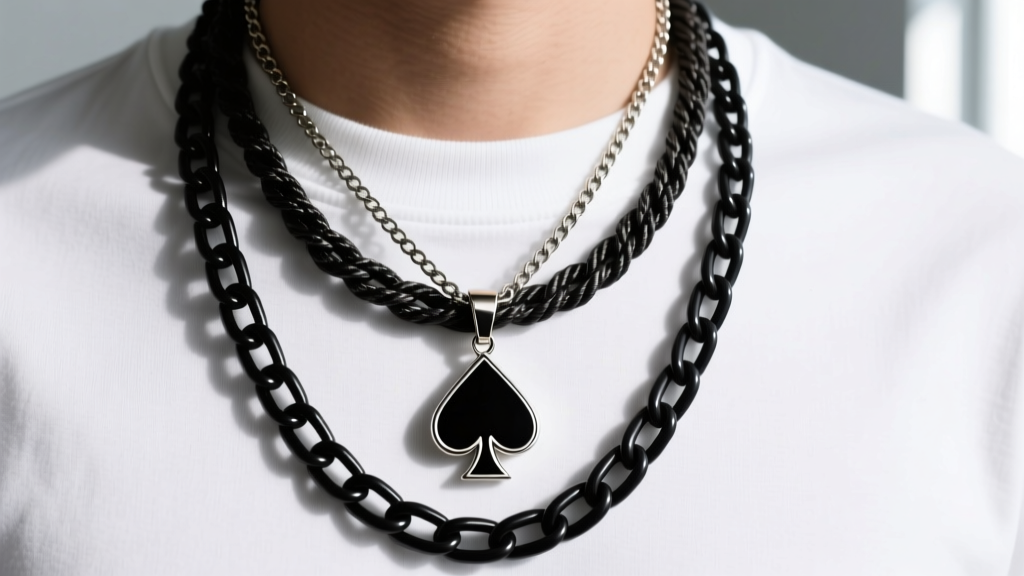
- 18-Inch Chain (Collarbone): Best for small, minimalist pendants (15mm to 20mm wide). This length works well under unbuttoned collared shirts or with crewneck t-shirts, offering a subtle flash of metal.
- 20-Inch Chain (Standard): The most versatile length, sitting just below the collarbone. This is the ideal home for a standard 25mm to 30mm spade pendant. It frames the neckline perfectly without getting lost in facial hair or shirt folds.
- 24-Inch Chain (Streetwear/Skater): Sits mid-chest. If you choose this length, you must size up your pendant to at least 35mm or 40mm. A small pendant on a 24-inch chain will look disproportionate and swing excessively during movement.
Pricing Tiers: What to Expect
Understanding the market tiers will help you identify fair pricing and avoid overpaying for plated base metals.
- Entry Tier ($15 - $45): Dominated by 316L stainless steel and brass with thin rhodium or gold PVD plating. Brands like King Ice (entry lines) and various independent Etsy makers operate here. Great for testing the style before committing to precious metals.
- Mid Tier ($50 - $150): Solid .925 sterling silver. In this tier, you will find superior craftsmanship, such as hand-applied black enamel, genuine black onyx inlays, and secure, soldered bails. Look for independent silversmiths or established streetwear jewelry brands.
- Premium Tier ($250 - $1,000+): Solid 14k or 18k gold, often featuring pavé diamond accents or custom guilloché enamel work. As noted in the GIA's gold educational guidelines, 14k gold offers the best balance of purity and durability for everyday pendants. This tier includes fine jewelry houses and bespoke streetwear jewelers.
Everyday Care and Tarnish Prevention
Maintaining the sharp contrast of your ace of spades necklace requires specific care routines depending on the metal.
For sterling silver, use a dry, treated polishing cloth (like a Sunshine cloth) to buff the high-polish edges. Never use liquid silver dips on an oxidized or enameled spade. The harsh chemical bath will strip the intentional blackening from the engraved grooves, leaving the card's details flat, white, and unreadable.
For stainless steel, simply wash the pendant and chain in a bowl of warm water with a drop of mild dish soap once a month. Use a soft-bristled baby toothbrush to gently scrub the bail and the back of the spade, where dead skin and lotion accumulate. Dry thoroughly with a microfiber towel to prevent water spots.
By understanding the symbolism, selecting the right metallurgical grade, and pairing your pendant with a properly sized chain, your ace of spades necklace will serve as a sharp, meaningful staple in your jewelry rotation for years to come.


