What Is a Tennis Necklace? Expert Care & Cleaning Guide
Discover what a tennis necklace is and learn expert care, cleaning, and maintenance tips to protect your diamonds and precious metal links.

What Is a Tennis Necklace? Defining the Classic Silhouette
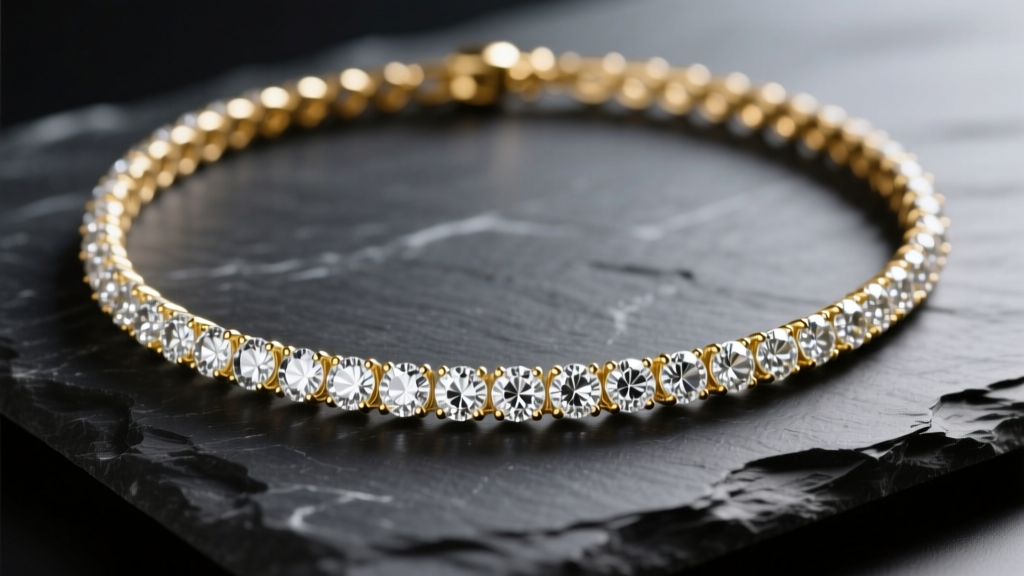
If you have ever browsed high-end jewelry collections, you have likely asked, what is a tennis necklace? At its core, a tennis necklace is a flexible, articulated piece of fine jewelry featuring a continuous, symmetrical strand of individually set gemstones—most commonly round brilliant diamonds. Unlike pendant necklaces that feature a single focal point, a tennis necklace distributes its carat weight evenly across the entire collarbone, creating an unbroken river of light. The name traces back to the 1987 US Open, when tennis legend Chris Evert paused a match to retrieve her broken diamond line bracelet, forever cementing the 'tennis' moniker for this style of continuous gemstone jewelry.
While the aesthetic is timeless, the structural engineering required to make a rigid gemstone and metal chain drape fluidly against the skin introduces unique vulnerabilities. Understanding the anatomy of your tennis necklace is the first step toward mastering its long-term care, maintenance, and cleaning protocols.
The Anatomy and Hidden Vulnerabilities of Continuous Diamond Lines
To properly care for a tennis necklace, you must understand how it is constructed. A standard 16-inch diamond tennis necklace contains anywhere from 40 to over 80 individual stone settings, connected by microscopic metal links. This articulation is what allows the necklace to drape elegantly, but it also creates dozens of friction points. According to the Jewelers of America, the continuous movement of these links against each other leads to gradual metal fatigue, particularly in softer alloys like 18k or 22k gold.
Prong Wear and Stone Security
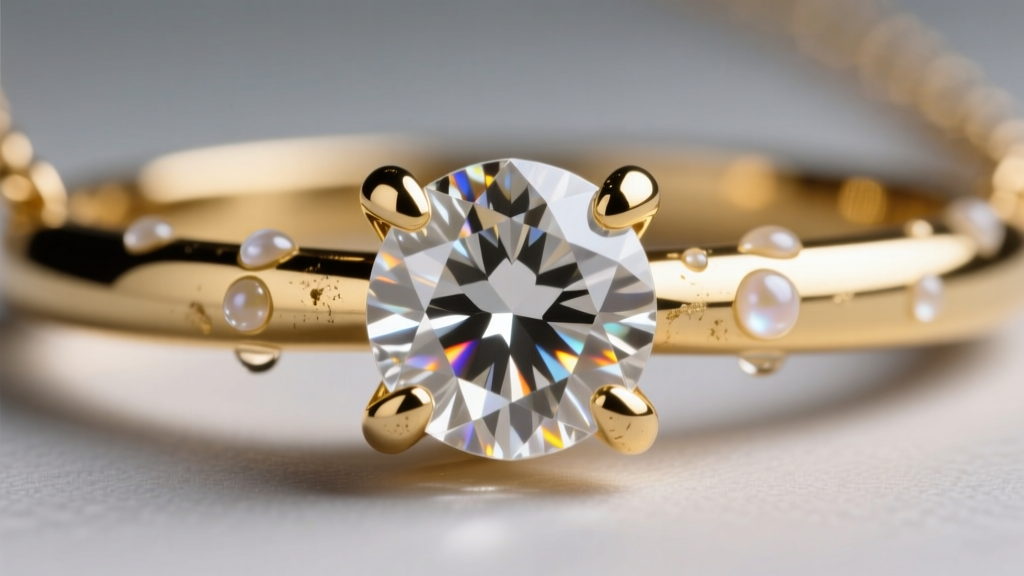
Most tennis necklaces utilize four-prong settings to secure the diamonds. While four prongs offer superior security compared to three-prong settings, they also present more surface area to catch on clothing, hair, and towels. Over time, these prongs can lift or thin out. Platinum is the most secure metal for prongs because it is highly durable and displaces rather than flakes away when scratched. However, 14k and 18k white gold remain the most popular choices due to pricing. If you own a white gold tennis necklace, you must also account for the degradation of its rhodium plating, which requires professional re-dipping every 12 to 24 months to maintain its bright white luster.
Clasp Mechanisms and Failure Points
A high-quality tennis necklace will feature a tongue-and-groove clasp equipped with dual figure-8 safety catches. Because the continuous line of diamonds carries significant weight, the clasp bears immense tension. If the safety catches become stretched or the internal spring of the tongue mechanism weakens, the necklace can snap open, leading to catastrophic stone loss. Checking the tension of these safety catches is a non-negotiable part of your maintenance routine.
Step-by-Step Cleaning Protocol for Tennis Necklaces
Daily wear exposes your tennis necklace to body oils, cosmetics, perfumes, and environmental dust. Because the settings are low-profile and closely linked, debris easily becomes trapped beneath the pavilions (the bottom facets) of the diamonds, severely dulling their brilliance. The Gemological Institute of America (GIA) recommends gentle, non-abrasive cleaning methods to preserve both the stones and the delicate metal links.
Tools You Will Need
- Mild, degreasing liquid dish soap (such as original Dawn)
- Distilled water (to prevent hard water calcium spots)
- A new, extra-soft baby toothbrush
- A lint-free microfiber polishing cloth
- A small glass or ceramic bowl (never use metal bowls to avoid scratching)
The Cleaning Process
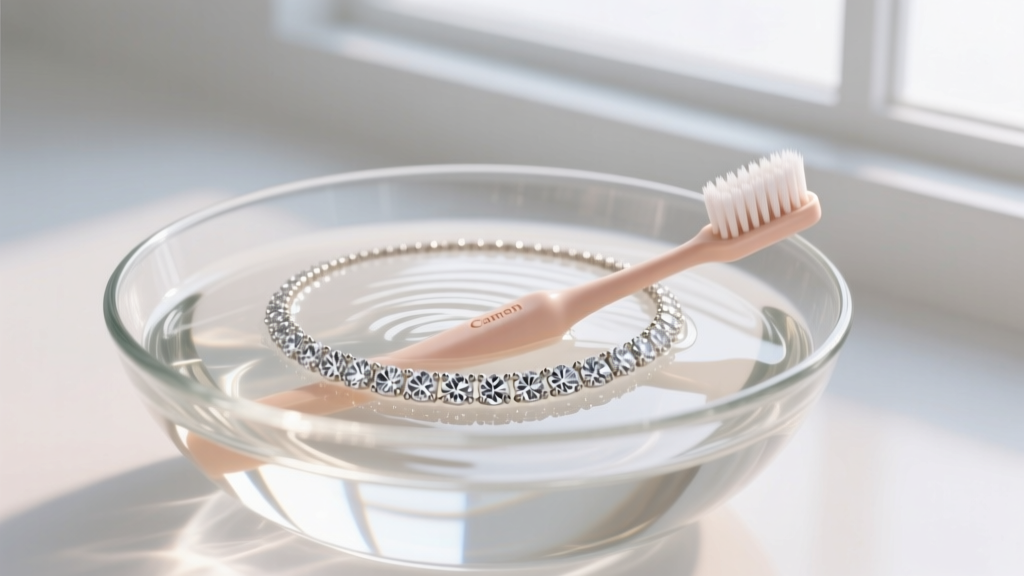
- Prepare the Solution: Fill the glass bowl with warm (not hot) distilled water and add three to four drops of the degreasing dish soap. Swirl gently to create suds.
- Soak: Submerge the tennis necklace in the solution for exactly 15 minutes. This loosens hardened lotions and sebum trapped in the prong heads and link joints.
- Agitate Gently: Using the extra-soft baby toothbrush, lightly brush the necklace. Always brush from the back (pavilion side) toward the front (crown side) to push dirt out and away from the settings. Do not scrub the metal links aggressively, as gold and platinum can accumulate micro-scratches.
- Rinse: Rinse the necklace thoroughly under a gentle stream of lukewarm distilled water. Ensure the drain is securely plugged or use a mesh strainer over the sink to prevent accidental loss.
- Dry: Pat the necklace dry with the lint-free microfiber cloth. Allow it to air dry completely on a clean paper towel before storing to prevent moisture from becoming trapped in the clasp mechanism.
Cleaning Methods: What to Use and What to Avoid
Not all jewelry cleaning methods are safe for the intricate engineering of a tennis necklace. While ultrasonic cleaners and steamers are popular for quick cleaning, they pose severe risks to certain gemstone treatments and worn metal links.
| Cleaning Method | Safety Level | Expert Insight & Risks |
|---|---|---|
| Mild Soap & Distilled Water | Highly Safe | The gold standard for weekly home maintenance. Safe for all diamond and metal types. |
| Ultrasonic Cleaners | High Risk | High-frequency vibrations can shake loose stones if prongs are even slightly worn. Will shatter fracture-filled diamonds. |
| Steam Cleaners | Moderate Risk | Thermal shock can damage treated stones or cause micro-fractures in included diamonds. Avoid for emerald or sapphire tennis necklaces. |
| Chemical Dip Cleaners | Unsafe | Harsh acids and ammonia can degrade alloy metals, strip rhodium plating from white gold, and pit porous gemstones. |
| Toothpaste & Baking Soda | Unsafe | Highly abrasive. Will permanently scratch the metal links and dull the polished girdles of the diamonds. |
Long-Term Storage and Professional Maintenance
How you store your tennis necklace is just as critical as how you clean it. Diamonds rank as a 10 on the Mohs scale of hardness, meaning they can easily scratch not only the gold or platinum links of the necklace but also each other. Furthermore, diamonds have 'cleavage planes'—directions of structural weakness where a hard impact against another diamond can cause chipping.
Proper Storage Techniques
Never toss a tennis necklace loosely into a communal jewelry box. The articulated links can easily become tangled and kinked, leading to permanent metal stretching. Instead, store the necklace fully extended in a soft, flannel-lined jewelry roll, or place it inside an individual polyethylene ziplock bag. If you must coil it for travel, wrap it gently around a soft velvet insert to maintain the curve of the links without creating sharp stress angles.
The 6-Month Professional Checkup
Home cleaning cannot replace professional maintenance. You should take your tennis necklace to a certified bench jeweler every six months. Under 10x magnification, the jeweler will inspect the integrity of the prong tips, check for link thinning, and test the tension of the figure-8 safety catches. If a prong is lifting, it can often be retipped or burnished back into place in a matter of minutes, saving you from the devastating and expensive loss of a diamond. By combining gentle, consistent home cleaning with rigorous professional inspections, your tennis necklace will remain a secure, brilliant staple in your collection for generations.


