Cross and Star of David Necklace: Value & Buying Guide
Discover how to evaluate a cross and Star of David necklace. Compare material costs, craftsmanship, and fair pricing for interfaith jewelry.

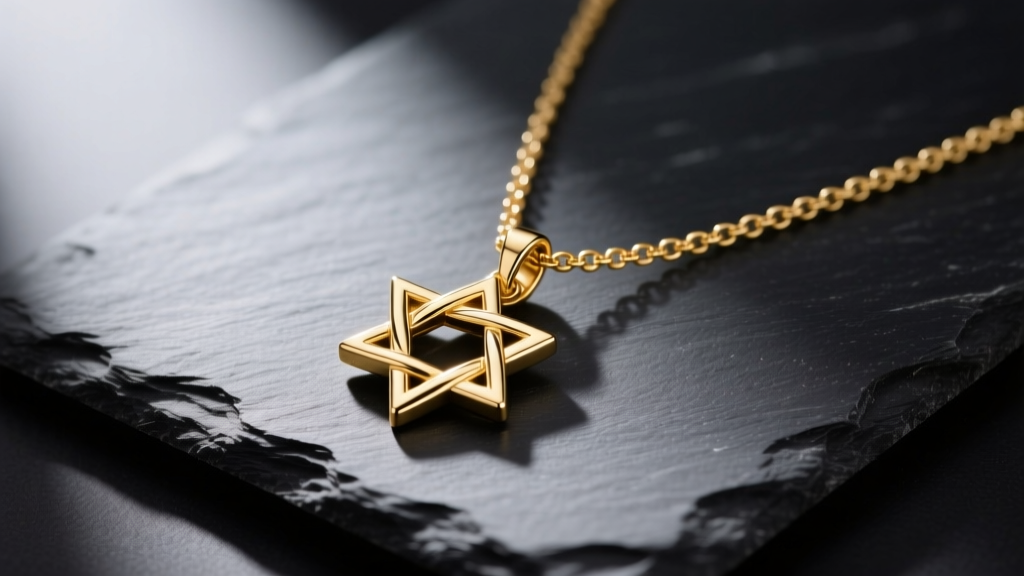
Finding jewelry that accurately represents a dual-faith heritage or interfaith family can be a deeply personal journey. The cross and star of david necklace has emerged as a powerful symbol for Messianic believers, Jewish-Christian households, and those celebrating religious solidarity. However, because this specific dual-symbol design is not as universally mass-produced as a standard crucifix or solitary Star of David, buyers often face inflated prices and inconsistent quality. From a budget and value assessment perspective, navigating this niche requires a sharp eye for metallurgy, structural integrity, and fair market pricing.
The 'Niche Tax' in Interfaith Jewelry
In the jewelry industry, items that fall outside standard mass-market catalogs often carry what gemologists and appraisers refer to as a 'niche tax.' Because a combined cross and Star of David pendant requires specialized CAD (Computer-Aided Design) modeling and distinct lost-wax casting molds, many boutique brands mark up these pieces by 40% to 60% simply due to their scarcity. To avoid overpaying, you must separate the symbolic value of the piece from its intrinsic material value. A fair price is dictated by the metal's spot weight, the complexity of the casting, and the brand's manufacturing transparency, not just the rarity of the design.
Material Breakdown: Where Your Money Actually Goes
When assessing the budget for any dual-faith pendant, the base metal and finishing processes are the primary cost drivers. According to the Gemological Institute of America (GIA), understanding the distinction between solid alloys and plated base metals is the first step in value assessment. Below is a structural breakdown of what you should expect to pay based on material grades in the current market.
| Material Grade | Base / Composition | Avg. Price Range (16-18'') | Expected Lifespan | Value Verdict |
|---|---|---|---|---|
| Brass w/ Flash Plating | Brass/Copper base, <0.5 microns gold | $25 - $45 | 3 - 6 Months | Poor Value (High tarnish risk) |
| 925 Sterling Silver | 92.5% Silver, 7.5% Copper | $60 - $110 | 10+ Years (with care) | Excellent Budget Choice |
| Gold Vermeil | 925 Silver base, ≥2.5 microns gold | $95 - $160 | 2 - 5 Years | Good Mid-Tier Value |
| Solid 14k Gold | 58.5% Gold, alloyed for strength | $450 - $850+ | Lifetime / Heirloom | Best Long-Term Investment |

The Vermeil Trap vs. Solid Gold Investments
Many buyers looking for a gold-toned cross and Star of David necklace opt for vermeil to stay under a $150 budget. However, the Federal Trade Commission (FTC) strictly dictates that for a piece to be legally marketed as 'vermeil' in the United States, it must have a sterling silver base and a gold plating of at least 2.5 microns. Many online marketplaces sell 'gold plated' or 'dipped' jewelry that only features 0.1 to 0.5 microns of gold over brass. This flash plating will wear off rapidly, especially on a pendant that rests against the skin and experiences friction from clothing. If a listing does not explicitly state the micron thickness and the 925 base, assume it is flash-plated brass and adjust your budget expectations accordingly.
Evaluating Craftsmanship: Soldering and Chain Integrity
Combining two distinct geometric shapes—a Latin cross and a hexagram (Star of David)—creates unique structural challenges for the jeweler. When assessing a piece in person or via high-resolution macro photography, you must inspect the intersection points.
- Single-Cast vs. Soldered: The highest quality pendants are cast as a single piece using a 3D-printed resin mold. If the cross and the star are two separate pieces soldered together, inspect the solder joints. Weak soldering will lead to the star's points snapping off under minor tension.
- The Bail and Center of Gravity: A combined pendant is often wider and heavier than a standard charm. If the bail (the loop the chain passes through) is too small or poorly weighted, the pendant will constantly flip upside down. Look for an oversized, reinforced oval bail that allows the pendant to lay flat against the sternum.
- Chain Pairing: A dual-symbol pendant weighing more than 4 grams requires a chain with high tensile strength. Avoid delicate cable chains. Instead, pair the pendant with a 1.5mm to 2.0mm box chain or a wheat chain, which offer superior resistance to kinking and snapping.
A 4-Step Value Assessment Framework
Before adding a cross and Star of David necklace to your cart, run the listing through this quick value-assessment checklist to ensure you are paying for quality, not just marketing.
- Verify the Hallmark: Ensure the product description or photos show a '925', '10k', '14k', or '18k' stamp. If the metal is unmarked, walk away.
- Check the Gram Weight: Reputable jewelers list the exact gram weight of the pendant. A solid 14k gold pendant weighing 1.5 grams should cost roughly the spot price of gold plus a 20-40% labor markup. If a 1.5g 14k pendant is listed for $900, you are overpaying for the brand name.
- Assess the Prongs and Bezels: If the design includes gemstones (such as a diamond in the center of the Star of David), check if they are prong-set or bezel-set. Bezel settings offer better protection for the stones on a pendant that moves throughout the day.
- Review the Return and Replating Policy: If buying vermeil, does the brand offer a replating service? A brand that stands behind its plating thickness is a brand that values long-term customer retention.
Final Verdict: What is a Fair Price?
A fair price for a well-crafted cross and Star of David necklace depends entirely on your timeline for wear. For a budget-conscious buyer seeking daily wear, a solid 925 sterling silver piece priced between $65 and $95 represents the absolute best value-to-longevity ratio. For those seeking a generational heirloom without the risk of plating degradation, a solid 14k gold casting weighing between 2 and 4 grams should reasonably fall in the $400 to $650 range. By focusing on metallurgical transparency, structural casting methods, and FTC-compliant plating standards, you can invest in a piece of interfaith jewelry that honors your heritage without compromising your financial boundaries.


