How to Clean and Maintain Your RE8 Necklace With 2 Holes
Master the care and cleaning of your RE8 necklace with 2 holes. Learn expert tips for bore maintenance, chain friction, and material-specific polishing.

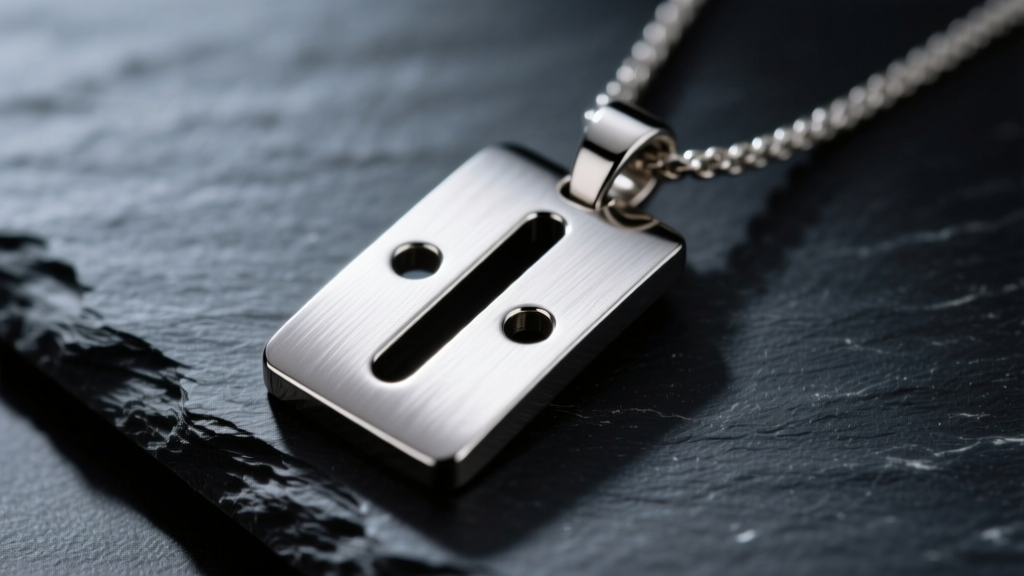
The Unique Anatomy of the RE8 Dual-Hole Pendant
The RE8 necklace with 2 holes represents a highly specialized intersection of industrial aesthetics and functional jewelry design. Originally popularized in tactical and artisan metalworking circles, the 'RE8' designation typically refers to a specific dual-bore pendant architecture. Unlike standard single-bail pendants that hang freely from a single point, the RE8 design features two parallel or staggered cylindrical holes. These bores are engineered to accommodate dual-chain threading, complex wire-wrapping techniques, or specialized sliding mechanisms.
While visually striking and structurally robust, this dual-hole configuration introduces unique maintenance challenges. The internal surface area of the bores acts as a trap for sebum, dead skin cells, environmental dust, and residual polishing compounds from the manufacturing process. Furthermore, if the chain threads directly through the two holes, the friction points are doubled, accelerating wear on both the chain links and the interior edges of the pendant. Proper care requires moving beyond standard jewelry wiping and adopting a targeted, bore-specific maintenance protocol.
Daily Wear: Managing Friction and Debris Accumulation
When worn daily, an RE8 necklace with 2 holes is subjected to continuous micro-abrasion. If you are threading a 1.5mm to 2.0mm stainless steel curb or cable chain directly through the dual bores, every movement of your body causes the chain to saw against the interior walls of the holes. Over time, this can lead to 'chain dust'—a fine, dark metallic powder that mixes with skin oils to form a stubborn, abrasive paste.
To mitigate this, you must perform a weekly dry-clearing of the bores. Do not use metal picks or safety pins, as these will scratch the interior finish, especially if your pendant is crafted from highly polished 316L surgical steel or mirror-finished sterling silver. Instead, utilize a wooden bamboo skewer or a specialized fiberglass scratch pen to gently dislodge compacted debris. According to the Gemological Institute of America (GIA), preventing the buildup of abrasive particulates is the first line of defense against premature metal degradation and link elongation.
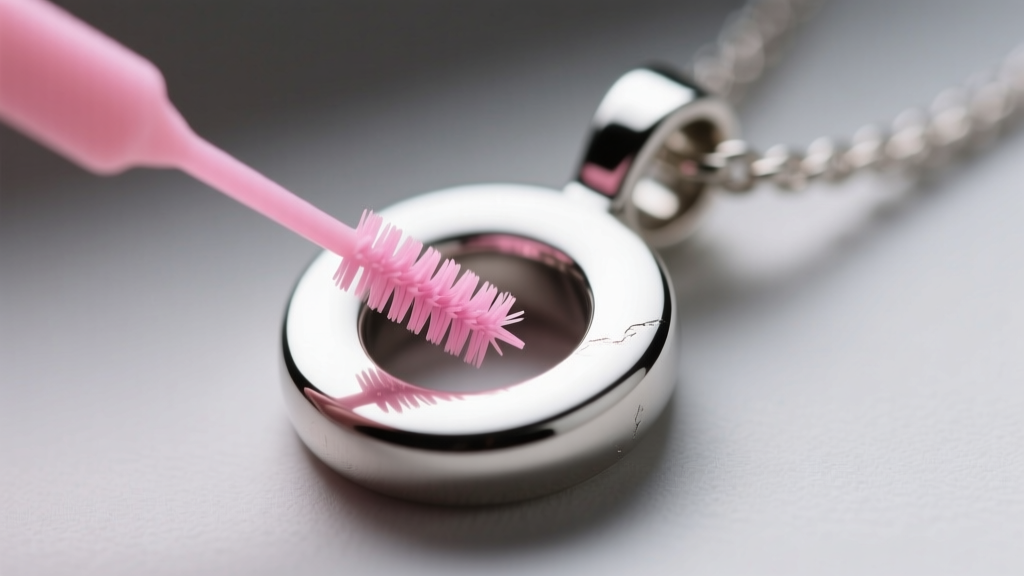
Step-by-Step Deep Cleaning Protocol
For a thorough deep clean, you must address the interior of the holes where standard microfiber cloths cannot reach. The following protocol is optimized for Grade 5 Titanium and 316L Marine Stainless Steel, the most common materials used in RE8 manufacturing.
Ultrasonic vs. Manual Bore Cleaning
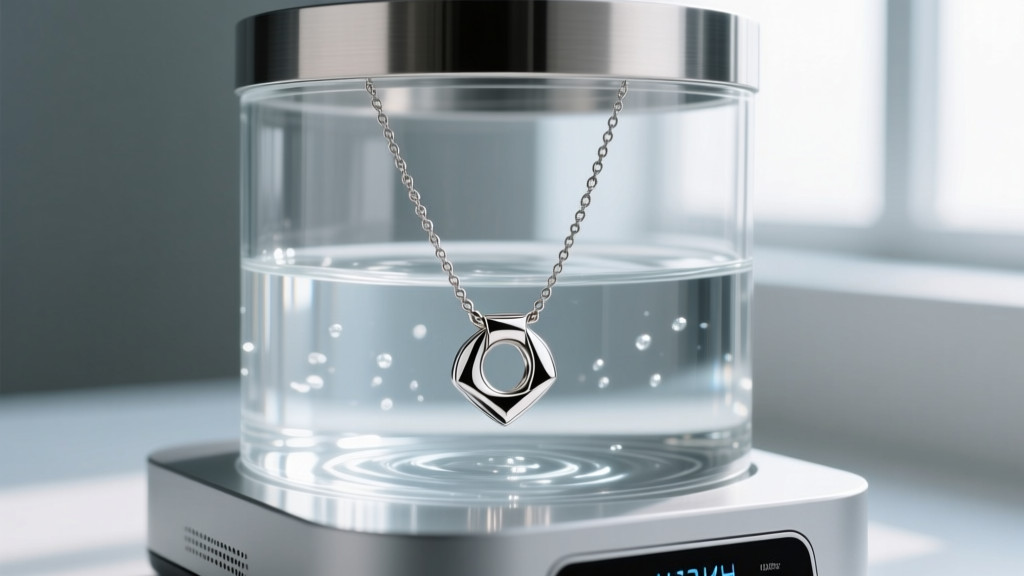
Ultrasonic cleaners are highly effective for jewelry, but frequency matters. A 42,000 Hz (42kHz) frequency is the industry standard for safely cavitating dirt out of microscopic crevices without causing micro-pitting on the metal surface. However, ultrasonic waves sometimes struggle to penetrate deep, narrow cylindrical bores if an air bubble becomes trapped inside the hole. To break the surface tension, manual agitation is required.
Expert Tip: Before placing your necklace in an ultrasonic tank, use a 0.4mm or 0.5mm interdental brush (commonly used for orthodontics) coated in a drop of mild dish soap to manually scrub the interior of both holes. This breaks the surface tension and ensures the ultrasonic cavitation can reach the deepest part of the bore.
Bore Diameter vs. Cleaning Tool Matrix
| Bore Diameter | Recommended Tool | Cleaning Solution | Agitation Method |
|---|---|---|---|
| 2.0mm - 3.0mm | TePe 0.4mm (Pink) Interdental Brush | Neutral pH Surfactant | Push-pull with 42kHz Ultrasonic |
| 3.5mm - 5.0mm | 0.7mm (Yellow) Interdental Brush | Ammoniated Silver Dip (if 925 Silver) | Rotational scrubbing |
| 5.5mm+ | Microfiber Swab / Cotton Bud | Isopropyl Alcohol (99%) | Twist and extract |
Material-Specific Chemical Guidelines
The chemical tolerance of your necklace dictates how aggressively you can clean the dual holes without risking discoloration or structural compromise. The RE8 design is most frequently produced in three distinct metals, each requiring a tailored chemical approach.
1. 316L Surgical Stainless Steel: Highly resistant to corrosion, but vulnerable to chloride-induced pitting. Never use bleach or harsh household cleaners near your steel RE8 pendant. A simple solution of warm water and a few drops of degreasing dish soap (like Dawn) is sufficient. For stubborn tarnish or oxidation around the hole edges, a paste of baking soda and water applied with a soft-bristled child's toothbrush will lift the grime without scratching the Mohs 5.5 hardness steel.
2. Grade 5 Titanium (Ti-6Al-4V): Titanium is virtually impervious to standard jewelry chemicals, including mild acids and alkalis. However, titanium develops a natural oxide layer that can attract oils. Isopropyl alcohol (99% purity) is the best solvent for flushing out the dual holes of a titanium pendant, as it evaporates instantly and leaves no residue. The The Goldsmiths' Company Assay Office notes that while titanium is robust, abrasive polishing compounds can permanently alter its anodized or brushed finishes, so avoid harsh scrubbing pads.
3. 925 Sterling Silver: If your RE8 necklace is crafted from silver, the dual holes will be the first places to show heavy black sulfide tarnish, as the recessed areas trap sulfur-rich moisture from the skin. Use a specialized silver polishing cloth for the exterior, but for the interior bores, use a liquid silver dip (thiourea-based) applied via a cotton swab. Ensure you rinse the holes thoroughly with distilled water afterward, as trapped chemical residue will accelerate future tarnishing.
Long-Term Storage and Anti-Tarnish Strategies
How you store an RE8 necklace with 2 holes is just as critical as how you clean it. When tossing the necklace into a standard jewelry box, the dual holes can easily catch on other chains, prongs, or gemstone settings, leading to severe tangling or scratching.
- Isolate the Pendant: Always store the necklace in a dedicated, soft flannel pouch. If the chain is threaded through the two holes, leave it threaded during storage to prevent the pendant from sliding around and denting the chain links.
- Moisture Control: Include a 3M anti-tarnish strip and a small silica gel desiccant packet inside the storage pouch. The dual bores trap ambient humidity, which can cause flash-rusting on lower-grade steel alloys or rapid oxidation on silver.
- Avoid PVC Plastics: Never store the necklace in cheap plastic zip-lock bags made of polyvinyl chloride (PVC). PVC off-gasses hydrogen chloride over time, which will aggressively corrode the interior walls of the metal holes, leading to irreversible pitting.
By adhering to this targeted maintenance routine, you ensure that the precise engineering and striking aesthetic of your dual-bore pendant remain flawless. Regular bore clearing, mindful friction management, and material-specific chemical care will extend the lifespan of your necklace, keeping it as functional and striking as the day it was machined.


