Emerald Cut Crystal Necklace: Glass vs. Quartz vs. CZ
Compare glass, quartz, and cubic zirconia for your emerald cut crystal necklace. Learn about refractive index, durability, and settings.

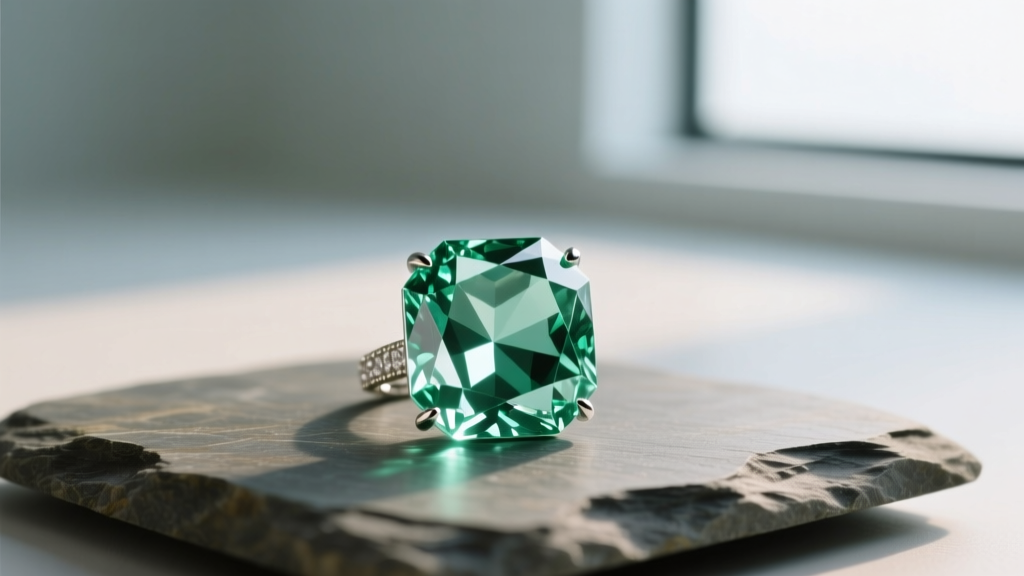
The term "crystal" in the jewelry industry is notoriously ambiguous. When shopping for an emerald cut crystal necklace, consumers are often met with a dizzying array of options ranging from $15 fashion accessories to $500 artisanal pieces. The confusion stems from the fact that "crystal" is a marketing term, not a strict gemological classification. It can refer to premium lead-free glass, natural rock crystal (quartz), or synthetic cubic zirconia (CZ).
In 2026, the shift toward sustainable and lab-created materials means high-grade optical glass and precision-cut CZ dominate the accessible luxury market, while natural quartz is largely reserved for niche artisanal jewelry. However, the emerald cut—a demanding step-cut faceting style—ruthlessly exposes the optical and physical limitations of whatever material is used. This guide breaks down the exact material properties, optical physics, and structural requirements you need to know before purchasing an emerald cut crystal pendant.
The Optical Demands of the Emerald Cut
Unlike the brilliant round cut, which uses 57 or 58 kite-shaped facets to scatter light into fiery sparks, the emerald cut is a step cut. It typically features broad, parallel rectangular facets that create a "hall of mirrors" effect. Because the table (the top flat surface) is exceptionally large and open, any material flaws, poor polishing, or low refractive index (RI) are immediately visible.
The most common failure mode in low-quality emerald cut crystals is windowing. This occurs when light enters the top of the stone but leaks out the bottom pavilion instead of reflecting back to the viewer's eye, creating a dead, transparent "window" in the center of the stone. The likelihood of windowing is directly tied to the material's refractive index and the cutter's willingness to add weight to the pavilion.
Material Showdown: Glass vs. Quartz vs. Cubic Zirconia
To understand how different crystals perform in an emerald cut, we must look at the hard data. Below is a comparison of the three most common materials used for these necklaces.
| Material | Mohs Hardness | Refractive Index (RI) | Dispersion (Fire) | Est. Price (10x14mm) |
|---|---|---|---|---|
| Premium Optical Glass | 5.0 - 6.0 | 1.52 - 1.70 | 0.045 | $12 - $25 |
| Natural Quartz (Rock Crystal) | 7.0 | 1.54 - 1.55 | 0.013 | $25 - $60 |
| Cubic Zirconia (CZ) | 8.0 - 8.5 | 2.15 - 2.18 | 0.058 | $15 - $40 |
Premium Optical Glass (The "Swarovski" Standard)
Historically, "crystal" meant leaded glass. Today, due to strict environmental and health regulations, premium brands use barium, zinc, or titanium oxides to achieve high brilliance without lead. Optical glass offers excellent clarity and a pleasant, subtle sparkle. However, its relatively low Mohs hardness (around 5.5) makes it highly susceptible to micro-scratches from everyday dust, which contains quartz particles (Mohs 7). Over a few years of daily wear, a glass emerald cut pendant will develop a cloudy, abraded surface.
Natural Rock Crystal (Quartz)
Natural quartz is highly prized by purists and metaphysical jewelry designers. It is completely colorless and possesses a hardness of 7, making it highly scratch-resistant. However, quartz has a very low dispersion rate (0.013). According to the GIA Gem Encyclopedia, dispersion is what gives a gemstone its "fire" or colorful flashes. An emerald cut quartz necklace will look elegant, icy, and glass-like, but it will lack the rainbow sparkle of synthetic alternatives.
Cubic Zirconia (CZ)
CZ is the undisputed king of optical performance in the affordable crystal market. With an RI of 2.15, it bends light aggressively, ensuring that even shallow emerald cuts reflect light beautifully without windowing. As noted by the Gemological Institute of America (GIA), CZ's high dispersion (0.058) gives it intense fire. The trade-off? In large emerald cuts (over 15mm), the extreme fire can sometimes look "too perfect" or artificial to a trained eye, lacking the subtle, understated elegance of natural quartz or premium glass.
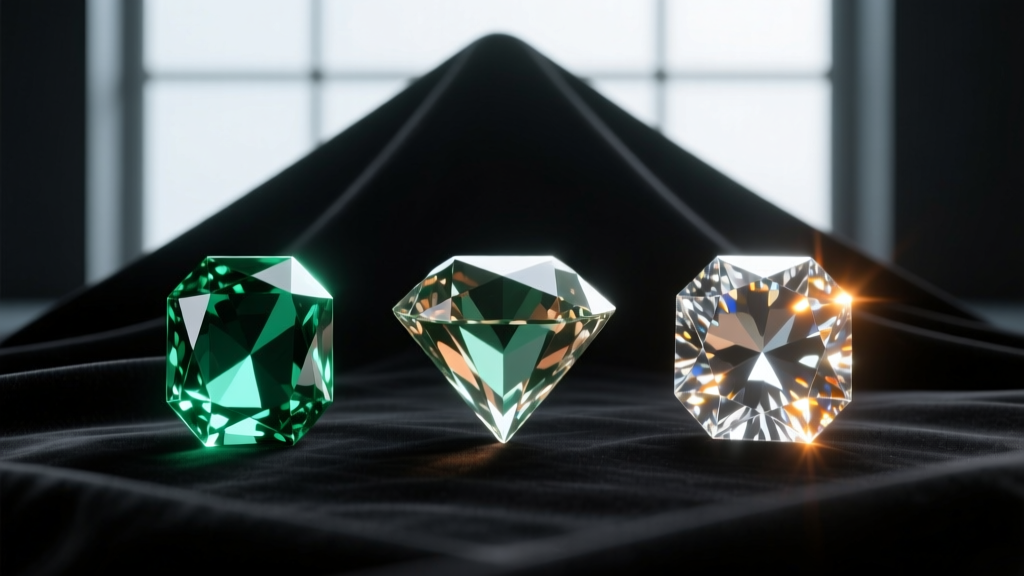
Durability and the Corner Chipping Hazard
The geometry of the emerald cut features cropped corners, but these angled edges remain the most vulnerable points of the stone. When a pendant swings and strikes a hard surface like a granite countertop or a glass table, the kinetic energy concentrates on these corners.
- Glass: Highly prone to chipping and conchoidal fracturing at the corners.
- Quartz: Features distinct parting planes; a sharp impact can cause internal feathering or cleave a corner entirely.
- Cubic Zirconia: Brittle despite its high hardness. CZ is notorious for "edge chipping" where the facet junctions meet.
Because of this inherent structural vulnerability, the setting mechanics of your necklace are just as important as the crystal material itself.
Setting Mechanics: Protecting the Step Cut
If you are buying an emerald cut crystal necklace for daily wear, avoid standard four-prong settings that leave the corners exposed. You must look for specific protective settings:
- The Full Bezel: A continuous rim of metal (preferably 14k gold or platinum) that completely encircles the stone. This is the gold standard for emerald cuts, protecting every corner and edge from impact while adding a sleek, modern aesthetic.
- V-Prongs: If you prefer the open look of prongs, ensure the setting utilizes V-prongs at the four cropped corners. A V-prong wraps around the point of the corner, absorbing shock that would otherwise shatter the crystal.
- Half-Bezel / Tension Hybrids: These leave the long sides of the emerald cut exposed for maximum light entry but cap the vulnerable ends with metal shields.
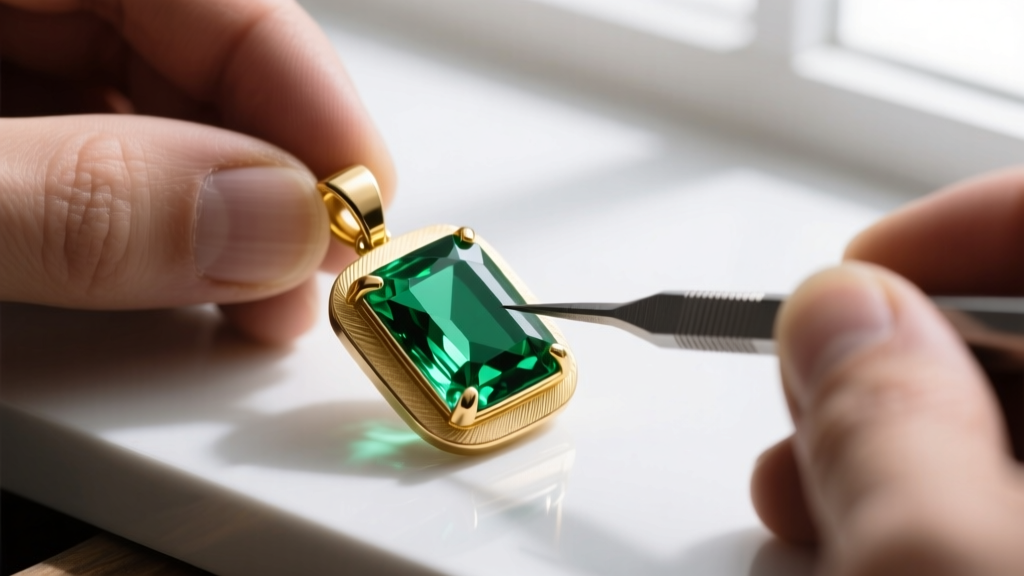
Chain Pairings and Weight Distribution
A common mistake buyers make is pairing a large, heavy emerald cut crystal pendant with an inadequate chain. A 10x14mm Cubic Zirconia stone weighs approximately 12 to 15 carats (roughly 2.5 to 3 grams). When you add the weight of a solid metal bezel setting, the total pendant weight can easily exceed 6 grams.
Delicate 0.8mm cable chains or thin snake chains will stretch, kink, or snap under this dynamic load. For an emerald cut pendant of this size, you need a chain with high tensile strength and rigid structural integrity:
- Box Chains (1.2mm - 1.5mm): The interlocking square links distribute weight evenly and resist kinking. They provide a geometric aesthetic that perfectly complements the straight lines of the emerald cut.
- Wheat / Spiga Chains (1.5mm+): Woven in a continuous braid, wheat chains offer exceptional tensile strength and a fluid drape that prevents the heavy pendant from pulling the chain taut against the back of your neck.
- Figaro or Curb Chains: Excellent for a more masculine or vintage aesthetic, provided the links are soldered and at least 1.5mm thick.
Expert Verdict: Which Material Should You Choose?
The ideal material for your emerald cut crystal necklace depends entirely on your wearing habits and aesthetic preferences.
If you want a durable, icy, and understated piece for occasional wear, and you value natural earth-mined materials, natural rock quartz is a beautiful, scratch-resistant choice, provided you accept the lack of colorful fire.
If you are looking for an affordable, high-impact fashion piece for evening wear, premium optical glass offers fantastic clarity and vintage charm, though it must be stored carefully to avoid scratches.
However, for the best overall optical performance, brilliance, and value, Cubic Zirconia remains the superior choice. Its high refractive index guarantees that the emerald cut will sparkle brilliantly without the dead "windows" that plague low-RI materials. Just ensure it is housed in a protective bezel setting and hung on a sturdy box chain, and your emerald cut crystal necklace will deliver flawless, mirror-like elegance for years to come.


