How to Clean a Weed Leaf Necklace: Material Care Guide
Learn how to safely clean your weed leaf necklace. Discover material-specific care tips for silver, gold, enamel, and brass cannabis pendants.

The Unique Anatomy of Cannabis Leaf Jewelry
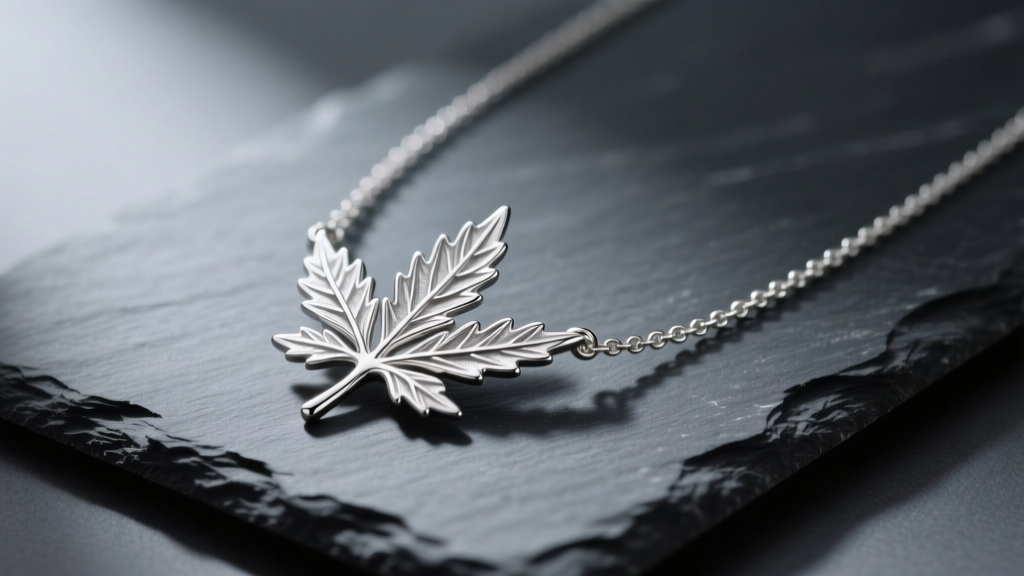
Cannabis-inspired jewelry has evolved far beyond cheap novelty trinkets into the realm of high-end artisanal craftsmanship. A premium weed leaf necklace is a statement piece, often featuring intricate serrated edges, deep venation, and complex surface textures. However, this very anatomy is what makes these pendants uniquely challenging to maintain. The deep crevices and sharp points of a botanical leaf design act as magnets for sebum, cosmetic lotions, environmental dust, and dead skin cells. Over time, this buildup not only dulls the metallic luster but can also accelerate localized corrosion, particularly in mixed-metal or plated pieces.
Proper maintenance requires more than a quick wipe with a cloth. To preserve the structural integrity and visual brilliance of your pendant, you must tailor your cleaning protocol to the specific metallurgy and finishing techniques used by the jeweler. According to the Gemological Institute of America (GIA), understanding the chemical reactivity of your specific jewelry metals is the first line of defense against irreversible damage.
Material Identification Matrix
Before applying any cleaning agent, you must accurately identify the base metal and any secondary finishes. Using the wrong chemical on a delicate finish can strip plating or dissolve enamel. Use the matrix below to determine the vulnerability and appropriate care level for your specific piece.
| Material / Finish | Tarnish Risk | Ultrasonic Safe? | Primary Cleaning Agent |
|---|---|---|---|
| 925 Sterling Silver | High (Sulfur reaction) | No (if oxidized) | Phosphate-free mild soap |
| Gold Vermeil (18k/925) | Low | No | Microfiber + distilled water |
| Raw Brass / Bronze | High (Patina/Oxidation) | Yes (uncoated) | Lemon juice + baking soda |
| Hard Enamel Inlay | None | No (Thermal shock) | Damp lint-free cloth only |
Targeted Cleaning Protocols by Material
Sterling Silver and Oxidized Accents
Sterling silver is an alloy comprising 92.5% pure silver and 7.5% copper. It is the copper that reacts with sulfur and moisture in the air to create silver sulfide, the black tarnish that plagues unworn jewelry. Many artisanal weed leaf necklaces utilize intentional oxidation (blackening) in the deep veins of the leaf to create contrast and depth. If you use a harsh chemical silver dip, you will strip this intentional patina, leaving the piece looking flat and overly bright.
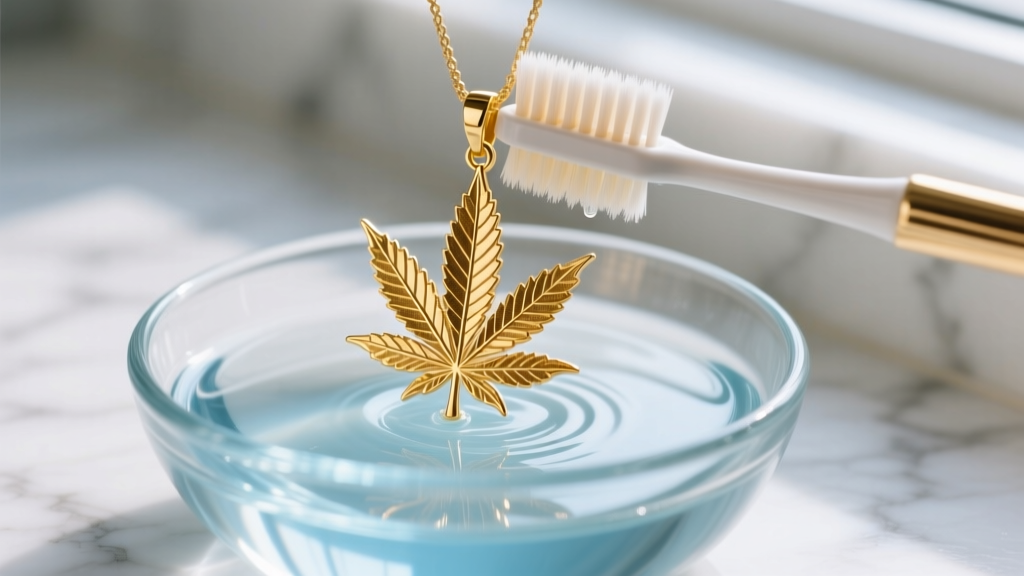
For oxidized silver, create a solution of warm distilled water and a few drops of phosphate-free dish soap. Submerge the pendant for no more than three minutes. Use a soft-bristled baby toothbrush to gently agitate the soapy water into the serrated edges and deep veins. Rinse thoroughly with distilled water to prevent mineral spotting, and pat dry immediately with a lint-free microfiber cloth. For the raised, polished surfaces of the leaf, use a treated jeweler's polishing cloth (such as a Sunshine cloth) to restore the high-shine finish without disturbing the darkened crevices.
Gold Vermeil and Plated Pieces
Gold vermeil consists of a thick layer of gold (legally required to be at least 2.5 microns) electroplated over a sterling silver base. Standard gold-plated jewelry, conversely, may have a gold layer of less than 0.5 microns over a brass base. Both are highly susceptible to abrasive damage. Never use baking soda, toothpaste, or stiff brushes on a gold weed leaf necklace, as these will scratch through the micron-thin gold layer, exposing the base metal beneath.
Clean vermeil pieces using only a damp microfiber cloth with a microscopic drop of mild soap. Wipe in the direction of the leaf's natural grain if a brushed finish is present. If the piece has accumulated heavy body oils, a brief soak in lukewarm soapy water is acceptable, but avoid any vigorous scrubbing. As noted by Fire Mountain Gems, ultrasonic cleaners generate high-frequency cavitation bubbles that can literally peel electroplated layers right off the base metal, so keep vermeil far away from these machines.
Enamel and Resin Inlays
Many contemporary cannabis pendants feature vitreous enamel or epoxy resin inlays to add vibrant greens, purples, or blacks to the design. Enamel is essentially fused glass, making it highly vulnerable to thermal shock and blunt force. Resin is a polymer that can cloud or melt when exposed to harsh solvents like acetone, alcohol, or ammonia. Clean these hybrid pieces exclusively with a slightly damp, lint-free cloth. If dirt is impacted in the seam where the enamel meets the metal bezel, use a wooden toothpick or a soft interdental brush to gently dislodge the debris without scratching the glass-like surface.
Chain and Clasp Maintenance
The pendant is only half the equation; the chain and clasp require equal attention. Weed leaf pendants are typically suspended from delicate 1.2mm to 1.5mm cable, box, or rope chains. These fine links easily trap lotion and dead skin, which can cause the chain to stiffen and eventually snap under the weight of the pendant.
To clean the chain, lay it flat on a paper towel and use a soapy cotton swab to run along the length of the links. Pay special attention to the lobster clasp or spring ring. The internal spring mechanism in these clasps is highly sensitive to debris and dried lotion, which can cause the lever to stick or fail to close completely. Apply a microscopic drop of sewing machine oil or specialized jewelry lubricant to the clasp hinge, work the lever back and forth, and wipe away any excess oil with a dry cotton swab. This prevents the clasp from failing and dropping your prized pendant.
Storage and Environmental Control
How you store your necklace when it is not being worn dictates how often you will need to clean it. Leaving a sterling silver or raw brass piece on a bathroom counter exposes it to high humidity and aerosolized cosmetics, accelerating tarnish exponentially.
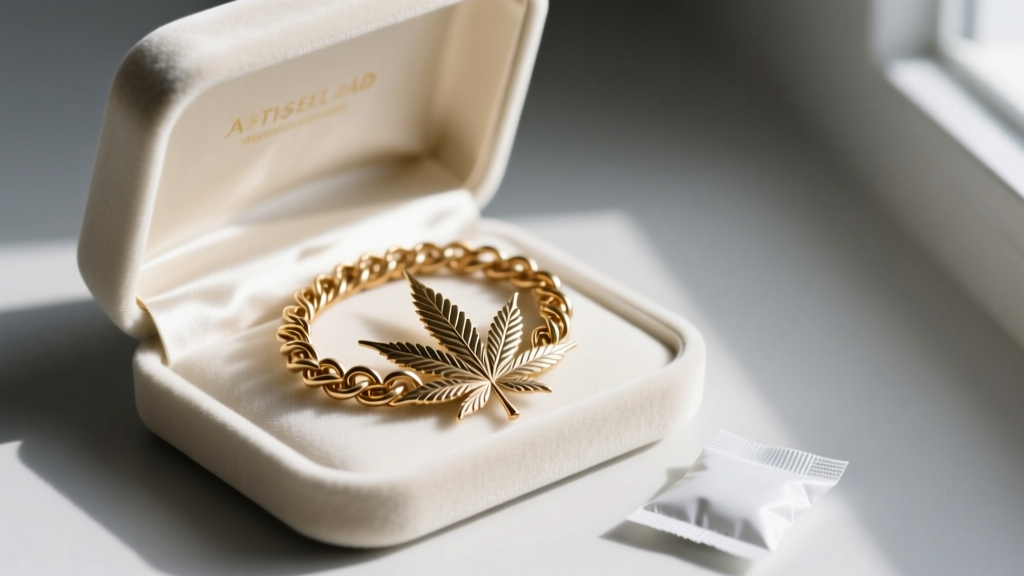
For long-term preservation, store your weed leaf necklace in an airtight polyethylene zip-lock bag. Squeeze out as much air as possible before sealing. To actively combat sulfur and moisture, include a 3M anti-tarnish strip and a small silica gel desiccant packet inside the bag. The anti-tarnish strip will absorb airborne sulfides, sacrificing itself to protect your silver, while the silica gel ensures the micro-environment remains bone-dry. Always fasten the clasp before storage to prevent the fine chain from tangling into microscopic knots that are nearly impossible to undo without stretching the links.
Troubleshooting Common Wear Issues
Even with meticulous care, botanical jewelry can present unique wear issues. Here is how to troubleshoot the most common problems associated with leaf-shaped pendants:
- Green Skin Discoloration: If your raw brass or copper-alloy leaf pendant is turning your skin green, this is a harmless reaction between the copper and your skin's natural acidity. To prevent this, apply a thin coat of clear, hypoallergenic nail polish to the back of the pendant, or have a jeweler apply a clear electro-coated rhodium barrier.
- Bent Serrated Tips: The sharp points of a cannabis leaf design are prone to catching on knit sweaters and bending. If a sterling silver tip bends, it can be carefully eased back into place using nylon-jaw pliers. Never use standard steel pliers, as they will mar the soft silver.
- Jump Ring Separation: The jump ring connecting the leaf bail to the chain is a common failure point. If you notice a gap in the jump ring, do not simply pull it apart laterally to close it, as this weakens the metal. Use two pairs of flat-nose pliers to twist the ends of the wire open and closed in a twisting motion, maintaining the perfect circular geometry.
"The intricate geometry of botanical jewelry demands respect. A weed leaf pendant isn't just a flat disc; it's a topographical map of ridges and valleys. Treating it with the same aggressive polishing techniques you'd use on a simple wedding band will destroy the artisan's intentional contrast and detail." — Master Bench Jeweler
By understanding the specific metallurgical properties of your jewelry and adopting a gentle, targeted cleaning regimen, your weed leaf necklace will retain its sharp details and brilliant luster for decades, serving as a timeless piece of wearable art.


