The Teal Sapphire Necklace: Gem Properties & Setting Comparisons
Discover the unique material properties of a teal sapphire necklace. Compare its durability, color zoning, and ideal metal settings.

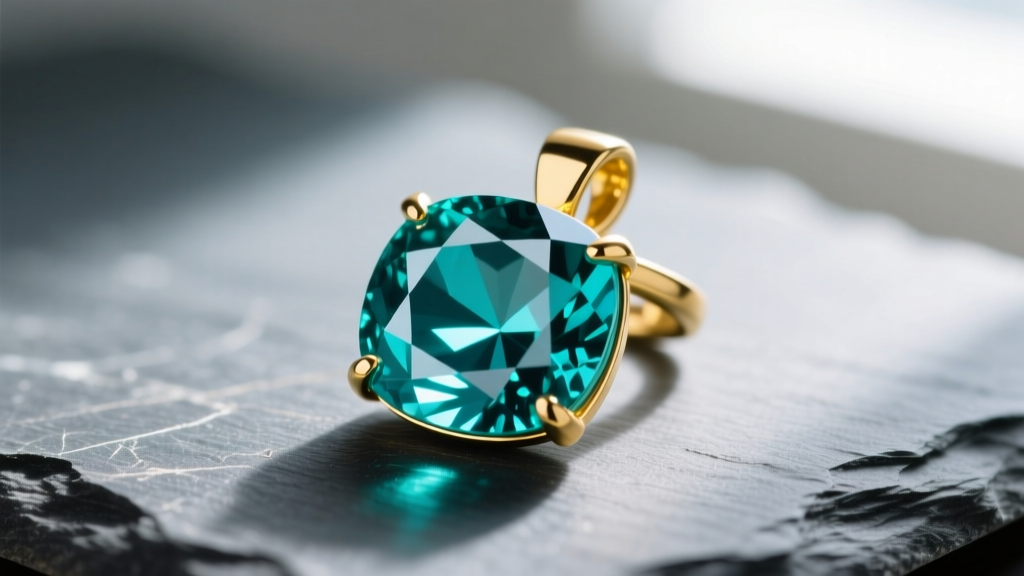
The Allure of Teal Sapphire: More Than Just a Color
When selecting a statement piece for everyday wear, the teal sapphire necklace has emerged as a definitive favorite among gemologists and jewelry collectors alike. Unlike traditional blue sapphires that rely on a singular, deep hue, teal sapphires offer a mesmerizing interplay of blue and green. This unique coloration is not the result of artificial enhancement, but rather a precise geological recipe. According to the Gemological Institute of America (GIA), the teal hue in corundum (Al2O3) is driven by specific trace amounts of iron (Fe) and titanium (Ti), combined with varying oxidation states during the crystal's formation deep within the earth's crust.
As of 2026, the market has seen a massive surge in demand for traceable, ethically mined teal sapphires, particularly those originating from the Rock Creek region of Montana and specific alluvial deposits in Australia. Understanding the underlying material properties of this gemstone is critical for anyone looking to invest in a teal sapphire pendant, as its crystal structure directly dictates how it should be cut, set, and maintained over decades of wear.
Teal Sapphire vs. Lookalike Gemstones: A Hardness & Durability Breakdown
To truly appreciate the value of a teal sapphire necklace, one must compare its physical properties to other blue-green gemstones frequently used in pendant designs. While stones like aquamarine and blue topaz may share a superficial visual similarity, their structural integrity varies wildly.
| Gemstone | Mineral Family | Mohs Hardness | Toughness | Cleavage / Parting | Refractive Index |
|---|---|---|---|---|---|
| Teal Sapphire | Corundum | 9.0 | Excellent | No cleavage; basal parting | 1.762 - 1.770 |
| Aquamarine | Beryl | 7.5 - 8.0 | Good | Poor cleavage | 1.577 - 1.583 |
| Blue Topaz | Topaz | 8.0 | Fair | Perfect basal cleavage | 1.629 - 1.637 |
| Indicolite Tourmaline | Tourmaline | 7.0 - 7.5 | Good | No cleavage | 1.624 - 1.644 |
As detailed in mineralogical databases like Mindat's corundum index, sapphire's 9.0 rating on the Mohs scale makes it the second hardest natural gemstone on earth, surpassed only by diamond. However, hardness (scratch resistance) is only one metric. Toughness (resistance to chipping and breaking) is equally vital for a necklace pendant, which is prone to swinging and striking surfaces. Because teal sapphire lacks true cleavage planes—meaning it does not have structural weak points where it can easily split like blue topaz—it is exceptionally suited for exposed, bezel, or prong-set pendants meant for daily wear.
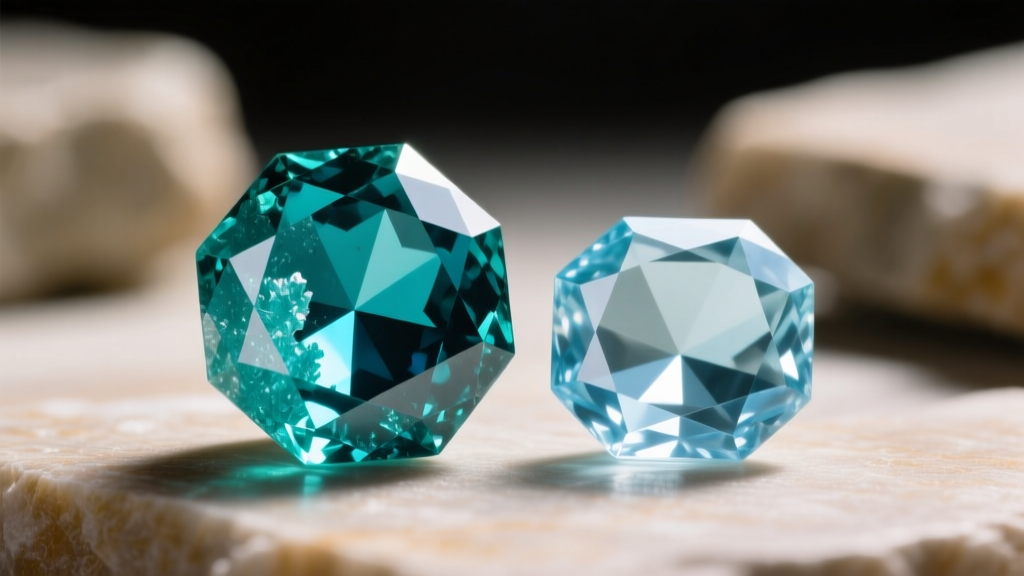
How Crystal Structure Dictates Necklace Design
The physical architecture of a teal sapphire crystal heavily influences the final aesthetic of your necklace. Teal sapphires typically form in a hexagonal crystal system, often presenting as barrel-shaped or bipyramidal crystals. This geometry, combined with the stone's intense pleochroism, forces lapidaries to make critical decisions during the cutting process.
The Impact of Pleochroism on Pendant Orientation
Pleochroism is the optical phenomenon where a gemstone displays different colors when viewed from different crystallographic axes. In teal sapphires, the dichroism is usually strong, showing a blue axis and a green axis. If a cutter orients the table (the flat top facet) perpendicular to the c-axis, the stone will predominantly show blue. If oriented parallel, it will show green. To achieve the coveted 'teal' balance in a finished necklace pendant, master cutters must tilt the facet arrangement to capture both axes simultaneously. This often results in asymmetric cuts, elongated ovals, or custom shield shapes that maximize the color-shifting effect when the pendant moves against the wearer's chest.
Inclusions and the Cabochon Alternative
While eye-clean faceted stones command the highest premiums, many teal sapphires contain rutile silk or fingerprint inclusions. Rather than discarding these, expert jewelers often cut them into cabochons (smooth, domed, unfaceted stones). When the rutile needles are densely packed and properly aligned, they can produce a rare asterism (star effect) or a soft, velvety luster that adds a unique, organic character to a bohemian or artisan-style teal sapphire necklace.
Metal Pairings: Enhancing the Teal Hue
The metal alloy you choose for your necklace chain and pendant setting acts as a secondary reflector, fundamentally altering the perceived color of the teal sapphire. Because teal sits on the spectrum between blue and green, the undertones of the precious metal can pull the gem's color in either direction.
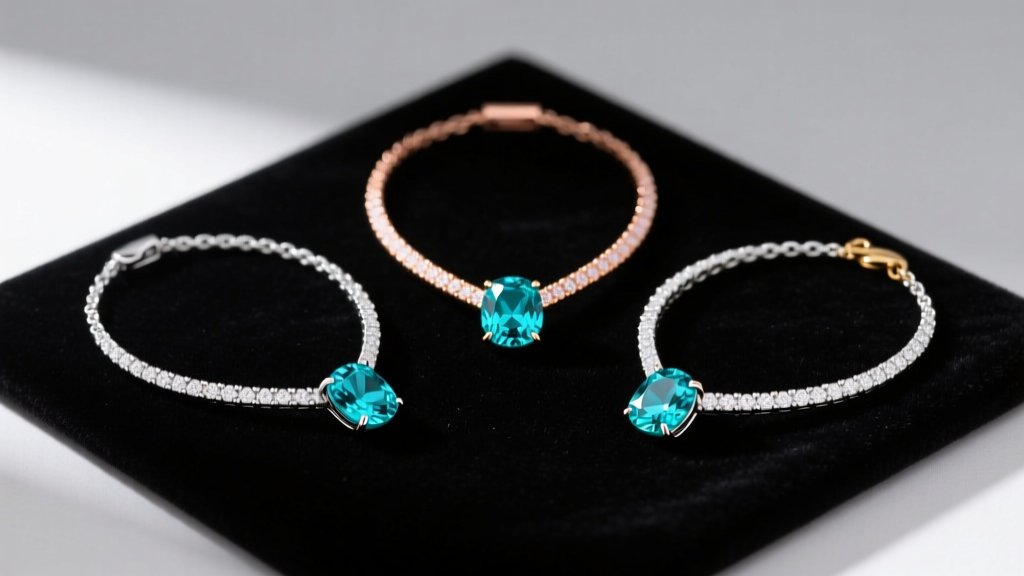
- 18k Yellow Gold: With a 75% pure gold content, 18k yellow gold possesses deep, warm undertones. When paired with a teal sapphire, the yellow metal reflects into the stone's pavilion, amplifying the green secondary hues and giving the gem a lush, tropical, or 'peacock' appearance.
- 14k or 18k White Gold (Rhodium Plated): White gold is alloyed with palladium or nickel and plated with rhodium to achieve a stark, bright white finish. This cool, neutral metal strips away warmth, forcing the teal sapphire to present its coolest, most icy-blue characteristics. It is the preferred choice for buyers who want their pendant to mimic the look of a traditional royal blue sapphire in dim lighting.
- 14k Rose Gold: Alloyed with a high percentage of copper, rose gold introduces a pinkish-red warmth. On the color wheel, red is complementary to green/blue. This high-contrast pairing makes the teal sapphire visually 'pop' with intense saturation, creating a highly modern, romantic aesthetic that has dominated bespoke jewelry trends in recent years.
- 950 Platinum: For heirloom-quality necklaces, platinum offers a naturally white, hypoallergenic, and incredibly dense setting. Its high specific gravity provides superior prong security for heavier teal sapphire pendants, ensuring the stone remains safe even if the necklace snags on clothing.
Sourcing and Treatment: What to Ask Your Jeweler
Material integrity goes beyond physical hardness; it encompasses the chemical stability of the treatments applied to the stone. The vast majority of sapphires on the market undergo traditional heat treatment (typically between 1600°C and 1900°C) to dissolve rutile silk and improve clarity. This is a stable, universally accepted practice that does not compromise the stone's durability.
However, buyers must be vigilant regarding beryllium diffusion. In this process, beryllium is introduced during heating to artificially alter or enhance the stone's color, often turning pale, unmarketable corundum into a vibrant teal. While diffusion-treated stones are not inherently fragile, their color is not entirely natural, and they should be priced at a significant discount compared to unheated or traditionally heated teal sapphires. Always request a report from a reputable gemological laboratory (such as GIA, AGL, or GRS) that explicitly states the absence of beryllium or lattice diffusion if you are paying a premium for natural color.
Care and Maintenance for Teal Sapphire Pendants
Because corundum is exceptionally hard and chemically inert, a teal sapphire necklace is remarkably easy to maintain. It will not react to mild acids, cosmetics, or chlorinated pool water. However, the setting and potential fracture fillings require specific care protocols.
Expert Warning: Never place a teal sapphire necklace in an ultrasonic cleaner if the stone has been fracture-filled with lead glass or if the pendant features secondary accent stones like emeralds or opals. The high-frequency vibrations and heat can shatter the filler or the secondary gems.
For routine cleaning, the safest and most effective method is to soak the pendant in a bowl of warm water mixed with a few drops of mild, ammonia-free dish soap. Use a soft-bristled baby toothbrush to gently agitate the area behind the girdle (the pavilion), where skin oils and lotions accumulate and block light return. Rinse thoroughly with distilled water to prevent hard water spotting, and dry with a lint-free microfiber cloth. By respecting the material properties and structural nuances of the teal sapphire, you ensure that your necklace remains a brilliant, legacy-grade accessory for generations.


