Expert Care and Cleaning for a Gold Spike Necklace
Learn expert cleaning, storage, and maintenance tips to keep your gold spike necklace shining and prevent damage to its delicate points.

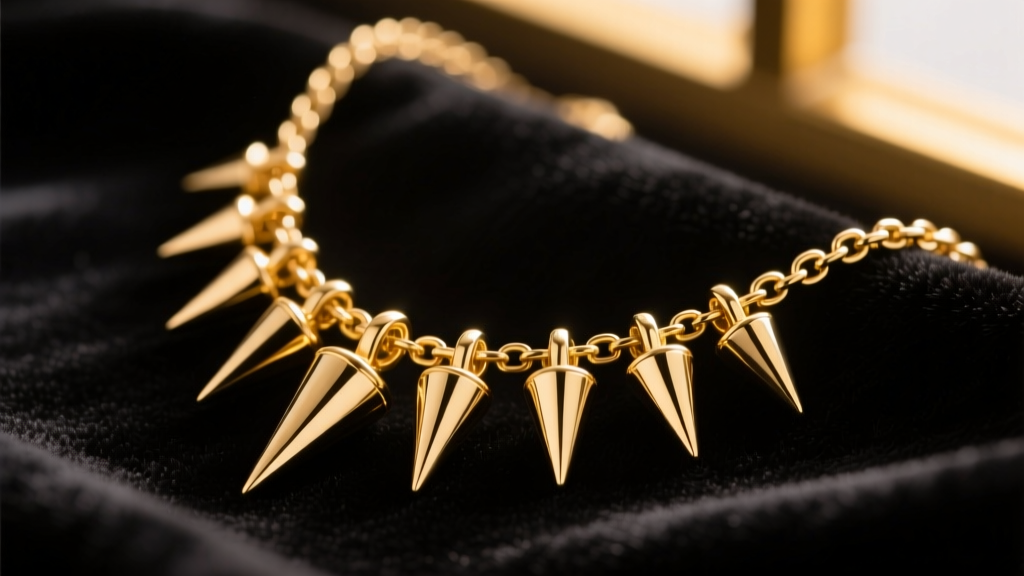
A gold spike necklace is a striking statement piece that bridges the gap between classic elegance and modern edge. However, the unique geometry of conical or stiletto spikes introduces specific maintenance challenges that standard jewelry care guides often overlook. Dirt accumulates in the tight crevices where the spike meets the bail, the sharp points are prone to snagging, and the structural integrity of the solder joints can be compromised by improper cleaning methods. To ensure your investment retains its luster and structural soundness, you must adopt a specialized care routine tailored to the physical demands of spiked pendants.
Understanding Your Gold Alloy and Spike Construction
Before applying any cleaning solution, it is critical to identify the exact material composition of your gold spike necklace. The durability of the spikes depends heavily on the gold alloy used. According to the Gemological Institute of America (GIA), pure 24k gold is far too soft for structural pendants; a 24k spike would bend or dent upon the first impact.
Most high-quality spike necklaces are crafted from 14k gold (58.5% pure gold), which offers an optimal Vickers hardness rating (approximately 120-150 HV) to maintain a sharp point without becoming brittle. 18k gold (75% pure gold) offers a richer yellow hue but is noticeably softer (around 90-110 HV), making 18k spikes more susceptible to blunting over time. If your necklace is gold vermeil (a thick layer of gold over sterling silver) or gold-plated brass, the cleaning protocol must be significantly gentler to avoid stripping the microscopic outer layers. Furthermore, examine the bail—the loop connecting the spike to the chain. On many spike designs, the bail is soldered to the flat base or the top cap of the cone. This solder joint is the most common failure point in spiked jewelry.
The Manual Cleaning Protocol for Intricate Spikes
Because of the deep angles and tight seams inherent in spike pendants, manual cleaning is the safest and most effective method. Avoid abrasive pastes or baking soda mixtures, which can leave micro-scratches on high-polish gold surfaces. Instead, follow this precise step-by-step protocol:
- Prepare a Neutral Bath: Mix three drops of pH-neutral liquid dish soap (such as original Dawn) into a bowl of lukewarm distilled water. Distilled water is crucial, as tap water contains dissolved minerals like calcium and magnesium that can leave hard water spots on the gold.
- Soak Briefly: Submerge the gold spike necklace for exactly 3 to 5 minutes. This loosens sebum, dead skin cells, and cosmetic residue trapped in the crevices around the spike base.
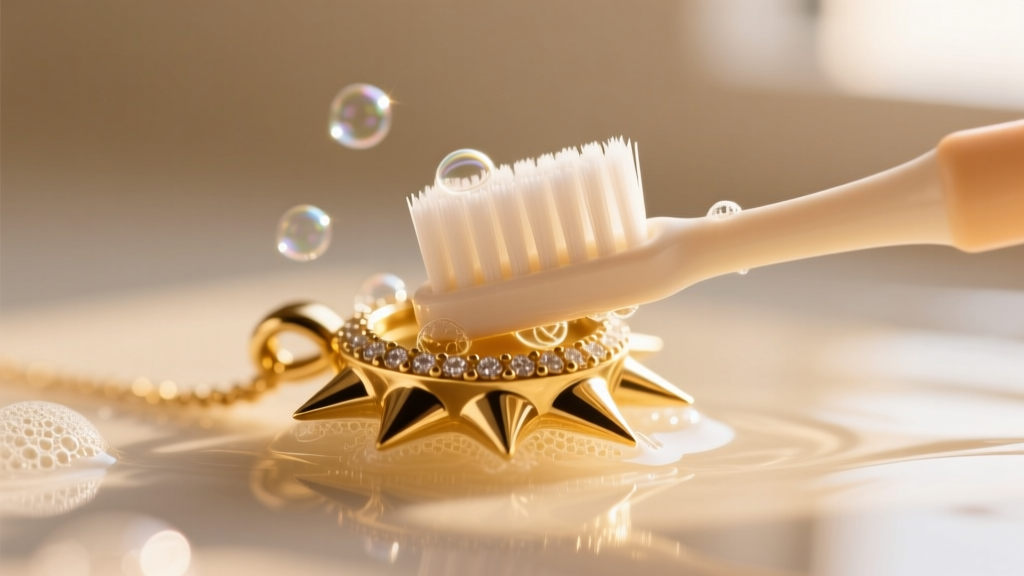
- Agitate with a Soft Brush: Using an extra-soft baby toothbrush, gently sweep the bristles along the chain links and the base of each spike. Never scrub the sharp tips directly, as lateral pressure can bend 18k or vermeil points.
- Rinse and Dry: Rinse the necklace under a gentle stream of lukewarm distilled water. Pat dry with a lint-free microfiber cloth, ensuring no moisture remains trapped in the chain's jump rings.
Why Ultrasonic Cleaners Risk Your Spike Pendants
While ultrasonic jewelry cleaners are highly effective for diamond rings, they pose a severe risk to a gold spike necklace. Ultrasonic machines work through cavitation—generating high-frequency sound waves that create microscopic vacuum bubbles in the liquid. When these bubbles implode against the jewelry, they create intense localized shockwaves.
For a spike necklace, this violent vibration can cause catastrophic failure at the solder joints connecting the spike to its bail. Over time, the micro-fractures caused by ultrasonic cavitation will weaken the solder, eventually causing the spike to snap off entirely during wear. Additionally, if your spikes are hollow (a common design in larger, statement-sized pendants to reduce weight and material costs), the pressure differentials created by ultrasonic waves can warp the thin gold sheeting or cause the seams to split. Always stick to manual, low-impact cleaning methods for spiked geometries.
Strategic Storage to Prevent Punctures and Tangles
Storing a gold spike necklace requires rethinking traditional jewelry organization. The sharp points of the pendants will easily pierce standard microfiber drawstring pouches, potentially damaging the necklace itself or other items in your collection. Furthermore, the conical shapes act as natural hooks, making the necklace highly prone to severe tangling if tossed loosely into a drawer.
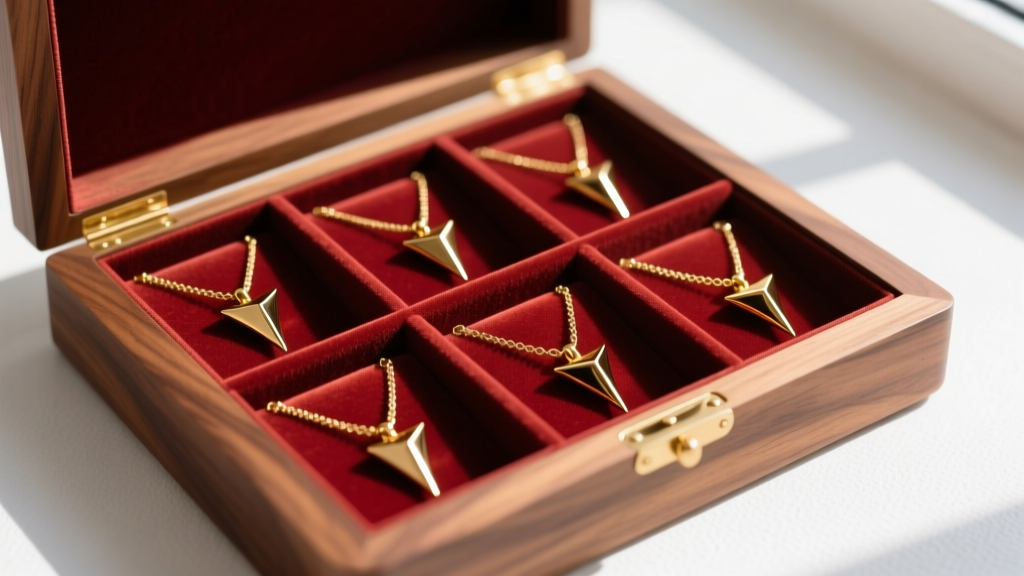
To preserve the structural integrity of the spikes and prevent chain knots, invest in a slotted jewelry box with individual, rigid compartments. Alternatively, use an ABS plastic travel case with a silicone insert. When placing the necklace in its compartment, lay it flat and ensure the spikes are pointing in the same direction, parallel to the chain. Never hang a heavy gold spike necklace on a standard jewelry tree; the concentrated weight of the spikes pulling downward can stretch and permanently deform delicate cable or box chains.
Wear and Tear: Environmental Risk Assessment
Proactive maintenance involves knowing when to take your necklace off. The Jewelers of America emphasizes that environmental exposure is the leading cause of premature jewelry degradation. Use the following risk matrix to guide your daily wear habits:
| Activity | Risk Level | Primary Threat to Spikes | Recommended Action |
|---|---|---|---|
| Showering | Medium | Soap scum buildup in spike crevices; hot water weakening chain solder. | Remove before showering to maintain high-polish finish. |
| Gym / Weightlifting | High | Sweat acidity tarnishing alloys; metal barbells denting or bending spikes. | Always remove. Sweat and physical impact will ruin the points. |
| Swimming (Pool/Ocean) | Critical | Chlorine dissolves gold alloys; saltwater corrodes solder joints. | Never wear. Chlorine can cause 14k gold spikes to become brittle and snap. |
| Sleeping | Medium | Body weight bending spikes; chains wrapping and snapping. | Remove to prevent blunting the tips against the mattress. |
Restoring Dull Gold and Professional Polishing Limits
Even with meticulous care, a gold spike necklace will gradually lose its mirror finish due to microscopic abrasions from clothing and skin contact. To restore the shine at home, use a treated jeweler's polishing cloth (impregnated with rouge or mild polishing compounds). Wipe the flat sides and the chain, but exercise extreme caution around the sharp tips, as the friction can snag the cloth and bend the point.
Expert Insight: Avoid taking a gold spike necklace to a jeweler for a high-speed motorized buffing wheel unless absolutely necessary. The aggressive nature of a muslin buffing wheel can easily round off the razor-sharp tips of the spikes, fundamentally altering the design's edgy aesthetic. If professional refinishing is required, request a gentle hand-polish or a light sonic rinse followed by a manual rouge application.
By understanding the metallurgical properties of your gold, avoiding destructive ultrasonic vibrations, and implementing strategic storage, your gold spike necklace will remain a flawless, striking centerpiece in your collection for decades to come.


