The Clay Necklace Value Guide: Pricing, Materials & Quality
Discover the true value of a clay necklace. Compare polymer vs. ceramic materials, pricing tiers, hardware quality, and how to spot artisan craftsmanship.

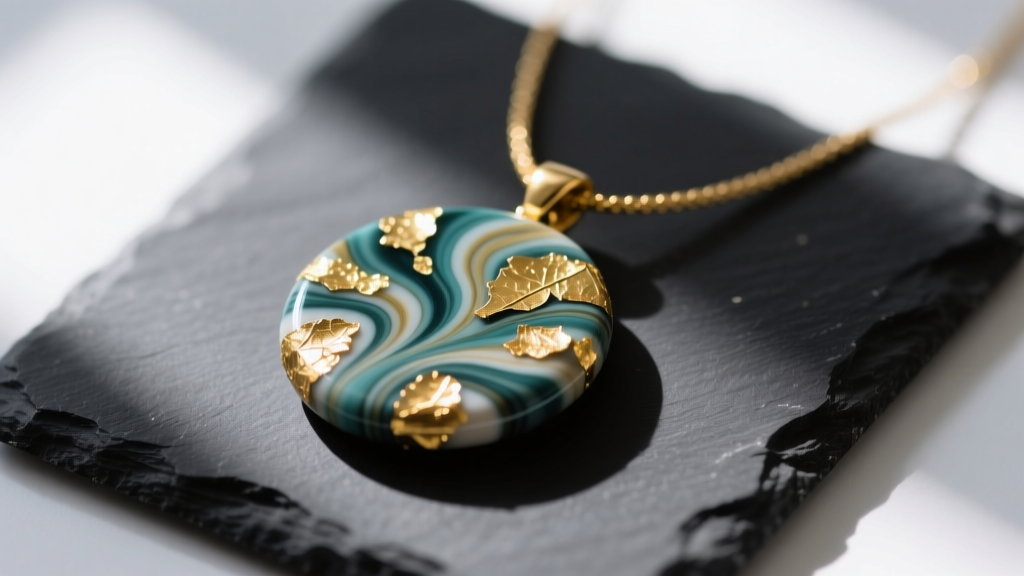
When evaluating the modern jewelry market, the term "clay necklace" encompasses two vastly different material categories: polymer clay and ceramic clay. While both offer incredible artistic versatility, their intrinsic value, durability, and pricing structures are worlds apart. In 2026, as consumers become more educated about material sourcing and artisan labor, distinguishing between a mass-produced dropshipped pendant and a master-crafted wearable art piece is crucial for smart budgeting. This guide provides a comprehensive value assessment framework, breaking down material grades, engineering failure modes, and true market pricing so you can invest your jewelry budget wisely.
Material Breakdown: Polymer vs. Ceramic Clay
To accurately assess value, you must first identify the type of clay used. The term "clay" is frequently misapplied in the jewelry space, leading to mismatched consumer expectations regarding durability and care.
Polymer Clay (PVC-Based)
Polymer clay is not a geological clay; it is a polyvinyl chloride (PVC) modeling compound mixed with plasticizers. High-end professional brands like Fimo Professional and Cernit utilize optimal plasticizer-to-resin ratios, resulting in a cured pendant that possesses slight flexibility. This flexibility is a massive value indicator: if dropped on a hardwood floor, a properly baked, high-grade polymer clay necklace will bounce. Conversely, cheap, bulk craft clays contain heavy calcium carbonate fillers. When baked, these become brittle and will shatter upon impact. According to Sculpey's Polymer Clay 101, proper curing requires precise temperature control (typically 265°F to 275°F). Underbaked clay remains crumbly and degrades rapidly, a common flaw in low-tier marketplaces.
Ceramic and Porcelain Clay (Silicate-Based)
True ceramic clays are earth-mined silicates. For jewelry, the firing temperature dictates the value and durability. Earthenware (low-fire) remains porous and requires a thick, glassy glaze to prevent water damage and skin irritation. Stoneware and porcelain, however, are fired to vitrification (often Cone 6, or 2232°F). As noted by the Ceramic Arts Network, vitrified porcelain is non-porous, incredibly hard, and resistant to chemical degradation from perfumes or sweat. The trade-off is brittleness; a ceramic clay necklace will shatter if dropped on tile, whereas high-grade polymer will not.
The True Cost of a Clay Necklace (2026 Pricing Tiers)
Pricing in the clay jewelry market is heavily stratified. Understanding these tiers prevents overpaying for hobbyist work while helping you recognize genuine artisan value.
| Market Tier | Price Range | Material Quality | Hardware & Engineering | Expected Longevity |
|---|---|---|---|---|
| Fast Fashion / Mass | $5 - $18 | High-filler polymer or low-fire earthenware; thick, heavy profiles. | Zinc alloy ("Tibetan silver"), thin 22-gauge jump rings, glued bails. | 3 - 6 Months |
| Boutique Hobbyist | $20 - $45 | Premo or Fimo; basic hand-sanding; standard aerosol sealants. | Brass or surgical steel; standard glued or loop bails. | 1 - 3 Years |
| Master Artisan | $50 - $150+ | Custom blends, Mokume Gane techniques, or high-fire translucent porcelain. | 14k Gold-filled; flush-set metal eyelets; micro-sanded to 12,000 grit. | Lifetime |
When budgeting, recognize that a $60 artisan polymer clay necklace often costs less per wear than a $15 mass-market piece that snaps or tarnishes within a season.
Hardware and Engineering: Where Value is Won or Lost
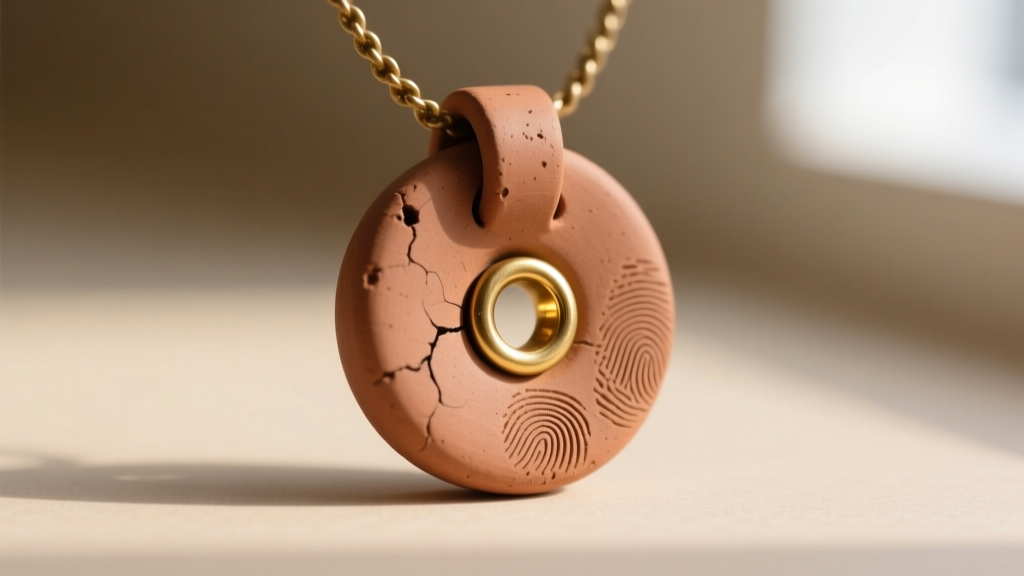
The most critical failure point of any clay necklace is the bail—the mechanism connecting the pendant to the chain. Assessing the engineering of this connection is the ultimate test of a piece's value.
The Drill Hole Vulnerability
In mass-produced necklaces, a simple hole is drilled directly through the clay, and a jump ring is threaded through. Over time, the friction of the metal jump ring acts like a saw, slowly slicing through the clay until the pendant snaps and is lost. A high-value artisan piece will never rely on bare clay for structural integrity at the connection point. Instead, look for a flush-set metal eyelet or a U-bail embedded with structural epoxy before the clay is cured or fired. This distributes the tension and prevents the metal from abrading the clay.
Chain and Clasp Metallurgy
A $40 clay pendant strung on a cheap base-metal chain is a poor investment. Base metals oxidize rapidly when exposed to the natural oils of the neck, leaving green stains and eventually snapping at the clasp spring. According to metallurgical standards referenced by the Gemological Institute of America (GIA), jewelry meant for daily wear should utilize solid brass, stainless steel, or 14k/20 gold-filled components. Gold-filled wire contains 5% solid gold by weight, offering decades of tarnish resistance compared to gold-plated brass, which wears off in months.
The Finishing and Sealant Trap
How a clay necklace is sealed dramatically impacts its tactile value and lifespan. Many mid-tier creators use aerosol clear coats (like Rust-Oleum or Krylon) to save time. However, the solvents in these aerosols react with the plasticizers in polymer clay, causing a chemical migration that results in a permanently tacky, sticky surface that attracts dust and lint.
"A premium clay necklace should feel like glass or smooth stone, never sticky or plasticky. If a polymer pendant feels tacky after a few weeks, it has been sealed with an incompatible solvent-based spray."
High-value pieces are either sanded and buffed to a natural glass-like shine using micro-mesh pads (up to 12,000 grit) without any chemical sealants, or they are coated with a UV-cured jewelry-grade epoxy resin or a high-quality water-based polyurethane (such as Varathane Ultimate) that will not react with the PVC.
Value Assessment Checklist Before Purchasing
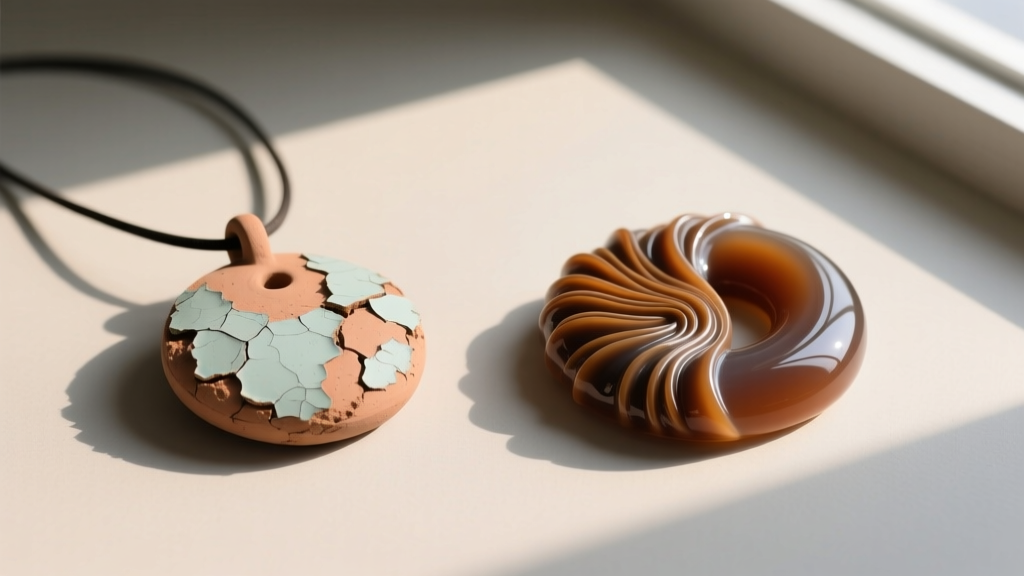
Use this rapid framework to evaluate a clay necklace before adding it to your cart:
- Weight Test: High-quality polymer clay is remarkably lightweight. If a large pendant feels dense and heavy, it is likely packed with cheap calcium carbonate fillers or is a low-grade ceramic that will strain the chain.
- Edge Inspection: Examine the edges of the pendant. Artisan pieces feature slightly beveled or sanded edges. Sharp, 90-degree edges indicate the clay was simply cut and baked without finishing, leading to premature chipping.
- Hardware Verification: Check the product description for specific metal grades. "Alloy" or "Tibetan Silver" means zinc and will tarnish. Look for "14k Gold-Filled," "Niobium," or "Solid Brass."
- Bail Security: Zoom in on the connection point. Is the jump ring resting directly on raw clay? If so, factor in the cost of eventually losing the pendant to friction damage.
Final Verdict: Budgeting for Longevity
A clay necklace can be a fleeting fashion accessory or a lifelong wardrobe staple, entirely dependent on the materials and engineering chosen by the maker. If your budget is under $20, treat the purchase as seasonal costume jewelry and avoid getting it wet. However, if you are allocating $50 to $100, you are entering the realm of master craftsmanship. At this price point, demand vitrified porcelain or premium, filler-free polymer clays, paired with gold-filled hardware and reinforced metal eyelets. By prioritizing structural engineering and chemical compatibility over flashy, mass-produced designs, you ensure your jewelry investment retains both its aesthetic beauty and its physical integrity for years to come.


