How to Clean and Care for Your Bubble Letter Monogram Necklace
Learn expert cleaning and maintenance tips to keep your bubble letter monogram necklace shining, dent-free, and pristine for years to come.

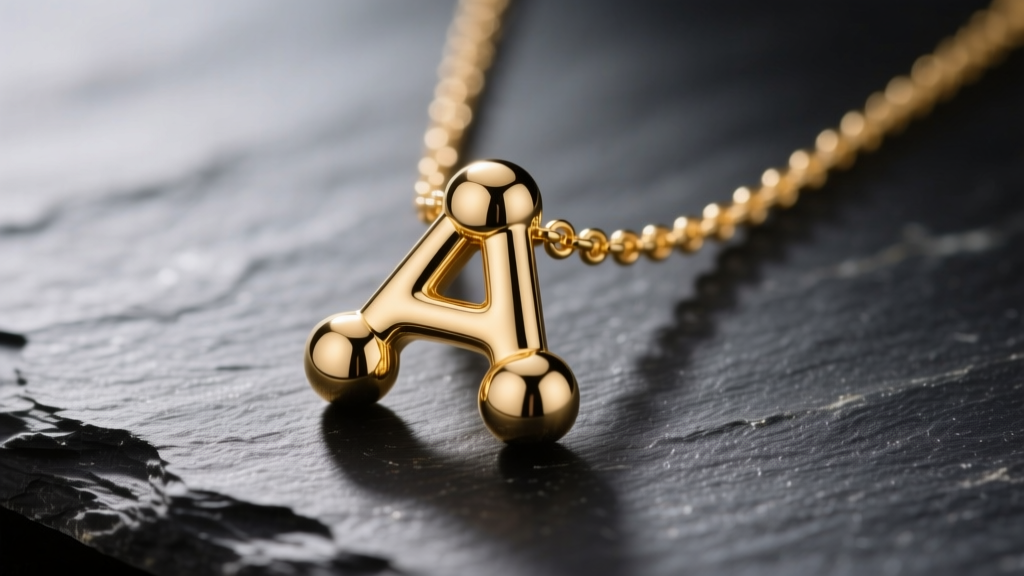
The bubble letter monogram necklace is a statement piece that blends nostalgic aesthetics with timeless personalization. However, the very features that make these puffy, three-dimensional letters so visually striking—their rounded edges, deep crevices, and often hollow construction—also make them uniquely vulnerable to damage, tarnish, and trapped debris. If you own one of these iconic pendants, standard jewelry cleaning methods might actually cause irreversible harm. In this comprehensive guide, we break down the metallurgical realities of your jewelry and provide a professional-grade maintenance protocol.
The Anatomy of Your Pendant: Solid Cast vs. Die-Struck Hollow
Before applying any cleaning solution, you must identify how your bubble letter monogram necklace was manufactured. This dictates what physical pressures it can withstand.
Die-Struck (Hollow) Construction
Most affordable and lightweight bubble letter pendants are die-struck. This process involves stamping two thin sheets of metal (usually 10k or 14k gold, or sterling silver) and soldering them together at the edges. While this creates a large, impressive 3D silhouette without the exorbitant cost of solid gold, it introduces a critical failure mode: denting. Hollow pieces cannot withstand the pressure of a polishing cloth if rubbed too aggressively, and they are strictly forbidden from ultrasonic cleaners, as the high-frequency vibrations can compromise the microscopic solder seams and trap water inside the hollow cavity.
Solid Cast Construction
Solid bubble letters are created via lost-wax casting. They are heavy, durable, and can withstand professional polishing wheels. However, their weight demands a heavier chain. According to the Gemological Institute of America (GIA), gold is a relatively soft metal (2.5 to 3 on the Mohs hardness scale). A heavy solid pendant swinging on a delicate 0.9mm chain will act as a pendulum, eventually causing metal fatigue and snapping the chain links at the clasp or bail.
The Professional Step-by-Step Cleaning Protocol
Dirt, dead skin cells, and lotion buildup love to hide in the deep, rounded crevices where the bubble letters meet the backing plate. Here is the safest, most effective way to restore your necklace's brilliance without causing micro-abrasions.
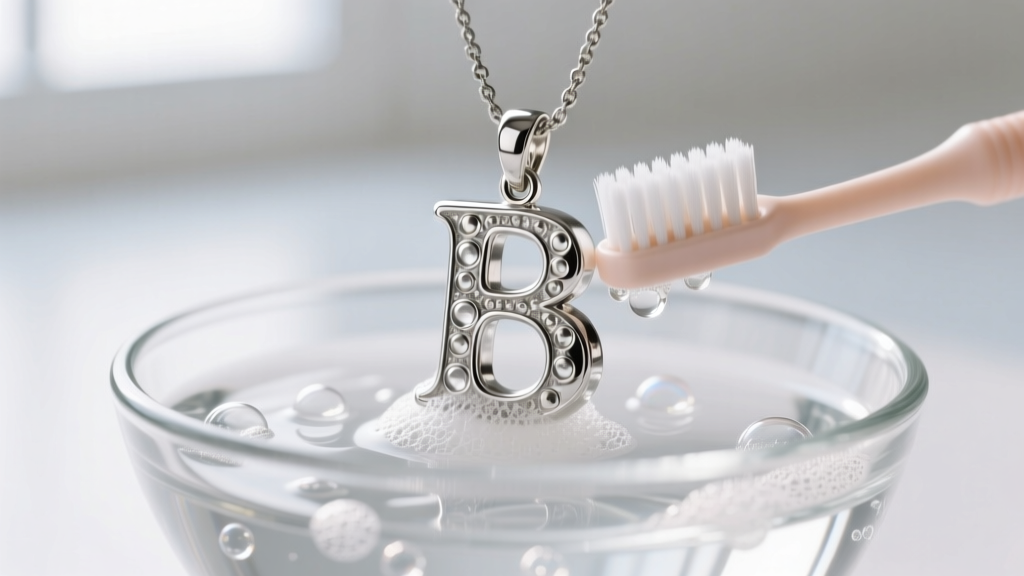
Step 1: The Distilled Water Soak
Never use tap water. Tap water contains dissolved minerals like calcium and magnesium that leave stubborn water spots on high-polish metals. Fill a small glass bowl with warm distilled water and add three drops of a pH-neutral, lotion-free dish soap (such as Dawn Free & Clear). Submerge your necklace and let it soak for exactly 5 to 7 minutes. This softens sebum and cosmetic buildup without attacking the metal.
Step 2: Targeted Agitation
Remove the necklace and use an extra-soft baby toothbrush (bristle diameter under 0.1mm). Standard adult toothbrushes are too stiff and can leave microscopic scratch patterns on high-karat gold. Gently brush the crevices of the letters and the bail (the loop connecting the pendant to the chain). Do not apply downward pressure; let the bristles do the work.
Step 3: The Rinse and Dry
Rinse thoroughly under a gentle stream of lukewarm distilled water. To dry, do not air-dry, as this causes spotting. Instead, lay the necklace flat on a clean, lint-free microfiber cloth and gently pat it dry. Use a wooden toothpick wrapped in a microfiber cloth to wick moisture out of the tightest corners of the monogram.
Chemical Dangers: What to Avoid at All Costs
The Jewelers of America consistently warns against using household chemicals on fine jewelry. Below is a breakdown of common cleaning agents and their destructive effects on bubble letter necklace materials.
| Chemical Agent | Material Affected | Failure Mode & Damage |
|---|---|---|
| Chlorine (Bleach / Pools) | 14k & 18k Gold | Causes 'Stress Corrosion Cracking', dissolving the copper/silver alloys and making the gold brittle and prone to shattering. |
| Whitening Toothpaste | All Metals | Contains high RDA (Relative Dentin Abrasivity) silica particles that permanently scratch the high-polish finish, leaving a dull, matte appearance. |
| Ammonia | Sterling Silver | Strips the protective rhodium plating (if present) and accelerates oxidation, leading to rapid, uneven black tarnishing. |
| Ultrasonic Waves | Hollow Die-Struck | Vibrations shake loose the solder at the bail and can crack the thin metal shell, rendering the pendant unrepairable. |
Strategic Storage to Prevent Tangles and Dents
Because bubble letter monograms are wide and asymmetrical, they are notorious for causing chain tangles. When a chain tangles around a 3D pendant, pulling it apart often results in bending the delicate letter loops or denting the hollow face.
The Flat-Lay Method
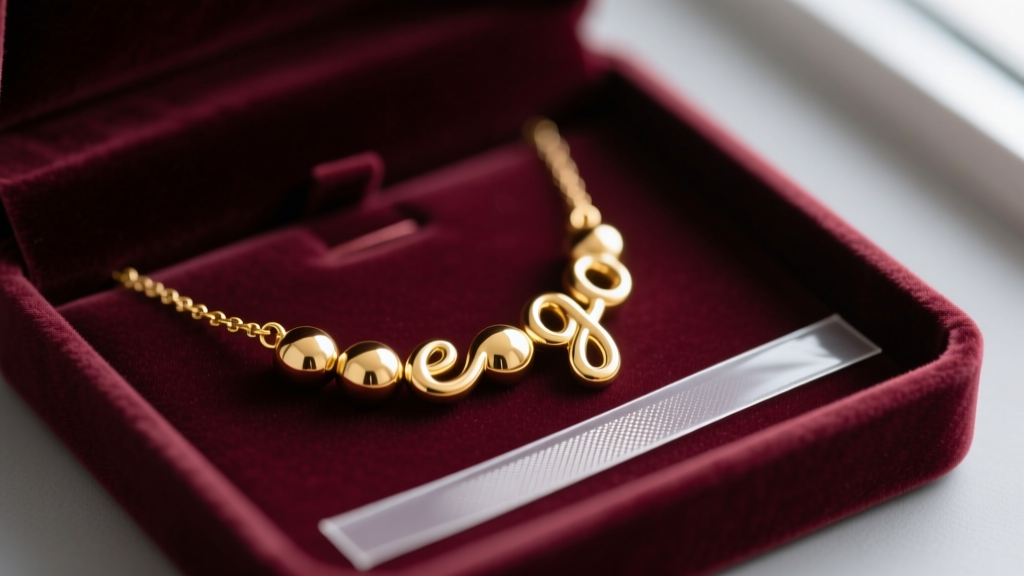
Never hang a bubble letter necklace on a standard jewelry tree. The swinging motion can cause the pendant to bang against other pieces, causing dents. Always store the necklace completely flat in a velvet-lined drawer or a dedicated polybag. Fasten the clasp to prevent the chain from weaving through the loops of the monogram letters.
Anti-Tarnish Technology
If your bubble letter necklace is crafted from sterling silver or features a high-copper rose gold alloy, oxidation is inevitable. Place a 3M anti-tarnish strip inside the storage bag. These strips absorb airborne sulfur compounds before they can react with the silver or copper in your jewelry, keeping the deep crevices of the bubble letters bright and free of dark tarnish.
When to Seek Professional Jeweler Intervention
While home maintenance is excellent for surface dirt, certain issues require a professional bench jeweler. If your hollow bubble letter pendant becomes dented, do not attempt to pop it out yourself. A professional can sometimes carefully drill a micro-hole, use a specialized resin or air-pressure tool to push the metal back into shape, and seamlessly laser-weld the hole shut. For solid cast pendants, a jeweler can use a motorized buffing wheel with a rouge compound to remove years of micro-scratches and restore the mirror-like finish that makes the bubble letter aesthetic so iconic.
Expert Tip: Inspect the bail (the loop holding the pendant) every six months. The friction of the chain rubbing against the inside of the bail slowly saws through the metal. If you see a deep groove forming, take it to a jeweler to have a new bail soldered on before you lose your cherished monogram forever.


