Rose Quartz Necklace Sterling Silver Care and Cleaning Guide
Learn how to safely clean and maintain your rose quartz necklace sterling silver settings. Expert tips to prevent tarnish and protect the stone.

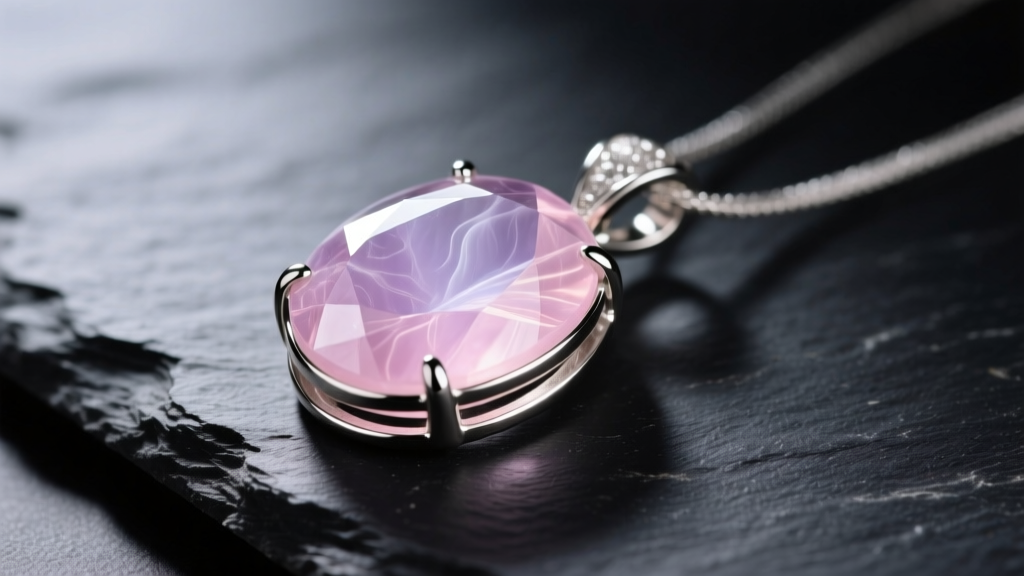
When buying a rose quartz necklace sterling silver is the most common precious metal used for the setting, creating a beautiful contrast between the soft pink silicate and the bright white metal. However, this specific material pairing presents a unique maintenance challenge. You are dealing with a gemstone that has a Mohs hardness of 7 and potential internal inclusions, married to an alloy (92.5% silver, 7.5% copper) that is highly reactive to environmental sulfur. Standard commercial jewelry cleaners that work wonders on plain metal chains can permanently cloud your gemstone or degrade its polish. This comprehensive guide provides a scientifically grounded, step-by-step framework for cleaning, maintaining, and storing your jewelry to ensure it remains pristine for decades.
Understanding Your Materials: The Vulnerability Matrix
Effective care begins with material science. According to the Gemological Institute of America (GIA), rose quartz derives its color from trace amounts of titanium, iron, or manganese, as well as microscopic fibrous inclusions like dumortierite. These inclusions, while responsible for the stone's desirable translucency and occasional asterism (the "star" effect), also create structural weak points. Meanwhile, the copper in sterling silver is the culprit behind tarnish, reacting with hydrogen sulfide in the air to form silver sulfide (Ag2S).
| Property | Rose Quartz (SiO2) | Sterling Silver (.925) |
|---|---|---|
| Mohs Hardness | 7 (Scratch resistant, but can be abraded by dust) | 2.5 - 3 (Highly prone to micro-scratches) |
| Cleavage / Fracture | None / Conchoidal (Prone to chipping on edges) | N/A (Malleable, prongs can bend or lift) |
| Chemical Sensitivity | Hydrofluoric acid, harsh alkalis, prolonged UV | Sulfur, chlorine, ozone, acidic cosmetics |
| Thermal Shock Risk | Moderate (Internal inclusions can expand and crack) | Low (Highly conductive, but safe from heat) |
The 5-Step Safe Cleaning Protocol
To safely remove sebum, dead skin cells, and cosmetic residue without triggering a chemical reaction or physical damage, follow this precise methodology. This framework is recommended by experts at Jewelers of America for mixed-material fine jewelry.
Step 1: The Distilled Water Bath
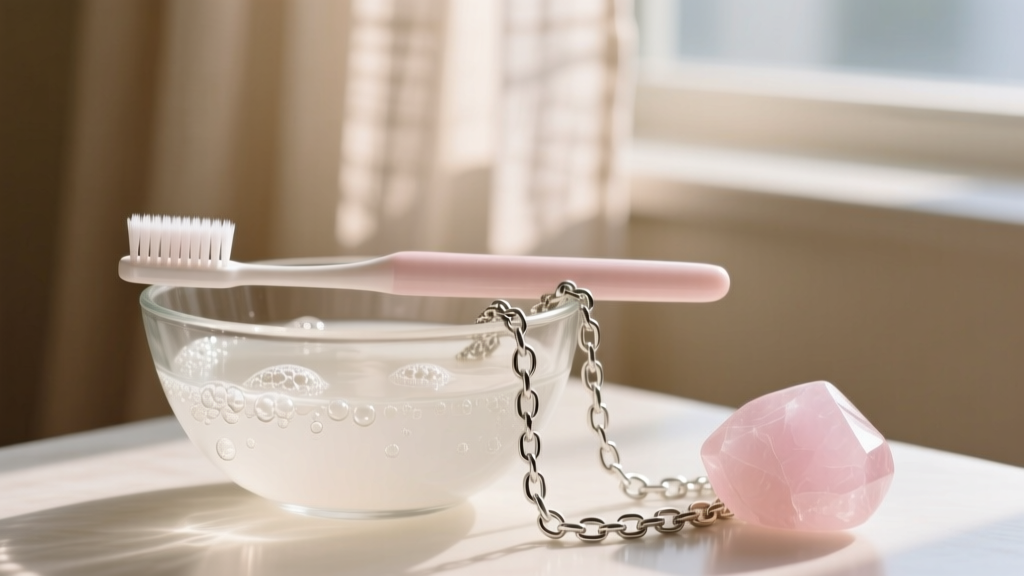
Never use tap water. Tap water contains dissolved minerals (calcium, magnesium) and chlorine. When the water evaporates, these minerals leave microscopic hard-water spots on the quartz, dulling its luster over time. Fill a glass bowl with lukewarm distilled water. Add exactly two drops of a pH-neutral, phosphate-free dish soap (such as original blue Dawn). Avoid soaps with added moisturizers or citrus degreasers, which can leave a filmy residue.
Step 2: Targeted Agitation
Submerge the necklace for no more than 3 to 5 minutes. Prolonged soaking can weaken the adhesive in glued bezel settings. Take a brand-new, extra-soft baby toothbrush and gently agitate the back of the stone (the pavilion) and the intricate chain links. Do not scrub the face of the rose quartz aggressively; let the surfactants in the soap lift the oils. Pay special attention to the bail and the jump rings, where sweat and dead skin accumulate and accelerate silver tarnish.
Step 3: The Rinse and Inspect
Rinse the necklace under a gentle stream of lukewarm distilled water. While rinsing, inspect the sterling silver prongs or bezel. Because silver is soft, everyday wear can cause prongs to lift. If you feel any snagging on a microfiber cloth, the setting requires professional tightening before further wear.
Step 4: Moisture Extraction
Pat the piece dry with a lint-free, unbleached microfiber cloth. Do not use paper towels or tissues; they are made from wood pulp and will leave microscopic scratches on the highly polished silver and can dull the quartz over time. Use a hair dryer on the "cool" setting to blow water out of the tiny crevices in the chain links.
Step 5: Mechanical Polishing
For any remaining light tarnish on the silver, use a treated jeweler's cloth (like a Sunshine cloth). Fold the cloth and use the edge to gently run along the silver chain and bezel. Keep the treated fabric away from the rose quartz itself, as the mild polishing compounds embedded in the cloth can build up in the stone's microscopic surface pores.
Critical Failure Modes: What to Avoid at All Costs
Many well-intentioned owners destroy their jewelry by applying generic cleaning hacks. Avoid these three common mistakes:
- Ultrasonic Cleaners: These machines use high-frequency sound waves to create cavitation (microscopic vacuum bubbles that collapse). While great for diamonds, the shockwaves will shatter rose quartz if it contains internal rutile needles or fluid inclusions.
- Commercial Silver Dip: Liquid silver dips rely on thiourea and mild acids to strip tarnish instantly. They leave a micro-porous surface on the silver that actually accelerates future tarnishing. Worse, if the liquid seeps behind the quartz, it can chemically etch the polish of the stone.
- The Boiling Aluminum Foil Hack: While the electrochemical reaction between aluminum, baking soda, and hot water safely reduces silver sulfide back to pure silver, the high heat poses a severe thermal shock risk to the quartz and will melt the epoxy used in many modern pendant settings.
Preventative Maintenance and Storage
Proper storage is 90% of the battle against tarnish and gemstone degradation. According to The Silver Institute, controlling the micro-environment around your silver is the most effective way to prevent the formation of silver sulfide.
UV Protection
Rose quartz is notoriously sensitive to prolonged ultraviolet exposure. Leaving your necklace on a sunny windowsill or wearing it daily in intense, direct sunlight over several years will cause the pink hue to fade to a chalky, translucent gray. Always store the piece in a closed, opaque drawer or jewelry box when not in use.
Atmospheric Control
Store your necklace in an airtight polyethylene ziplock bag alongside a 3M anti-tarnish tab or a piece of Pacific Silvercloth. These materials actively absorb and neutralize airborne sulfur compounds before they can reach the copper alloy in your sterling silver. Never store your necklace in a humid bathroom; high humidity acts as a catalyst for the tarnishing process. Include a small silica gel packet in the storage bag to maintain a dry micro-climate.
Troubleshooting: Cloudy Stones and Stubborn Tarnish
Expert Insight: If your rose quartz appears cloudy even after a thorough wash, the issue is likely not dirt. Years of exposure to acidic skin pH, lotions, and improper chemical cleaners can micro-etch the surface of the quartz. This requires a professional lapidary to perform a light re-polish using cerium oxide on a felt wheel.
If you encounter heavy, blackened tarnish in the recessed areas of an ornate sterling silver pendant setting that a polishing cloth cannot reach, use a specialized silver polishing paste applied with a wooden toothpick. The wood is softer than silver and will not scratch the metal, allowing you to precisely target the crevices without smearing the abrasive paste onto the delicate rose quartz cabochon. Wipe away all residue with a damp microfiber swab immediately after.
Conclusion
Maintaining a rose quartz necklace sterling silver collectors and jewelry lovers adore requires a departure from generic cleaning habits. By respecting the distinct chemical and physical properties of both the silicate gemstone and the copper-alloyed metal, you can preserve the structural integrity and visual brilliance of the piece. Stick to distilled water, pH-neutral surfactants, and mechanical polishing, and your necklace will remain a vibrant, tarnish-free staple in your collection for a lifetime.


