Metallurgy & Design: Choosing an Engravable Necklace for Her
Discover the technical details of selecting an engravable necklace for her, from metal hardness and laser engraving to chain gauge durability.

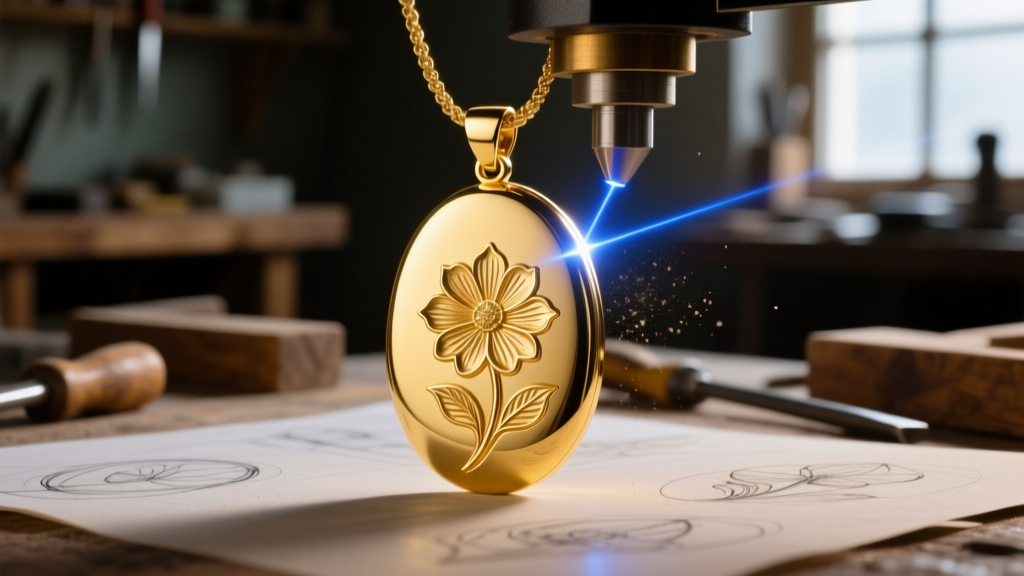
When selecting an engravable necklace for her, most buyers focus solely on the emotional weight of the message or the aesthetic of the pendant. However, as jewelry professionals and metallurgical enthusiasts, we know that the longevity, legibility, and structural integrity of that personalized piece depend entirely on material science, precision tooling, and chain engineering. A beautifully scripted dedication means little if the pendant warps under pressure, the engraving fades from improper depth, or the chain snaps at a weak solder joint. This expert deep dive explores the technical parameters you must evaluate to choose a high-quality, enduring engravable necklace.
The Metallurgy of Engravable Pendants: Hardness and Grain Structure
The foundation of any superior engravable necklace for her lies in the Vickers Hardness (HV) of the chosen alloy. The hardness dictates how the metal will respond to both rotary cutting tools and thermal laser ablation. According to the Gemological Institute of America (GIA), the alloying metals used in karat gold dramatically alter its physical properties.
- 925 Sterling Silver: In its annealed state, sterling silver sits at roughly 65 HV, making it exceptionally soft. While easy to engrave, it is prone to 'burring' (metal displacement) if a rotary tool is used without proper lubrication. Work-hardened sterling silver jumps to 120+ HV, providing a crisper engraving surface but requiring more torque from CNC machines.
- 14k Yellow Gold: Typically alloyed with copper and silver, 14k yellow gold averages 130-140 HV. Its uniform grain structure makes it the gold standard for deep, clean rotary engraving without micro-fracturing.
- Platinum 950: Often alloyed with ruthenium or iridium, platinum sits around 130 HV but possesses a much higher density. Its 'gummy' nature means it tends to gall or tear under dull engraving bits, necessitating diamond-coated or specialized carbide burrs.
Understanding these hardness values prevents the common consumer mistake of selecting ultra-soft, high-purity 22k or 24k gold for heavily worn, engraved pendants, as the metal will quickly scratch and deform, distorting the personalized message over time.
Laser vs. Rotary Engraving: Technical Limitations and Depths
The method of inscription fundamentally alters the tactile feel and visual contrast of the jewelry. Modern jewelers primarily rely on two distinct technologies: Fiber Lasers and CNC Diamond Drag.
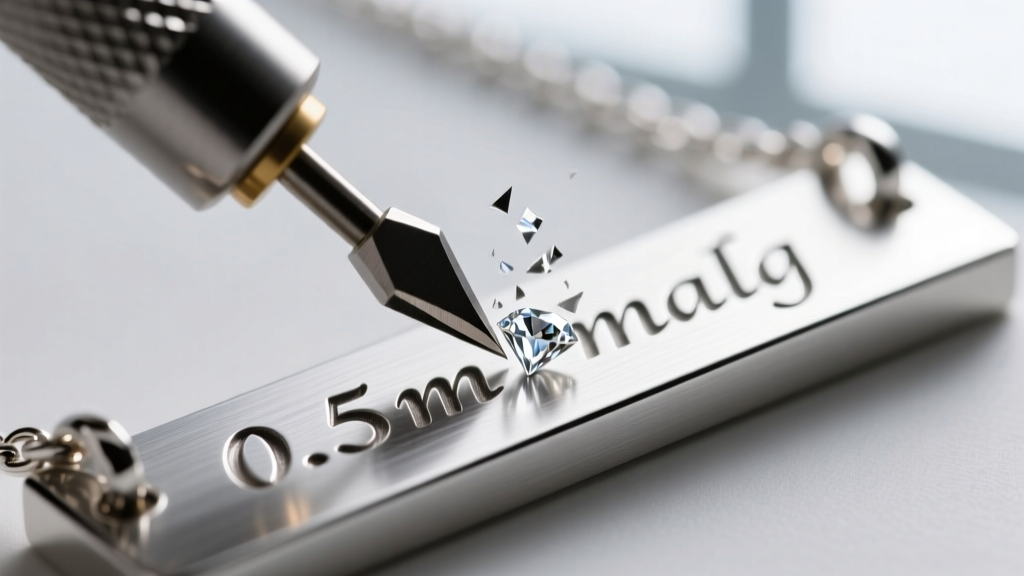
Fiber Laser Engraving (1064 nm Wavelength)
Fiber lasers operate by pulsing concentrated light to either anneal (darken) or ablate (vaporize) the metal surface. For gold and silver, a MOPA (Master Oscillator Power Amplifier) fiber laser is preferred because it allows the operator to adjust pulse width and frequency. This creates a deep, high-contrast black mark via controlled oxidation without removing significant material. The typical depth of a laser engraving is shallow—between 0.01mm and 0.05mm. While visually striking, this shallow depth means that aggressive polishing in the future can easily erase the inscription.
CNC Diamond Drag and Rotary Milling
Diamond drag engraving uses a non-rotating, industrial-grade diamond tip dragged across the metal surface under precise spring tension. This physically displaces the metal, creating a V-shaped groove. The depth is significantly greater, usually between 0.1mm and 0.3mm. According to technical manufacturing guidelines from industry suppliers like Rio Grande, diamond drag is vastly superior for soft metals like high-karat gold and fine silver, as it avoids the thermal stress and micro-welding associated with lasers. The physical grooves also catch ambient light, offering a brilliant, sparkling contrast that requires no chemical darkening agents.
The White Gold Rhodium Interference: A Hidden Pitfall
One of the most frequent technical failures in personalized jewelry occurs when engraving 14k or 18k white gold. White gold is naturally pale yellow; it achieves its bright, silvery finish through a microscopic plating of rhodium (usually 0.1 to 0.5 microns thick).
Expert Warning: If a jeweler uses a fiber laser to engrave a finished, rhodium-plated white gold pendant, the intense thermal energy will instantly vaporize the rhodium layer. The laser then marks the underlying yellowish white gold alloy, resulting in a muddy, low-contrast, and often brassy-looking inscription that cannot be polished out without stripping the entire pendant.
To execute a flawless engraving on white gold, the artisan must perform the rotary or laser inscription before the final rhodium plating bath, or meticulously mask the piece and re-plate it post-engraving. Always verify your jeweler's plating protocol when ordering an engravable necklace for her in white gold.
Chain Gauge and Clasp Engineering: Preventing Structural Failure
A pendant is only as secure as the chain supporting it. When pairing a custom-engraved solid metal pendant (which typically weighs between 3 and 8 grams) with a chain, you must evaluate the chain's gauge (thickness), link geometry, and tensile yield. Delicate chains will stretch, kink, or snap under the pendulum effect of a swinging pendant.
| Chain Style | Optimal Gauge | Structural Integrity | Max Pendant Weight | Failure Mode |
|---|---|---|---|---|
| Cable Chain | 0.8mm - 1.0mm | Low | 2.5 grams | Link stretching at the weld points |
| Box Chain | 1.0mm - 1.2mm | Medium | 4.0 grams | Severe kinking and rigid link lock-up |
| Curb Chain | 1.2mm - 1.5mm | High | 8.0 grams | Clasp failure (chain rarely breaks) |
| Rope Chain | 1.5mm - 2.0mm | Very High | 12.0+ grams | Internal wire fraying over decades |
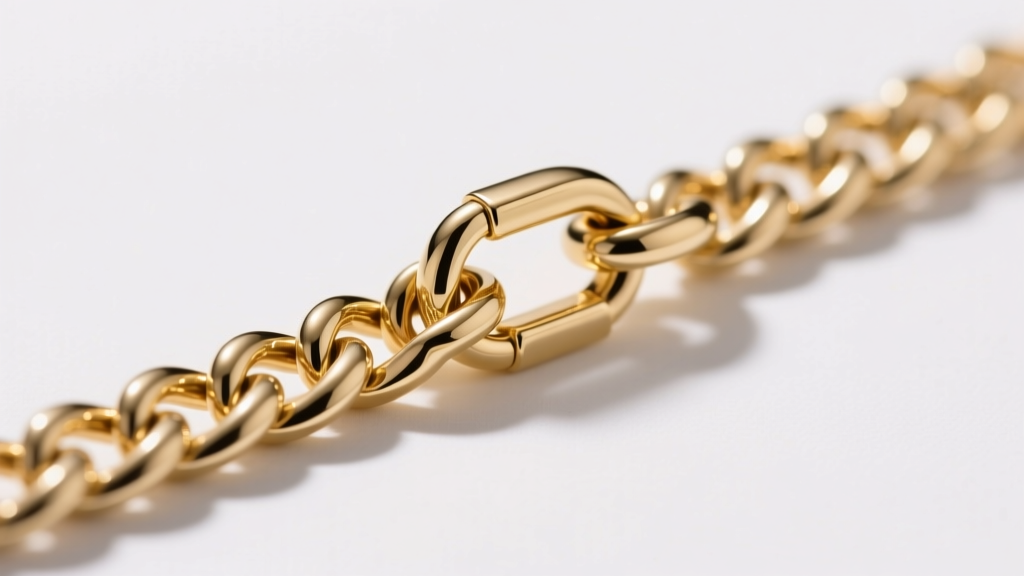
For an everyday engravable necklace, a solid 1.2mm Curb chain is the optimal engineering choice. The interlocking, flattened links lay flush against the skin, preventing hair snagging and distributing the pendant's kinetic energy evenly. Furthermore, always insist on a lobster clasp with a heavy-duty internal spring mechanism. Standard spring-ring clasps possess a single, fragile solder joint opposite the gate that routinely fails under the dynamic load of a swinging pendant.
Typographic Constraints: Font Scaling and Surface Area Ratios
The physical dimensions of the pendant dictate strict typographic limitations. A common error is attempting to engrave a 40-character quote onto a 12mm x 12mm surface area. To maintain legibility and prevent the metal from tearing between closely spaced letters, specific spatial rules must be followed.
- Minimum Character Height: For diamond drag engraving, the absolute minimum character height is 0.8mm. Anything smaller risks the carbide tip slipping or the grooves merging into an illegible scratch.
- Kerning and Serifs: Sans-serif fonts (like Helvetica or Futura) are vastly superior for small-scale metal engraving. Serif fonts require microscopic thin-to-thick line transitions that rotary tools cannot physically replicate without breaking the tip or leaving jagged edges.
- The 60% Rule: Engraving should never occupy more than 60% of the pendant's total surface area. Leaving a 20% margin around the perimeter ensures the structural rigidity of the metal blank is maintained and prevents the edges from warping due to the physical stress of the engraving process.
Conclusion: Marrying Sentiment with Science
Selecting the perfect engravable necklace for her is an exercise in balancing emotional resonance with material science. By prioritizing work-hardened alloys, understanding the distinct advantages of diamond drag versus fiber laser inscription, avoiding rhodium-plating pitfalls, and engineering the chain-to-pendant weight ratio, you ensure the piece will survive decades of daily wear. True luxury in personalized jewelry is not just found in the words you choose to engrave, but in the uncompromising technical execution that preserves those words for a lifetime.