How to Clean and Maintain a Silver Necklace Snake Chain
Learn how to clean, untangle, and repair your silver necklace snake chain. Step-by-step care guide to prevent kinks, tarnish, and hair snags.

The Anatomy of a Silver Snake Chain
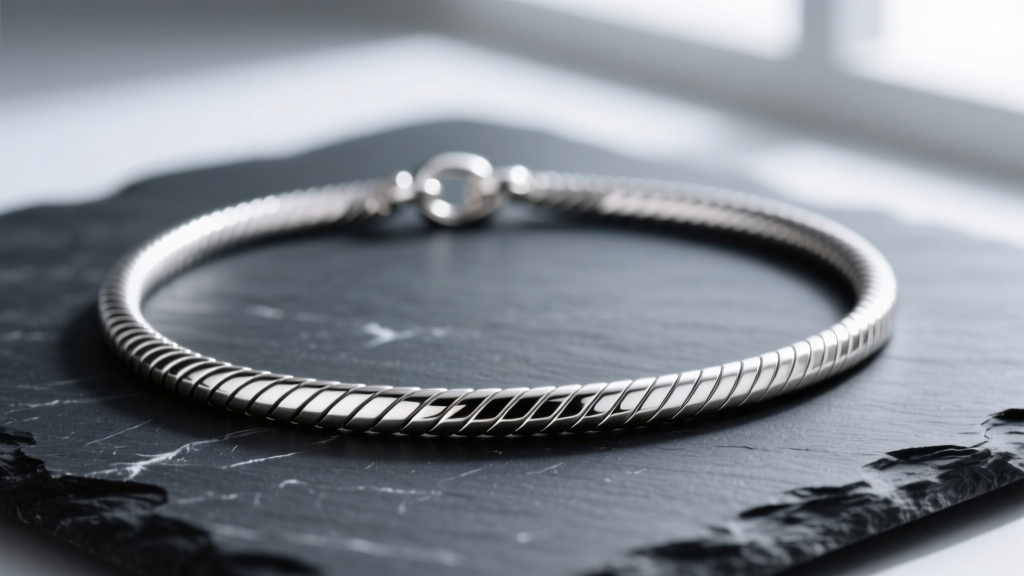
When you invest in a silver necklace snake chain, you are choosing one of the most elegant, fluid chain styles available in fine jewelry. Unlike standard link chains, a snake chain is constructed from slightly wavy, tightly interlocked rings that are compressed into a smooth, tubular surface. This manufacturing process gives the chain its signature liquid-metal drape, but it also introduces specific structural vulnerabilities. Because the links are so densely packed, the chain lacks the flexibility of a cable or box chain, making it highly susceptible to permanent kinking if bent sharply.
Most high-quality snake chains are crafted from 925 sterling silver. According to The London Assay Office, sterling silver consists of 92.5% pure silver and 7.5% alloy metals, usually copper. While pure silver is highly resistant to tarnish, the copper alloy is reactive. When exposed to hydrogen sulfide in the air, moisture, and the natural acidity of human skin, the copper oxidizes, creating the dark silver sulfide layer we recognize as tarnish. Understanding this chemical reality is the first step in mastering the long-term care of your jewelry.
Step-by-Step Cleaning Guide
Cleaning a snake chain requires a gentle touch. The tight crevices between the interlocked rings can trap oils, lotions, and dead skin cells, but aggressive scrubbing can pull the links apart or scratch the high-polish finish. Furthermore, you must never place a snake chain in an ultrasonic jewelry cleaner. The high-frequency vibrations can easily fracture the delicate, compressed bonds of the tubular links.
The Safe Washing Method
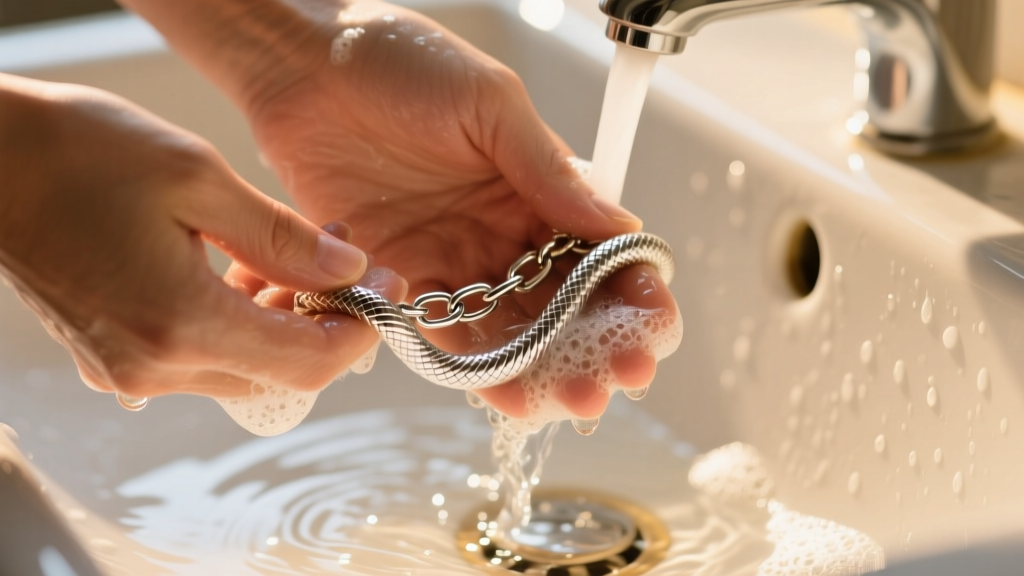
- Prepare the Solution: Fill a glass bowl with lukewarm water (never hot, as extreme heat can weaken the metal's temper) and add three drops of mild, phosphate-free dish soap. Avoid soaps with heavy moisturizers or citrus extracts, which can leave a filmy residue or react with the copper alloy.
- Soak Briefly: Submerge your silver necklace snake chain for exactly 3 to 5 minutes. This loosens trapped sebum and cosmetic buildup without risking prolonged water exposure.
- Gently Agitate: Swish the chain gently through the water with your fingers. Do not use a toothbrush; even soft bristles can catch the microscopic edges of the links and cause fraying.
- Rinse and Dry: Rinse thoroughly under cool, distilled water to prevent hard water spots. Lay the chain perfectly straight on a clean, lint-free microfiber cloth and pat it dry. Allow it to air-dry completely before storing.
Pro-Tip: For heavy tarnish, bypass commercial silver dips, which contain harsh thiourea chemicals that strip the metal's natural luster over time. Instead, use a dedicated silver polishing cloth impregnated with microscopic jeweler's rouge to gently buff the surface in a linear motion, following the direction of the chain.
How to Fix a Kinked Silver Necklace Snake Chain
A kink in a snake chain is a jewelry emergency. Because the chain is essentially a flexible tube, a sharp bend crushes the interlocking rings, creating a weak point that will eventually snap if not addressed. If your chain develops a kink, do not pull it or try to bend it back with your fingers, as this will only worsen the structural damage.
The Glossy Paper and Rolling Pin Technique
To repair a minor kink at home, you will need a piece of heavy, glossy paper (like a magazine cover or photo paper) and a smooth, cylindrical object like a glass rolling pin or a smooth wooden dowel.
- Lay the glossy paper on a hard, flat surface. The slick coating prevents the silver from snagging or scratching.
- Place the kinked section of the chain flat on the paper.
- Using the rolling pin, apply very gentle, even pressure directly over the kink. Roll back and forth over the damaged area, slowly increasing the pressure with each pass.
- The goal is to gently massage the crushed rings back into their tubular alignment. Stop immediately if you hear any clicking or snapping sounds.
If the kink is severe or the metal has creased, home repair is no longer viable. You must take the piece to a professional bench jeweler who can use a specialized drawplate to carefully pull and reshape the chain without breaking the links.
Chain Comparison: Snake vs. Herringbone vs. Box
To understand the specific maintenance requirements of a snake chain, it is helpful to compare it to other popular flat and semi-flat chain styles. Each structure dictates how the metal reacts to daily wear, tension, and environmental exposure.
| Chain Type | Kink Resistance | Hair Snag Risk | Pendant Weight Limit | Cleaning Difficulty |
|---|---|---|---|---|
| Snake Chain | Low (Kinks easily) | High (Catches fine hair) | Low (Max 10-15g) | Moderate (Traps oils in seams) |
| Herringbone | Very Low (Bends permanently) | Moderate | Very Low (Max 5-8g) | Easy (Flat surface wipes clean) |
| Box Chain | High (Highly durable) | Low (Smooth square edges) | High (Can hold 30g+) | High (Deep crevices trap dirt) |
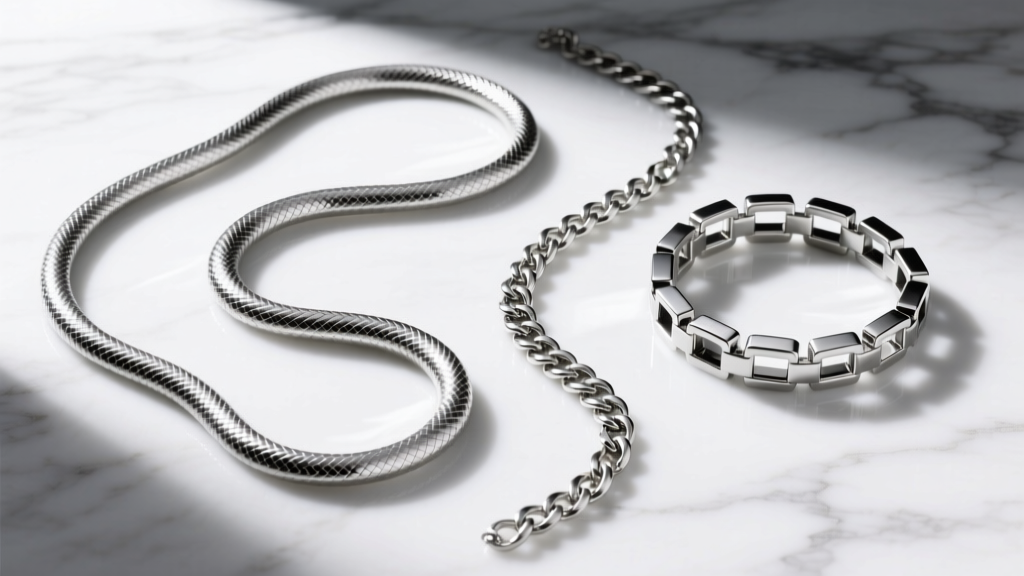
As noted by the Gemological Institute of America (GIA), understanding the structural limits of your jewelry is paramount to its longevity. While a box chain can easily support a heavy gemstone pendant, a snake chain is primarily designed to be worn alone or with very lightweight, delicate charms.
Styling and Pendant Weight Limits
Styling a silver necklace snake chain requires careful consideration of weight distribution and bail sizes. Because the chain's flexibility relies on the precise alignment of its compressed rings, hanging a heavy pendant will cause the chain to stretch, warp, and eventually fracture under the collarbone.
Gauge Sizes and Weight Tolerances
- 1.2mm - 1.5mm (Delicate): Best worn alone as a minimalist choker or princess-length necklace. Maximum pendant weight: 5 to 8 grams. Requires a bail with an inner diameter of at least 3mm to prevent sharp bending where the pendant hangs.
- 1.8mm - 2.5mm (Standard): Offers a slightly more substantial look while maintaining the liquid drape. Maximum pendant weight: 10 to 15 grams. Ideal for lightweight gemstone drops or small metallic charms.
- 3.0mm+ (Statement): Rare for snake chains due to the stiffness and weight of the metal at this thickness. Can support up to 20 grams, but loses much of the signature 'fluid' aesthetic.
Preventing Hair Snags
The microscopic seams between the interlocked rings of a snake chain act like tiny teeth, which can easily catch and pull fine neck hairs. To mitigate this, always put your necklace on after you have finished styling your hair and applying hairspray. When taking the necklace off, unfasten the clasp and pull it straight forward over your head or off your neck, rather than dragging it upward through your hair. Storing the chain flat in an anti-tarnish pouch, fully fastened to prevent the clasp from scratching the links, will ensure your silver necklace snake chain remains a flawless, fluid staple in your jewelry collection for years to come.