Expert Care & Cleaning Guide for a Gold Jewish Star Necklace
Preserve the shine and meaning of your gold Jewish Star necklace. Learn expert cleaning methods, storage tips, and maintenance for 14k and 18k gold.

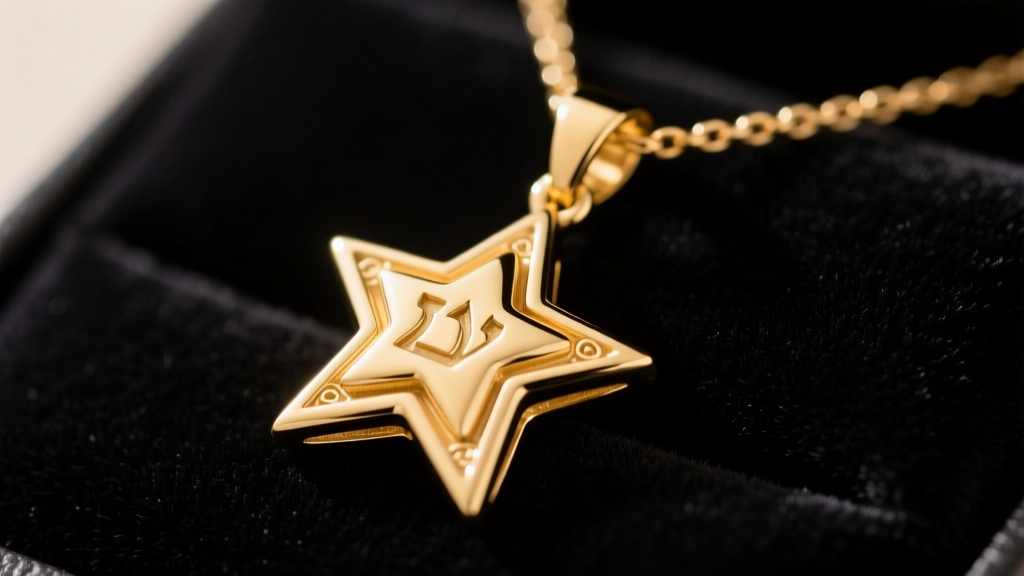
The Symbolism and Metallurgy of Your Star of David Pendant
A gold Jewish star necklace is more than just a beautiful piece of jewelry; it is a profound emblem of faith, heritage, and identity. The Magen David (Star of David) features a distinct geometric design that carries deep historical significance. However, from a metallurgical and gemological perspective, this specific shape also presents unique maintenance challenges. To properly care for your necklace, you must first understand the gold alloy you are working with.
Pure 24-karat gold is exceptionally soft and malleable. While it resists tarnish, it is entirely unsuitable for a pendant with six sharp, protruding points, as they would easily bend or warp against the skin or clothing. Therefore, jewelers alloy gold with metals like copper, silver, zinc, and nickel to increase durability. According to the Gemological Institute of America (GIA), the most common choices for fine religious pendants are 14k and 18k gold:
- 14k Gold (58.5% pure gold): The gold standard for daily-wear religious jewelry. The higher alloy content (41.5%) provides excellent structural integrity, ensuring the sharp points of the star remain crisp and unbent over decades of wear.
- 18k Gold (75% pure gold): Offers a richer, deeper yellow hue and is highly hypoallergenic, but is slightly softer. It requires a bit more mindfulness regarding physical impacts.
- 10k Gold (41.7% pure gold): Highly durable but contains more base metals, making it slightly more prone to tarnishing and oxidation over time, requiring more frequent polishing.
The Geometry of Grime: Why the Magen David Traps Oils
Unlike a simple circular or teardrop pendant, the Star of David is composed of two interlocking equilateral triangles. This overlapping geometry creates a central hexagon and six inner V-shaped crevices. These intersecting lines act as microscopic traps for sebum (skin oils), dead skin cells, cosmetic residues, and environmental dust. When left uncleaned, this buildup forms a dull, grayish film that blocks light from reflecting off the gold's surface, making even the most polished 18k gold look flat and lifeless.
Daily Wear: Environmental Hazards to Avoid
Preventative care is the cornerstone of jewelry maintenance. While gold itself is a noble metal and does not corrode, the alloy metals mixed into your 14k or 18k necklace are highly reactive to specific chemicals. To protect your gold Jewish star necklace, remove it before engaging in the following activities:
- Swimming and Hot Tubs: Chlorine is the ultimate enemy of gold alloys. Prolonged exposure to chlorinated water can cause 'stress corrosion cracking,' a phenomenon where the alloy metals break down, leading to microscopic fractures, especially at the solder points where the bail meets the star.
- Applying Cosmetics and Skincare: Lotions, sunscreens, and makeup contain emollients and chemical filters that leave a stubborn, waxy film on gold. Always put your necklace on after your skincare routine has fully absorbed.
- Cleaning with Household Chemicals: Bleach and ammonia-based cleaners will instantly discolor the copper and silver alloys in your gold, leaving permanent whitish or dark spots on the metal's surface.
The Step-by-Step Home Cleaning Protocol
For routine maintenance, you do not need expensive commercial jewelry dips, which can be overly harsh. The Jewelers of America recommends a gentle, pH-neutral approach that effectively lifts oils without damaging the metal or any potential gemstone accents.
What You Will Need:
- A small glass or ceramic bowl (avoid metal bowls that can scratch the gold)
- Lukewarm distilled water (tap water contains minerals that can leave hard water spots)
- 3-4 drops of mild, phosphate-free dish soap (such as original Dawn)
- An ultra-soft baby toothbrush (dedicated solely to jewelry cleaning)
- A clean, lint-free microfiber cloth
The Cleaning Process:
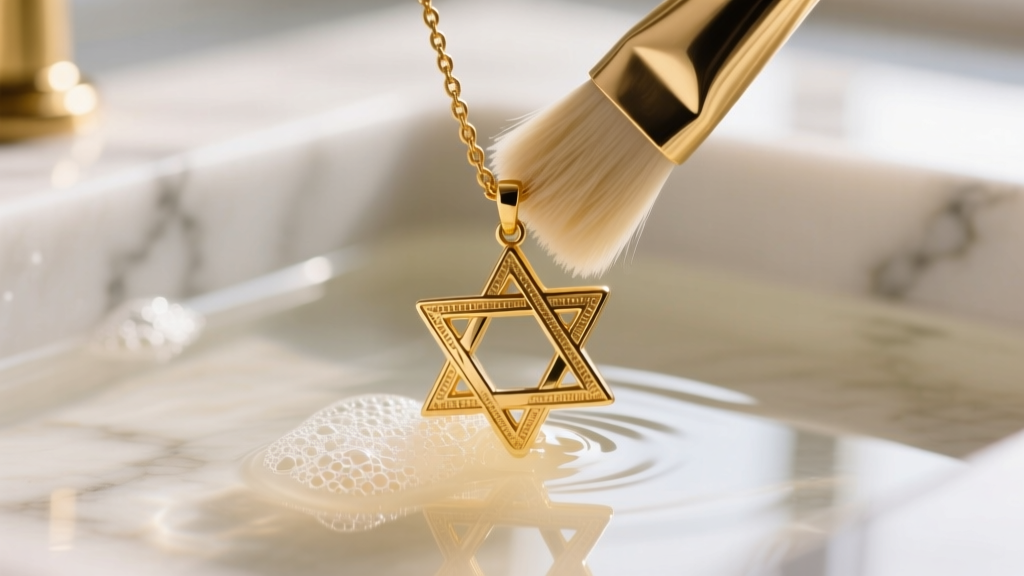
- Prepare the Bath: Mix the lukewarm distilled water and dish soap in the bowl until sudsy. Ensure the water is not hot, as extreme temperature changes can stress the metal.
- Soak: Submerge your gold Jewish star necklace completely. Let it soak for 15 to 20 minutes. This crucial step softens the hardened sebum and lotion trapped in the V-shaped crevices of the interlocking triangles.
- Agitate Gently: Using the baby toothbrush, gently brush the pendant. Pay special attention to the overlapping lines of the star and the bail (the loop that connects the pendant to the chain). Brush in the direction of the metal's grain if it has a brushed finish, or in small circles for high-polish finishes.
- Rinse Thoroughly: Rinse the necklace under a gentle stream of lukewarm distilled water to wash away the suspended dirt and soap residue.
- Dry and Polish: Pat the necklace dry with the microfiber cloth. Avoid paper towels or tissues, as their wood-pulp fibers can inflict microscopic scratches on high-polish gold surfaces.
Chain Considerations: Cleaning the Links
A Star of David pendant is only half the equation; the chain it hangs from requires equal attention. Different chain styles interact with dirt and oils in unique ways:
- Box Chains: Highly popular for their modern, geometric look that complements the Magen David. However, the hollow, square links are notorious for trapping hand sanitizer and thick lotions. Use a soft cotton swab dipped in soapy water to clean the inside of each link.
- Rope Chains: The twisted links mimic the intertwined nature of the Star of David but create thousands of tiny crevices. A longer soak time (up to 30 minutes) is usually required to loosen grime from the twists.
- Cable Chains: The classic, simple oval links are the easiest to maintain and the least likely to trap debris, making them an excellent choice for those who prefer low-maintenance jewelry.
Advanced Maintenance: Comparing Cleaning Methods
While the home soap-and-water method is ideal for weekly upkeep, deeper cleaning methods are sometimes necessary. Use the following chart to determine the safest advanced cleaning method for your specific necklace.
| Cleaning Method | Best Used For | Risk Level | Recommended Frequency |
|---|---|---|---|
| Mild Soap & Water | Routine removal of skin oils, dust, and cosmetics. | Very Low | Weekly / Bi-Weekly |
| Ultrasonic Cleaner | Solid gold pieces with heavy, hardened grime in crevices. | Medium | Every 3-6 Months |
| Steam Cleaning | Achieving a professional, high-luster shine. | High (if stones/enamel present) | Annually (Pro only) |
| Commercial Gold Dip | Severe tarnish on lower-karat gold (10k). | High (can strip finishes) | Rarely / As last resort |
Warning: If your gold Jewish star necklace features black enamel inlay, diamond accents, or delicate milgrain detailing, never use an ultrasonic cleaner or steam cleaner. The high-frequency vibrations can shatter diamonds with internal inclusions, and the heat can melt or crack the enamel.
Proper Storage to Prevent Tarnish and Scratching
How you store your necklace when it is not being worn is just as critical as how you clean it. Gold alloys, particularly those with higher copper or silver content (like 10k and 14k), can tarnish when exposed to sulfur and high humidity in the air.
"The golden rule of jewelry storage is isolation. Never toss your Star of David necklace into a communal jewelry box where it can become tangled with harder gemstones like diamonds or sapphires, which will easily scratch the gold's surface."
To ensure your necklace remains pristine between wears, follow these storage protocols:
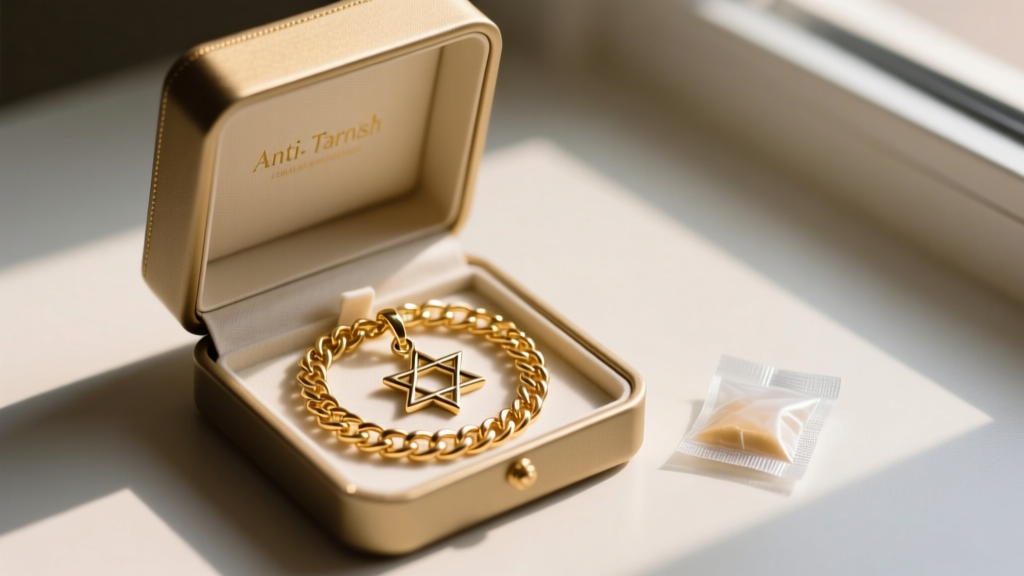
- Use Anti-Tarnish Pouches: Store the necklace in a treated anti-tarnish cloth bag. These fabrics are impregnated with microscopic silver or copper particles that absorb sulfur gases from the air before they can reach your jewelry.
- Control Humidity: If you live in a humid climate, place a small silica gel desiccant packet inside your jewelry box or drawer to absorb excess moisture.
- Prevent Tangles: Always fasten the clasp before storing. For added protection against knotting, thread the chain through a plastic drinking straw before clasping it. This keeps the chain rigid and prevents the links from folding in on themselves.
When to Seek Professional Jeweler Services
Even with meticulous home care, a gold Jewish star necklace requires professional attention over its lifetime. You should visit a certified bench jeweler at least once every two years for a comprehensive inspection. They will check the structural integrity of the bail (the loop holding the star), which experiences the most friction and wear from rubbing against the chain. If your pendant features a diamond set in the center of the star, the jeweler will use a loupe to inspect the prongs for thinning and tighten them before a stone is lost. Finally, a professional can perform a gentle mechanical polish to remove micro-scratches and restore the original mirror-like finish of your cherished symbol.


