Troubleshooting a Broken Multicolored Beaded Necklace
Learn how to troubleshoot, restring, and clean your multicolored beaded necklace. Expert fixes for broken wire, color bleeding, and clasp failure.

Diagnosing the Failure: Why Your Necklace Broke
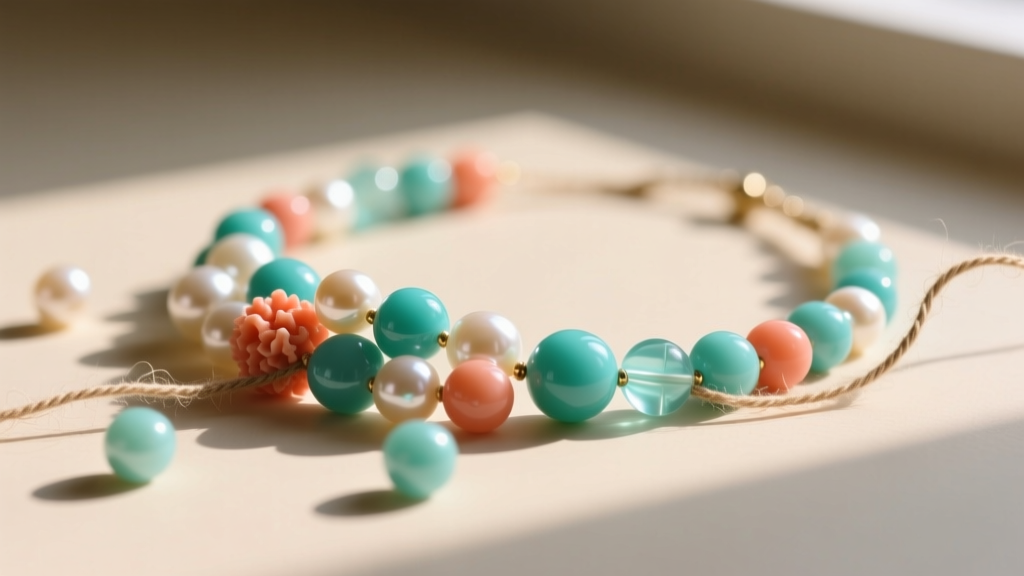
A multicolored beaded necklace is a masterpiece of mixed materials, but combining porous stones, heavy glass, and delicate pearls creates a structural nightmare if strung incorrectly. When a necklace snaps, it rarely happens by accident; it is almost always the result of material incompatibility or friction fatigue. The most common culprit is using a stringing material that cannot handle the varying friction coefficients of different bead types. For example, faceted crystals and rough-hewn turquoise possess sharp edges that act like microscopic saws against organic silk or basic nylon threads.
Before restringing, you must identify the failure point. If the stringing material frayed near the clasp, the issue is metal-on-thread friction. If it snapped in the middle of the beadwork, the thread was likely compromised by a sharp-edged bead or degraded by skin oils and UV exposure. Below is a diagnostic guide to help you select the correct replacement material based on your specific bead composition.
| Stringing Material | Tensile Strength | Best For | Primary Failure Mode |
|---|---|---|---|
| Silk Thread (Size F or G) | Low (12-16 lbs) | Pearls, lightweight amber | Stretches and rots from skin oils |
| Nylon (Power Pro) | Medium (20-30 lbs) | Seed beads, lightweight glass | Fraying against sharp bead edges |
| 49-Strand Stainless Wire | High (30-50 lbs) | Heavy stone, mixed glass, metal | Kinking and snapping at crimp points |
The Color Bleeding Crisis: Saving Dyed Stones
One of the most devastating issues unique to a multicolored beaded necklace is color migration. Many vibrant beads in mixed strands—such as turquoise, howlite, jade, and coral—are dyed to achieve uniform saturation. When exposed to humidity, sweat, or even certain commercial jewelry cleaners, these dyes can leach out and permanently stain adjacent lighter beads, particularly freshwater pearls or clear quartz.

To troubleshoot this before it ruins your piece, perform an acetone test. Dip a cotton swab in pure acetone (nail polish remover) and rub it gently against an inconspicuous area of the suspected dyed bead. If the swab picks up color, the stone is unstable. According to the Gemological Institute of America (GIA), porous and dyed gems require specialized care to prevent chemical reactions. To seal the beads and prevent future bleeding, apply a microcrystalline wax or a specialized gemstone sealer using a soft microfiber cloth. Allow it to cure for 24 hours before restringing, ensuring the sealer does not clog the bead holes.
Restringing Heavy Stone and Glass Mixes
If your multicolored design incorporates heavy lampwork glass or large 10mm+ semi-precious stones, standard thread will inevitably fail. You must transition to a 49-strand stainless steel beading wire. However, choosing the wrong gauge will lead to either a stiff, unnatural drape or a wire that snaps under the dynamic load of heavy beads shifting against one another.
Selecting the Correct Gauge and Hardware
- 0.015-inch gauge: Use only for beads with very small holes (like pearls or micro-faceted garnets) under 6mm in diameter.
- 0.018-inch gauge: The industry workhorse. Ideal for standard 4mm to 8mm mixed beads, offering a balance of flexibility and a 30-lb tensile strength.
- 0.024-inch gauge: Reserved for heavy, large-hole stone beads and chunky glass. It provides up to 50 lbs of tensile strength but will not drape well with small beads.
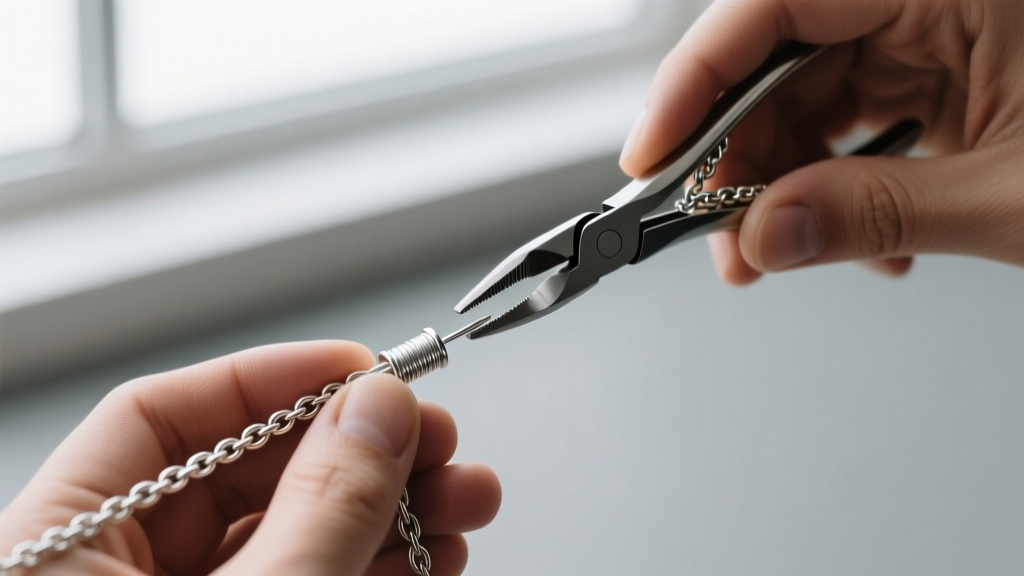
When securing the wire, avoid flattening crimp beads completely, which can create sharp metal edges that slice the wire. Instead, use 2mm sterling silver tube crimps and a crimping plier to fold them into a neat, rounded 'U' shape. For added security, slide a 3mm metal crimp cover over the folded tube and squeeze it shut with chain-nose pliers to mimic a seamless metal bead.
Fixing Clasp Slippage and Neckline Sagging
A frequent complaint with multicolored beaded necklaces is the 'creep effect,' where the heavy front cluster of beads pulls the clasp forward, forcing the wearer to constantly adjust it. This happens when the center of gravity is poorly distributed, and the friction between the beads and the skin is lower than the friction of the clasp against the neck.
To solve this, you must introduce a counterweight. String a heavy metal bead, a large sterling silver spacer, or a cluster of dense hematite beads within one inch of the clasp on the back of the neck. This shifts the center of gravity backward, anchoring the clasp in place. Additionally, upgrade your clasp hardware. A standard spring-ring clasp is too light and prone to accidental unhooking. Swap it for a 12mm or 15mm lobster clasp attached via a 5mm heavy-duty jump ring, ensuring the jump ring is soldered shut or twisted closed with two pairs of pliers to prevent the beading wire from slipping through the gap.
Cleaning Without Ruining the Color Gradient
Cleaning a multicolored beaded necklace is a high-risk task. The ultrasonic cleaners used for diamond and gold jewelry will shatter porous stones like opals, emeralds, and turquoise, and will strip the dye right out of enhanced howlite. Furthermore, submerging a necklace strung on silk or nylon in water will cause the thread to stretch and weaken, leading to premature sagging.
Adopt a dry-to-damp cleaning protocol to preserve the integrity of your mixed materials:
- Dust Removal: Use a soft, clean makeup brush (like a blush brush) to gently sweep dust and skin oils out of the crevices between tightly strung beads.
- Spot Cleaning: For glass or non-porous crystal beads, dampen a cotton swab with a mixture of distilled water and a single drop of pH-neutral Castile soap. Wipe the bead carefully, avoiding the stringing hole.
- Porous Stone Care: Wipe turquoise, coral, and pearls with a dry, untreated microfiber cloth immediately after wearing to remove acidic skin oils before they can etch the surface.
For more complex gemstone combinations, always consult supplier guidelines. As noted by Fire Mountain Gems, understanding the specific Mohs hardness and porosity of each bead in a multicolored strand is essential for long-term preservation. Store your necklace flat in a zip-top bag with an anti-tarnish strip to prevent metal spacer beads from oxidizing and transferring black marks onto your lighter stones.