The 24k Gold Necklace: A Buyer's Guide to Pure Gold
Discover what to look for when buying a 24k gold necklace. Learn about purity stamps, 3D hard gold, durable chain styles, and pricing in our expert guide.

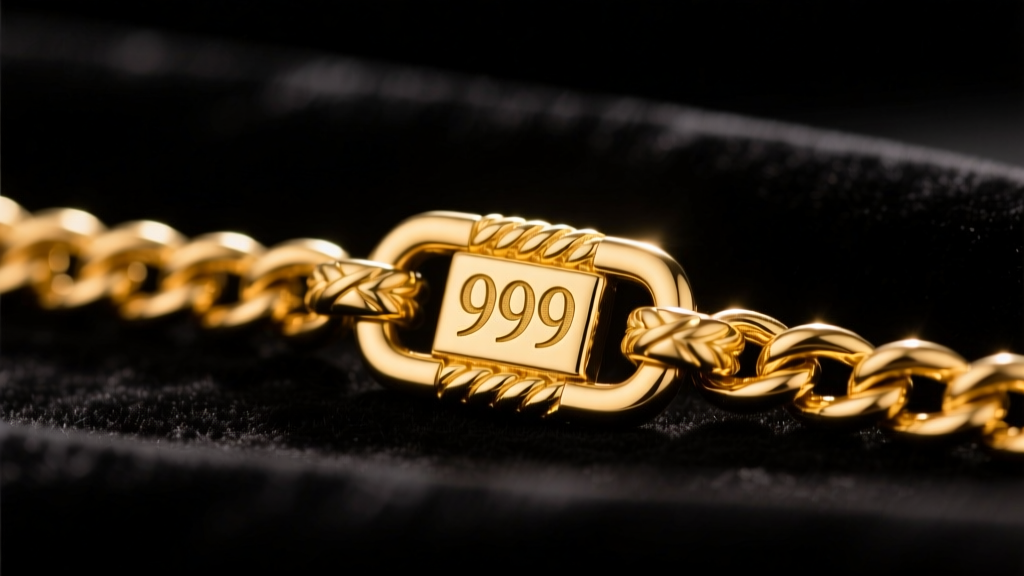
When you decide to invest in pure gold jewelry, you are stepping into a world where metallurgy meets high finance. A 24k gold necklace represents the absolute pinnacle of gold purity, offering a rich, unmistakable yellow luster that lower-karat alloys simply cannot replicate. However, purchasing pure gold requires a vastly different approach than buying standard 14k or 18k fashion jewelry. Because pure gold is inherently soft, a buyer must navigate specific structural vulnerabilities, understand advanced manufacturing techniques, and evaluate pricing premiums over the spot market.
Whether you are acquiring a piece for its hypoallergenic properties, its cultural significance, or its intrinsic value as a wearable asset, this comprehensive buying guide will equip you with the technical knowledge required to make a secure, informed purchase in today's market.
The Metallurgical Reality: Softness vs. Innovation
To understand what to look for in a pure gold piece, you must first understand its physical limitations. On the Vickers Hardness (HV) scale, pure 24k gold measures a mere 25 to 30 HV. By comparison, standard 14k gold sits around 135 to 150 HV, making it nearly five times harder. This extreme malleability means that a traditional solid 24k chain is highly susceptible to stretching, denting, and permanent deformation if subjected to tensile stress or sharp impacts.
Historically, this softness restricted pure gold to heavy, simple cast designs or delicate pieces meant only for occasional wear. However, modern jewelry engineering has introduced a game-changing solution: 3D Hard Gold. According to the Gemological Institute of America (GIA), advancements in electroforming allow manufacturers to create 24k gold structures that are up to four times harder (reaching 90-110 HV) without introducing any alloying metals. This process involves depositing pure gold onto a wax or resin mold, which is later melted or dissolved away. The result is a lightweight, hollow, yet incredibly durable 24k piece that resists denting and maintains intricate, three-dimensional shapes that would collapse in traditional cast pure gold.
Decoding Hallmarks: 999 vs. 9999 Purity
When evaluating authenticity, the hallmark is your primary defense against fraud. Pure gold is universally stamped with its millesimal fineness rather than a karat mark, though '24k' is sometimes used colloquially. You will typically encounter two grades of pure gold in the market:
- 999 (Three Nines Fine): This indicates 99.9% pure gold. This is the global standard for investment-grade jewelry and bullion. The remaining 0.1% consists of trace impurities that are virtually impossible to remove without prohibitive costs.
- 9999 (Four Nines Fine): Indicating 99.99% purity, this is a premium tier often marketed by high-end mints and luxury jewelers. While it commands a higher manufacturing premium, the visual and physical differences between 999 and 9999 are entirely imperceptible to the naked eye and do not affect the jewelry's durability.
Always use a jeweler's loupe to inspect the clasp or the inner band of the pendant for these stamps. Be wary of pieces stamped simply '24k' without a numerical fineness mark, as this can sometimes indicate a lower-purity gold wash or gold-filled item in unregulated markets. The World Gold Council maintains strict guidelines on hallmarking, and reputable dealers will always provide an assay certificate for high-value pure gold pieces.
Chain Styles That Survive Pure Gold
The structural integrity of your jewelry is heavily dictated by its chain style. Because pure gold yields easily to friction and pulling, selecting the right weave is critical to preventing catastrophic failure.
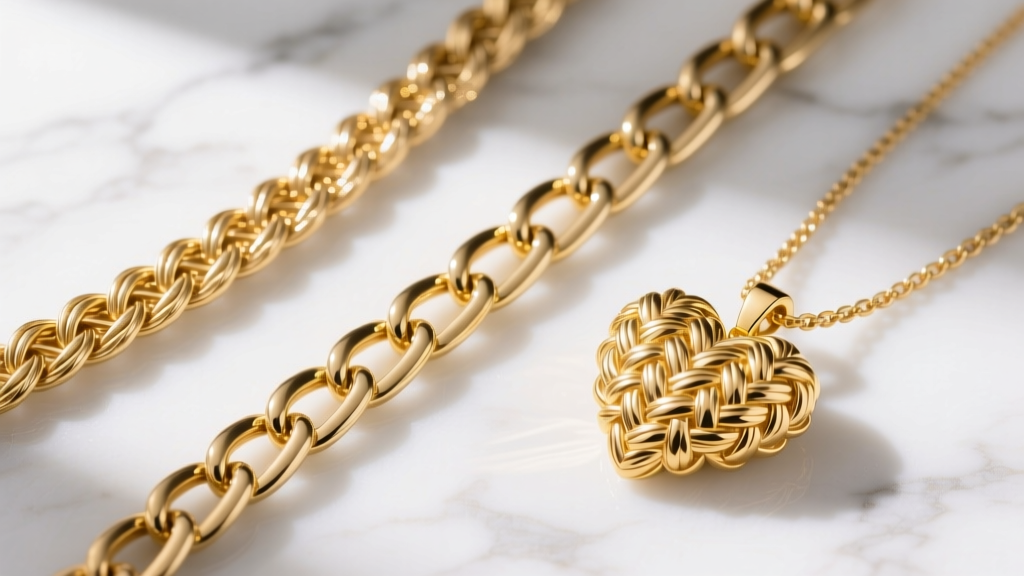
Recommended Styles
- Solid Rope Chain: The twisted, interlocking links of a solid rope chain distribute tensile stress evenly across multiple points. If one link is stressed, the surrounding geometry absorbs the shock, making it one of the most durable options for soft metals.
- Thick Curb Chain: Flat, interlocking links that lay flush against the skin. A solid (not hollow) curb chain of at least 3mm in width provides excellent structural rigidity and resists snagging on clothing, which is a primary cause of chain stretching.
- Box Chain (Solid): Composed of square, interlocking links, a solid box chain offers high tensile strength. However, ensure it is completely solid; hollow box chains will crush irreparably if bent.
Styles to Avoid
- Herringbone / Snake Chains: While visually stunning and liquid-like, these chains are notoriously fragile in pure gold. The flat, tightly packed links have zero flexibility. If a herringbone chain is kinked or folded, the structural damage is permanent and nearly impossible for a jeweler to repair without leaving a visible weak point.
- Delicate Cable Chains: Thin, simple oval links lack the mass and interlocking geometry to support the weight of a pendant in 24k gold. They will stretch and snap under minimal tension.
The Clasp Conundrum: Securing Soft Chains
A chain is only as strong as its weakest link, and in pure gold jewelry, the weakest link is almost always the jump ring connecting the clasp. A standard lobster claw clasp relies on a tiny spring mechanism, but the jump ring it hooks into is made of soft 24k gold. Over time, the repeated friction of the clasp pulling against the jump ring will cause the soft gold to thin, eventually pulling open and dropping your necklace.
What to demand from your jeweler: Insist on a soldered jump ring. Soldering fuses the gap of the ring shut, transforming it from a vulnerable hook into a continuous, unbreakable loop. If a soldered ring is not an option, opt for a toggle clasp. Toggle clasps distribute the tension across a wider surface area and do not rely on a tiny, friction-prone ring to bear the entire dynamic load of the chain's movement.
Pricing, Premiums, and Investment Value
Buying pure gold is both a fashion statement and a financial transaction. The price of a 24k necklace is calculated using a straightforward formula: (Current Gold Spot Price × Weight in Troy Ounces) + Making Charge (Premium).
The 'making charge' covers the labor, design, and retail overhead. While a simple cast 24k chain might carry a modest 5% to 10% premium over the spot price, intricate hand-woven designs or advanced 3D Hard Gold electroformed pendants can command premiums of 25% to 40%. When viewing pure gold as an investment, lower-premium, heavier, and simpler chains offer the best liquidity and closest tracking to the raw gold market.
| Karat | Purity | Vickers Hardness (HV) | Best Use Case | Investment Liquidity |
|---|---|---|---|---|
| 24k | 99.9% | 25 - 30 | Investment, cultural jewelry, hypoallergenic needs | Excellent (closest to spot) |
| 22k | 91.6% | 45 - 55 | Traditional bridal jewelry, coin settings | Very Good |
| 18k | 75.0% | 125 - 130 | Fine diamond/gemstone settings, luxury daily wear | Moderate (high alloy content) |
| 14k | 58.3% | 135 - 150 | Everyday durability, intricate mechanical clasps | Low (primarily fashion value) |
Care and Maintenance for 24k Necklaces
Pure gold is entirely immune to tarnish, oxidation, and corrosion. It will never react with your skin's pH or turn your neck green. However, its softness dictates a strict care regimen to preserve its physical form and high-polish finish.

- Storage is Critical: Never toss a 24k necklace into a shared jewelry box. The friction from harder gemstones or lower-karat metals will leave deep, permanent scratches on the pure gold surface. Store it individually in a soft, anti-tarnish flannel pouch or a dedicated velvet-lined compartment.
- Cleaning Protocols: For traditional solid 24k chains, a simple soak in warm water with a few drops of mild, phosphate-free dish soap, followed by a gentle brush with an ultra-soft baby toothbrush, is sufficient. Rinse and pat dry with a microfiber cloth.
- The Hard Gold Warning: If you own a 3D Hard Gold electroformed piece, never place it in an ultrasonic cleaner. The high-frequency vibrations can shatter the thin, hollow gold shell, especially if trace amounts of the internal wax or resin mold remain inside the piece. Clean these exclusively with a damp, soft cloth.
Ultimately, purchasing a pure gold piece is an exercise in balancing aesthetic desires with metallurgical realities. By prioritizing structural chain designs, demanding soldered connections, and understanding the nuances of modern electroforming, you can confidently acquire a pure gold necklace that serves as both a breathtaking adornment and a lasting store of generational wealth.


